The Short Answer on Electric Minivans
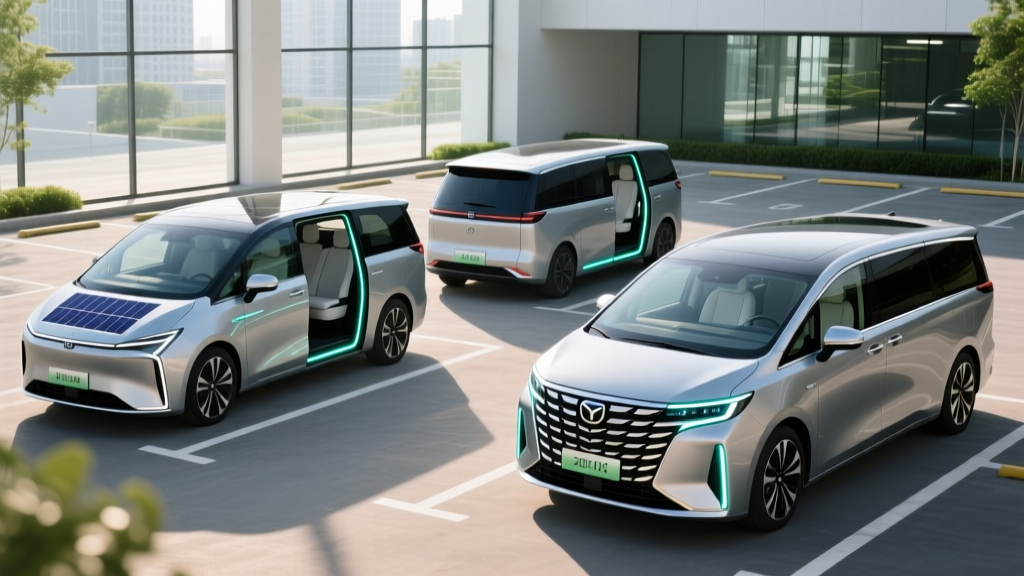
As of early 2026, there is no fully electric minivan widely available for purchase in the United States from a mainstream automaker. The Chrysler Pacifica remains a plug-in hybrid (PHEV), and the Toyota Sienna and Honda Odyssey are conventional hybrids or gas-only, respectively. The Kia EV9 three-row SUV is the closest electrified family hauler with DC fast charging and over 300 miles of EPA range, but it is an SUV, not a minivan. If you need sliding doors and a true minivan floor, your only electrified option today is the Chrysler Pacifica PHEV with 32 miles of electric-only range. Several Chinese-market electric minivans (Zeekr 009, XPeng X9) exist overseas but are not sold in the U.S.
Why the Electric Minivan Segment Is Still Empty
Minivans sell roughly 400,000 to 500,000 units per year in the U.S. — a fraction of the midsize SUV market. Automakers prioritize EV investment where volume and margins justify billion-dollar battery pack commitments. The minivan's low-slung, flat-floor architecture also complicates battery packaging: a 100+ kWh pack adds weight and cost that conflicts with the segment's value-oriented pricing. Families shopping minivans are price-sensitive, typically spending $38,000 to $52,000, while current three-row EVs start above $54,000 and often cross $65,000.
The result is a gap: families who want sliding doors, a low step-in height, and a flat load floor have no zero-emission option. That may change later this decade, but for 2026 model-year shopping, here is what you can actually buy and how the numbers work.
Your Actual Options: PHEV Minivan vs. Three-Row EV SUV
Since no battery-electric minivan exists in the U.S. market, buyers cross-shopping an electric minivan realistically choose between two vehicle types:
| Spec | 2026 Chrysler Pacifica PHEV | 2026 Kia EV9 (3-Row EV SUV) | 2026 Toyota Sienna Hybrid |
|---|---|---|---|
| Powertrain | Plug-in Hybrid (PHEV) | Battery Electric (BEV) | Hybrid (HEV) |
| EPA Electric-Only Range | 32 miles | N/A (full electric) | N/A (no plug) |
| EPA Total Range | ~430 miles (gas + electric) | 304 mi (Land AWD) / 230 mi (GT-Line AWD est.) | ~630 miles |
| Battery Capacity | 16 kWh (usable ~12 kWh) | 100.0 kWh usable (NMC) | ~1.6 kWh (self-charging) |
| MPGe (Electric Mode) | 82 MPGe | 89 MPGe (Land RWD EPA est.) | N/A |
| MPG (Gas Mode) | 30 MPG combined | N/A | 36 MPG combined |
| Max DC Fast Charge | N/A (Level 2 AC only) | ~210 kW peak (10-80% in ~24 min) | N/A |
| Level 2 Charge Time (0-100%) | ~2 hours (32A) | ~8.5 hours (11 kW) | N/A |
| Horsepower | 260 hp combined | 379 hp (AWD) | 245 hp combined |
| 0-60 mph | ~7.5 sec | ~5.0 sec (AWD) | ~7.1 sec |
| Cargo (Behind 3rd Row) | 32.3 cu ft | 20.2 cu ft | 33.5 cu ft |
| Sliding Doors | Yes (power) | No | Yes (power) |
| Starting MSRP | ~$51,000 | ~$54,900 | ~$39,500 |
| Federal Tax Credit (§30D) | Up to $7,500 (eligibility varies) | Up to $7,500 (eligibility varies) | None (HEV) |
Sources: fueleconomy.gov, Stellantis/Chrysler, Kia USA. Pacifica PHEV tax credit eligibility depends on battery sourcing and buyer income — verify at irs.gov.
Real-World Range and Efficiency: What the Sticker Doesn't Tell You
The Pacifica PHEV's 32-mile electric range is EPA-rated under mixed driving. In real-world use, expect 25-28 miles on the highway and potentially 30+ miles in stop-and-go city driving where regenerative braking recaptures more energy. In cold weather (below 30°F), that electric range drops to roughly 20-24 miles due to battery chemistry limitations and cabin heating demand. The Pacifica uses a resistive heater in EV mode, which draws heavily from the small pack.
The Kia EV9's 304-mile EPA rating (Land RWD) is more robust, but real-world highway driving at 75 mph typically yields 250-275 miles. In sub-freezing temperatures, plan for 200-230 miles per charge. The EV9 does include a heat pump on most trims, which mitigates cold-weather range loss compared to vehicles without one.
Real-World Range Reality Check: EPA ratings assume a mix of city and highway driving at moderate temperatures. For family road trips at sustained highway speeds in summer heat or winter cold, budget 15-25% below the sticker range. The EV9 Land RWD's 304-mile EPA figure becomes roughly 240-260 miles on a 70°F highway day and 200-230 miles at 20°F.
Cost Breakdown: Purchase, Fueling, Maintenance, and Insurance
The financial case for an electrified family hauler depends heavily on your driving patterns, electricity rates, and whether you qualify for federal or state incentives.
| Cost Category | Pacifica PHEV | Kia EV9 (Land AWD) | Sienna Hybrid (XLE) |
|---|---|---|---|
| Base MSRP | $51,000 | $59,900 | $42,500 |
| Federal Tax Credit (§30D) | Up to $7,500* | Up to $7,500* | $0 |
| Effective Price After Credit | ~$43,500* | ~$52,400* | $42,500 |
| Home Charger Install (Level 2) | $600-$1,500 | $600-$1,500 | $0 |
| Annual Fuel/Energy (15,000 mi) | ~$700-$1,100** | ~$550-$800** | ~$1,400 |
| Annual Maintenance | ~$500-$700 | ~$200-$350 | ~$500-$700 |
| Avg. Annual Insurance | ~$1,800-$2,200 | ~$2,000-$2,600 | ~$1,500-$1,900 |
| 5-Year Total Operating Cost | ~$14,000-$19,000 | ~$11,500-$16,500 | ~$16,500-$20,500 |
* Tax credit eligibility requires meeting MSRP caps (vans: $80,000), buyer income limits ($300K MFJ / $150K single), and battery critical-mineral/sourcing rules per IRS §30D. Verify before purchasing — rules change and not all trims/battery sources qualify.
** Fuel/energy costs assume 70% electric driving for the PHEV (daily commute under 30 miles with nightly home charging), $0.14/kWh national avg. electricity, and $3.30/gal gas. Your actual costs depend on local rates and driving mix.
What First-Time EV Buyers Need to Know Before Committing
If you are considering the Kia EV9 as your family's first electric vehicle, several practical realities shape daily ownership:
Home Charging Is Non-Negotiable for Convenience
Without a Level 2 home charger (240V, 32-48A), EV ownership becomes a chore. The EV9's 100 kWh battery takes roughly 50+ hours on a standard 120V outlet (Level 1) — essentially unusable for daily family life. A Level 2 installation runs $600 to $1,500 if your electrical panel has capacity, but can reach $3,000-$5,000 if a panel upgrade (to 200A service) is required. Renters and apartment dwellers without dedicated parking face a genuine barrier.
DC Fast Charging: Peak kW Is Not Sustained kW
The EV9's ~210 kW peak charge rate sounds impressive, but charging follows a curve. You will see 210 kW briefly between roughly 10-30% state of charge. From 30-60%, expect 150-180 kW. Above 80%, the rate drops sharply to protect battery health — often below 50 kW. A realistic 10-80% session takes about 24 minutes at a functioning 350 kW charger. Plan road-trip stops around 25-30 minutes, not the 18-minute marketing figure some competitors claim.
Cold Weather Demands Planning
Battery chemistry slows in cold temperatures, reducing both range and charging speed. In sub-freezing conditions, precondition the battery (the EV9 supports this via the navigation-linked preconditioning feature) before arriving at a DC fast charger. Without preconditioning, your first 10 minutes of charging may be limited to under 50 kW until the battery warms.
Common Misconceptions About Electric Family Vehicles
| Myth | Fact |
|---|---|
| "Electric minivans are widely available." | No mainstream BEV minivan is sold in the U.S. as of 2026. The Pacifica PHEV is the only plug-in minivan option. |
| "The EV9 is basically an electric minivan." | The EV9 is a body-on-frame-style three-row SUV with conventional doors, higher step-in height, and less cargo versatility than a true minivan. It competes with the Telluride and Atlas, not the Sienna. |
| "I'll save $10,000 in fuel in year one." | Annual energy savings vs. gas are typically $500-$1,000 depending on your electricity rate, driving mix, and local gas prices. The real savings accumulate over 5-8 years, and depend on qualifying for the tax credit upfront. |
| "EV batteries need replacing every 5 years." | Modern NMC and LFP packs are designed for 150,000-200,000+ miles. Kia warranties the EV9 battery at 10 years/100,000 miles with a 70% capacity retention threshold. Most packs outlast the vehicle's economic life. |
| "I can't take a road trip in an EV." | The EV9's 304-mile range and 210 kW charging make 500-mile trips feasible with one 25-30 minute stop. However, charging infrastructure remains sparse in rural areas — check PlugShare or your vehicle's route planner before trips into remote regions. |
Decision Framework: Which Family Hauler Fits Your Situation?
Choose the Chrysler Pacifica PHEV if:
- You need sliding doors and a true minivan interior for child seats, strollers, or wheelchair accessibility
- Your daily commute is under 30 miles and you can charge at home nightly
- You take regular road trips and cannot tolerate charging stops
- You want to reduce fuel consumption and emissions without range compromise
Choose the Kia EV9 if:
- You can accept an SUV form factor (no sliding doors) and are upgrading from a crossover, not a minivan
- You have reliable home Level 2 charging and drive under 250 miles daily
- You want zero tailpipe emissions and the lowest per-mile energy cost
- You value strong acceleration (5.0 sec 0-60), modern ADAS, and over-the-air updates
Choose the Toyota Sienna Hybrid if:
- You want the lowest purchase price and highest total range (~630 miles)
- You lack home charging access and rely on gas stations exclusively
- You prioritize cargo space and sliding doors over electrification
- You drive in extreme cold or remote areas where charging infrastructure is unreliable
Wait for a true electric minivan if:
- You need the minivan form factor but want zero emissions and zero gas use
- You can hold off 2-3 years for potential entries from Hyundai, Kia, or Chrysler's future EV lineup
Frequently Asked Questions
Will Chrysler or Kia release an electric minivan soon?
Chrysler has signaled an all-electric future by 2028 under Stellantis, but no specific electric minivan has been officially announced with a production date. Kia's platform (E-GMP) could underpin a future electric minivan, but the company has not confirmed one for the U.S. market. Treat any speculative model as unconfirmed until a manufacturer press release with specs and pricing.
Can I convert a gas minivan to electric?
Aftermarket EV conversions exist but are impractical for modern minivans. The cost ($30,000-$50,000+), loss of factory safety systems, voided warranties, and registration complications make this unviable for a family vehicle. No certified conversion kit exists for the Pacifica, Sienna, or Odyssey.
Is the Pacifica PHEV's 32-mile electric range actually useful?
Yes, if your daily driving is under 30 miles. The average American drives roughly 37 miles per day, and many families' school-run and errand loops fall under 25 miles. With nightly Level 2 charging, you can run the Pacifica mostly on electricity during the week and use gas only for longer weekend trips. Over a year, owners who charge daily report using 40-60% less gasoline than a gas-only Pacifica.
Does the Kia EV9 qualify for the full $7,500 federal tax credit?
It depends. Under current IRS §30D rules, eligibility hinges on battery critical-mineral sourcing, buyer income (under $300K married filing jointly), MSRP under $80,000 for SUVs/vans, and final assembly in North America. The EV9 is assembled in West Point, Georgia, which satisfies the assembly requirement. Battery sourcing rules are stringent and subject to change — always verify the specific VIN's eligibility with your dealer and a tax professional before purchase. The credit can now be transferred to the dealer at point of sale, reducing your out-of-pocket cost directly.
What about the Volkswagen ID. Buzz — isn't that an electric minivan?
The VW ID. Buzz launched in Europe as a retro-styled electric van, but the U.S. version was delayed and ultimately not brought to market as of early 2026. VW cited range, pricing, and regulatory challenges. It is not available for purchase in the United States.
How does insurance cost compare for EVs vs. gas minivans?
EVs typically carry 15-25% higher insurance premiums than comparable gas vehicles due to higher repair costs (specialized labor, battery replacement risk, and sensor recalibration after bodywork). The EV9's average annual premium is $2,000-$2,600 depending on your state, driving record, and coverage level, compared to $1,500-$1,900 for a Sienna Hybrid. Get quotes from your insurer before purchasing — the premium gap can offset some fuel savings.