The Short Answer on Miniature Electric Boats and EV Incentives
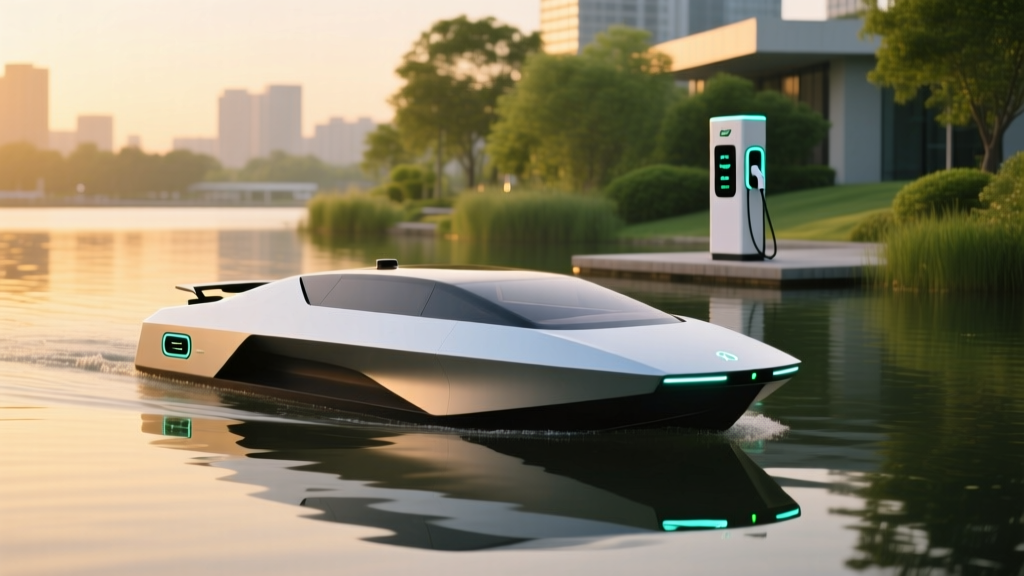
If you've been searching for miniature electric boats and wondering whether they qualify for the federal EV tax credit or fit into an electrified-vehicle ownership strategy, here's the direct answer: miniature electric boats do not qualify for the IRS §30D Clean Vehicle Credit. The credit applies exclusively to highway-capable, four-wheeled motor vehicles — battery-electric cars (BEVs), plug-in hybrids (PHEVs), and fuel-cell vehicles (FCVs) — purchased for personal use. Watercraft of any kind, including electric pontoons, kayaks with trolling motors, and small electric runabouts, fall entirely outside the statute's definition of a "qualified clean vehicle."
However, if your interest in miniature electric boats reflects a broader curiosity about electric mobility and battery-powered recreation, the electrified-vehicle market in 2026 offers substantial savings for buyers who choose the right car, truck, or SUV. Below, we break down exactly what does qualify, the real costs and savings, and how to make a data-driven purchase decision.
What the §30D Tax Credit Actually Covers (And Why Boats Are Excluded)
The IRS §30D New Clean Vehicle Credit is specific in its language: the credit applies to a "qualified plug-in electric drive motor vehicle" or a "qualified fuel cell motor vehicle" that meets all of the following criteria:
- Vehicle type: Must be a four-wheeled vehicle designed for use on public streets, roads, or highways
- Battery capacity: Minimum 7 kWh for BEVs (16 kWh for PHEVs in some cases)
- GVWR: Gross vehicle weight rating under 14,000 lbs
- Assembly: Final assembly in North America
- MSRP cap: Vans/SUVs/trucks ≤ $80,000; sedans ≤ $55,000
- Buyer income cap: AGI ≤ $150,000 (single), $225,000 (head of household), $300,000 (joint)
- Battery sourcing: Critical minerals and battery components must meet escalating domestic-content thresholds
Miniature electric boats fail the very first criterion: they are not four-wheeled motor vehicles designed for highway use. This is not a gray area — the IRS does not provide exceptions for off-road or recreational electric vehicles. Electric golf carts, ATVs, e-bikes, and electric watercraft are all excluded.
Common Misconceptions About EV Tax Credits
| Myth | Fact |
|---|---|
| "Any electric vehicle with a battery qualifies for the $7,500 credit." | Only highway-capable, four-wheeled BEVs, PHEVs, and FCVs meeting MSRP, income, and sourcing rules qualify. The maximum credit is $7,500, but many vehicles qualify for $3,750 or $0 depending on battery sourcing. |
| "Electric boats and jet skis are eligible." | Watercraft are excluded regardless of battery size or electric-only propulsion. The §30D credit applies to motor vehicles only. |
| "I can claim the credit for a used electric boat." | The §25E Used Clean Vehicle Credit also requires a four-wheeled highway vehicle. Boats are ineligible. |
| "The credit is automatic — everyone gets $7,500." | You must meet income caps, purchase an eligible model, and the vehicle must meet critical-mineral and battery-component sourcing thresholds. Point-of-sale transfer is available but requires dealer enrollment and buyer attestation. |
If You're Spending $10K–$30K on a Miniature Electric Boat, Consider This EV Instead
Many miniature electric boats — compact electric runabouts, electric fishing skiffs, and motorized pontoons — retail between $8,000 and $35,000. That's a significant investment with zero tax incentive and limited daily utility compared to an electrified vehicle you'd drive every day. Here's how the economics compare when you redirect that budget toward a qualifying EV or PHEV.
Budget Redirect: Electric Boat vs. Qualifying Electrified Vehicle
| Factor | Miniature Electric Boat (Typical) | 2026 Chevrolet Equinox EV LT | 2026 Toyota RAV4 PHEV (SE) |
|---|---|---|---|
| Base MSRP | $18,000–$28,000 | $33,600 | $44,600 |
| Federal Tax Credit (§30D) | $0 | Up to $7,500 (if sourcing/income rules met) | Up to $7,500 (if sourcing/income rules met) |
| Effective Price After Credit | $18,000–$28,000 | ~$26,100 | ~$37,100 |
| EPA Range / Electric-Only | 20–40 miles (water) | 319 miles (EPA est.) | 42 miles electric + 380 mi total (gas) |
| Annual Fuel/Energy Cost | $150–$400 (electricity for seasonal use) | ~$600/yr (electricity, 12k mi) | ~$900/yr (mixed gas/electric) |
| Annual Maintenance | $200–$500 (winterization, hull, motor) | ~$300 (tire rotation, cabin filter) | ~$500 (oil changes + EV system) |
| Daily Utility | Seasonal recreation only | Year-round daily transportation | Year-round daily transportation |
Sources: fueleconomy.gov, manufacturer MSRPs. Tax credit eligibility depends on IRS §30D rules — consult a tax professional. Boat costs are representative market averages.
Real EV Ownership Costs: What First-Time Buyers Should Know in 2026
If the comparison above has you reconsidering where to allocate your budget, here's what the data actually shows about EV ownership in 2026 — the real numbers, not the marketing.
Charging at Home: The Foundation of EV Economics
The single biggest ownership advantage of an EV comes from home Level 2 charging. If you can install a 240V outlet (NEMA 14-50) or hardwired Level 2 charger in your garage or driveway, your per-mile energy cost drops to roughly $0.03–$0.05/mile depending on your local electricity rate (national average ~$0.17/kWh in 2026). That compares to $0.12–$0.16/mile for a gas car averaging 27 MPG at $3.40/gallon.
However, home charging installation isn't free. Here's a realistic cost breakdown:
| Item | Low Estimate | High Estimate |
|---|---|---|
| Level 2 charger (hardware, e.g., ChargePoint Home Flex, Emporia Level 2) | $350 | $700 |
| Electrical panel upgrade (100A → 200A, if needed) | $0 (if panel sufficient) | $2,500 |
| Electrician labor (wiring, outlet/install, permit) | $500 | $2,000 |
| Permit and inspection | $50 | $300 |
| Total (no panel upgrade) | $900 | $3,000 |
| Total (with panel upgrade) | $3,400 | $5,500 |
Always get a licensed electrician to assess your panel capacity before purchasing equipment. Some utilities offer rebates of $250–$1,000 for Level 2 installation — check your local provider.
Cold-Weather Range Loss: The Honest Numbers
If you live north of the 37th parallel, plan for 15–30% range reduction in sustained sub-freezing temperatures. A vehicle with a 319-mile EPA rating may deliver 225–270 miles in January highway driving at 70 MPH in 20°F weather. Vehicles equipped with a heat pump (standard on the Hyundai Ioniq 5, Tesla Model Y, and others) mitigate this loss by 5–10 percentage points compared to resistive cabin heating.
Insurance Premiums: The Hidden Line Item
EV insurance premiums run 10–25% higher than comparable gas vehicles, driven by higher repair costs for battery packs and specialized bodywork. Budget an extra $150–$400/year depending on your model, location, and driving record. Shop multiple carriers — some insurers now offer EV-specific policies with battery-replacement riders.
EV vs. Gas vs. Hybrid: The Data-Driven Decision Framework
Here's the five-year total cost of ownership comparison for three representative vehicles, assuming 12,000 miles/year, home Level 2 charging, and current national-average fuel and electricity prices.
| Cost Category (5-Year) | 2026 Chevy Equinox EV 2LT ($36,100 MSRP) | 2026 Toyota RAV4 Hybrid XLE ($34,500 MSRP) | 2026 Honda CR-V EX-L Gas ($38,000 MSRP) |
|---|---|---|---|
| Purchase Price (after credit) | $28,600 (est. $7,500 credit) | $34,500 (no credit) | $38,000 (no credit) |
| Fuel / Energy (5 yrs) | $3,000 | $5,800 | $8,500 |
| Maintenance (5 yrs) | $1,500 | $3,000 | $3,500 |
| Insurance (5 yrs, est.) | $9,500 | $7,500 | $7,500 |
| Depreciation (est. 5-yr) | $14,000 | $12,000 | $14,500 |
| Total 5-Year Cost | $56,600 | $62,800 | $72,000 |
Depreciation estimates based on current resale-value trends. Insurance varies significantly by driver profile. fueleconomy.gov used for MPG and kWh/100mi figures. Tax credit applied to EV per §30D eligibility — verify your personal qualification.
The Actionable Decision Framework: Which Electrified Vehicle Is Right for You?
If/Then Purchase Guide
- IF you have home charging access (garage/driveway with 240V capability) AND your daily commute is under 80 miles round-trip → THEN a BEV like the Equinox EV, Tesla Model 3, or Hyundai Ioniq 5 delivers maximum savings. Target a model with ≥ 300 miles EPA range for road-trip flexibility.
- IF you lack reliable home charging (apartment, street parking) AND public DC fast chargers are more than 15 minutes away → THEN a PHEV like the RAV4 Prime or Jeep Wrangler 4xe gives you electric-only commuting (35–42 miles) with gas backup, eliminating range anxiety entirely.
- IF you regularly tow over 3,500 lbs or drive more than 300 miles between stops in rural areas → THEN a hybrid (HEV) like the Toyota Tacoma Hybrid or Ford F-150 PowerBoost may be more practical than a BEV in 2026, as DC charging infrastructure in rural corridors remains inconsistent.
- IF you want electrified recreation (the miniature electric boat use case) → THEN budget for it as a separate recreational expense. Do not expect tax incentives. Consider pairing it with a PHEV that offers Vehicle-to-Load (V2L) capability — the Hyundai Ioniq 5 and Ford F-150 Lightning can power accessories and small watercraft chargers from their traction batteries.
- IF your household income exceeds the §30D caps ($150K single / $300K joint) → THEN the new-vehicle credit is unavailable. Consider the §25E Used Clean Vehicle Credit (up to $4,000, 30% of sale price, income caps apply) on a qualifying pre-owned EV.
Frequently Asked Questions
Do any electric watercraft qualify for federal EV tax credits?
No. The IRS §30D credit requires a four-wheeled, highway-capable motor vehicle. Electric boats, jet skis, kayaks with electric motors, and pontoons do not qualify regardless of battery size or price. The same exclusion applies to the §25E used-vehicle credit and the §30C commercial charging infrastructure credit (which applies to charging equipment, not vehicles).
Can I charge a miniature electric boat from my EV or home charger?
Most miniature electric boats use separate marine-grade battery systems (typically 12V, 24V, or 36V lithium or lead-acid) with proprietary or marine-specific chargers. You cannot plug a boat into a J1772 or NACS connector. However, some EVs with V2L (Vehicle-to-Load) capability — such as the Hyundai Ioniq 5, Kia EV6, and Ford F-150 Lightning — can power a standard 120V AC outlet that may run a boat's shore charger. Check your boat's charger input requirements and your EV's V2L wattage limit (typically 1,900–3,600W continuous).
Are there any state incentives for electric boats?
A small number of states and local air-quality districts have offered rebates for electric marine vessels, primarily in California (via CARB and local air districts) and through certain EPA clean-marina programs. These are highly localized, change frequently, and are separate from the federal §30D credit. Check your state energy office or local air-quality management district for current programs.
What's the best EV to buy in 2026 if I also want to use it for recreation and towing?
The Ford F-150 Lightning (extended-range, 320-mile EPA, up to 10,000 lbs towing) and the Rivian R1T (up to 410-mile EPA with Max Pack, 11,000 lbs towing) are the top choices for buyers who need utility, recreation support, and V2L capability. Both qualify for the §30D credit if you meet income and sourcing requirements, as their MSRPs fall under the $80,000 truck/SUV cap.
What should a first-time EV buyer prioritize?
Three things, in order: (1) Confirm you can charge at home — this is non-negotiable for EV economics and convenience. (2) Choose a vehicle with at least 250+ miles of EPA range (plan for 20% real-world highway/cold-weather reduction). (3) Verify your specific tax-credit eligibility on IRS.gov before signing a purchase agreement, as battery-sourcing requirements change and not every trim qualifies for the full $7,500.