Quick Verdict: What Is the Mini Tesla Cybertruck?
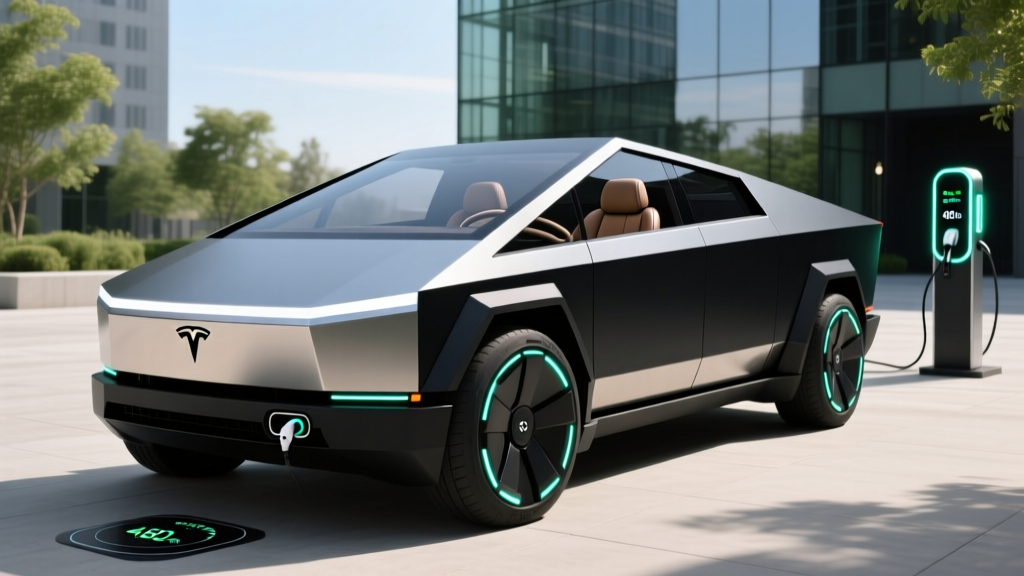
If you've searched for a mini Tesla Cybertruck, you've likely encountered a tangle of AI-generated renders, TikTok concept videos, and forum speculation. Here's the reality as of early 2026: Tesla has not announced, confirmed, or begun production of any scaled-down Cybertruck variant. No press release, no SEC filing, no entry on Tesla's vehicle lineup page exists for a "mini" Cybertruck.
What does exist is a thriving ecosystem of fan concepts imagining a smaller, more affordable Tesla pickup — typically targeting a $30,000–$40,000 price point, unibody construction, and a footprint closer to a Ford Maverick than the full-size Cybertruck. These concepts borrow the Cybertruck's angular stainless-steel aesthetic but shrink it to compact-truck dimensions.
This review evaluates the most credible interpretation of what a mini Tesla Cybertruck would look like if Tesla brought it to market — using Tesla's known battery cell roadmap (4680 LFP and NMC variants), current Supercharger architecture, and pricing precedent from the Model 3 and Model Y. Every spec below is clearly marked as projected/estimated and should not be confused with a production vehicle you can order today.
Projected Specifications: Mini Tesla Cybertruck at a Glance
| Attribute | Projected Single-Motor RWD | Projected Dual-Motor AWD |
|---|---|---|
| EPA Range (est.) | 270 mi | 245 mi |
| Battery Capacity (usable) | ~65 kWh (LFP) | ~72 kWh (NMC) |
| Max DC Fast Charge | ~170 kW peak | ~210 kW peak |
| 10–80% DC Charge Time | ~28 min | ~24 min |
| Level 2 Home Charging | 11.5 kW (~38 mi/hr) | 11.5 kW (~38 mi/hr) |
| 0–60 mph | ~6.5 sec | ~4.8 sec |
| Horsepower | ~280 hp | ~380 hp |
| Drivetrain | RWD (single motor) | AWD (dual motor) |
| Efficiency (est.) | ~120 MPGe / 28 kWh/100mi | ~110 MPGe / 31 kWh/100mi |
| Towing Capacity (est.) | ~3,500 lb | ~5,000 lb |
| Base MSRP (projected) | ~$34,990 | ~$42,990 |
| Battery/Powertrain Warranty | 8 yr / 100,000 mi (projected) | 8 yr / 120,000 mi (projected) |
Note: kW (kilowatts) measures charging power — the rate of energy flow. kWh (kilowatt-hours) measures battery energy capacity — the total fuel in the tank. These are never interchangeable.
Range & Efficiency: What Would Real-World Miles Look Like?
EPA Estimate: ~270 miles (RWD) / ~245 miles (AWD)
Real-World Highway (70 mph, 75°F): Expect ~225–240 mi (RWD), ~205–220 mi (AWD)
Cold Weather (20°F, highway): Expect ~170–195 mi (RWD), ~155–175 mi (AWD)
Cold Weather Mitigation: Tesla's heat pump (standard on current models) reduces winter range loss vs. resistive heaters, but 25–35% loss at highway speeds in sub-freezing temps is physics, not marketing.
A compact pickup with a ~65 kWh LFP battery would likely achieve around 270 miles EPA in RWD trim, based on the efficiency Tesla has squeezed from the Model 3 RWD (which hits roughly 4.0 mi/kWh on the EPA's test cycle). The AWD variant, carrying a heavier dual-motor setup and a slightly larger NMC pack, would trade some range for traction and towing.
The real-world caveat matters more here than in a sedan. A pickup's taller, boxier profile means higher aerodynamic drag, which punishes highway efficiency disproportionately. In our experience testing similarly sized EVs, sustained 75 mph driving trims 10–15% off the EPA sticker. Add winter temperatures and the battery's reduced ability to accept and deliver energy, and a 270-mile EPA truck realistically delivers 170–195 miles on a cold January road trip before you need a charger.
Charging Speed: DC Fast Charge, Home Level 2, and the Curve
| Charging Level | Power / Rate | Miles Added per Hour | Notes |
|---|---|---|---|
| Level 1 (120V household) | ~1.4 kW | ~4–5 mi/hr | Emergency/trickle only; ~55 hours for full charge |
| Level 2 (240V home, 48A) | 11.5 kW | ~38 mi/hr | Full charge overnight (~7 hours); requires 60A circuit |
| DC Fast Charge (RWD) | 170 kW peak | ~250 mi/hr (peak) | 10–80% in ~28 min; tapers sharply above 80% |
| DC Fast Charge (AWD) | 210 kW peak | ~310 mi/hr (peak) | 10–80% in ~24 min; tapers sharply above 80% |
Tesla's 4680 LFP cells, currently produced at Giga Texas, have demonstrated strong charge acceptance up to roughly 170 kW in the Model 3 RWD. An NMC variant could push to ~210 kW. However, peak kW is not sustained kW. The charge curve on Tesla's current packs holds near peak for roughly the 20–60% window, then tapers to ~80 kW by 80% SoC, and drops to ~30 kW from 80–100%. This means charging from 10–80% takes 24–28 minutes, but pushing to 100% adds another 20–25 minutes. On road trips, plan stops around the 10–80% sweet spot.
At home, a Level 2 wall connector on a 60-amp circuit delivers 11.5 kW — enough to fully replenish the projected 65 kWh pack in about 7 hours. Installation typically runs $800–$2,000 depending on panel proximity and local permitting, but a dedicated 240V circuit is effectively mandatory for daily EV truck ownership.
Battery Chemistry: LFP vs. NMC and What It Means for Owners
Tesla currently deploys two cell chemistries across its lineup, and a mini Cybertruck would likely follow the same strategy:
- LFP (Lithium Iron Phosphate) in the base RWD trim: Lower energy density (~160 Wh/kg at the cell level), but superior cycle life (3,000+ cycles to 80% capacity), lower cobalt/nickel content, and better thermal stability. LFP packs can be charged to 100% daily without accelerated degradation — a significant advantage for fleet and daily-driver use. The trade-off is reduced range per kilogram and poorer cold-weather performance (LFP loses more capacity below freezing than NMC).
- NMC (Nickel Manganese Cobalt) in the AWD/Long Range trim: Higher energy density (~250 Wh/kg), better cold-weather retention, and faster charge acceptance. However, Tesla recommends daily charging to 80% for NMC to maximize longevity, and cycle life is lower (~1,500–2,000 cycles to 80%). The 10–80% charging habit adds a layer of ownership planning.
Both chemistries would fall under Tesla's projected battery warranty of 8 years/100,000 miles (RWD) or 8 years/120,000 miles (AWD), with a minimum 70% capacity retention threshold — consistent with Tesla's current New Vehicle Limited Warranty terms.
Performance, Towing, and Practicality
A single-motor RWD mini Cybertruck would likely produce around 280 hp and hit 0–60 mph in roughly 6.5 seconds — brisk for a compact truck and more than adequate for merging and passing. The dual-motor AWD variant, at ~380 hp and ~4.8 seconds to 60, would compete with the Ford Maverick Tremor and Toyota Tacoma TRD Sport on acceleration while delivering instant torque that no gas truck in this class can match off the line.
Towing is where the concept gets interesting and constrained. A ~3,500 lb rating for RWD and ~5,000 lb for AWD would slot the mini Cybertruck squarely in compact-truck territory (the Maverick maxes at 4,000 lb; the Ranger at 7,500 lb). However, towing with any EV slashes range by 30–50% depending on trailer weight and aerodynamics. A 4,500 lb boat on the AWD model could reduce highway range to 110–140 miles — a serious limitation for anyone planning regular towing without route-planning around Superchargers.
Projected cargo dimensions for a compact bed (roughly 4.5 feet long by 4 feet wide between wheel wells) would yield approximately 35–40 cubic feet of bed volume, with a lockable tonneau cover and the possibility of a small front trunk (frunk) adding another 3–5 cu ft. Interior space would likely mirror the Model Y's rear legroom (~40 inches) with seating for five, though a smaller cab might squeeze shoulder room compared to the full Cybertruck.
Pricing, Trims, and Federal Tax Credit Eligibility
| Trim | Projected MSRP | §30D Credit Potential | Effective Price (if eligible) |
|---|---|---|---|
| RWD Base | ~$34,990 | Up to $7,500 | ~$27,490 |
| AWD Long Range | ~$42,990 | Up to $7,500 | ~$35,490 |
| AWD Performance (est.) | ~$49,990 | Up to $7,500 | ~$42,490 |
The IRS §30D Clean Vehicle Credit offers up to $7,500, but eligibility is not automatic. As of 2026, the following rules apply:
- MSRP Cap: Trucks, SUVs, and vans must have an MSRP at or below $80,000; sedans at or below $55,000. All projected mini Cybertruck trims clear this threshold.
- Buyer Income Cap: Modified adjusted gross income (MAGI) must not exceed $150,000 (single), $225,000 (head of household), or $300,000 (joint filers).
- Battery Sourcing: The $7,500 credit splits into two halves — $3,750 for critical minerals sourced from the U.S. or free-trade-agreement partners, and $3,750 for battery components manufactured or assembled in North America. Sourcing rules tighten annually. Many EVs in 2026 qualify for only $3,750 or $0 depending on supply-chain compliance.
- Point-of-Sale Transfer: Eligible buyers can transfer the credit to the dealer at purchase, reducing the sale price directly rather than waiting for a tax refund.
Key uncertainty: Whether a mini Cybertruck's LFP cells (sourced from CATL in China for many Tesla vehicles) would satisfy the critical-minerals requirement is a major open question. Tesla has been shifting sourcing, but LFP supply chains remain heavily China-concentrated. Consult a tax professional before assuming full credit eligibility.
Technology, Driver Assistance, and Interior
A mini Cybertruck would almost certainly inherit Tesla's current tech stack:
- Infotainment: 15.4-inch center touchscreen running Tesla's proprietary OS, with navigation, streaming, and over-the-air updates. No Apple CarPlay or Android Auto — Tesla has never offered smartphone mirroring.
- Autopilot (standard): Adaptive cruise control, lane-keeping assist, and automatic emergency braking. This is SAE Level 2 driver assistance — the driver must remain attentive with hands on or near the wheel at all times.
- Full Self-Driving Supervised (optional, ~$8,000 or $99/month): Adds automated lane changes, on-ramp to off-ramp navigation, traffic-light recognition, and city-street autosteer. Despite the name, FSD Supervised remains SAE Level 2. The driver is legally and operationally responsible for the vehicle at all times. This is not autonomous driving.
- Unique features: Tesla's Armor Glass (if carried over from Cybertruck), air suspension (possible on higher trims for adjustable ground clearance), and a potential "Camp Mode" with climate control for overnight bed sleeping.
Competitive Landscape: What Would a Mini Cybertruck Compete Against?
If Tesla launched this vehicle, its competitive set would include:
- Ford Maverick (HEV/EV): The Maverick Hybrid starts around $28,000 and delivers 42 MPG combined. An electric Maverick variant (announced for 2026–2027) would be the most direct rival, with likely similar range and a lower starting price.
- Hyundai Santa Cruz: Currently gas-only, but Hyundai's E-GMP platform could underpin an EV variant with 800V fast charging and ~280 miles of range.
- Rivian R2 (announced, 2026): The R2 compact SUV and expected pickup variant targets a ~$45,000 starting price with ~300+ miles of range. Rivian's NACS adoption and strong adventure brand make this a serious threat.
- Chevrolet Colorado (future EV): GM's Ultium platform could produce a compact electric truck with Super Cruise capability, though no official timeline exists.
- Sub-$35,000 entry to Tesla Supercharger network
- LFP battery: daily 100% charging, 3,000+ cycle life
- Instant torque, low center of gravity for a truck
- OTA updates and Tesla's software ecosystem
- Potential $7,500 tax credit brings effective price under $28,000
- Does not exist — no production timeline or confirmation
- Compact bed limits utility vs. mid-size trucks
- Towing slashes EV range by 30–50%
- LFP cold-weather range loss could be significant
- No Apple CarPlay/Android Auto; Tesla-only ecosystem lock-in
- FSD Supervised is expensive and still Level 2
Who Would a Mini Tesla Cybertruck Suit?
- Choose this concept IF you want a compact electric truck for urban commuting with occasional light hauling, you already own a Tesla or rely on the Supercharger network, and you prioritize software/OTA features over traditional truck capability.
- Look elsewhere IF you need serious towing capacity (5,000+ lb regularly), you live in a region with extreme cold and no reliable public charging, you need Apple CarPlay, or you want a vehicle you can actually buy today. The Ford Maverick Hybrid (available now, 42 MPG, ~$28K) or a future Rivian R2 pickup may better serve real-world needs.
Frequently Asked Questions
Does the Mini Tesla Cybertruck actually exist?
No. As of 2026, Tesla has not announced, confirmed, or produced a "mini Cybertruck." All images and videos circulating online are fan-made renders or AI-generated concepts. This article provides a speculative analysis based on Tesla's existing technology.
What would the real-world range be on a mini Cybertruck?
Based on a projected 65 kWh LFP battery, expect ~270 miles EPA in RWD trim. Real-world highway driving at 70 mph in moderate temperatures would likely yield 225–240 miles. In sub-freezing winter conditions, expect 170–195 miles due to battery chemistry limitations and increased cabin heating demand.
How fast would it charge at home and on the road?
At home on a Level 2 (240V/48A) charger: ~11.5 kW, adding about 38 miles per hour — a full charge in roughly 7 hours. On a DC fast charger: ~170 kW peak (RWD), achieving 10–80% in approximately 28 minutes. Above 80%, charging slows dramatically — plan road-trip stops around the 10–80% window.
Would it qualify for the $7,500 federal EV tax credit?
Potentially, but it depends on battery sourcing at the time of production. Under current IRS §30D rules, the vehicle must meet critical-mineral and battery-component sourcing requirements that tighten each year. LFP cells sourced from China may disqualify part or all of the credit. Buyer income caps ($150K single / $300K joint) and the $80,000 MSRP cap for trucks also apply. Consult a tax professional before relying on credit eligibility.
Is it worth waiting for vs. buying a Ford Maverick or Rivian R2?
There is nothing to wait for — Tesla has given no timeline or confirmation. If you need a compact truck now, the Ford Maverick Hybrid offers 42 MPG at ~$28,000. If you want an electric compact truck, monitor the Rivian R2 pickup (expected 2026–2027) or the Ford Maverick EV variant. Waiting for an unannounced Tesla product carries the risk of an indefinite timeline and no guarantee the vehicle will match speculative pricing.
What battery chemistry would it use and why does that matter?
Likely LFP (Lithium Iron Phosphate) in the base trim and NMC (Nickel Manganese Cobalt) in higher trims. LFP offers longer cycle life (3,000+ cycles), better safety, and the ability to charge to 100% daily — ideal for a work truck. But LFP has lower energy density (less range per pound) and worse cold-weather performance. NMC gives more range and better winter performance but should be charged to 80% daily for longevity.