Quick Answer: Is an All Electric Mercedes Worth It in 2026?
Mercedes-Benz offers five battery-electric models in the US for 2026 under its EQ sub-brand: the EQB (compact SUV, ~245 mi EPA), EQE Sedan (~305 mi), EQE SUV (~279 mi), EQS Sedan (~390 mi with 118 kWh pack), and EQS SUV (~330 mi). Base MSRPs range from approximately $54,000 (EQB 250+) to $110,000+ (EQS SUV). None currently qualify for the full $7,500 federal §30D tax credit due to battery-sourcing and critical-mineral requirements tied to Chinese supply chains — though point-of-sale lease credits under §45W may apply. Real-world range typically falls 10–18% below EPA stickers on highway trips, and 25–35% in sub-freezing weather. If you want luxury EV ownership with DC fast charging up to 200 kW and premium interiors, these are compelling — but they compete against lower-priced rivals with faster charging and better credit eligibility.
The 2026 All Electric Mercedes Lineup at a Glance
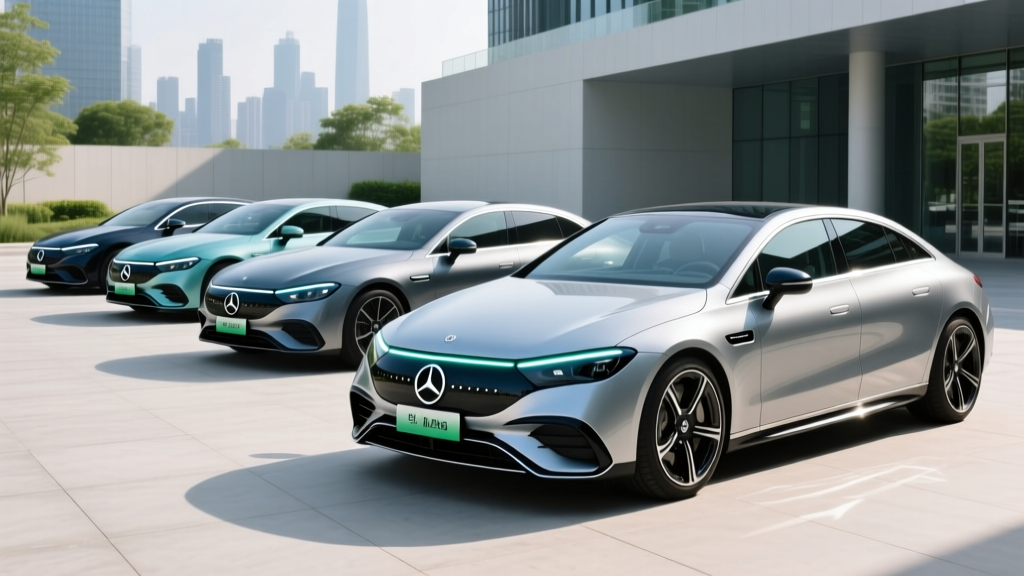
Mercedes has streamlined its EQ portfolio for the US market. Here is every battery-electric model currently available, with EPA-verified figures and manufacturer pricing. Note that Mercedes uses the EQ prefix for its all-electric vehicles and EQ suffix naming to distinguish body styles.
| Model | Body Style | Battery (kWh usable) | Chemistry | EPA Range | Max DC Charge (kW) | 10–80% DCFC | 0–60 mph | Base MSRP |
|---|---|---|---|---|---|---|---|---|
| EQB 250+ | Compact 3-row SUV | 66.5 | NMC | ~245 mi | 100 kW | ~32 min | 8.7s | $54,200 |
| EQB 350 4MATIC | Compact 3-row SUV | 66.5 | NMC | ~227 mi | 100 kW | ~32 min | 5.8s | $58,700 |
| EQE 350+ Sedan | Mid-size sedan | 90.6 | NMC | ~305 mi | 170 kW | ~31 min | 6.2s | $76,050 |
| EQE 350 4MATIC SUV | Mid-size SUV | 90.6 | NMC | ~279 mi | 170 kW | ~32 min | 6.4s | $78,050 |
| EQS 450+ Sedan | Full-size luxury sedan | 118.0 | NMC | ~390 mi | 200 kW | ~31 min | 5.9s | $88,350 |
| EQS 580 4MATIC SUV | Full-size luxury SUV | 108.4 | NMC | ~330 mi | 200 kW | ~31 min | 4.3s | $110,450 |
Sources: EPA / fueleconomy.gov, Mercedes-Benz USA. Range figures are EPA estimates; real-world results vary. Prices exclude destination charge.
Real-World Range vs. EPA Sticker
EPA range is tested under controlled conditions. In practice, expect the following adjustments:
- Highway driving (70+ mph): Subtract 10–15% from EPA. An EQS 450+ rated at 390 miles will deliver roughly 330–350 miles at sustained interstate speeds.
- Cold weather (below 32°F): Subtract 25–35%. The EQE Sedan may drop to 200–230 miles in January in Chicago or Minneapolis. All EQ models include a heat pump to mitigate cabin-heating losses.
- Combined mixed driving (55/45 city/highway, moderate temps): Expect 5–8% below EPA.
The EQS Sedan's massive 118 kWh battery provides a buffer that makes even reduced real-world range comfortable for most daily and road-trip use cases.
All Electric Mercedes vs. Gas Mercedes: Cost Comparison
The most common cross-shop is between an EQ model and its internal-combustion equivalent. Below, we compare the EQE 350+ Sedan against the E 350 Sedan (gas), which occupies a similar luxury mid-size segment.
| Factor | EQE 350+ Sedan (EV) | E 350 Sedan (Gas) |
|---|---|---|
| Base MSRP | $76,050 | $62,300 |
| Federal Tax Credit (§30D) | $0 (sourcing rules) | $0 |
| Effective Purchase Price | $76,050 | $62,300 |
| Fuel/Energy Cost per Mile | $0.045 (home L2, $0.16/kWh) | $0.175 (premium gas, $4.20/gal, 24 MPG) |
| Annual Fuel/Energy (12,000 mi) | $540 | $2,100 |
| Annual Maintenance | ~$400 | ~$900 |
| 5-Year Fuel + Maintenance | $4,700 | $15,000 |
| Estimated Insurance (annual) | $2,800 | $2,200 |
| 5-Year Total Operating Cost | $18,700 | $26,000 |
| Estimated 5-Year Depreciation | ~52% | ~45% |
Key takeaway: The EQE costs roughly $13,750 more upfront. Over five years, it saves about $7,300 in operating costs (fuel + maintenance). The net ownership premium is approximately $6,450 over five years, before accounting for the EQE's steeper depreciation. The math improves significantly if you lease and capture the §45W commercial clean vehicle credit, or if your local electricity rates are below $0.12/kWh.
Charging the All Electric Mercedes: Home and Public
Every EQ model uses the CCS1 connector for DC fast charging and J1772 for Level 2 AC. Mercedes has not adopted NACS (Tesla's connector) as of the 2026 model year, though adapters are expected for future model years to access Tesla Superchargers.
| Charging Level | Power (kW) | Connector | Miles of Range per Hour | Best For |
|---|---|---|---|---|
| Level 1 (120V outlet) | 1.4 kW | J1772 | 3–5 mi/hr | Overnight top-ups, emergencies |
| Level 2 (240V home) | 7.4–11.5 kW | J1772 | 22–38 mi/hr | Daily home charging |
| DC Fast Charge | 100–200 kW | CCS1 | 150–400 mi in 30 min | Road trips |
Home charging reality: A Level 2 home charger (like the Mercedes-Benz Wallbox or a ChargePoint Home Flex) delivers a full overnight charge for any EQ model. Installation typically costs $800–$2,500 for a straightforward setup (240V/50A circuit near the panel). If your electrical panel needs an upgrade to 200A, add $1,500–$3,500. Always get a quote from a licensed electrician — panel conditions vary enormously.
DC fast charging caveat: The EQ models' peak charge rates (100–200 kW) are moderate compared to rivals. The Hyundai Ioniq 5 peaks at 240 kW on its 800V architecture; the Porsche Taycan hits 270 kW. Mercedes uses a 400V electrical architecture, which limits peak charge speed. On a road trip, expect 10–80% in roughly 31 minutes — adequate, but not class-leading. Charge curves taper significantly above 80%, so plan to unplug at 80% and move on rather than waiting for a full charge.
Federal Tax Credits and Incentives for Mercedes EVs
This is where the all electric Mercedes lineup faces its biggest headwind. Under current IRS §30D rules, the federal EV tax credit of up to $7,500 requires that battery components and critical minerals meet specific sourcing thresholds — primarily excluding Chinese-sourced materials. As of 2026, no Mercedes EQ model qualifies for the purchase credit because their battery supply chains do not meet these requirements.
§30D Purchase Credit Requirements (2026)
- Vehicle MSRP cap: $80,000 for SUVs/vans/pickups; $55,000 for sedans/wagons
- Buyer income cap: $150,000 single / $300,000 married filing jointly
- Battery critical minerals: Must be sourced from US or FTA partners (phased thresholds)
- Battery components: Must be manufactured/assembled in North America (phased thresholds)
- Result for Mercedes EQ: Most models exceed MSRP caps AND fail sourcing rules
The lease loophole: If you lease rather than purchase, the §45W commercial clean vehicle credit ($7,500) may apply regardless of sourcing or MSRP caps. Mercedes Financial Services often passes this savings to the lessee as a capitalized-cost reduction. Ask your dealer explicitly whether the lease includes the $7,500 credit applied to the deal — it is not automatic, and dealer implementation varies.
Always consult a tax professional for your specific situation and check IRS guidance for the most current rules.
Real Ownership Costs: 5-Year Breakdown
Below is a projected 5-year / 60,000-mile ownership cost for the most popular all electric Mercedes — the EQE 350+ Sedan — compared to the closest gas rival and a competing luxury EV.
| Category | Mercedes EQE 350+ | BMW i5 eDrive40 | Mercedes E 350 (Gas) |
|---|---|---|---|
| Purchase Price (after credits) | $76,050 | $71,200 | $62,300 |
| 5-Year Fuel/Energy | $2,700 | $2,700 | $10,500 |
| 5-Year Maintenance | $2,000 | $2,100 | $4,500 |
| 5-Year Insurance | $14,000 | $13,200 | $11,000 |
| 5-Year Depreciation (est.) | $39,546 | $35,600 | $28,035 |
| Total 5-Year Cost | $134,296 | $124,800 | $116,335 |
What this reveals: The EQE's operating costs are genuinely low, but depreciation dominates luxury EV ownership. The BMW i5 undercuts the EQE on purchase price and holds value slightly better. The gas E 350 costs the least overall because it starts $14K lower and depreciates less in dollar terms. If minimizing total cost is the priority, the gas E 350 wins on paper — but it does not deliver the refinement, instant torque, or home-charging convenience of the EQE.
Common Misconceptions About All Electric Mercedes Vehicles
| Myth | Fact |
|---|---|
| "Mercedes EVs get the $7,500 tax credit." | As of 2026, no EQ model qualifies for the §30D purchase credit due to battery-sourcing rules. Lease credits under §45W may apply. |
| "The EQS has 400+ miles of real-world range." | EPA rates the EQS 450+ at ~390 miles. Real-world highway driving delivers 330–350 miles; cold weather drops this further. |
| "Mercedes EVs charge as fast as Teslas." | Mercedes EQ models use 400V architecture (100–200 kW peak). Tesla's 800V-class vehicles and Hyundai/Kia E-GMP models charge faster (240–350 kW peak). |
| "EVs need no maintenance." | EVs skip oil changes and transmission service, but still require tire rotations, brake fluid, cabin air filters, wiper fluid, and 12V battery replacement. Budget ~$400/year. |
| "The battery will need replacing in 5 years." | Mercedes warranties its HV battery for 10 years/155,000 miles against degradation below 70% capacity. NMC chemistry degrades roughly 1.5–2% per year under normal use. |
Decision Framework: Which All Electric Mercedes Is Right for You?
Choose Based on Your Situation
Choose the EQB if: You need a compact luxury SUV with an optional third row for occasional use, have a shorter commute (under 40 miles daily), and want the most affordable entry into an all electric Mercedes. Accept that 245 miles of range and 100 kW DC charging limit road-trip flexibility.
Choose the EQE Sedan if: You want a daily-driver luxury EV with 300+ miles of range, prioritize interior quality and ride comfort over sporty handling, and charge primarily at home. The 90.6 kWh battery and 170 kW charging are well-suited to mixed commuting and occasional longer drives.
Choose the EQE SUV if: You prefer SUV ride height and cargo space over sedan efficiency. You'll sacrifice ~26 miles of range versus the EQE Sedan for the same battery — a worthwhile trade if cargo and ground clearance matter.
Choose the EQS Sedan if: Maximum range is your top priority and budget allows $88K+. The 118 kWh battery and 390-mile EPA rating make this the longest-range luxury sedan on the market. Ideal for frequent road-trippers who want minimal charging stops.
Choose the EQS SUV if: You need three-row luxury with electric powertrain and 330 miles of range. This is the only all electric Mercedes with genuine three-row seating and the cargo volume to match. Expect $110K+ after options.
Look elsewhere if: You need the fastest possible DC charging (consider Hyundai Ioniq 5 N or Porsche Taycan), want full federal tax credit eligibility on purchase (consider Tesla Model Y, Ford F-150 Lightning, or GM Ultium-based models), or need sub-$50K pricing.
Frequently Asked Questions
Does Mercedes make a fully electric G-Wagon?
Yes — the Mercedes-Benz G 580 with EQ Technology launched for the 2025 model year with a ~240 kWh-equivalent battery system, four individual electric motors, and approximately 240 miles of EPA range. MSRP starts around $160,000. It is a niche, ultra-premium product and not included in the mainstream EQ lineup above.
Can I charge a Mercedes EQ at a Tesla Supercharger?
Not natively as of 2026. Mercedes EQ vehicles use CCS1 connectors, while Tesla Superchargers use NACS. Mercedes has announced plans to offer a NACS adapter, and Tesla has begun opening select Superchargers to non-Tesla EVs via the Magic Dock adapter — but coverage remains limited. Your primary DC fast-charging networks will be Electrify America, EVgo, and ChargePoint.
What is the battery warranty on a Mercedes EQ?
Mercedes provides a high-voltage battery warranty of 10 years or 155,000 miles (whichever comes first) covering capacity degradation below 70% of original capacity. This is competitive with industry standards (most luxury EV makers offer 8 years/100,000 miles). Normal degradation for NMC chemistry in these packs is approximately 1.5–2% per year, meaning you should retain 85–90% capacity at the 5-year mark under typical use.
How much does home charger installation cost for a Mercedes EQ?
For a Level 2 charger (240V, 40–48A) on a circuit near your electrical panel, expect $800–$2,500 total (equipment + electrician + permit). If your home has a 100A electrical panel and needs a 200A upgrade, add $1,500–$3,500. Get at least two quotes from licensed electricians. The Mercedes-Benz Wallbox Home costs approximately $600 for the unit itself.
Are Mercedes EQ models reliable?
Long-term reliability data for the EQ lineup is still maturing — the EQS launched for 2022 and the EQE for 2023. Early owner surveys and IIHS safety ratings have been generally favorable, with the EQS earning Top Safety Pick+ recognition. Common reported issues include MBUX software glitches and occasional charging-handshake failures at public DC stations. Mercedes' dealer network provides a service advantage over newer EV brands, but EV-specific repair expertise varies by location.
Should I lease or buy a Mercedes EQ?
Given that no EQ model currently qualifies for the §30D purchase credit, leasing is often the smarter financial move. The §45W commercial credit ($7,500) can be applied to leases regardless of sourcing rules, and Mercedes Financial frequently passes this through as a cap-cost reduction. Leasing also protects you from the steep luxury-EV depreciation curve. If you drive under 10,000–12,000 miles annually and prefer a new vehicle every 36 months, leasing is the clear winner.