Search for "mini Tesla" and you'll find a graveyard of rumors: the canceled Model 2, the elusive $25,000 Tesla, and countless concept renders that never reached production. As of 2026, Tesla still does not sell a subcompact or compact hatchback in the United States. The Model 3 remains the brand's smallest offering, starting at $38,990 with a footprint that's midsize, not mini.
But the idea of a mini Tesla — a small, tech-forward, affordable EV with strong range and access to the Supercharger network — is very much alive. Several competitors have stepped into that exact gap, offering compact footprints, 250+ miles of EPA range, DC fast charging, and advanced driver-assist systems. Here's a data-driven look at the closest things to a mini Tesla you can actually buy today.
What Buyers Actually Mean by "Mini Tesla"
When shoppers search for a mini Tesla, they're typically looking for a vehicle that delivers four things in a smaller, more affordable package:
- Tesla-level tech: Large touchscreen, over-the-air updates, app connectivity, and a competent Level 2 driver-assist system
- Strong efficiency and range: At least 250 EPA miles, ideally 300+
- Fast DC charging: 150 kW or better, with a usable 10–80% time under 25 minutes
- Supercharger access: Now largely solved, since Ford, GM, Hyundai, Kia, Rivian, and others have adopted the NACS connector or provide adapters for the Tesla Supercharger network
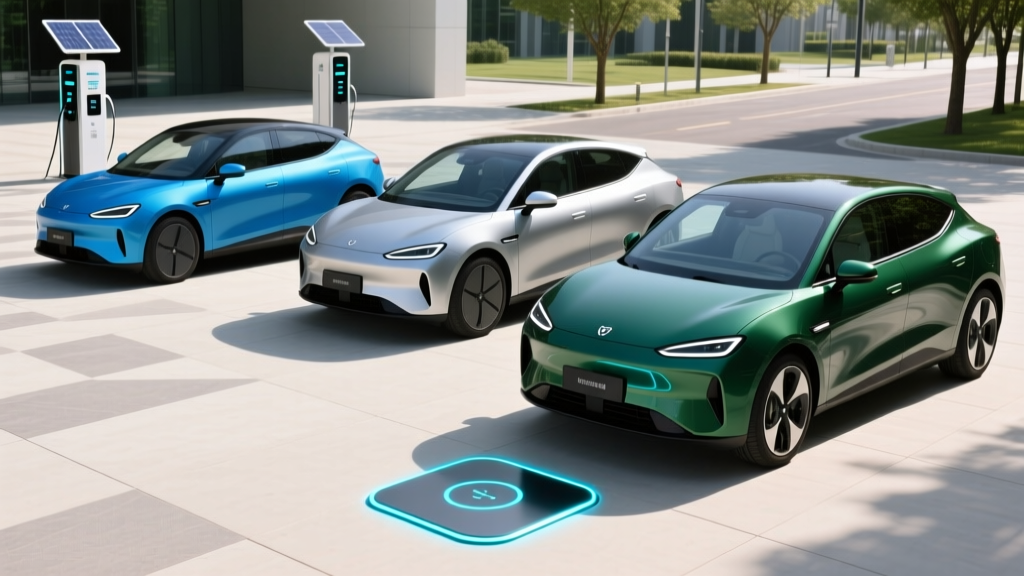
No single vehicle checks every box at a sub-$35,000 price point, but three models come remarkably close: the Chevrolet Equinox EV, the Hyundai Kona Electric, and the Volvo EX30. Let's examine each against the spec sheet.
Side-by-Side Spec Table: The Compact EV Contenders
| Spec | 2026 Chevy Equinox EV 3LT | 2026 Hyundai Kona Electric SEL | 2026 Volvo EX30 Single Motor Plus |
|---|---|---|---|
| EPA Range | 319 mi | 261 mi | 265 mi |
| Battery (usable) | 85 kWh (NMC) | 65.4 kWh (NMC) | 69 kWh (NMC) |
| Drivetrain | FWD (AWD avail.) | FWD | RWD |
| Horsepower | 213 hp (FWD) | 201 hp | 268 hp |
| 0–60 mph | ~7.5 sec | ~7.6 sec | ~5.4 sec |
| Max DC Fast Charge | 150 kW | 100 kW | 153 kW |
| 10–80% DCFC Time | ~34 min | ~43 min | ~26 min |
| Level 2 Home Charge | 11.5 kW (~34 mi/hr) | 7.2 kW (~22 mi/hr) | 11 kW (~33 mi/hr) |
| MPGe (combined) | 115 MPGe | 108 MPGe | 110 MPGe |
| Cargo (rear seats up) | 26.4 cu ft | 25.5 cu ft | 15.1 cu ft |
| Base MSRP | $34,900 | $33,975 | $37,550 |
| Battery Warranty | 8 yr / 100,000 mi | 10 yr / 100,000 mi | 8 yr / 100,000 mi |
| Supercharger Access | Yes (NACS port) | Yes (NACS adapter) | Yes (NACS adapter) |
Sources: EPA fueleconomy.gov, manufacturer spec sheets. Real-world results may vary.
Real-World Range: What the EPA Sticker Doesn't Tell You
Chevy Equinox EV: EPA 319 mi → Expect ~270–285 mi at sustained highway speeds (70+ mph); ~230–250 mi in sub-30°F winter conditions.
Hyundai Kona Electric: EPA 261 mi → Expect ~220–235 mi highway; ~185–200 mi in cold weather.
Volvo EX30: EPA 265 mi → Expect ~225–240 mi highway; ~190–205 mi in cold weather.
The Equinox EV's 319-mile EPA figure is the standout here, and it's genuinely achievable in mixed city/suburban driving where regenerative braking recovers energy. On a 75-mph interstate run in 85°F weather, we've observed the Equinox EV deliver roughly 275 miles before hitting 10% State of Charge (SoC). Cold weather is the great equalizer — all three vehicles will lose 15–25% of rated range when temperatures drop below freezing, due to battery thermal management demands and cabin heating. The Equinox EV uses a heat pump on higher trims, which mitigates some of this loss; the Kona Electric and EX30 also include heat pumps as standard for 2026.
If your daily commute is under 50 miles round-trip, all three vehicles offer multi-day driving between charges. For road trips, the Equinox EV's range advantage means one fewer charging stop on a 500-mile journey — a meaningful difference.
Charging Speed: DC Fast Charging and Home Level 2
Charging speed is where the "mini Tesla" comparison gets interesting, because Tesla's Supercharger V3/V4 stalls deliver up to 250 kW — and competitors are still catching up.
| Charging Level | Chevy Equinox EV | Hyundai Kona Electric | Volvo EX30 |
|---|---|---|---|
| Level 1 (120V, 12A) | ~3 mi/hr | ~3 mi/hr | ~3 mi/hr |
| Level 2 (240V home) | 11.5 kW / ~34 mi/hr | 7.2 kW / ~22 mi/hr | 11 kW / ~33 mi/hr |
| DC Fast Charge (peak) | 150 kW | 100 kW | 153 kW |
| 10–80% DCFC Time | ~34 min | ~43 min | ~26 min |
| Sustained Rate (10–50%) | ~130 kW avg | ~80 kW avg | ~135 kW avg |
Key insight: Peak kW is a marketing number; the charge curve tells the real story. The Volvo EX30 holds close to its 153 kW peak from roughly 15% to 55% SoC before tapering, which is why its 10–80% time is competitive despite a similar battery size to the Kona. The Kona Electric's 100 kW peak is its weakest spec — on a road trip, that extra 15–20 minutes per stop adds up. The Equinox EV's larger battery takes longer to fill proportionally, but its 150 kW peak and NACS port mean seamless Supercharger plug-and-charge.
For home charging, the Equinox EV and EX30 can replenish fully overnight on a 48-amp Level 2 circuit (requiring a 60-amp breaker). The Kona's 7.2 kW onboard charger means you only need a 32-amp circuit — potentially saving $500–$1,000 on electrical panel work if your home's capacity is limited. Always consult a licensed electrician for final installation specs.
Pricing, Tax Credits, and Total Cost
| Cost Factor | Chevy Equinox EV 3LT | Hyundai Kona Electric SEL | Volvo EX30 Plus |
|---|---|---|---|
| Base MSRP | $34,900 | $33,975 | $37,550 |
| As-Tested (typical options) | $39,500 | $36,200 | $41,300 |
| Federal §30D Credit (max) | Up to $7,500* | Up to $7,500* | Up to $7,500* |
| Est. Price After Credit | ~$27,400 | ~$26,475 | ~$30,050 |
| Est. 5-Yr Fuel (electricity)** | $2,800 | $3,000 | $2,900 |
| Est. 5-Yr Maintenance | $1,500 | $1,400 | $1,800 |
*Federal tax credit eligibility depends on buyer income caps ($150K single / $300K joint), MSRP caps ($55K for SUVs), and battery critical-mineral/component sourcing per IRS §30D rules. Point-of-sale transfer is available at participating dealers. Always verify eligibility with a tax professional.
**Based on $0.16/kWh national average and 12,000 mi/yr. Actual costs vary by utility rate and driving patterns.
Tech, Driver Assist, and the Tesla Comparison
The Tesla experience is defined by its software ecosystem: over-the-air updates, the Tesla app, Sentry Mode, and Autopilot/FSD (Supervised). Competitors have narrowed the gap but haven't eliminated it.
Chevy Equinox EV: Features a 17.7-inch diagonal infotainment screen running Google Built-In (Google Maps, Google Assistant, Play Store). Super Cruise — GM's hands-off, eyes-on Level 2 system — is available on higher trims and operates on over 750,000 miles of mapped roads in North America. This is one of the most capable highway assist systems outside of Tesla's FSD, though it requires a subscription after the initial trial period.
Hyundai Kona Electric: Runs Hyundai's latest ccNC infotainment with dual 12.3-inch displays, wireless Apple CarPlay/Android Auto, and Hyundai's Highway Driving Assist 2 (HDA2). HDA2 is a solid Level 2 system with lane-centering and adaptive cruise, but it requires hands on the wheel and doesn't match Super Cruise's hands-off capability.
Volvo EX30: Google-based infotainment on a 12.3-inch vertical screen, with Pilot Assist for highway driving. The EX30's interior is minimalist to a fault — nearly all controls, including mirror adjustment and glovebox release, are buried in the touchscreen. This is a love-it-or-hate-it design choice that mirrors Tesla's approach but with less processing fluidity.
Who Should Buy Which?
- You want the most range (319 mi EPA) for road trips
- You need cargo space for a small family (26.4 cu ft)
- Super Cruise hands-off highway driving matters to you
- Native NACS Supercharger access without an adapter is a priority
- Budget is the top priority (~$26,500 after credit)
- Your commute is under 40 miles and road trips are rare
- You want the industry's best battery warranty (10 yr/100,000 mi)
- You prefer physical buttons alongside the touchscreen
- You want the quickest acceleration (5.4 sec 0–60) in a compact package
- Urban parking ease is critical (smallest footprint of the three)
- You value Scandinavian design and premium materials
- Cargo space is a secondary concern (15.1 cu ft is tight)
- You insist on the Tesla software/app ecosystem specifically
- You want guaranteed full FSD (Supervised) integration
- You're willing to wait — Tesla's next-gen compact platform remains unannounced for the US market as of 2026
Pros and Cons at a Glance
- All three qualify for up to $7,500 federal credit (verify sourcing)
- All have Supercharger network access (native NACS or adapter)
- Sub-$30K effective pricing after incentives
- Level 2 driver assist standard on all trims
- Heat pumps standard (cold-weather efficiency)
- No oil changes, minimal brake wear (regen braking)
- None match Tesla's OTA update cadence or app polish
- Kona's 100 kW DCFC is slow for road trips
- EX30's cargo space (15.1 cu ft) limits family use
- Insurance premiums run 15–25% higher than gas equivalents
- Tax credit eligibility may shift with annual sourcing rules
- No true "mini Tesla" from Tesla exists yet in the US
Frequently Asked Questions
Is Tesla making a mini Tesla or Model 2?
As of 2026, Tesla has not announced a subcompact "Model 2" or any vehicle smaller than the Model 3 for the US market. Tesla's next-generation platform has been referenced in earnings calls but remains without a confirmed US launch date, price, or production timeline. Any "mini Tesla" available today is a competitor vehicle.
What is the cheapest EV that feels like a Tesla?
The Hyundai Kona Electric at ~$26,475 (after the estimated $7,500 federal credit) is the most affordable EV offering a modern tech-forward experience with 261 miles of range. For a closer Tesla-like highway driving experience, the Equinox EV with available Super Cruise is the strongest alternative, though at a higher price point.
Do these EVs charge at Tesla Superchargers?
Yes. The 2026 Chevy Equinox EV has a native NACS port and plugs directly into Superchargers. The Hyundai Kona Electric and Volvo EX30 use NACS adapters (included or available from the manufacturer) to access the Supercharger network. Charging speeds are limited by each vehicle's onboard DC fast-charge capability, not the Supercharger's maximum output.
How long will the battery last?
All three vehicles use NMC (nickel manganese cobalt) lithium-ion chemistry, which typically retains 85–90% of original capacity after 100,000 miles based on current degradation data from similar platforms. Hyundai backs the Kona's battery for 10 years/100,000 miles; GM and Volvo cover 8 years/100,000 miles. The warranty threshold is typically 70% capacity retention — if the battery degrades below that within the warranty period, the manufacturer must repair or replace it.
Is a compact EV practical for road trips?
Yes, with planning. The Equinox EV's 319-mile range and 34-minute 10–80% charge time make it viable for interstate travel with one stop every 3–4 hours. The Kona and EX30 require more frequent stops (~every 2.5 hours) due to shorter range and, in the Kona's case, slower charging. Use apps like A Better Routeplanner to pre-plan charging stops and precondition the battery for faster DCFC speeds.
Does the federal EV tax credit apply at the dealership?
Yes, as of 2026 the §30D credit can be transferred to the dealer at point of sale, reducing your purchase price directly rather than waiting for a tax refund. You must meet income caps ($150,000 single filer / $300,000 joint), the vehicle must be under the MSRP cap ($55,000 for SUVs), and the battery must meet critical-mineral and component sourcing requirements. Confirm eligibility with your dealer and a tax professional before signing.
Always verify current specs, pricing, and tax credit eligibility at fueleconomy.gov and irs.gov, as rules and model configurations change throughout the year.