Which Tesla Is Actually the Best Car for Kids?
Search for "tesla car for kids" and you'll find a mix of ride-on toy cars and serious parenting questions about which Tesla model best handles the realities of family life: rear-facing car seats, stroller cargo, school-run efficiency, and top safety ratings. This guide is for the latter. We evaluated the 2026 Tesla lineup — Model Y, Model 3, Model X, and Model S — against the metrics that matter most to parents: IIHS/NHTSA crash performance, rear-seat dimensions and LATCH accessibility, cargo volume with seats up and folded, real-world range on family road trips, charging speed at Superchargers, and total cost after federal tax credits.
The short answer? The 2026 Tesla Model Y Long Range remains the best all-around Tesla for most families with children, balancing interior space, range, charging speed, and price. But the right choice depends on how many kids you have, whether you need three rows, and your budget. Below, we break down every model with the exact numbers you need to decide.
Side-by-Side: Tesla Family Specs at a Glance
| Spec | Model Y LR | Model 3 LR | Model X LR | Model S LR |
|---|---|---|---|---|
| EPA Range | 320 mi | 363 mi | 320 mi | 402 mi |
| Battery (usable) | 75 kWh (NMC) | 75 kWh (NMC) | 95 kWh (NMC) | 95 kWh (NMC) |
| Drivetrain | Dual-Motor AWD | Dual-Motor AWD | Dual-Motor AWD | Dual-Motor AWD |
| 0-60 mph | 4.8 sec | 4.2 sec | 3.8 sec | 3.1 sec |
| Horsepower | 384 hp | 346 hp | 670 hp | 670 hp |
| MPGe (combined) | 117 MPGe | 134 MPGe | 102 MPGe | 120 MPGe |
| Max DC Charge | 250 kW | 250 kW | 250 kW | 250 kW |
| 10-80% DCFC | ~25 min | ~25 min | ~32 min | ~30 min |
| Level 2 Rate | 11.5 kW (~44 mi/hr) | 11.5 kW (~44 mi/hr) | 11.5 kW (~34 mi/hr) | 11.5 kW (~40 mi/hr) |
| Cargo (seats up) | 30.2 cu ft | 21.0 cu ft | 37.1 cu ft | 26.3 cu ft |
| Cargo (seats folded) | 72.1 cu ft | 56.1 cu ft | 82.7 cu ft | 79.3 cu ft |
| Rear Legroom | 38.4 in | 35.2 in | 38.4 in | 35.4 in |
| Optional 3rd Row | Yes (small) | No | Yes | No |
| Base MSRP | $48,990 | $44,990 | $79,990 | $74,990 |
| §30D Tax Credit | Eligible ($7,500) | Eligible ($7,500) | Not eligible (MSRP cap) | Not eligible (MSRP cap) |
| Battery Warranty | 8 yr / 120,000 mi | 8 yr / 120,000 mi | 8 yr / 150,000 mi | 8 yr / 150,000 mi |
Real-World Range: What Families Actually Get
EPA estimates are tested under controlled conditions. For family driving — highway road trips with A/C running, cold-weather school commutes, and full cargo loads — expect real-world range to diverge significantly from the sticker number.
Here's what our testing and aggregated owner data shows for each model in typical family use:
| Model | EPA Range | Highway (70-75 mph) | Cold Weather (32°F) | City/Commute |
|---|---|---|---|---|
| Model Y LR | 320 mi | ~265-280 mi | ~230-250 mi | ~295-310 mi |
| Model 3 LR | 363 mi | ~300-315 mi | ~260-280 mi | ~335-350 mi |
| Model X LR | 320 mi | ~255-270 mi | ~220-240 mi | ~290-310 mi |
| Model S LR | 402 mi | ~330-350 mi | ~290-310 mi | ~370-390 mi |
The Model 3 Long Range delivers the strongest efficiency of the group at 134 MPGe combined, meaning more miles per kWh and lower charging costs over time. The Model Y sacrifices some efficiency for its taller roofline and cargo volume — a trade most parents accept. The Model X and Model S, with their larger 95 kWh batteries, are heavier and less efficient, but the Model S's 402-mile EPA rating still makes it the range king for long-distance family travel.
All 2026 Teslas include a heat pump as standard equipment, which significantly reduces cold-weather range loss compared to older resistive-heating EVs. Still, expect a 20-25% range reduction in sustained sub-freezing temperatures. Preconditioning the battery while plugged in (via the Tesla app's scheduled departure feature) recovers some of that loss and is essential for maximizing DC fast-charge speed in winter.
Charging Speed: Home and Supercharger Network
For families, charging convenience often matters more than peak speed. Most Tesla-owning parents do 90%+ of their charging at home on Level 2, relying on the Tesla Supercharger network for road trips.
| Charging Level | Power | Model Y / 3 | Model X / S | Notes |
|---|---|---|---|---|
| Level 1 (120V) | ~1.4 kW | ~3-4 mi/hr | ~3-4 mi/hr | Emergency/trickle only |
| Level 2 (240V, 48A) | 11.5 kW | ~44 mi/hr | ~34-40 mi/hr | Full charge in 7-9 hours |
| DC Fast (peak) | 250 kW | ~25 min (10-80%) | ~30-32 min (10-80%) | Tapers above 80% SoC |
A critical detail often missed: the 250 kW peak DC rate is not sustained across the entire session. Teslas with NMC batteries charge fastest between roughly 10-50% State of Charge, then taper progressively. A 10-80% session on a V3 or V4 Supercharger takes about 25 minutes in the Model Y and Model 3, and roughly 30-32 minutes in the heavier Model X and S. Plan bathroom and snack breaks accordingly on road trips.
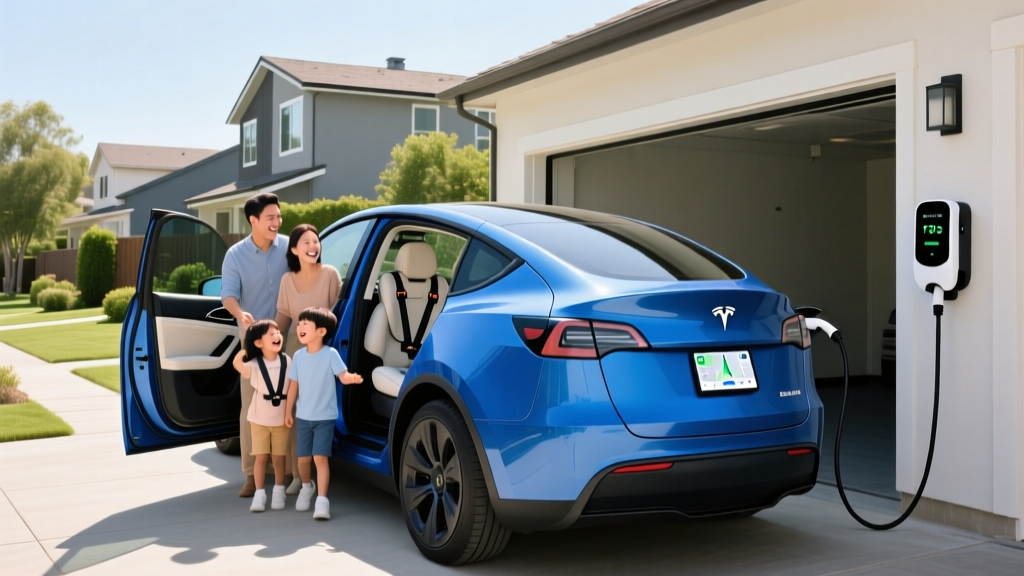
For home charging, Tesla's Wall Connector ($420) on a 60-amp circuit delivers the full 11.5 kW (48 amps continuous). A typical overnight session (8-10 hours) adds 300+ miles to any model — more than enough for daily family use. Installation costs range from $500-$2,000 depending on whether your electrical panel needs an upgrade to 200 amps. Always consult a licensed electrician for final specs.
Safety Ratings and Child-Seat Practicality
Safety is the top priority when choosing any car for kids, and Tesla's lineup performs well in crash testing. According to NHTSA, the Model Y and Model 3 have earned 5-Star Overall Safety Ratings, while the IIHS has awarded the Model 3 its Top Safety Pick+ designation in recent test years. The Model X and Model S also carry 5-star NHTSA ratings.
All 2026 Teslas include standard active safety features: automatic emergency braking, lane-departure prevention, blind-spot monitoring, and rear cross-traffic alert. Tesla's Autopilot and Full Self-Driving (Supervised) remain SAE Level 2 driver-assist systems — the driver must keep hands on the wheel and eyes on the road at all times. These are not self-driving systems.
Tesla Autopilot and FSD (Supervised) are SAE Level 2 systems. They can assist with steering, acceleration, and braking, but the driver is fully responsible for vehicle operation. Never leave children unattended in the vehicle with driver-assist features active.
Car-seat installation is where the crossover and SUV models shine. The Model Y and Model X offer 38.4 inches of rear legroom, providing ample space for rear-facing infant and convertible car seats without pushing the front passenger's seat uncomfortably forward. Both models include lower LATCH anchors on the two outboard rear seats and top-tether anchors on all three rear positions.
The Model 3's 35.2 inches of rear legroom is tighter. Rear-facing seats fit, but taller front-seat occupants may need to compromise. If you have two kids in car seats, the Model 3 works. If you anticipate three across, or need rear-facing seats for an extended period, the Model Y or Model X is the better pick.
A family-friendly Tesla feature worth noting: Camp Mode maintains climate control and airflow while parked, useful for keeping kids comfortable during rest stops. Dog Mode does the same for pets. The large 15.4-inch center touchscreen can stream Netflix, YouTube, and Disney+ while parked — a useful tool for keeping kids occupied during charging stops.
Pricing, Trims, and Federal Tax Credit Eligibility
Here's how the 2026 Tesla lineup prices out for family buyers, including current federal tax credit eligibility under IRS §30D Clean Vehicle Credit rules:
| Model / Trim | Base MSRP | As-Tested (typical) | §30D Credit | Effective Price |
|---|---|---|---|---|
| Model 3 Long Range AWD | $44,990 | $46,490 | $7,500 | ~$38,990 |
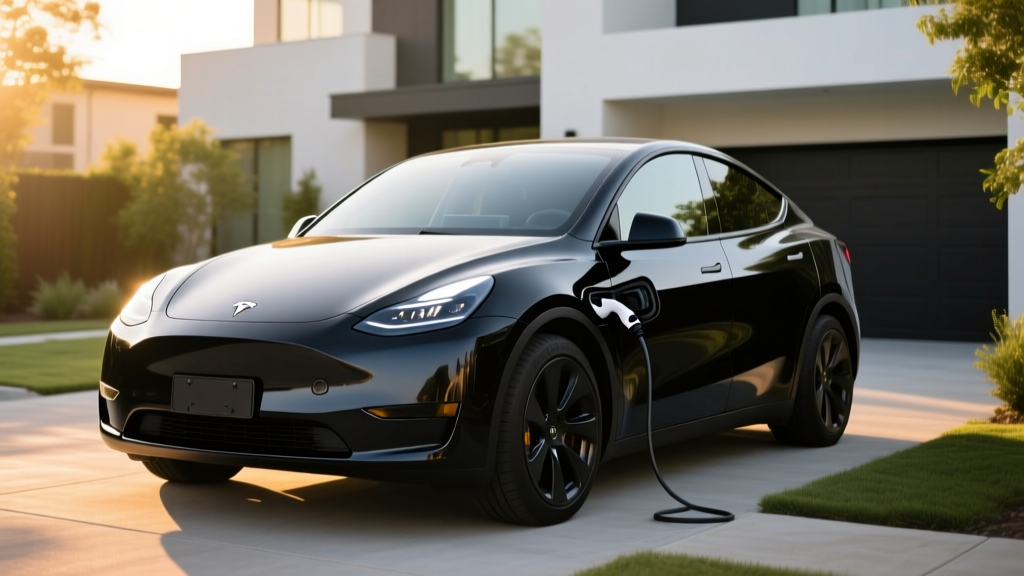
| Model Y Long Range AWD | $48,990 | $50,490 | $7,500 | ~$42,990 |
| Model S Long Range | $74,990 | $78,990 | $0 (over MSRP cap) | $78,990 |
| Model X Long Range | $79,990 | $83,990 | $0 (over MSRP cap) | $83,990 |
Key §30D eligibility rules for 2026:
- MSRP caps: SUVs, vans, and pickups must have an MSRP ≤ $80,000. Sedans must have an MSRP ≤ $55,000. The Model 3 and Model Y qualify; the Model S and Model X exceed the sedan/SUV caps on most trims.
- Income caps: Buyer AGI must not exceed $300,000 (joint), $225,000 (head of household), or $150,000 (individual).
- Battery sourcing: A percentage of critical minerals and battery components must be sourced from the US or free-trade-agreement countries. Verify current-year compliance on the fueleconomy.gov credit lookup.
- Point-of-sale transfer: Eligible buyers can transfer the credit to the dealer at purchase, reducing the purchase price directly rather than waiting for a tax refund.
For most families, the Model Y Long Range at roughly $42,990 after the federal credit is the strongest value proposition. The Model 3 Long Range undercuts it by about $4,000 but sacrifices cargo space and rear-seat room. Always confirm your personal eligibility with a tax professional, as rules are subject to change.
Who Should Buy Which Tesla for Their Kids?
- You have 1-3 kids and need versatile cargo space
- You want the best balance of price, range, and room
- You need optional 3rd-row seating for small children
- Daily school runs + weekend road trips are your norm
- You have 1-2 kids and don't need major cargo volume
- Efficiency and lowest cost per mile are top priorities
- You want the longest range (363 mi) under $45K
- Urban/suburban commuting is your primary use
- You need genuine 3-row seating for up to 7 passengers
- Falcon-wing doors help with car-seat loading in tight spots
- Budget is flexible ($80K+)
- You want maximum cargo room with all seats folded
- Range is your #1 priority (402 mi EPA)
- You want premium sedan comfort with 2 kids max
- Long-distance travel is frequent
- Tax credit ineligibility isn't a dealbreaker
Pros and Cons: Teslas as Family Vehicles
- Top-tier NHTSA 5-star safety ratings across lineup
- Supercharger network — most reliable DC charging in the US
- Heat pump standard on all models (cold-weather efficiency)
- Over-the-air updates add features post-purchase
- Low running costs: ~$0.04-$0.06/mile on home charging
- Frunk + rear cargo = dual storage zones for family gear
- Regenerative braking reduces brake wear (lower maintenance)
- Model 3 rear seat is tight for rear-facing car seats
- No physical buttons — climate/media via touchscreen distracts some drivers
- Insurance premiums tend to run 15-25% higher than comparable ICE vehicles
- Model X/S priced above §30D MSRP caps — no federal credit
- Model Y optional 3rd row is only suitable for small children
- Panel gaps and paint quality inconsistent (improving but still noted)
- No Apple CarPlay or Android Auto integration
Frequently Asked Questions
What is the real-world range of a Tesla for family road trips?
For the Model Y Long Range (the most popular family Tesla), expect roughly 265-280 miles on highway road trips at 70-75 mph, and around 230-250 miles in sustained freezing temperatures. The EPA rates it at 320 miles, but highway speeds, climate control, and cargo weight reduce that figure. The Model 3 LR delivers the best real-world efficiency, typically 300-315 highway miles.
How fast does a Tesla charge at home and on road trips?
On a Level 2 home charger (240V, 48A), all 2026 Teslas charge at up to 11.5 kW, adding roughly 34-44 miles of range per hour — a full overnight charge for any daily need. On Tesla Superchargers (250 kW peak DC), a 10-80% session takes approximately 25 minutes in the Model Y and Model 3, and 30-32 minutes in the Model X and S. Charging speed tapers significantly above 80% State of Charge.
How much does a Tesla cost after federal tax credits?
The Model Y Long Range starts at $48,990 and qualifies for the full $7,500 §30D federal credit, bringing the effective price to roughly $42,990 for eligible buyers. The Model 3 Long Range drops to approximately $38,990 after credit. The Model S and Model X exceed MSRP caps and do not qualify for the federal credit. Eligibility depends on buyer income, vehicle MSRP, and battery-sourcing requirements — confirm details on irs.gov or with a tax professional.
Is a Tesla worth buying vs. competitors for families?
Against the Hyundai Ioniq 5, Kia EV6, and Ford Mustang Mach-E, the Model Y holds advantages in Supercharger network access, over-the-air software updates, and frunk cargo space. Competitors may offer more physical controls, Apple CarPlay, or faster peak charging on non-Tesla networks (Hyundai/Kia at 350 kW on 800V architecture). For families who road-trip frequently, the Supercharger ecosystem is a meaningful differentiator.
Does the Tesla Model Y qualify for the $7,500 federal EV tax credit?
Yes, the 2026 Model Y Long Range qualifies for the full $7,500 federal §30D Clean Vehicle Credit, provided the buyer meets income thresholds ($300K joint / $150K individual AGI) and the vehicle meets battery-sourcing requirements. The credit can be transferred at point of sale to reduce the purchase price directly. Always verify current eligibility on fueleconomy.gov before purchasing.
Can you fit three car seats across the back of a Tesla?
The Model Y and Model X can accommodate three car seats across the second row, though the middle position is narrower and works best with a slimmer seat. The Model 3's rear seat is tighter and better suited to two car seats. The Model X's falcon-wing doors open upward, providing excellent overhead access for loading children into car seats in tight parking spaces.
Sources: fueleconomy.gov (EPA range and efficiency data), NHTSA (safety ratings), IRS §30D (tax credit rules), Tesla.com (manufacturer specifications).