If you have been browsing forums and EV-adjacent marketplaces lately, you may have noticed a surprising search trend popping up among electric-vehicle enthusiasts: mini electric jet boats for sale. It is an odd crossover at first glance. But for buyers who already understand lithium-ion battery packs, kW charging, and the difference between LFP and NMC chemistry, the leap from a Tesla or Hyundai Ioniq to an electric personal watercraft is not nearly as big as it seems.
This article is not a traditional car review. AutoEdgeView focuses on road-going EVs, PHEVs, and the charging ecosystem that supports them. But because a growing slice of our readership is asking about electric marine options — and because the underlying tech is closely related — we are taking a data-driven look at what the mini electric jet boat market actually offers in 2026, how it stacks up against the EVs in your driveway, and whether the crossover makes financial or practical sense.
What Exactly Is a Mini Electric Jet Boat?
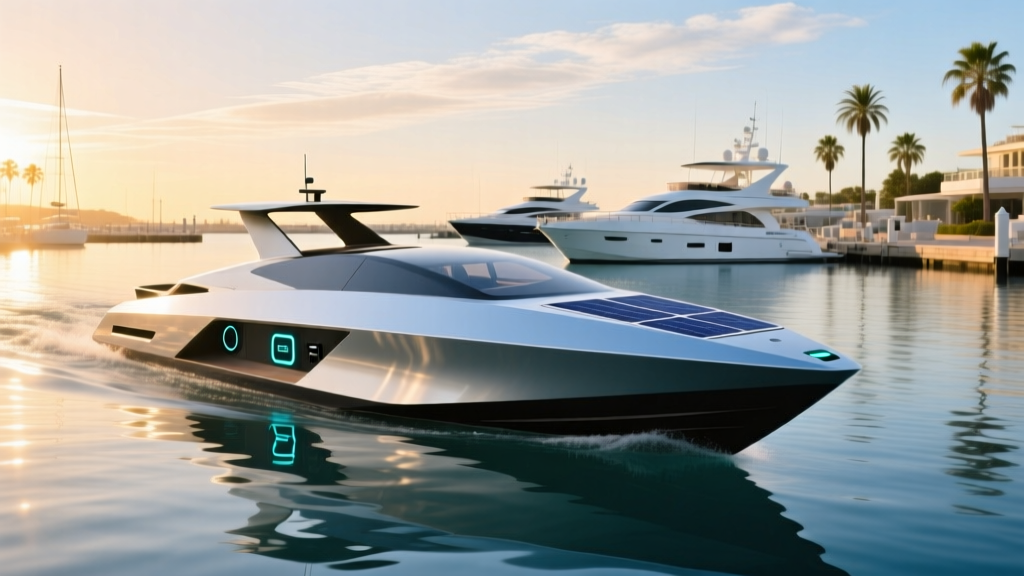
A mini electric jet boat is a compact, typically 8-to-12-foot watercraft propelled by an electric motor driving a waterjet pump rather than a propeller. Think of it as the marine equivalent of a personal EV: small battery pack (usually 5–20 kWh), brushless DC motor, and a regenerative or plug-in charging setup. Brands like RANDX, Narke, and a handful of Chinese OEM importers have been the most visible players, with prices ranging from roughly $8,000 to $35,000 depending on battery size and build quality.
For the EV-minded buyer, the relevant question is not whether these are "boats" in the traditional sense — they are closer to electric jet skis with a hull — but whether the electrification fundamentals hold up: energy density, charge times, real-world runtime, and total cost of ownership.
Electric Marine vs. Road EV: A Spec Comparison
To make the comparison concrete, here is how a representative mid-tier mini electric jet boat (based on aggregated 2026 listings) stacks up against two popular road-going EVs that our readers frequently cross-shop.
| Spec | Typical Mini E-Jet Boat | Tesla Model Y LR (2026) | Hyundai Ioniq 5 LR (2026) |
|---|---|---|---|
| Usable Battery | 10–15 kWh (NMC) | ~75 kWh (NMC) | 77.4 kWh (NMC) |
| Motor Output | 15–40 kW (20–54 HP) | 384 HP (dual-motor AWD) | 320 HP (dual-motor AWD) |
| EPA / Rated Range | N/A (marine — runtime-based) | 320 mi (EPA) | 303 mi (EPA) |
| Runtime / Drive Time | 1.5–3 hrs at cruise | ~4.5 hrs highway driving | ~4 hrs highway driving |
| Charge (Level 2 equiv.) | 3–5 hrs (120V/240V shore) | ~7 hrs (11.5 kW onboard) | ~6.5 hrs (10.9 kW onboard) |
| DC Fast Charge | Rare; some 5–10 kW DC | 250 kW peak (10-80% ~18 min) | 240 kW peak (10-80% ~18 min) |
| Base Price | $12,000–$28,000 | $48,990 | $46,650 |
| Federal Tax Credit | Not eligible (§30D is road vehicles) | Up to $7,500 (varies) | Up to $7,500 (varies) |
A few things jump out. First, the battery packs in mini electric jet boats are roughly 1/5th to 1/7th the size of a road-going EV. That is proportionate to the lower mass and far lower speeds (most top out around 25–35 mph on water). Second, DC fast charging is virtually nonexistent in this segment — a major differentiator from the road EV experience. Third, and critically, the federal §30D EV tax credit does not apply to boats. That credit is written for highway-capable motor vehicles, and electric watercraft fall outside the IRS definition. We will come back to the cost implications below.
Battery Chemistry and Degradation: What EV Owners Should Know
If you are coming from a Tesla, Ford, or Hyundai EV, you are likely familiar with the NMC (nickel manganese cobalt) vs. LFP (lithium iron phosphate) trade-off. Most mini electric jet boats on the market in 2026 use NMC pouch or cylindrical cells, primarily because weight is at a premium in a small hull and NMC offers higher energy density (roughly 200–260 Wh/kg at the cell level vs. LFP's 150–180 Wh/kg).
The practical consequence: these packs are lighter but more sensitive to sustained high-state-of-charge storage and heat. If you are used to charging an LFP-equipped Tesla Model 3 RWD to 100% daily, that habit does not transfer well to an NMC jet boat pack. Best practice is to store at 50–60% state of charge and avoid leaving the pack at 100% for more than a few hours before use.
Degradation data for marine packs is thinner than for road EVs (where we have millions of data points from Tesla, Hyundai, and others), but expect roughly 10–15% capacity loss over 500–800 full cycles — similar to early NMC road EVs. For a weekend-use boat, that translates to 10–15 years before noticeable runtime reduction.
Charging Infrastructure: The Biggest Gap
Here is where the EV-to-boat transition gets awkward. On the road, you have access to Level 2 home chargers (typically 7–11.5 kW), a growing NACS/CCS DC fast-charging network, and standardized connectors. On the water, none of that infrastructure exists at scale.
| Charge Method | Power (kW) | Full Charge Time (15 kWh pack) | Availability |
|---|---|---|---|
| 120V Household Outlet | ~1.0–1.4 kW | 11–15 hours | Universal |
| 240V Shore Power (marina) | ~3.0–5.0 kW | 3–5 hours | Limited; requires adapter |
| Portable Generator (gas) | ~2.0–3.5 kW | 4–7 hours | Off-grid option |
| DC Fast (rare, premium models) | 5–10 kW | 1.5–3 hours | Virtually nonexistent publicly |
For context, a 240V Level 2 home charger for your EV delivers 7–11.5 kW. Most marina shore power tops out at 30A/240V (about 7.2 kW), but adapters for marine-to-EV-style charging are not standardized. You will likely need a marine-specific charger supplied by the boat manufacturer, and you should budget for a dedicated 240V circuit at your dock or storage location — similar in cost to a home EV charger install ($500–$2,000 depending on run length and panel capacity).
Real-World Runtime: What the Marketing Does Not Tell You
Rated vs. Real-World Runtime
Most mini electric jet boat sellers advertise "2–3 hours of runtime." That figure assumes calm water, a single rider, moderate throttle (roughly 50% power), and a fully new battery. In practice:
- Aggressive riding (full throttle, towing): 45–75 minutes
- Moderate cruising with 2 passengers: 1.5–2 hours
- Cold water / cold battery (below 50°F): Expect 15–25% runtime reduction, similar to cold-weather range loss in road EVs
- After 3–5 years of pack aging: Subtract another 10–15%
This mirrors what we see in road EVs: the sticker number is an optimistic ceiling, not a daily-driver expectation. If you plan to use a mini electric jet boat for extended outings, treat the advertised runtime as a best-case and plan your routes around a 60–70% usable figure.
Pricing, Total Cost, and the Tax Credit Reality
Here is where the comparison to road EVs becomes stark. A well-equipped mini electric jet boat in 2026 runs $18,000–$30,000. That puts it in the same price range as a used Tesla Model 3 or a new base Hyundai Ioniq 5 — vehicles that qualify for the IRS §30D federal tax credit (up to $7,500, subject to MSRP caps, buyer income limits, and battery-sourcing requirements).
Electric boats do not qualify for §30D. The credit applies to "new clean vehicles" defined as highway-capable motor vehicles with four wheels and a gross vehicle weight rating under 14,000 lbs. Watercraft are excluded. Some states offer separate marine electrification incentives (California's CARB programs occasionally include off-road and marine equipment), but there is no federal equivalent to the road-EV credit.
On the ownership side, the economics are more favorable than gas-powered jet boats. Electricity at $0.15/kWh means a full 15 kWh charge costs about $2.25. A comparable gas jet boat burning 4–6 gallons per hour at $4/gallon costs $16–$24 for the same runtime. Maintenance is also dramatically lower — no impeller-bearing replacements, no exhaust manifold corrosion, no winterization oil changes. Expect annual maintenance on an electric jet boat to run $100–$300 (primarily impeller inspection, battery storage management, and hull cleaning) vs. $800–$1,500 for a gas equivalent.
Who Should Consider a Mini Electric Jet Boat?
Best For:
- Existing EV owners who want silent, zero-local-emission lake or calm-water recreation
- Lakefront homeowners with dock access and 240V shore power
- Users who prioritize low maintenance and low per-hour operating cost
- Tender/commuter use from a larger vessel or marina slip
Skip It If:
- You need open-water range or high-speed performance (electric PWCs and larger powerboats are more appropriate)
- You lack reliable 240V charging access at your launch point
- You were counting on the $7,500 federal tax credit to make the math work
- You want standardized charging infrastructure comparable to the EV road network
Frequently Asked Questions
Do mini electric jet boats qualify for the federal EV tax credit?
No. The IRS §30D credit applies only to highway-capable four-wheeled motor vehicles. Electric watercraft — including mini jet boats, electric PWCs, and electric pontoons — are not eligible. Check your state's incentive programs for possible marine electrification rebates.
How far can a mini electric jet boat go on a charge?
Range is measured in runtime rather than miles, but at a typical cruising speed of 15–20 mph, a 15 kWh pack gives roughly 25–40 miles of range under moderate conditions. Aggressive riding cuts that roughly in half.
Can I charge an electric jet boat from my home EV charger?
Not directly. Most mini electric jet boats use proprietary marine connectors, not NACS or CCS. You will need the manufacturer-supplied charger. However, the 240V circuit you installed for your home Level 2 EV charger can often be adapted (by a licensed electrician) to serve a marine charger at your dock.
What is the battery replacement cost?
Replacement packs for mini electric jet boats typically run $3,000–$7,000 depending on capacity and chemistry. This is proportionally similar to road EV battery replacement on a per-kWh basis ($200–$400/kWh installed in 2026), but the smaller total pack size keeps the absolute cost lower.
Is an electric jet boat worth it vs. a gas model?
If you boat on lakes with noise restrictions, value near-silent operation, and have charging access, the operating-cost advantage is significant — roughly $2/hr in electricity vs. $16–$24/hr in fuel. The higher upfront cost and lack of tax credits mean the payback period is 4–7 years for typical weekend use.
How does cold weather affect an electric jet boat?
Just like a road EV, lithium-ion marine packs lose performance in cold temperatures. Expect 15–25% runtime reduction in water temperatures below 50°F, and avoid charging the pack when the battery is below freezing — most BMS systems will block charging to prevent lithium plating, the same protection your EV uses.
The Bottom Line for EV Enthusiasts
Mini electric jet boats occupy an interesting niche for the EV-curious buyer who wants to extend electrification beyond the driveway. The underlying technology — NMC lithium-ion packs, brushless motors, regenerative systems — is directly transferable from your road EV experience. The gaps are in infrastructure (no DC fast-charging network on the water), incentives (no federal tax credit), and standardization (proprietary connectors and chargers).
If you are shopping for mini electric jet boats for sale in 2026, go in with the same spec-driven mindset you would bring to an EV purchase: verify the usable kWh (not just the "nominal" pack size), ask for real-world runtime data at various throttle levels, confirm your charging setup before delivery, and budget without assuming any federal incentive. The technology is real and the ownership experience is genuinely compelling for the right use case — just do not expect the marine world to have caught up with the road EV ecosystem yet.