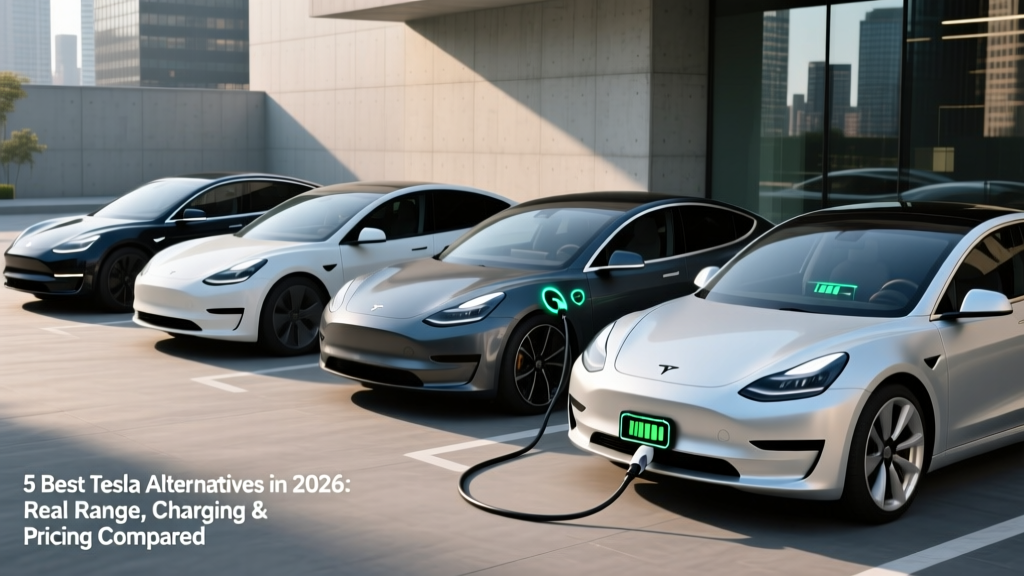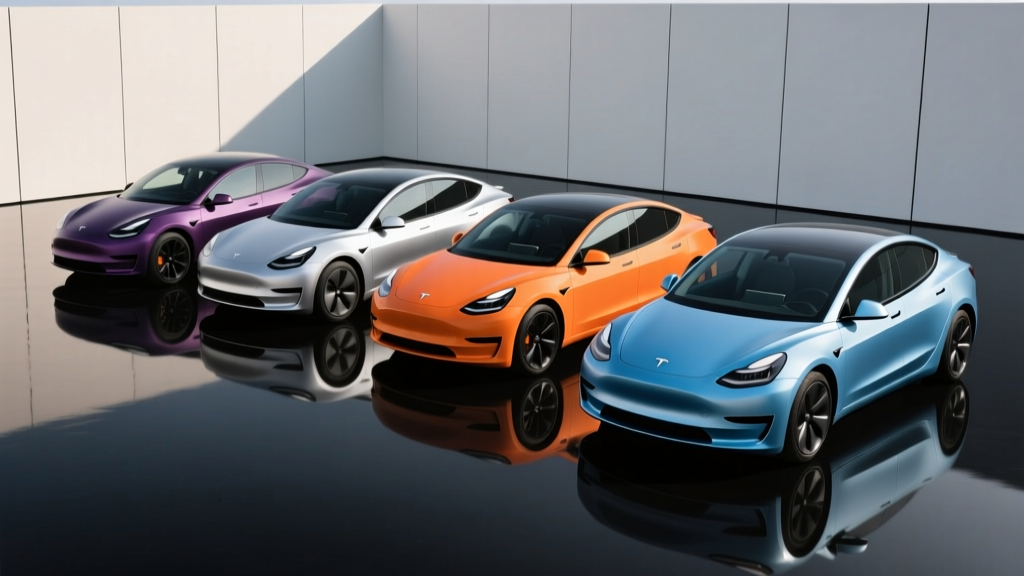
Tesla has steadily expanded its factory paint palette beyond the once-ubiquitous white and black, and for the 2026 model year the lineup includes several newer shades that have reshaped how the brand's vehicles look on the road. Whether you are configuring a refreshed Model 3 Highland, a Juniper-era Model Y, or the flagship Model S and X, understanding what each Tesla new colours option costs—and how it pairs with the underlying range, charging, and pricing of each model—is essential before you hit "Order."
This guide breaks down the current 2026 Tesla paint offerings by model, then pairs them with the exact EPA range figures, battery specs, DC fast-charging speeds, and federal tax credit details you need to make an informed purchase. We will also cover real-world range expectations, because a colour is only as satisfying as the car it wraps—and that car still needs to get you where you are going.
Tesla's 2026 Paint Palette: What's New and What It Costs
Tesla's colour strategy has evolved significantly since the early days when Pearl White Multi-Coat was the only free option. For 2026, the available colours vary by model, and several newer additions carry premium pricing. Here is the current breakdown:
| Colour | Model 3 | Model Y | Model S / X | Price Premium |
|---|---|---|---|---|
| Stealth Grey | ✓ | ✓ | ✓ | $0 (included) |
| Pearl White Multi-Coat | ✓ | ✓ | ✓ | $1,000 |
| Deep Blue Metallic | ✓ | ✓ | ✓ | $1,000 |
| Solid Black | ✓ | ✓ | ✓ | $1,500 |
| Red Multi-Coat | ✓ | ✓ | ✓ | $2,000 |
| Ultra Red | ✓ | ✓ | ✓ | $2,500 |
| Quicksilver | ✓ | ✓ | ✓ | $2,500 |
| Midnight Cherry Red | ✓ | ✓ | ✓ | $2,500 |
| Starlight (Limited) | — | — | ✓ | $3,000 |
Tesla periodically rotates limited-edition colours, and availability can shift by quarter. The introduction of Quicksilver (a warm champagne-silver with metallic flake) and Midnight Cherry Red (a deep, near-black red under overcast light) over the past two years has given buyers more personality options without resorting to aftermarket wraps. Stealth Grey replacing the previous Midnight Silver Metallic as the no-cost option was a notable shift—it reads slightly warmer and more neutral than its predecessor.
Model 3 (2026 Refresh): Range, Battery, and Performance
The refreshed Model 3 (internally known as Highland) carries into 2026 with updated styling, improved cabin materials, and the same efficient powertrain architecture that made it Tesla's volume sedan. The RWD Long Range and dual-motor AWD trims dominate sales, with the Performance variant sitting at the top.
| Spec | RWD | Long Range AWD | Performance AWD |
|---|---|---|---|
| EPA Range | 272 mi | 363 mi | 315 mi |
| Battery (usable) | ~57.5 kWh (LFP) | ~75 kWh (NMC) | ~75 kWh (NMC) |
| Drivetrain | RWD, single motor | Dual-motor AWD | Dual-motor AWD |
| Horsepower | 271 hp | 346 hp | 510 hp |
| 0–60 mph | 5.8 sec | 4.2 sec | 2.9 sec |
| MPGe (combined) | 142 MPGe | 132 MPGe | 119 MPGe |
| Base MSRP | $38,990 | $44,990 | $52,990 |
Charging Speeds
| Level | Max Rate | Speed |
|---|---|---|
| Level 1 (120V) | 1.4 kW | ~3–4 mi/hr |
| Level 2 (240V, 48A) | 11.5 kW | ~33–38 mi/hr |
| DC Fast Charge | 250 kW peak | 10–80% in ~25 min |
The Model 3's charge curve tapers meaningfully above 80% State of Charge (SoC). If you are road-tripping, plan to charge from 10% to 80% and skip the slow top-off unless you need the final miles. Preconditioning via the navigation system is essential in cold weather to hit peak kW rates at Superchargers.
Model Y (2026 Juniper): The Best-Selling EV Gets Fresh Paint
The Juniper-refreshed Model Y enters 2026 as the best-selling vehicle globally, and Tesla's expanded colour options give it more visual differentiation than the pre-refresh generation. The cabin is quieter, the ride is more compliant, and the front light bar adds a modern signature. Buyers choosing Tesla new colours on the Model Y tend to gravitate toward Quicksilver and Ultra Red for their depth and metallic complexity.
| Spec | Long Range AWD | Performance AWD |
|---|---|---|
| EPA Range | 337 mi | 298 mi |
| Battery (usable) | ~75 kWh (NMC) | ~75 kWh (NMC) |
| Drivetrain | Dual-motor AWD | Dual-motor AWD |
| Horsepower | 384 hp | 510 hp |
| 0–60 mph | 4.8 sec | 3.5 sec |
| MPGe (combined) | 122 MPGe | 111 MPGe |
| Base MSRP | $47,990 | $54,990 |
Cargo & Passenger Space
The Model Y offers up to 76 cu ft of cargo volume with the rear seats folded, plus a front trunk (frunk) of approximately 4.1 cu ft. Rear legroom measures 40.5 inches—enough for adults on longer trips. The Juniper refresh improved seat cushioning and added ventilated front seats on higher trims.
Model S & Model X: Flagship Specs and Exclusive Colours
The Model S sedan and Model X SUV carry into 2026 with minimal mechanical changes but retain access to Tesla's most exclusive paint options, including Starlight—a deep metallic with colour-shift properties. Both vehicles sit on a 100 kWh (usable ~95 kWh) NMC battery and offer tri-motor Plaid variants.
| Spec | Model S LR | Model S Plaid | Model X LR | Model X Plaid |
|---|---|---|---|---|
| EPA Range | 402 mi | 359 mi | 342 mi | 311 mi |
| Battery (usable) | ~95 kWh | ~95 kWh | ~95 kWh | ~95 kWh |
| HP | 670 hp | 1,020 hp | 670 hp | 1,020 hp |
| 0–60 mph | 3.1 sec | 1.99 sec | 3.8 sec | 2.5 sec |
| DC Fast Charge | 250 kW | 250 kW | 250 kW | 250 kW |
| Base MSRP | $74,990 | $89,990 | $79,990 | $94,990 |
At these price points, neither the Model S nor Model X qualifies for the §30D federal tax credit due to the MSRP cap ($55,000 for sedans, $80,000 for SUVs/vans/pickups). The Model X Long Range just barely falls under the SUV cap, but income and sourcing rules further limit eligibility.
Federal Tax Credit Eligibility (§30D): Which Teslas Qualify?
The IRS §30D Clean Vehicle Credit remains complex, and eligibility depends on MSRP caps, buyer income limits, and battery critical-mineral sourcing requirements that shift annually. Here is where each 2026 Tesla stands:
- Model 3 RWD ($38,990): Under the $55,000 sedan MSRP cap. Eligibility for the full $7,500 depends on battery sourcing (critical minerals and component rules). Buyer income must not exceed $150,000 single / $300,000 joint.
- Model 3 Long Range / Performance ($44,990–$52,990): Under MSRP cap. Same income and sourcing rules apply. Typically qualifies for at least $3,750; full $7,500 varies by quarter based on sourcing compliance.
- Model Y Long Range / Performance ($47,990–$54,990): Under the $80,000 SUV cap. Historically qualifies for the full $7,500 when sourcing requirements are met. Point-of-sale transfer available at delivery.
- Model S / X: Model S exceeds the $55,000 sedan cap—ineligible. Model X Long Range ($79,990) is under the $80,000 SUV cap but buyer income and sourcing rules still apply. Model X Plaid exceeds the cap.
The point-of-sale transfer option means eligible buyers can apply the credit as an immediate price reduction at delivery rather than waiting to claim it on their tax return. Always verify current eligibility on the IRS website or with a tax professional before ordering, as critical-mineral sourcing rules have tightened progressively through 2026.
| Model / Trim | Base MSRP | Est. §30D Credit | Effective Price |
|---|---|---|---|
| Model 3 RWD | $38,990 | $3,750–$7,500 | $31,490–$35,240 |
| Model 3 Long Range | $44,990 | $3,750–$7,500 | $37,490–$41,240 |
| Model Y Long Range | $47,990 | $7,500 | $40,490 |
| Model Y Performance | $54,990 | $7,500 | $47,490 |
| Model X Long Range | $79,990 | $0–$7,500 | $72,490–$79,990 |
Battery Chemistry, Warranty, and Longevity
Tesla uses two battery chemistries across its 2026 lineup, and the distinction matters for long-term ownership:
| Factor | LFP (Lithium Iron Phosphate) | NMC (Nickel Manganese Cobalt) |
|---|---|---|
| Used in | Model 3 RWD | Model 3 LR/Perf, Model Y, S, X |
| Energy Density | Lower (heavier pack for same kWh) | Higher (more range per kg) |
| Cycle Life | 3,000+ cycles to 80% SoH | 1,500–2,000 cycles to 80% SoH |
| Charge to 100%? | Yes—Tesla recommends periodic 100% | No—daily limit to 80–90% |
| Cold Performance | More range loss in freezing temps | Better cold-weather performance |
| Cost | Lower (no cobalt/nickel) | Higher |
All 2026 Tesla vehicles carry an 8-year / 100,000-mile battery and drive unit warranty (120,000 miles for Model S/X Long Range). Tesla guarantees the battery will retain at least 70% of its original capacity during the warranty period. Real-world degradation data from EPA sources and fleet reports suggest most Tesla batteries retain 90%+ capacity after 100,000 miles under normal use.
Driver Assistance: Autopilot, FSD, and SAE Level 2 Reality
For 2026, Tesla includes Basic Autopilot (lane centering + adaptive cruise) on all models. Enhanced Autopilot ($6,000) adds auto lane change, auto park, and Summon. FSD (Supervised) remains available as a $8,000 one-time purchase or $99/month subscription. While FSD continues to improve in urban environments, it still requires active supervision and is not a substitute for an attentive driver.
Who Should Buy Which Tesla in 2026?
Choose the Model 3 RWD if: You commute under 40 miles round-trip, can charge at home nightly, want the lowest entry price, and prefer LFP's tolerance for daily 100% charging.
Choose the Model 3 Long Range if: You take regular road trips of 200+ miles, live in a cold climate where range loss matters, and want dual-motor AWD security.
Choose the Model Y Long Range if: You need SUV cargo space for a family, want the best combination of range and utility, and plan to use the $7,500 credit at point of sale.
Choose the Model S/X if: You want flagship performance, 400+ mile range (Model S), or falcon-wing doors (Model X), and the higher price and lack of tax credit are not dealbreakers.
Pros and Cons Across the 2026 Tesla Lineup
Pros
- Class-leading Supercharger network with 50,000+ stalls globally
- Over-the-air updates continuously add features
- Low cost of ownership when charging at home ($0.03–0.06/mi)
- Strong resale value relative to other EV brands
- Expanded colour palette adds personalization without wraps
- Excellent efficiency (kWh/100mi) across the lineup
Cons
- Paint quality inconsistency reported by some owners
- No Apple CarPlay or Android Auto support
- FSD still requires full driver attention (Level 2 only)
- Insurance premiums 15–30% higher than comparable ICE vehicles
- Premium colours add $2,000–$3,000 to an already configured price
- Service center wait times can be lengthy in some metro areas
Frequently Asked Questions
What is the real-world range of a 2026 Tesla?
It depends on the model and conditions. The Model 3 Long Range (EPA 363 mi) typically delivers 300–320 miles highway and 240–270 in freezing weather. The Model Y Long Range (EPA 337 mi) returns about 280–300 highway. The Model S Long Range (EPA 402 mi) achieves 340–360 in real-world mixed driving. Always plan road trips around 80% of the EPA figure for a safety margin.
How fast does a 2026 Tesla charge at home and on the road?
At home on a Level 2 (240V, 48A) charger, expect 11.5 kW or roughly 33–44 miles of range per hour depending on the model. An overnight charge easily replenishes daily driving. On DC fast chargers, all 2026 Teslas peak at 250 kW, achieving a 10–80% charge in approximately 25–30 minutes. The charge curve tapers significantly above 80%, so road-trippers should plan shorter, more frequent stops rather than charging to full.
How much does a 2026 Tesla cost after tax credits?
The Model 3 RWD starts at $38,990 and can drop to approximately $31,490–$35,240 with the §30D credit (depending on sourcing eligibility). The Model Y Long Range at $47,990 drops to roughly $40,490 with the full $7,500 credit. Model S and most Model X trims exceed MSRP caps and do not qualify.
Which Tesla new colours are worth the premium?
Quicksilver ($2,500) and Ultra Red ($2,500) offer the most visual depth and metallic complexity, holding up well in various lighting. Midnight Cherry Red ($2,500) is a sophisticated near-black that photographs beautifully. Stealth Grey is the best no-cost option and reads more modern than the old Midnight Silver. If budget matters, Stealth Grey with aftermarket ceramic coating provides excellent results at zero colour cost.
Does every 2026 Tesla qualify for the federal EV tax credit?
No. Eligibility under IRS §30D depends on three factors: the vehicle's MSRP must be under $55,000 (sedans) or $80,000 (SUVs); the buyer's adjusted gross income must not exceed $150,000 (single) or $300,000 (joint); and the battery must meet escalating critical-mineral and component sourcing thresholds. The Model 3 and Model Y generally qualify; the Model S does not; the Model X is borderline. Always check the IRS Clean Vehicle Credit page for the latest rules before ordering.
Is a 2026 Tesla worth buying over competitors?
For most buyers, yes—primarily because of the Supercharger network, efficiency, and software ecosystem. The Model 3 competes with the Hyundai Ioniq 6 (361 mi EPA, lower price) and BMW i4 (less range, premium build). The Model Y competes with the Hyundai Ioniq 5 (318 mi, faster charging), Ford Mustang Mach-E (320 mi), and Kia EV9 (three-row option). Tesla's advantages remain charging infrastructure, OTA updates, and efficiency. Competitors may offer better interior quality, CarPlay, or faster peak charging. Your priority ranking among these factors should drive the decision.
Sources: EPA Fuel Economy, IRS §30D Clean Vehicle Credit, Tesla.com official specifications. Pricing and tax credit rules reflect 2026 model year data and are subject to change. Verify all figures before ordering.