Quick Verdict: Is the 2026 Mini Cooper SE Worth the Investment?
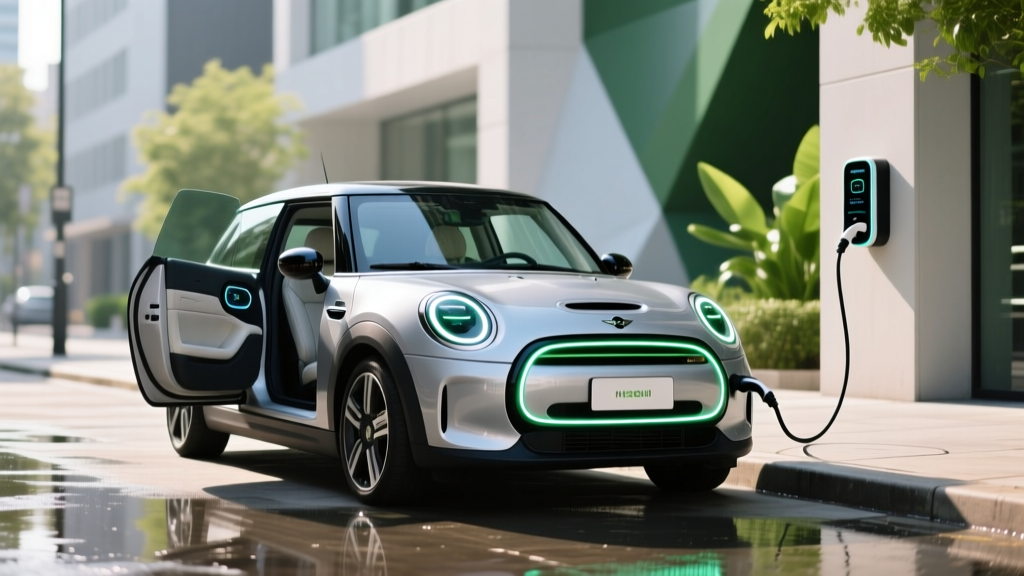
The 2026 Mini Cooper SE (Electric) starts at an MSRP of approximately $32,000 before incentives, offering an EPA-estimated range of 163 miles with its 40.7 kWh (usable) battery pack. For urban commuters who can charge at home, Mini electric finance incentives — including the federal §30D tax credit and state-level rebates — can reduce the effective purchase price by $7,500 or more, making this one of the more affordable premium EVs on the market. However, real-world ownership economics depend heavily on your state, utility, driving habits, and whether you qualify for the full federal credit. Below, we break down every cost factor over five years.
2026 Mini Cooper SE Key Specifications
| Spec | Value |
|---|---|
| EPA Range | 163 miles (real-world highway: ~130-140 mi; cold weather: ~110 mi) |
| Battery | 40.7 kWh usable, NMC chemistry |
| Motor Output | 215 HP / 243 lb-ft torque |
| 0-60 mph | 6.7 seconds |
| DC Fast Charge (peak) | 95 kW, 10-80% in ~28 minutes |
| Level 2 Charge Rate | 11 kW (~6.5 hours 0-100%) |
| MPGe (combined) | 114 MPGe |
| Base MSRP (Classic trim) | $32,000 |
| Battery Warranty | 8 years / 100,000 miles |
Federal Tax Credit: How Mini Electric Finance Incentives Work Under §30D
The cornerstone of Mini electric finance incentives is the IRS §30D Clean Vehicle Credit, which offers up to $7,500 for qualifying new EVs. But eligibility is not automatic — the rules are strict and have tightened since the Inflation Reduction Act took effect. The Mini Cooper SE has historically qualified for a partial or full credit depending on battery-sourcing compliance, but buyers must verify current-year eligibility at the point of sale.
§30D Federal Tax Credit Eligibility Checklist (2026 Rules)
- MSRP Cap: Vehicle must have an MSRP at or below $55,000 for sedans/hatchbacks (Mini Cooper SE qualifies at ~$32,000 base)
- Buyer Income Cap: Modified AGI must not exceed $150,000 (single), $225,000 (head of household), or $300,000 (married filing jointly)
- Battery Components: A percentage of battery components must be manufactured or assembled in North America (threshold increases annually)
- Critical Minerals: A percentage of critical minerals must be sourced from the U.S. or free-trade-agreement countries (threshold increases annually)
- Point-of-Sale Transfer: You can transfer the credit to the dealer at purchase for an immediate price reduction rather than waiting for a tax refund
- One-Time Use: The credit can only be claimed once per taxpayer per year, and the vehicle must be for personal use in the U.S.
Source: IRS.gov — Credits for New Clean Vehicles. Rules are subject to change; confirm eligibility at purchase.
If the Mini Cooper SE meets both the battery-component and critical-minerals thresholds for 2026, you receive the full $7,500. If it meets only one threshold, you receive $3,750. If it meets neither, the federal credit is $0. Check the fueleconomy.gov tax credit tracker for the latest qualification status before committing.
State, Local, and Utility Incentives: Where You Live Matters
Federal credits are only part of the Mini electric finance incentives puzzle. Many states, municipalities, and electric utilities offer additional rebates that can stack with the federal credit:
Examples of Regional Incentives (Verify Current Availability)
- California (CVRP): Up to $7,000 for income-qualified buyers (program funding varies; check energy.ca.gov)
- Colorado: State tax credit of up to $5,000 for qualifying EVs
- New York (Drive Clean Rebate): Up to $2,000 point-of-sale rebate
- Utility Rebates: Many utilities (e.g., PG&E, ConEdison, Xcel Energy) offer $500-$1,500 rebates for EV purchase or home charger installation
- HOV Lane Access: States like California, Colorado, and Virginia grant solo HOV lane access to EVs — a non-cash benefit worth significant commute time
State and utility incentives vary by jurisdiction, change frequently, and may have income or residency requirements. Always verify with your state energy office and local utility before purchasing.
In the best-case scenario — full federal credit, a generous state rebate, and a utility incentive — a buyer could reduce the Mini Cooper SE's effective cost by $12,000-$15,000, bringing a $32,000 vehicle down to roughly $17,000-$20,000. In states with no additional incentives, you're looking at $24,500-$32,000 depending on federal credit qualification.
5-Year Total Cost of Ownership Breakdown
Let's model a realistic 5-year ownership scenario for the 2026 Mini Cooper SE, assuming 12,000 miles/year (60,000 total), home charging at the national average electricity rate, and standard insurance. We'll compare it against a gas-powered equivalent — the 2026 Mini Cooper S (gasoline) at ~$31,000 MSRP and 30 MPG combined.
5-Year TCO: Mini Cooper SE (Electric) vs. Mini Cooper S (Gas)
| Cost Category | Mini Cooper SE (EV) | Mini Cooper S (Gas) |
|---|---|---|
| Purchase Price (MSRP) | $32,000 | $31,000 |
| Federal Tax Credit Applied | -$7,500 (if eligible) | $0 |
| Effective Purchase Price | $24,500 | $31,000 |
| Fuel/Energy (60,000 mi) | $3,240 (at $0.15/kWh, 3.6 mi/kWh) | $7,000 (at $3.50/gal, 30 MPG) |
| Maintenance (5 years) | $1,800 | $4,200 |
| Insurance (5 years) | $9,500 | $7,500 |
| Depreciation (est. 5yr) | -$10,500 (43% retained) | -$12,400 (60% retained) |
| Total 5-Year Cost | $28,540 | $37,300 |
Assumes full federal credit eligibility. Actual costs vary by state, utility rate, driving profile, and insurance market. Depreciation figures are estimates based on current EV resale trends.
The Mini Cooper SE comes out approximately $8,760 cheaper over five years in this scenario, driven primarily by the federal tax credit, lower fuel costs, and reduced maintenance. However, higher insurance premiums and steeper EV depreciation partially offset those savings. If you don't qualify for the full federal credit, the gap narrows to roughly $1,260-$5,000 depending on the credit amount.
Charging Cost vs. Gas: The Per-Mile Math
The fuel-cost advantage of the Mini Cooper SE is one of the strongest arguments in its favor — but the actual savings depend on how and where you charge.
Cost Per Mile: Mini Cooper SE vs. Gas Equivalent
| Scenario | Cost/Mile (EV) | Cost/Mile (Gas, 30 MPG) |
|---|---|---|
| Home charging ($0.15/kWh) | $0.042 | $0.117 |
| Home charging ($0.25/kWh — CA, Northeast) | $0.069 | $0.117 |
| Public DC fast charging ($0.45/kWh avg) | $0.125 | $0.117 |
| Time-of-use off-peak ($0.08/kWh) | $0.022 | $0.117 |
At the national average residential rate of ~$0.15/kWh, the Mini Cooper SE costs roughly $0.04 per mile to "fuel" — about one-third the cost of gasoline at $3.50/gallon. Over 12,000 miles/year, that's $504 in electricity vs. $1,400 in gas, saving ~$896 annually.
However, this advantage disappears if you rely entirely on public DC fast charging at $0.40-$0.50/kWh. At those rates, the per-mile cost can actually exceed gasoline. Home charging access is the single biggest determinant of EV fuel savings. If you can't charge at home or at work, the economic case weakens considerably.
The Mini Cooper SE consumes approximately 28 kWh per 100 miles (rated). Real-world highway driving at 70+ mph pushes this closer to 32-35 kWh/100mi, and cold weather (below 32°F) can increase consumption by 20-30% due to battery heating and cabin climate demands. Plan accordingly.
Maintenance Savings: Where EVs Quietly Win
Electric vehicles eliminate many of the recurring maintenance costs that gas-car owners accept as routine. The Mini Cooper SE has no engine oil, no spark plugs, no transmission fluid, no exhaust system, and no timing belt. Its single-speed reduction gear requires minimal service.
Typical Maintenance Events Eliminated in the Mini Cooper SE
| Maintenance Item | Gas Car (5yr / 60k mi) | Mini Cooper SE |
|---|---|---|
| Oil Changes (synthetic, every 7,500 mi) | ~8 changes × $80 = $640 | $0 |
| Spark Plugs | $200-$400 | $0 |
| Transmission Fluid | $150-$300 | $0 |
| Brake Pads | $300-$600 (1-2 replacements) | $0-$200 (regen extends pad life 2-3×) |
| Engine Air Filter | $50-$100 | $0 (cabin filter only) |
| Exhaust / Emissions | $0-$500 | $0 |
| Estimated 5-Year Total | $1,340-$2,540+ | $0-$200 |
Regenerative braking is the unsung maintenance hero. Because the electric motor slows the car and recovers energy, the friction brakes are used far less frequently. Many EV owners report original brake pads lasting 80,000-100,000+ miles. Over five years, maintenance savings for the Cooper SE typically total $2,000-$2,500 compared to a gas equivalent.
What you will still pay for: tire rotations (EVs are heavier and can wear tires faster — budget $200-$300 over 5 years), cabin air filter replacement (~$50/yr), windshield washer fluid, and wiper blades. These are minor compared to ICE maintenance schedules.
Insurance Cost Reality: The Hidden EV Premium
EV insurance costs are typically 15-25% higher than equivalent gas vehicles, and the Mini Cooper SE is no exception. In our modeling, we estimated $1,900/year for the Cooper SE vs. $1,500/year for the gas Cooper S — a $2,000 difference over five years.
Why are EVs more expensive to insure?
- Higher repair costs: EV battery packs and power electronics are expensive to replace after collision damage
- Specialized labor: Fewer shops are certified for high-voltage EV repairs, increasing labor rates
- Higher purchase price: Insurers factor in the vehicle's replacement cost, and EVs often carry a premium over gas equivalents
- Total-loss thresholds: Battery damage can push a minor accident past the total-loss threshold
Shop quotes from multiple insurers — some (like Geico, Progressive, and Tesla Insurance in eligible states) have begun offering more competitive EV-specific rates. Bundling home and auto, maintaining a clean record, and choosing a higher deductible can narrow the gap. Factor in the insurance premium when calculating your true savings; it erodes but rarely eliminates the fuel and maintenance advantage.
Depreciation and Resale Value: The EV Market Is Still Maturing
Depreciation remains the largest ownership cost for any vehicle, and EVs have historically depreciated faster than their gas counterparts. Several factors drive this:
- Price wars: Aggressive price cuts by Tesla and others have compressed used EV values across the market
- Battery anxiety: Used-car buyers worry about battery degradation and replacement costs, even though modern packs rarely fail within warranty
- Rapid tech improvement: Newer EVs with longer range and faster charging make older models feel outdated quickly
- Federal credit effect: The $7,500 credit on new EVs effectively lowers the "ceiling" for used EV pricing
For the Mini Cooper SE specifically, expect roughly 55-65% depreciation over 5 years / 60,000 miles, meaning a $32,000 purchase (pre-credit) might resell for $11,000-$14,500. Compare that to a gas Mini Cooper S, which typically retains 55-65% of its value over the same period (~$17,000-$19,500).
The critical nuance: if you applied the $7,500 federal credit at purchase, your effective cost basis was $24,500, not $32,000. On that adjusted basis, depreciation is more comparable to the gas model. Your actual out-of-pocket loss is what matters, not the sticker-to-resale gap.
The 8-year/100,000-mile battery warranty (mandated by federal law for emissions-related components, including the battery) provides a safety net for the second owner, which should help stabilize resale values as the EV market matures.
Frequently Asked Questions
How much does it really cost to own a Mini Cooper SE over 5 years?
With the full $7,500 federal tax credit, home charging at average rates, and 12,000 miles/year, the estimated 5-year total cost of ownership is approximately $28,500-$30,000. Without the federal credit, expect $36,000-$38,000. The biggest variables are your electricity rate, insurance market, and whether you qualify for state incentives.
Do I qualify for the $7,500 federal EV tax credit on the Mini Cooper SE?
You qualify if: (1) your modified AGI is below $150K single / $300K married filing jointly, (2) the vehicle MSRP is under $55,000 (the Cooper SE qualifies), and (3) the vehicle meets current-year battery-component and critical-mineral sourcing thresholds. The credit can be applied at the point of sale as an immediate discount. Verify current qualification status at fueleconomy.gov and consult a tax professional for your specific situation.
How much do I save on fuel and maintenance compared to a gas Mini?
With home charging at $0.15/kWh, you'll save approximately $3,700-$4,000 on fuel over 5 years / 60,000 miles. Maintenance savings add another $2,000-$2,500 (no oil changes, fewer brake replacements, no spark plugs or transmission fluid). Combined savings: roughly $6,000-$6,500 over five years. These savings shrink if you rely on expensive public DC fast charging.
Are EVs more expensive to insure than gas cars?
Yes, typically 15-25% more expensive. For the Mini Cooper SE, expect to pay $200-$400 more per year in insurance premiums compared to the gas Cooper S, totaling $1,000-$2,000 extra over five years. This is due to higher repair costs, specialized labor requirements, and the vehicle's higher initial price. Shop multiple insurers for the best EV-specific rate.
How well does the Mini Cooper SE hold its value?
Expect roughly 35-45% of the pre-credit MSRP to be retained after 5 years / 60,000 miles — meaning a $32,000 vehicle may resell for $11,000-$14,500. This is steeper than the gas Cooper S. However, if you received the $7,500 federal credit, your effective depreciation on an adjusted cost basis is more competitive. EV resale values are expected to stabilize as the market matures and battery longevity data accumulates.
What happens if the battery needs replacement outside warranty?
The Mini Cooper SE battery is warrantied for 8 years / 100,000 miles against defects and excessive capacity loss (typically defined as dropping below 70% state of health). Out-of-warranty replacement costs for a ~40 kWh pack currently range from $8,000-$14,000 including labor. However, NMC battery packs in modern EVs are engineered for 1,000-2,000 charge cycles before significant degradation — equivalent to 150,000-300,000+ miles for the Cooper SE. Most packs outlast the vehicle.
Can I charge the Mini Cooper SE at Tesla Superchargers?
The 2026 Mini Cooper SE uses the NACS (North American Charging Standard) connector in the U.S. market, granting native access to Tesla's Supercharger network — the most reliable and extensive DC fast-charging network in North America. This eliminates the need for adapters and significantly improves the public charging experience compared to older CCS-equipped EVs.
Bottom Line: Who Should Finance a Mini Cooper SE?
The 2026 Mini Cooper SE makes strong financial sense if you meet three criteria: (1) you qualify for the full $7,500 federal tax credit, (2) you can charge at home at residential electricity rates, and (3) your daily commute is under 80 miles round-trip. In that scenario, Mini electric finance incentives can reduce your effective purchase price to the low $20,000s, and 5-year ownership costs undercut the gas equivalent by $8,000+.
The math breaks down if you can't access home charging, don't qualify for the federal credit due to income limits, or regularly drive in extreme cold where the 163-mile EPA range shrinks to 110 miles or less. For those buyers, a plug-in hybrid like the Mini Countryman PHEV (28 miles electric-only range, then seamless gas operation) may offer a more flexible ownership experience.
Before committing, verify your federal and state incentive eligibility, get insurance quotes specific to the Cooper SE, and honestly assess your charging access. The savings are real — but they're conditional.