Quick Verdict: The Mini Cooper SE in 2026
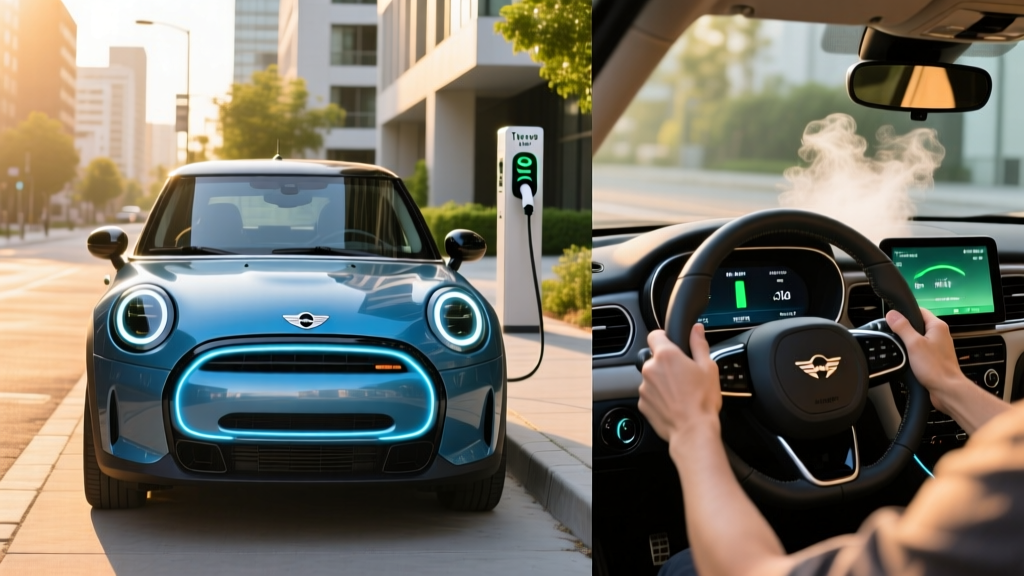
The 2026 Mini Cooper SE (often searched as the Mini SE) returns with a meaningful battery upgrade and the iconic hatchback styling that made its predecessor a cult favorite among urban EV enthusiasts. With a 54.2 kWh battery pack, an EPA-estimated 150 miles of range, and a starting MSRP of $30,900, the 2026 model addresses the single biggest criticism of the earlier generation — its anemic 114-mile range — while preserving the go-kart handling that defines the Mini brand.
But 150 miles still places the Cooper SE firmly in the city-commuter category. If your daily round trip exceeds 80 miles or you regularly face sub-freezing winters, this EV demands honest self-assessment before purchase. Here's everything you need to know, spec by spec, to decide whether the Mini SE fits your life.
Range, Efficiency, and Real-World Expectations
Real-World Expectation: 120–140 miles on mixed highway driving at 70 mph; 100–115 miles in sustained sub-30°F winter conditions with cabin heat. City driving with regenerative braking can push closer to 155 miles in mild weather.
The 2026 Cooper SE's 54.2 kWh battery (approximately 49.5 kWh usable, with a protective buffer to preserve long-term State of Health) represents a significant jump from the 32.6 kWh pack in the 2020–2024 models. Mini uses NMC (nickel-manganese-cobalt) chemistry, which offers higher energy density than LFP — critical in a compact platform where physical battery space is constrained.
Efficiency lands at an EPA-rated 110 MPGe combined, translating to roughly 30 kWh per 100 miles. That's average for the segment; the Hyundai Kona Electric achieves about 28 kWh/100 mi, while the Nissan LEAF sits near 31. The Mini's boxy shape and relatively wide tires work against highway efficiency, so expect consumption to climb to 34–36 kWh/100 mi at sustained 75+ mph speeds.
According to fueleconomy.gov, the Cooper SE's combined rating positions it competitively among subcompact electric hatchbacks, though it trails more aerodynamically optimized rivals. Cold-weather testing consistently shows a 20–30% range reduction for EVs without heat pump systems — and the 2026 Cooper SE does include a heat pump, which mitigates but does not eliminate winter losses.
Charging Speed: DC Fast Charging and Home Level 2
| Charging Level | Power / Rate | Time / Miles Added |
|---|---|---|
| Level 1 (120V household) | ~1.4 kW | ~4 miles per hour of charging |
| Level 2 (240V home/public) | 11 kW (onboard charger) | ~35 miles per hour; 0–100% in ~5 hours |
| DC Fast Charge (CCS/NACS) | Peak 95 kW | 10–80% in approximately 28 minutes |
The 95 kW peak DC fast-charge rate is the Cooper SE's most notable charging upgrade. On a 150 kW or higher station (such as Electrify America or Tesla Superchargers with the Magic Dock adapter), you'll see the Mini ramp quickly to its peak, though the charge curve tapers noticeably above 60% State of Charge. Expect sustained rates around 65–75 kW through the 40–70% window, then a drop to 35–40 kW as you approach 80%. This taper is standard for NMC packs managed conservatively to protect long-term battery health.
At home, the 11 kW onboard AC charger is a strong point. A full Level 2 session from near-empty to full takes roughly 5 hours — easily an overnight top-up. If your home electrical panel supports a 48-amp circuit (requiring a 60-amp breaker), you'll maximize that 11 kW rate. On a standard 32-amp Level 2 setup (common with many wall chargers), expect about 7.7 kW, extending a full charge to around 7 hours.
One practical note: the 2026 Cooper SE ships with a CCS1 connector in North America, though Mini has confirmed NACS compatibility via adapter for Tesla Supercharger access. If you're installing a home charger, a universal J1772 Level 2 unit covers your needs; consult a licensed electrician for panel capacity assessment before committing to a 48-amp circuit.
Performance and Driving Dynamics
| Spec | 2026 Mini Cooper SE |
|---|---|
| Drivetrain | Front-Wheel Drive (FWD) |
| Motor Output | 215 hp / 243 lb-ft torque |
| 0–60 mph | 6.7 seconds |
| Top Speed | 106 mph (electronically limited) |
| Curb Weight | ~3,650 lbs |
| Battery Chemistry | NMC (nickel-manganese-cobalt) |
| Battery Capacity | 54.2 kWh gross / ~49.5 kWh usable |
The single front-mounted motor delivers 215 horsepower — a meaningful step up from the 181 hp in the outgoing generation. The 6.7-second 0–60 time won't embarrass you at a stoplight, and more importantly, the instant torque delivery makes the Cooper SE feel punchy in the 0–40 mph range where city driving actually happens.
What truly sets the Mini SE apart is its chassis tuning. The low center of gravity from the floor-mounted battery, combined with Mini's trademark tight steering ratio and firm-but-controlled suspension, delivers a driving experience that's genuinely engaging. This is one of the few EVs in the sub-$35,000 bracket where the handling feels like a feature, not an afterthought. The trade-off is a ride that some passengers may find stiff over rough pavement — the sport-tuned suspension doesn't isolate bumps the way a comfort-oriented crossover does.
Interior Space, Cargo, and Technology
The Cooper SE remains a subcompact hatchback, and interior dimensions reflect that reality. Front-seat passengers enjoy 41.3 inches of legroom and generous headroom, but rear-seat legroom shrinks to 33.0 inches — tight for adults on longer trips. Cargo volume measures 8.7 cubic feet behind the rear seats and 32.4 cubic feet with the 60/40 split rear seats folded. There is no front trunk (frunk); the motor and power electronics occupy that space.
The centerpiece of the 2026 cabin is a 9.4-inch circular OLED display running Mini's latest Operating System 9. The round interface is distinctive and generally intuitive, with wireless Apple CarPlay and Android Auto as standard. A head-up display, wireless phone charging pad, and Harman Kardon premium audio are available on higher trims.
On the driver-assistance front, the Cooper SE includes standard forward collision warning, automatic emergency braking, lane departure warning, and parking sensors. Adaptive cruise control with stop-and-go functionality and lane-keeping assist are bundled in the optional Driver Assistance Package. It's critical to understand that these are SAE Level 2 driver-assist features — you must remain fully engaged with hands on the wheel and eyes on the road. This is not autonomous driving.
Pricing, Trims, and Federal Tax Credit Eligibility
| Trim Level | Base MSRP | Est. After §30D Credit |
|---|---|---|
| Classic | $30,900 | $23,400 (if eligible) |
| Signature | $34,400 | $26,900 (if eligible) |
| Iconic | $38,900 | $31,400 (if eligible) |
The 2026 Mini Cooper SE starts at $30,900 (including destination) for the Classic trim, which is well-equipped with the 9.4-inch OLED display, LED lighting, heated front seats, and the full suite of standard safety features. The mid-tier Signature adds adaptive cruise, a panoramic sunroof, and upgraded interior materials. The range-topping Iconic brings the Harman Kardon audio, head-up display, and premium leather upholstery.
Regarding the federal EV tax credit under IRS §30D: the Cooper SE's eligibility for the full $7,500 credit depends on several factors that shift frequently. As of the current tax year, the vehicle must meet critical-mineral sourcing and battery-component manufacturing requirements, the buyer's adjusted gross income must not exceed $150,000 (single) or $300,000 (joint), and the vehicle's MSRP must remain under $55,000 (the Mini qualifies easily). The point-of-sale transfer option allows eligible buyers to apply the credit directly at the dealership, reducing the purchase price upfront.
However, battery sourcing rules have tightened significantly. Mini's parent company BMW has been working to localize battery cell supply chains, but you should verify current-year eligibility on the IRS clean vehicle credit page or with your tax professional before relying on the full $7,500 in your purchase math. Partial credit ($3,750) may apply if only one of the two sourcing requirements (critical minerals or battery components) is met.
Warranty and Long-Term Battery Outlook
Mini backs the 2026 Cooper SE with a 4-year/50,000-mile new-vehicle limited warranty and an 8-year/100,000-mile high-voltage battery warranty. The battery warranty guarantees that the pack will retain at least 70% of its original capacity during the coverage period — if degradation drops below that threshold, Mini will repair or replace the battery at no cost.
For NMC chemistry, industry data suggests typical degradation of 10–15% over the first 100,000 miles under normal use patterns. Owners who frequently DC fast-charge, regularly charge to 100%, or operate in extreme heat may see slightly accelerated degradation. Best practices for longevity: set your daily charge limit to 80%, use DC fast charging for road trips rather than daily routine, and take advantage of the Cooper SE's preconditioning feature before fast-charging sessions to bring the battery to optimal temperature.
Who Should Buy the 2026 Mini Cooper SE?
- Engaging go-kart handling unmatched in the price range
- Distinctive design with premium interior materials
- Improved 150-mile range covers most urban commutes
- Strong 11 kW Level 2 onboard charging
- Heat pump included standard for winter efficiency
- Eligible for up to $7,500 federal credit (verify sourcing rules)
- 150-mile range limits road-trip practicality
- Rear seat and cargo space are tight
- 95 kW peak DC charge rate trails rivals (Kona Electric: 100+ kW)
- No front trunk (frunk) for additional storage
- Firm ride may not suit all passengers
- FWD only — no AWD option for snow-belt buyers
The Mini Cooper SE is the right EV if you're a city or close-suburban dweller with reliable home charging, a daily commute under 60 miles round-trip, and a priority on driving enjoyment over maximum utility. It's a compelling second vehicle for a household that already has a longer-range option for road trips, or a primary car for a single professional or couple without children who value style and dynamics.
It is not the right choice if you need 250+ miles of range for highway commuting, regularly carry rear-seat passengers, or live in a region with sparse DC fast-charging infrastructure where a 150-mile range would create genuine range anxiety on longer outings. In those cases, the Hyundai Kona Electric (261 mi EPA), Chevrolet Equinox EV (315 mi), or Tesla Model 3 (341 mi RWD) serve the practicality mandate more effectively — though none match the Mini's personality.
Frequently Asked Questions
What is the real-world range of the 2026 Mini Cooper SE?
The EPA rates it at 150 miles. In real-world mixed driving at highway speeds, expect 120–140 miles. In cold weather (below 30°F), plan for 100–115 miles. City driving with regenerative braking in mild weather can yield up to 155 miles.
How fast does the Mini SE charge at home and on the road?
At home on a Level 2 (240V) charger, the 11 kW onboard rate delivers about 35 miles of range per hour, with a full charge in roughly 5 hours. On a DC fast charger, it peaks at 95 kW and charges from 10–80% in approximately 28 minutes, with taper above 60% SoC.
Does the 2026 Mini Cooper SE qualify for the $7,500 federal EV tax credit?
It can, but eligibility depends on current-year IRS §30D rules including battery-sourcing requirements, buyer income caps ($150K single / $300K joint), and the $55,000 MSRP cap (which the Mini clears). Verify on IRS.gov or with a tax professional before purchasing, as sourcing rules change.
Is the Mini Cooper SE worth buying over competitors?
If driving dynamics, design, and urban agility are your top priorities, the Cooper SE is difficult to beat at its price point. If range and cargo space matter more, the Hyundai Kona Electric (261 mi EPA, ~$33,000) and the Chevrolet Equinox EV (315 mi, ~$33,000) are stronger practical choices. The Mini wins on personality; rivals win on versatility.
What is the battery warranty on the Mini SE?
Mini provides an 8-year/100,000-mile battery warranty guaranteeing at least 70% capacity retention. The general vehicle warranty is 4 years/50,000 miles.
Can I take the Mini Cooper SE on road trips?
Yes, with planning. The 150-mile range and 95 kW DC fast-charging mean you'll stop every 100–120 miles for roughly 25–30 minutes on highway trips. For drivers who road-trip more than 2–3 times per year, a longer-range EV or a two-vehicle household is more practical.