If you own or are considering a Tesla Model X, you've likely searched for answers about its panoramic windshield — the massive single-piece glass that stretches from the cowl to the middle of the roof. It's one of the most striking design elements on any SUV, electric or otherwise, but it also raises practical questions about replacement cost, durability, heat management, and whether this architectural feature is worth the trade-offs. This review covers everything you need to know about the Tesla Model X windshield alongside a complete 2026 model-year profile: range, charging, pricing, tax credits, and real-world ownership data.
The Tesla Model X Windshield: What Owners Need to Know
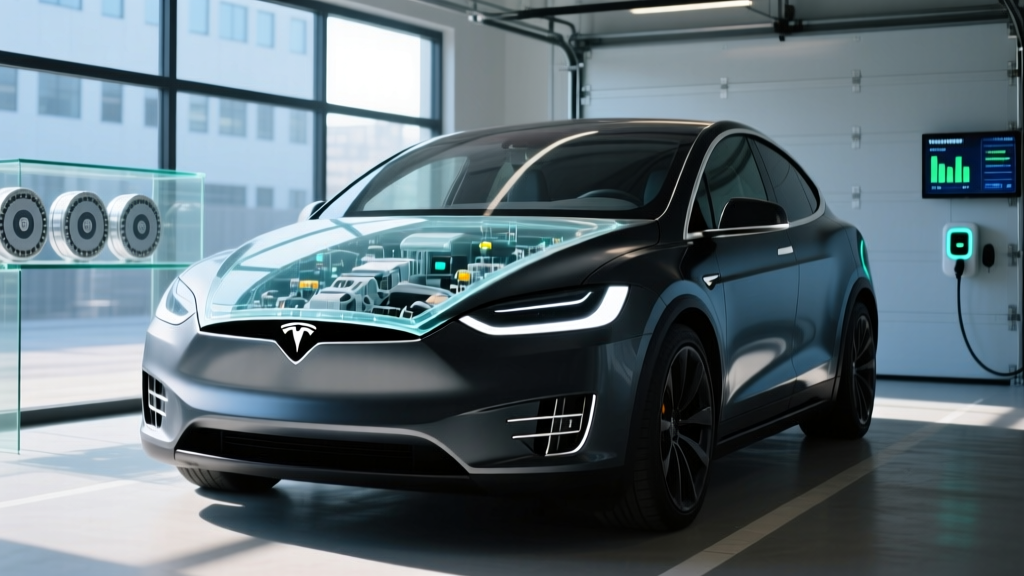
The Model X uses a single-piece panoramic laminated windshield that extends well past the traditional header line, creating an unobstructed upward view that Tesla calls "the largest all-glass panoramic windshield in production." While visually stunning, this design creates specific ownership considerations that every buyer should understand before signing the delivery paperwork.
Replacement Cost and Availability
The Tesla Model X windshield replacement cost typically ranges from $1,200 to $2,000+ depending on your location, whether the replacement glass is OEM Tesla or aftermarket, and whether your insurance covers glass under comprehensive coverage with a zero-deductible glass rider (available in many states). The panoramic size means fewer aftermarket suppliers produce compatible glass, which keeps prices elevated compared to conventional SUV windshields. OEM Tesla glass through a Tesla Service Center or authorized mobile glass partner tends to run $1,500–$1,800 including calibration.
ADAS recalibration is a mandatory step after any windshield replacement on the Model X. The forward-facing cameras and sensors mounted behind the glass must be recalibrated using Tesla's proprietary software — this adds $150–$300 to the total bill and means you cannot simply use any local glass shop. Choose a provider experienced with Tesla camera recalibration, or the Autopilot and automatic emergency braking systems may malfunction or refuse to engage.
Durability, Cracking, and Heat Concerns
Early Model X windshields (2016–2019) had a documented pattern of spontaneous cracking, often originating near the top edge where the glass meets the roof structure. Tesla addressed this in later production runs with revised mounting hardware and updated glass specifications, but owners in regions with extreme temperature swings still report occasional stress cracks. Rock chips, as with any vehicle, are the most common cause of windshield damage.
The sheer glass area also means significant solar heat gain. Tesla applies a UV-blocking tint to the upper portion of the windshield, but many owners in southern climates add an aftermarket ceramic tint (typically $200–$400) to the entire windshield to reduce cabin heat and glare. The panoramic glass also means the cabin can heat up faster when parked in direct sun — preconditioning via the Tesla app is essential in summer months.
Insurance Considerations
Because of the replacement cost, Model X owners should verify their comprehensive glass coverage. In states like Florida, Kentucky, and South Carolina, zero-deductible glass coverage is mandated by law. Elsewhere, adding a glass rider to your policy is a smart move — the annual premium increase (often $20–$50) is negligible compared to a $1,800 out-of-pocket replacement.
2026 Tesla Model X: Full Vehicle Profile and Specifications
Beyond the windshield, the Model X remains Tesla's flagship three-row electric SUV. Here's the complete spec breakdown for the 2026 model year, which carries over the refreshed design introduced in prior years with updated battery management and software features.
| Specification | Long Range AWD | Plaid |
|---|---|---|
| EPA Range | 320 miles | 300 miles |
| Battery Capacity (usable) | ~100 kWh (NMC) | ~100 kWh (NMC) |
| Drivetrain | Dual-Motor AWD | Tri-Motor AWD |
| Horsepower | 670 hp | 1,020 hp |
| 0–60 mph | 3.8 seconds | 2.5 seconds |
| Top Speed | 155 mph | 163 mph |
| Max DC Fast Charge | 250 kW | 250 kW |
| 10–80% DC Charge Time | ~31 minutes | ~31 minutes |
| Level 2 Home Charge Rate | 11.5 kW (~34 mi/hr) | 11.5 kW (~34 mi/hr) |
| MPGe (combined) | 102 MPGe | 98 MPGe |
| Efficiency | 33 kWh/100 mi | 34 kWh/100 mi |
| Cargo (behind 3rd row) | 37.1 cu ft | 37.1 cu ft |
| Cargo (max, seats folded) | 83.1 cu ft | 83.1 cu ft |
| Frunk | 7.1 cu ft | 7.1 cu ft |
| Seating Configurations | 5, 6, or 7 seats | 5 or 6 seats |
| Towing Capacity | 3,500 lbs | 3,500 lbs |
| Base MSRP | $79,990 | $94,990 |
| Battery Warranty | 8 yr / 150,000 mi | 8 yr / 150,000 mi |
| Vehicle Warranty | 4 yr / 50,000 mi | 4 yr / 50,000 mi |
Sources: EPA fueleconomy.gov, Tesla Model X official specs
Real-World Range: What to Actually Expect
Long Range AWD: EPA 320 miles. Expect ~270–290 miles on highway trips at 70+ mph, and ~230–260 miles in cold weather (below 32°F) with cabin heating active.
Plaid: EPA 300 miles. Expect ~250–275 miles highway, ~215–245 miles in cold weather.
The Model X's large frontal area and heavy curb weight (~5,100 lbs) hurt highway efficiency compared to sleeker sedans. If your commute is mostly city driving with frequent regenerative braking opportunities, you'll see numbers closer to — or even above — the EPA sticker.
Cold-weather range loss is real and measurable. The Model X uses a heat pump (standard since the 2021 refresh), which is significantly more efficient than resistive heating, but any EV loses 15–30% of its rated range in sustained sub-freezing temperatures. Preconditioning the battery while plugged in — using scheduled departure or the app — recovers much of that loss by warming the battery pack before you drive.
Charging Speed: DC Fast, Level 2, and Home Setup
The Model X supports a maximum DC fast-charge rate of 250 kW on Tesla's V3 Superchargers. On the CCS adapter (included with newer deliveries), it can also use third-party networks like Electrify America at similar peak rates, though actual speeds depend on the station's output and the vehicle's state of charge.
| Charging Level | Power (kW) | Miles Added per Hour | Notes |
|---|---|---|---|
| Level 1 (120V household) | ~1.4 kW | ~4 mi/hr | Emergency/trickle only |
| Level 2 (240V, 48A Wall Connector) | 11.5 kW | ~34 mi/hr | Full charge in ~9 hours |
| Level 2 (240V, 32A mobile connector) | 7.7 kW | ~23 mi/hr | With NEMA 14-50 outlet |
| DC Fast (V3 Supercharger) | 250 kW peak | ~175 mi in 15 min | 10–80% in ~31 min |
| DC Fast (CCS adapter, 350 kW station) | ~250 kW peak | Similar to Supercharger | Varies by station output |
Charging curve reality: The 250 kW peak only holds between roughly 10–30% state of charge. From 50–80%, the rate tapers to ~100–130 kW, and above 80% it drops sharply to protect battery health. This is why Tesla (and every EV maker) quotes 10–80% times rather than 0–100%. For road trips, plan to charge to 80% and go — the last 20% takes nearly as long as the first 70%.
For home charging, Tesla's Wall Connector on a 60-amp circuit delivers the full 11.5 kW (48 amps continuous). That's enough to fully replenish the ~100 kWh battery overnight. Installation costs typically run $500–$2,000 depending on your electrical panel's capacity and the run length from panel to garage — if you need a 200-amp panel upgrade, add $1,500–$3,000.
Pricing, Trims, and Federal Tax Credit Eligibility
The 2026 Tesla Model X starts at $79,990 for the Long Range AWD and $94,990 for the Plaid. Adding the six-seat interior ($6,500), FSD (Supervised) capability ($8,000), or premium paint colors ($1,500–$2,500) pushes the as-tested price well above $90,000 for a Long Range and past $110,000 for a loaded Plaid.
Under IRS §30D rules, the Model X faces a critical hurdle: the MSRP cap for SUVs is $80,000. The Long Range at $79,990 technically clears this threshold, but any options or destination charges that push the total MSRP above $80,000 will disqualify it. The Plaid at $94,990 does not qualify under any configuration.
Additional §30D requirements that apply:
- Buyer income caps: AGI must not exceed $300,000 (joint filers), $225,000 (head of household), or $150,000 (single).
- Battery sourcing: Critical minerals and battery components must meet phased-in domestic/free-trade-agreement sourcing thresholds. Tesla's supply chain has been evolving — verify current-year compliance on IRS.gov or via Tesla's checkout page, which displays credit eligibility at point of sale.
- Point-of-sale transfer: If eligible, you can transfer the up-to-$7,500 credit to the dealer at purchase, reducing your out-of-pocket cost immediately rather than waiting for tax filing.
Bottom line: A base Long Range Model X with no options may qualify for up to $7,500, bringing the effective price to ~$72,490. But most buyers add at least one option, which can push MSRP over the $80,000 cap. Always confirm eligibility before ordering.
Interior, Tech, and Standout Features
The Model X interior centers on a 17-inch landscape-oriented touchscreen running Tesla's latest software, a 12.3-inch digital instrument cluster, and a yoke-style or round steering wheel (buyer's choice at no extra cost since 2024). The second row in the six-seat configuration features individual captain's chairs with a center console — the seven-seat option uses a bench. Third-row space is tight: 32.7 inches of legroom, suitable for children on longer trips or adults on short hops.
Standout tech features include:
- Falcon Wing rear doors: The signature double-hinged gullwing doors open upward with ultrasonic obstacle sensing, making car-seat access dramatically easier in tight parking spots. They're also slow, can be unreliable in heavy rain, and are expensive to repair — the trade-off for the wow factor.
- HEPA air filtration: The "Bioweapon Defense Mode" uses a hospital-grade HEPA filter and is genuinely best-in-class for air quality.
- 1,400-watt 22-speaker audio: One of the best factory audio systems in any vehicle at this price point.
- Autopilot / FSD (Supervised): Standard Autopilot includes adaptive cruise and lane centering. FSD (Supervised) adds automated lane changes, on/off-ramp navigation, and city-street traffic-light recognition — but this is SAE Level 2, meaning you must remain fully engaged with hands on the wheel and eyes on the road at all times. It is not self-driving.
- Over-the-air updates: Tesla continues to push software improvements, new features, and UI refinements without service-center visits.
Notable drawbacks include panel-gap inconsistency (a long-running Tesla criticism that has improved but isn't fully resolved), the absence of physical buttons for climate and media controls (everything routes through the touchscreen), and the yoke steering wheel's learning curve during low-speed maneuvers and roundabouts.
How the Model X Compares to Key Competitors
The Model X occupies a unique niche: a three-row electric SUV with sports-car acceleration, access to the Supercharger network, and a starting price under $80,000. But competition has grown substantially. Here's how it stacks up against the most relevant alternatives:
| Spec | Tesla Model X LR | Kia EV9 GT-Line AWD | Rivian R1S Dual-Motor | BMW iX xDrive50 |
|---|---|---|---|---|
| EPA Range | 320 mi | 270 mi | 316 mi | 307 mi |
| Base MSRP | $79,990 | $73,900 | $79,900 | $87,250 |
| 0–60 mph | 3.8 sec | 5.0 sec | 4.5 sec | 4.4 sec |
| Max DC Charge | 250 kW | 236 kW | 220 kW | 200 kW |
| 3rd-Row Legroom | 32.7 in | 32.0 in | 32.4 in | N/A (2-row) |
| Charging Network | Supercharger (native) | NACS / growing access | Rivian Adventure Network + CCS | CCS / EA / Ionity |
| Tax Credit Eligible? | Borderline (MSRP cap) | Yes (select trims) | Yes (MSRP under cap) | No (MSRP over cap) |
The Kia EV9 is the value pick — lower price, qualifies for the tax credit more easily, and offers comparable third-row space, but gives up 50 miles of range and significant performance. The Rivian R1S is the off-road and adventure choice with superior ground clearance and build quality, but its charging network is less mature. The BMW iX is a luxury two-row crossover — not a direct three-row competitor — but worth cross-shopping if you don't need the third row and prioritize refinement. The Model X wins on raw range, acceleration, and Supercharger access, but loses on build quality perception and third-row comfort.
Pros, Cons, and Who Should Buy the Model X
- Class-leading 320-mile EPA range for a three-row EV SUV
- Access to Tesla's Supercharger network — the most reliable and extensive DC fast-charging network in North America
- Supercar-rivaling acceleration (3.8 sec Long Range, 2.5 sec Plaid)
- Falcon Wing doors make car-seat loading genuinely easier
- Best-in-class HEPA cabin air filtration
- Continuous OTA software improvements
- Strong resale value relative to most EV competitors
- Windshield replacement cost $1,200–$2,000+ with limited aftermarket options
- Falcon Wing doors can be slow, noisy, and expensive to repair
- Third row is cramped for adults on long trips
- Panel gaps and interior fit/finish lag behind BMW, Mercedes, Rivian
- Touchscreen-only controls frustrate some drivers
- Tax credit eligibility is razor-thin due to $80,000 MSRP cap
- No NACS native CCS — requires adapter for non-Tesla DC chargers (adapter included on newer deliveries)
Choose the Model X if: You need three rows, want maximum range and Supercharger access for road trips, value acceleration, and can keep the base MSRP at or under $80,000 to preserve tax credit eligibility. It's ideal for tech-forward families who take frequent long-distance trips.
Look elsewhere if: You prioritize luxury build quality (BMW iX, Mercedes EQS SUV), need genuine off-road capability (Rivian R1S), want the lowest price with easy tax-credit qualification (Kia EV9), or rarely need a third row (Tesla Model Y or a two-row crossover will save you $20,000+).
Frequently Asked Questions
How much does it cost to replace a Tesla Model X windshield?
Expect to pay $1,200–$2,000+ for a Tesla Model X windshield replacement, including OEM glass and mandatory ADAS camera recalibration. Insurance comprehensive coverage with a glass rider can reduce your out-of-pocket cost to zero in many states.
Does the Tesla Model X windshield crack easily?
Early production years (2016–2019) had reports of spontaneous cracking near the roof edge. Tesla revised the mounting and glass specification in subsequent years. Rock chips remain the most common damage source, and the large glass area means a chip in the driver's sightline often requires full replacement rather than repair.
What is the real-world range of the 2026 Tesla Model X?
The EPA rates the Long Range at 320 miles and the Plaid at 300 miles. In real-world highway driving at 70+ mph, expect 270–290 miles (Long Range) and 250–275 miles (Plaid). In cold weather below freezing, subtract another 15–25% from those figures.
How fast does the Model X charge at home and on the road?
At home on a Tesla Wall Connector (240V, 48A), the Model X charges at 11.5 kW, adding ~34 miles of range per hour — a full charge takes about 9 hours. On a V3 Supercharger, it peaks at 250 kW and charges from 10–80% in approximately 31 minutes, though the rate tapers significantly above 50% state of charge.
Does the 2026 Tesla Model X qualify for the federal EV tax credit?
The Long Range at $79,990 base MSRP barely clears the IRS §30D SUV cap of $80,000 — but adding any options or destination charges can push it over, disqualifying the vehicle. The Plaid at $94,990 does not qualify. Buyers must also meet income caps ($300,000 joint / $150,000 single) and the vehicle must satisfy battery-sourcing requirements. Verify current eligibility at IRS.gov.
Is the Model X worth buying over the Rivian R1S or Kia EV9?
The Model X wins on range (320 vs. 316 vs. 270 miles), Supercharger network access, and acceleration. The Rivian R1S wins on off-road capability, build quality, and adventure-oriented design. The Kia EV9 wins on price, easier tax-credit qualification, and practicality for budget-conscious families. Your priority — range/tech, adventure, or value — should drive the decision.
Is Tesla Autopilot or FSD self-driving?
No. Both Autopilot and Full Self-Driving (Supervised) are SAE Level 2 driver-assistance systems. The driver must remain fully attentive, with hands on the steering wheel and eyes on the road, at all times. Tesla's system can handle highway lane-keeping, adaptive cruise, and in FSD's case, traffic-light recognition and city-street navigation — but it cannot drive without human supervision. Only Level 4 robotaxi services like Waymo operate without a human driver, and those are limited to specific geofenced areas.
What is the battery warranty on the Tesla Model X?
Tesla covers the Model X battery and drive unit for 8 years or 150,000 miles, whichever comes first, with a minimum 70% capacity retention guarantee over that period. If the battery degrades below 70% of its original capacity within the warranty window, Tesla will repair or replace it at no cost.