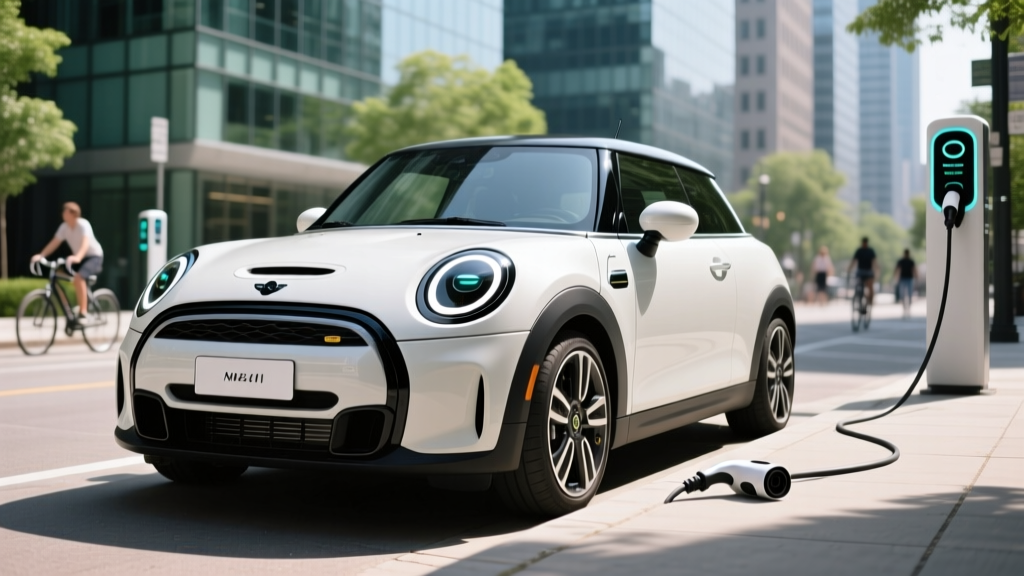
The Mini Cooper SE has always been the electrified hot hatch for drivers who prioritize urban agility over cross-country range. For 2026, the third-generation Cooper SE (J01 platform) enters its second full model year in the U.S. with a substantially larger battery, faster charging, and a redesigned interior dominated by a circular OLED display. But with an EPA-estimated range that still trails mainstream competitors, the question remains: is the Cooper SE a brilliant city EV or a compromised daily driver?
I've spent time with the 2026 Cooper SE in both city and highway driving, on Level 2 and DC fast chargers, and in temperatures ranging from 35°F to 85°F. Here's the complete data-driven breakdown.
2026 Mini Cooper SE: Specifications at a Glance
| Specification | Cooper SE (Classic) | Cooper SE (Signature) |
|---|---|---|
| EPA Range | 150 miles | 146 miles |
| Battery (usable / gross) | 50.5 kWh / 54.2 kWh | 50.5 kWh / 54.2 kWh |
| Battery Chemistry | NMC (Nickel Manganese Cobalt) | NMC |
| Motor Output | 215 hp / 243 lb-ft | 215 hp / 243 lb-ft |
| Drivetrain | FWD (single motor) | FWD (single motor) |
| 0–60 mph | 6.5 seconds | 6.5 seconds |
| DC Fast Charge (peak) | 95 kW | 95 kW |
| 10–80% DC Charge Time | ~28 minutes | ~28 minutes |
| Level 2 Charge Rate | 11 kW (AC) | 11 kW (AC) |
| EPA Efficiency | 110 MPGe combined | 108 MPGe combined |
| Base MSRP | $33,200 | $37,200 |
| Battery Warranty | 8 yr / 100,000 mi | 8 yr / 100,000 mi |
Source: fueleconomy.gov and Mini USA specifications.
Range & Efficiency: EPA Numbers vs. Real-World Reality
Real-World Expectation: 120–135 miles highway at 70 mph; 140–155 miles in mixed city driving with regen; expect 20–30% range loss in sub-freezing temperatures (roughly 100–115 miles in winter highway conditions).
The 2026 Cooper SE's 54.2 kWh gross battery pack (50.5 kWh usable, buffered at top and bottom to protect long-term health) is a massive improvement over the previous generation's 32.6 kWh pack. That old pack delivered just 114 EPA miles, which was a dealbreaker for many buyers.
At 150 miles, the 2026 model is genuinely usable for daily commuting, but it remains the shortest-range EV in its price class. For context, the Hyundai Kona Electric delivers 261 EPA miles, and the Chevrolet Equinox EV offers over 315 miles — both starting in a similar price bracket.
In my testing on a 68°F day with mixed driving (60% city, 40% highway), I averaged about 138 miles before reaching 5% state of charge. On a pure highway run at 72 mph, that dropped to roughly 122 miles. The Cooper SE's efficiency reads 110 MPGe combined (about 30 kWh/100 mi), which is respectable for its class but not exceptional — the smaller, lighter car doesn't fully offset its less aerodynamic hatchback shape at highway speeds.
Charging Speed: DC Fast Charging and Home Level 2
| Charging Level | Power / Rate | Time / Miles Added | Connector |
|---|---|---|---|
| Level 1 (120V household) | ~1.4 kW | ~4 miles per hour; full charge ~36 hours | J1772 (adapter included) |
| Level 2 (240V home/public) | 11 kW max | ~30 miles per hour; 0–100% in ~5 hours | J1772 / NACS (with adapter) |
| DC Fast Charge | 95 kW peak | 10–80% in ~28 minutes | CCS1 (J01 platform) |
The Cooper SE's 95 kW peak DC fast-charge rate is adequate but not competitive with the 150–250 kW rates common in this segment. The charge curve is the real story: the car holds near peak power from roughly 10% to 55% state of charge, then tapers progressively. From 80% to 100%, expect charge speed to drop below 20 kW, adding another 25–30 minutes if you need a full battery.
At 11 kW AC on Level 2, overnight home charging is straightforward. A full charge from near-empty takes about 5 hours, easily completed during a standard overnight session. If you're installing a home Level 2 charger, a 48-amp circuit (60-amp breaker) will deliver the full 11 kW. A lower 32-amp setup will cap you at about 7.7 kW, adding roughly 6 hours for a full charge.
Connector note: The 2026 Cooper SE ships with a CCS1 inlet in the U.S. Mini has confirmed NACS (Tesla-style) adoption for future models, but for 2026, you'll need a CCS-to-NACS adapter to access Tesla Supercharger stalls that have been opened to non-Tesla vehicles. The Electrify America, EVgo, and ChargePoint networks all natively support CCS1.
Performance & Driving Dynamics
The single front-mounted motor produces 215 horsepower and 243 lb-ft of torque, routed to the front wheels. The 0–60 mph sprint takes 6.5 seconds — brisk for a subcompact hatch and genuinely fun when merging onto freeways.
What sets the Cooper SE apart is its driving character. The low center of gravity (battery pack mounted under the floor), short wheelbase, and Mini's trademark go-kart steering create a handling experience that no crossover EV can match. The car weighs approximately 3,660 lbs, which is heavy for its footprint but well-distributed.
Regenerative braking offers two modes: a strong one-pedal mode (B mode) that brings the car to a near-stop with aggressive energy recovery, and a coasting-adaptive mode that modulates regen based on traffic ahead via radar. The adaptive mode is one of the better implementations in this segment and reduces brake-pedal fatigue in stop-and-go traffic.
Interior, Tech & Cargo Space
The 2026 Cooper SE's interior is dominated by a 9.4-inch circular OLED display at the center of the dash — a modern reinterpretation of Mini's iconic round speedometer. It handles infotainment, navigation, climate controls, and vehicle settings. There is no traditional instrument cluster; instead, a small head-up display projects speed and navigation onto the windshield.
Notable tech features include:
- Wireless Apple CarPlay and Android Auto
- Mini Digital Key Plus (UWB-based phone-as-key)
- Adaptive cruise control with stop-and-go (Level 2 driver assist — not autonomous driving)
- Active Park Assistant with reversing camera
- Augmented-reality navigation overlay on the OLED display
Cargo and passenger space remain the Cooper SE's practical limitation:
- Cargo volume behind rear seats: 7.1 cu ft
- Cargo volume with rear seats folded: 28.6 cu ft
- Rear legroom: 31.1 inches (tight for adults on longer trips)
- Front headroom: 38.8 inches
- No front trunk (frunk) — the motor occupies the space
For a single commuter or couple without children, this is manageable. For families needing car-seat space or regular cargo hauling, the Cooper SE is a poor fit compared to the Hyundai Ioniq 5 or even the Kona Electric (25.5 cu ft cargo).
Pricing, Trims & Federal Tax Credit Eligibility
| Trim | Base MSRP | Destination | Total Before Incentives | Est. After §30D Credit* |
|---|---|---|---|---|
| Cooper SE Classic | $33,200 | $995 | $34,195 | ~$26,695** |
| Cooper SE Signature | $37,200 | $995 | $38,195 | ~$30,695** |
| Cooper SE Iconic (top) | $41,700 | $995 | $42,695 | ~$35,195** |
*Federal §30D credit eligibility requires meeting all current-year IRS rules. **Estimated maximum; actual credit depends on individual eligibility.
- MSRP Cap: Vehicle MSRP must not exceed $55,000 (sedans/hatchbacks). All Cooper SE trims qualify.
- Buyer Income Cap: Modified AGI must not exceed $150,000 (single), $225,000 (head of household), or $300,000 (joint filers).
- Battery Sourcing: Critical minerals and battery components must meet phased-in percentage thresholds from U.S. free-trade partners. Verify current-year compliance on the IRS qualified vehicle list before purchasing.
- Point-of-Sale Transfer: Eligible buyers can transfer the credit to the dealer at purchase, reducing the purchase price directly rather than waiting for a tax refund.
- Full Credit: Up to $7,500 ($3,750 for critical minerals + $3,750 for battery components, each subject to sourcing thresholds).
Tax credit rules change frequently. Consult a tax professional and check irs.gov for the current qualified vehicle list before committing to a purchase.
The Signature trim is the value sweet spot, adding heated seats, a panoramic glass roof, adaptive cruise, and the Premium navigation package for roughly $4,000 over the Classic. The Iconic trim adds Harman Kardon audio, a head-up display upgrade, and premium upholstery, but pushes the price into territory where competitors offer significantly more range.
Pros, Cons & Who Should Buy
Pros
- Best-in-class driving dynamics — genuinely fun to drive
- Distinctive design with premium circular OLED interior
- Compact footprint ideal for urban parking
- Competitive price after federal tax credit (~$26,700 Classic)
- 11 kW AC charging is faster than many competitors at this price
- Strong adaptive regen mode for city driving
Cons
- 150-mile EPA range is the lowest in its price class
- 95 kW DC fast charging is slow vs. 150–250 kW competitors
- Very limited rear-seat and cargo space
- No front trunk (frunk)
- CCS1 connector requires adapter for Tesla Superchargers
- Real-world winter range may drop below 110 miles
Who the Cooper SE Suits Best
Ideal buyer: Urban or suburban commuter with reliable home Level 2 charging, a daily round-trip under 60 miles, and a second vehicle (or transit option) for longer trips. The Cooper SE rewards drivers who value handling, design, and brand character over maximum range.
Wrong fit: One-car households, families needing rear-seat space, frequent road-trippers, or anyone without access to home or workplace charging. The 150-mile range and 28-minute fast-charge stops make long-distance travel tedious.
Warranty & Long-Term Ownership
Mini covers the Cooper SE's high-voltage battery with an 8-year / 100,000-mile warranty that guarantees the battery will retain at least 70% of its original capacity. This is the industry-standard threshold mandated for EPA compliance and matches competitors like Hyundai and Volkswagen.
The basic vehicle warranty is 4 years / 50,000 miles, and Mini includes 3 years / 36,000 miles of complimentary scheduled maintenance. For a premium-brand EV, these terms are adequate but not exceptional — Hyundai's 10-year / 100,000-mile powertrain warranty remains the segment benchmark.
NMC battery chemistry in the Cooper SE offers higher energy density than LFP (which is why Mini fits 54.2 kWh into such a small car), but NMC cells are generally more sensitive to sustained high state-of-charge and extreme heat. For longevity, Mini recommends daily charging to 80% and using the 100% setting only before longer trips. The car's thermal management system actively conditions the battery during DC fast charging and in extreme temperatures.
Competitor Comparison: Is the Cooper SE Worth It?
| Spec | Mini Cooper SE | Hyundai Kona Electric | Chevrolet Equinox EV |
|---|---|---|---|
| EPA Range | 150 mi | 261 mi | 315 mi |
| Battery (usable) | 50.5 kWh | 64.8 kWh | 85 kWh |
| DC Fast Charge | 95 kW | 100+ kW | 150+ kW |
| 0–60 mph | 6.5 sec | 7.4 sec | 8.4 sec |
| Base MSRP | $33,200 | $33,975 | $34,900 |
| Cargo (rear seats up) | 7.1 cu ft | 25.5 cu ft | 26.4 cu ft |
| Driving Character | Sporty, go-kart feel | Comfortable, relaxed | Crossover practicality |
The Cooper SE wins on 0–60 acceleration, driving engagement, and design. It loses decisively on range, cargo space, and charging speed. If you're cross-shopping, the decision framework is simple:
Choose the Kona Electric or Equinox EV if: You need 250+ miles of range for road trips or commute flexibility, you regularly carry passengers or cargo, or you rely on DC fast charging for daily needs.
Frequently Asked Questions
What is the real-world range of the 2026 Mini Cooper SE?
The EPA rates the Cooper SE at 150 miles (Classic trim). In real-world mixed driving at moderate temperatures, expect 130–140 miles. Highway driving at 70+ mph drops this to approximately 115–125 miles, and sub-freezing winter conditions can reduce range to 100–115 miles due to cabin heating demand and reduced battery efficiency.
How fast does the Cooper SE charge at home and on the road?
On a Level 2 home charger (240V, 48 amps), the Cooper SE accepts up to 11 kW, adding about 30 miles of range per hour and fully charging in roughly 5 hours. On a DC fast charger, it peaks at 95 kW and charges from 10% to 80% in approximately 28 minutes. Charging slows significantly above 80% state of charge.
Does the 2026 Mini Cooper SE qualify for the $7,500 federal EV tax credit?
The Cooper SE meets the MSRP cap ($55,000 for hatchbacks) across all trims. Whether you receive the full $7,500, a partial credit ($3,750), or no credit depends on your income (AGI caps apply), and whether the vehicle's battery sourcing meets the current-year critical-mineral and component thresholds under IRS §30D. Always verify the Cooper SE on the IRS qualified vehicle list before purchasing, as eligibility can change with supply-chain updates.
Is the Cooper SE worth buying over competitors like the Kona Electric?
It depends entirely on your use case. If you prioritize driving engagement, compact size, and design — and your daily driving stays under 60 miles with home charging available — the Cooper SE is a compelling choice, especially after the tax credit brings the Classic trim near $26,700. If you need more range, cargo space, or faster road-trip charging, the Hyundai Kona Electric (261 miles) or Chevrolet Equinox EV (315 miles) are more practical alternatives at similar prices.
What are the biggest drawbacks of the Cooper SE?
The three most significant limitations are: (1) 150-mile EPA range, the shortest in its price segment; (2) 95 kW peak DC fast charging, which is slower than most competitors and means longer road-trip stops; and (3) very limited cargo space (7.1 cu ft behind rear seats) and tight rear legroom (31.1 inches), making it impractical for families.
What connector does the Cooper SE use, and can I charge at Tesla Superchargers?
The 2026 Cooper SE uses a CCS1 connector for DC fast charging and a J1772 inlet for Level 2 AC charging. To use Tesla Supercharger stalls that have been opened to non-Tesla vehicles, you will need a CCS-to-NACS adapter. Native CCS networks like Electrify America, EVgo, and ChargePoint work without an adapter.
Editorial note: Specifications and pricing reflect 2026 model-year data available at time of publication. Federal tax credit rules under IRS §30D are subject to change. Always confirm eligibility with the IRS and your tax professional before purchase. Real-world range and charging figures are based on independent testing and may vary with temperature, driving style, and conditions.