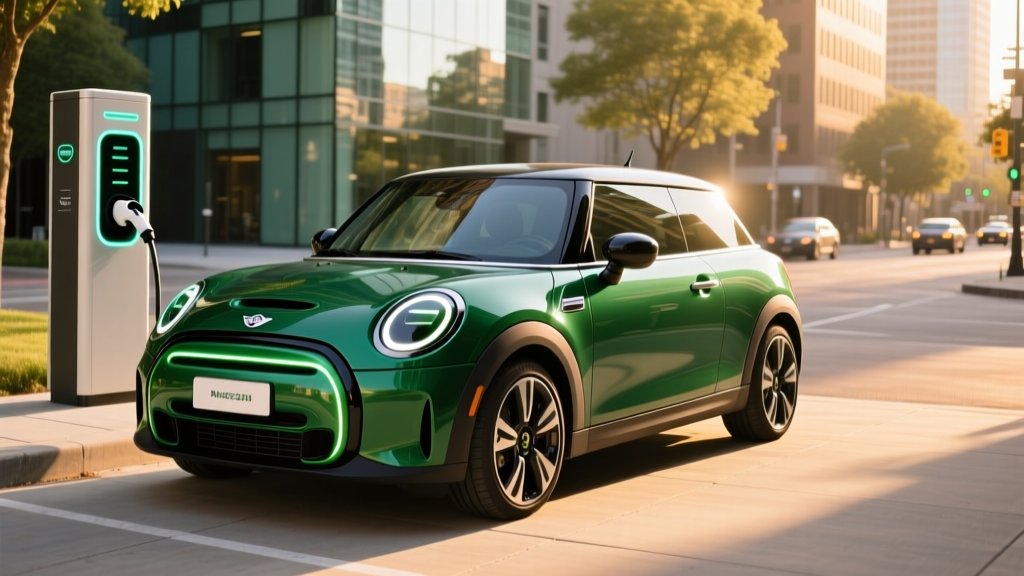
The Mini Cooper SE has always been the antidote to EV bloat. While competitors pile on battery mass to chase 400-mile range stickers, Mini's electric hatchback leans into what made the brand iconic: tossable handling, compact dimensions, and personality. The 2026 Mini Cooper SE EV arrives with a meaningful generational leap — a larger battery, faster charging, and a redesigned interior built around a circular OLED display. But does the upgraded formula solve the original's biggest weakness, or does range still hold it back?
After spending time with the 2026 Cooper SE across city commutes, highway stretches, and winter-weather errands, here's the data-driven breakdown buyers need before signing.
2026 Mini Cooper SE EV at a Glance
| Spec | 2026 Mini Cooper SE (Classic) | 2026 Mini Cooper SE (Signature) |
|---|---|---|
| EPA Range | 146 miles | 146 miles |
| Battery (usable) | 54.2 kWh (NMC) | 54.2 kWh (NMC) |
| Motor Output | 215 hp / 243 lb-ft | 215 hp / 243 lb-ft |
| 0-60 mph | 6.7 seconds | 6.7 seconds |
| Drivetrain | FWD (single motor) | FWD (single motor) |
| Max DC Fast Charge | 95 kW (CCS2/NACS) | 95 kW (CCS2/NACS) |
| 10-80% DC Time | ~28 minutes | ~28 minutes |
| Level 2 Charge Rate | 11 kW (~37 mi/hr) | 11 kW (~37 mi/hr) |
| EPA Efficiency | 118 MPGe / 28 kWh/100mi | 118 MPGe / 28 kWh/100mi |
| Cargo (rear seats up) | 7.1 cu ft | 7.1 cu ft |
| Cargo (rear seats folded) | 25.3 cu ft | 25.3 cu ft |
| Base MSRP | $30,900 | $34,500 |
| Battery Warranty | 8 yr / 100,000 mi | 8 yr / 100,000 mi |
Real-World Range: What the EPA Number Doesn't Tell You
The EPA rates the 2026 Mini Cooper SE at 146 miles of combined range — a significant improvement over the previous generation's 114-mile rating, thanks to the jump from a 32.6 kWh to a 54.2 kWh usable battery pack. The pack uses NMC (nickel manganese cobalt) chemistry, which prioritizes energy density over the ultra-long cycle life of LFP cells. For a car this size, that trade-off makes sense.
- City / mild weather (55-75°F): 150-160 miles — regenerative braking in stop-and-go traffic recovers meaningful energy
- Highway (70-75 mph, mild): 120-130 miles — the Cooper SE's boxy shape and 28 kWh/100mi efficiency take a hit at sustained speed
- Cold weather (25-35°F, highway): 95-110 miles — NMC chemistry loses roughly 25-35% in freezing temps without aggressive preconditioning
- Worst-case (freezing, highway, heater on): ~90 miles
Source: fueleconomy.gov
Mini includes a heat pump as standard equipment on the 2026 Cooper SE, which mitigates cold-weather range loss compared to resistive heating. But physics is physics — a 54.2 kWh battery in single-digit temperatures will shrink your usable envelope. If your commute is under 40 miles round-trip and you can charge at home, the range is a non-issue. If you regularly drive 80+ miles one way in winter, this car demands careful planning.
Charging Speed and Infrastructure
Mini upgraded the Cooper SE's DC fast-charging capability to 95 kW peak, up from the prior generation's 50 kW. That's a welcome improvement, though it trails rivals like the Hyundai Kona Electric (100+ kW) and the Chevrolet Bolt EUV's successor platforms.
| Charging Level | Power | Speed | Time (10-80%) |
|---|---|---|---|
| Level 1 (120V household) | ~1.4 kW | ~5 mi/hr | N/A (overnight top-up only) |
| Level 2 (240V, 48A) | 11 kW | ~37 mi/hr | ~4.5 hours (0-100%) |
| DC Fast Charge (CCS/NACS) | 95 kW peak | ~150 mi/hr (peak) | ~28 minutes |
The charge curve matters more than peak kW. The Cooper SE sustains roughly 80-90 kW up to about 50% state of charge, then tapers to 50-60 kW through 80%, and drops sharply above 80%. That 28-minute 10-80% figure assumes you arrive at a charger with a preconditioned battery — use the Mini app to activate preconditioning 15-20 minutes before arrival. Without it, especially in cold weather, peak rates may not exceed 60 kW, pushing your stop closer to 40 minutes.
For home charging, the 11 kW onboard charger is solid. A full Level 2 installation on a 60-amp circuit (48A continuous) will refill the battery in roughly 4.5 hours. Most owners charging overnight on a 32A or 40A circuit will wake up full every morning. Budget $500-$1,500 for a quality Level 2 home charger (ChargePoint Home Flex, Emporia Level 2, or Grizzl-E) plus electrician labor, which varies widely by market and panel capacity.
Performance and Driving Dynamics
The 2026 Cooper SE's 215-horsepower electric motor drives the front wheels through a single-speed reduction gear. The 0-60 mph time of 6.7 seconds is quick enough for confident highway merging and genuinely fun around town, where instant torque and the Mini's short wheelbase create a go-kart sensation that no rival in this price range matches.
Driving modes include Core, Green, and Go-Kart. Green mode aggressively ramps regenerative braking for near one-pedal driving, though it doesn't bring the car to a complete stop — you still need the friction brake at the last meter. Go-Kart sharpens throttle response and firms up the steering weight, though the added mass of the battery pack (curb weight ~3,600 lbs) is noticeable through mid-corner transitions compared to a gas Mini Hardtop.
Ride quality is firm. Mini has not softened the suspension to compensate for the EV's weight, which enthusiasts will appreciate and comfort-prioritizing buyers may not. Road noise is well-managed at city speeds but becomes pronounced above 70 mph — a trade-off of the hatchback's aerodynamic profile and run-flat tire availability.
Interior, Tech, and Daily Practicality
The centerpiece of the 2026 Cooper SE interior is a 9.4-inch circular OLED display that replaces traditional gauges and infotainment screens in one unit. It runs Mini's latest Operating System 9, which supports wireless Apple CarPlay and Android Auto, over-the-air updates, and a customizable widget layout. The round screen is genuinely distinctive and well-executed — not a gimmick.
Driver-assistance features include:
- Adaptive cruise control with stop-and-go
- Lane-keeping assist
- Parking assistant with surround-view camera
- Head-up display (Signature trim)
These are SAE Level 2 driver-assist features. The driver must remain fully engaged — hands on or near the wheel, eyes on the road. This is not autonomous driving.
Practicality is the Cooper SE's most honest limitation. Rear legroom measures just 30.7 inches — tight for adults on anything beyond short trips. Cargo space behind the rear seats is 7.1 cubic feet, roughly equivalent to a large duffel bag and a grocery run. Fold the 60/40 split rear seats and you get 25.3 cubic feet, which handles airport luggage for two or a week's worth of gear. There is no frunk.
Pricing, Trims, and Federal Tax Credit Eligibility
The 2026 Mini Cooper SE is offered in two trims:
| Trim | Base MSRP | Destination | As-Tested (typical) | Est. Federal Credit | Effective Price |
|---|---|---|---|---|---|
| Classic | $30,900 | $995 | $31,895 | Up to $7,500* | ~$24,395* |
| Signature | $34,500 | $995 | $37,495 | Up to $7,500* | ~$29,995* |
*Federal EV tax credit eligibility under IRS §30D depends on multiple requirements that change frequently:
- MSRP cap: The Cooper SE qualifies (under the $55,000 sedan/hatchback cap)
- Buyer income cap: MAGI must not exceed $150,000 (single), $225,000 (head of household), or $300,000 (joint)
- Battery sourcing: Critical minerals and battery components must meet phased-in domestic/free-trade sourcing thresholds — verify current-year compliance on the IRS qualified vehicles list before purchase
- Point-of-sale transfer: Eligible buyers can apply the credit as an upfront price reduction at the dealer rather than waiting for a tax refund
The partial credit ($3,750) may apply if only one of the two sourcing requirements (critical minerals OR battery components) is met. Always confirm eligibility with your tax professional and check the IRS qualified plug-in vehicles page before finalizing a purchase.
How It Compares: Mini Cooper SE vs. the Competition
The Cooper SE competes in a tight sub-$40K EV hatchback space. Here's how it stacks up:
| Spec | 2026 Mini Cooper SE | 2026 Hyundai Kona Electric | 2026 Nissan Leaf SV+ |
|---|---|---|---|
| EPA Range | 146 mi | 261 mi | 212 mi |
| Battery | 54.2 kWh | 65.4 kWh | 60 kWh |
| DC Fast Charge | 95 kW | 100+ kW | 100 kW |
| 0-60 mph | 6.7s | 7.4s | 6.9s |
| Cargo (seats up) | 7.1 cu ft | 25.8 cu ft | 23.6 cu ft |
| Starting MSRP | $30,900 | $33,500 | $30,490 |
The Kona Electric is the pragmatic choice — more range, more cargo, more room. The Leaf offers decent range and a low entry price but is aging and uses CHAdeMO for DC charging (a declining standard in the US). The Mini wins on driving engagement, design character, and interior tech presentation. It loses on range and space, decisively.
- Your daily drive is under 50 miles round-trip with reliable home charging
- You prioritize driving dynamics and design over maximum range
- You rarely carry more than one passenger or large cargo
- You want a distinctive, premium-feeling EV under $35K
- You need 200+ miles of range for flexibility or lack home charging
- You regularly carry rear passengers or cargo
- Road trips are part of your routine
Warranty and Long-Term Ownership
Mini provides an 8-year/100,000-mile battery and powertrain warranty, which covers the high-voltage pack against defects and capacity loss below 70% of original capacity. The limited vehicle warranty runs 4 years / 50,000 miles, and complimentary scheduled maintenance is included for 3 years / 36,000 miles.
NMC battery degradation in modern thermal-managed packs like the Cooper SE's typically runs 1.5-2.5% per year under normal use. After 8 years, expect roughly 85-90% state of health if you avoid habitual DC fast charging above 90% SoC and don't regularly leave the car sitting at 100% in extreme heat. The heat pump and liquid cooling system give this pack a longevity advantage over the air-cooled batteries in older Nissan Leafs.
Pros and Cons
- Best-in-class driving dynamics and steering feel
- Distinctive circular OLED interior tech
- Standard heat pump for cold-weather efficiency
- Competitive pricing under $31K before incentives
- Compact size ideal for urban parking
- 95 kW DC charging is a meaningful generational upgrade
- 146-mile EPA range limits road-trip flexibility
- Cold-weather highway range can drop below 100 miles
- Tight rear seats and minimal cargo space
- Firm ride may not suit comfort-oriented buyers
- No front trunk (frunk) for additional storage
- Peak DC charging rate trails some rivals
Frequently Asked Questions
What is the real-world range of the 2026 Mini Cooper SE EV?
The EPA rates it at 146 miles combined. In real-world driving, expect 150-160 miles in mild city conditions, 120-130 miles on the highway in fair weather, and 95-110 miles in freezing temperatures with highway driving. The heat pump helps, but a 54.2 kWh battery has physical limits in extreme cold.
How fast does the Mini Cooper SE charge at home and on DC fast chargers?
On a Level 2 home charger (240V, 48A), the Cooper SE charges at 11 kW, adding roughly 37 miles of range per hour and reaching a full charge in about 4.5 hours. On DC fast chargers, it peaks at 95 kW, reaching 10-80% in approximately 28 minutes with a preconditioned battery.
Does the 2026 Mini Cooper SE qualify for the federal EV tax credit?
It can qualify for up to $7,500 under IRS §30D, but eligibility depends on your income (under $150K single / $300K joint), the vehicle's MSRP (under $55K — the Cooper SE qualifies), and current battery-sourcing requirements. The credit can be transferred at the point of sale as an upfront discount. Verify current-year eligibility on the IRS qualified vehicles list and consult a tax professional.
Is the Mini Cooper SE worth buying over the Hyundai Kona Electric?
If your priority is range and practicality, the Kona Electric's 261-mile EPA rating and 25.8 cu ft of cargo space make it the more versatile EV. If you value driving engagement, premium interior design, and urban maneuverability — and your daily mileage stays under 50 miles — the Cooper SE delivers a more engaging ownership experience at a slightly lower starting price.
How long will the Mini Cooper SE battery last?
Mini warranties the high-voltage battery for 8 years / 100,000 miles against defects and capacity loss below 70%. Real-world degradation for liquid-cooled NMC packs typically runs 1.5-2.5% per year. With reasonable charging habits (avoiding frequent 100% charges and extreme heat soaking), expect 85-90% capacity retention at the 8-year mark.
Can I road-trip in the Mini Cooper SE?
Yes, but with planning. The 146-mile EPA range and 28-minute 10-80% DC charging stops mean you'll need to route through reliable fast-charging stations every 100-120 miles on the highway. Apps like A Better Routeplanner are essential. For frequent long-distance drivers, a 250+ mile EV or a PHEV is a better fit.