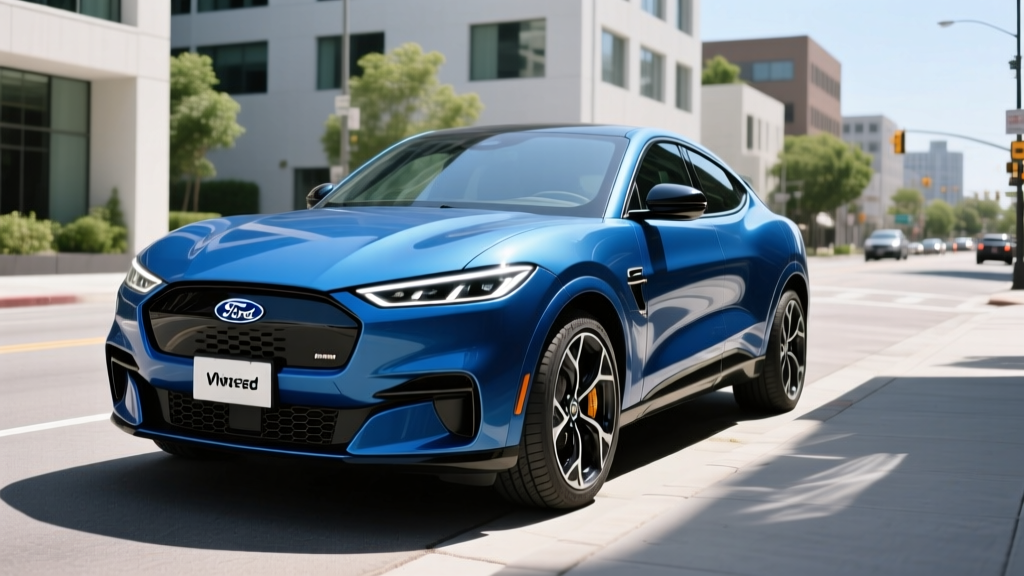
Ford Mustang Mach-E Safety Ratings and Crash Test Performance
If you've searched "Ford Mustang Mach-E crash" you're likely weighing safety alongside range and price — a smart priority for any EV buyer. The 2026 Ford Mustang Mach-E enters the model year with refreshed battery options, NACS-native charging, and a strong safety pedigree built over five years of real-world sales. As a family-oriented electric crossover, its crash-test scores matter as much as its 0-60 time.
The Mach-E has historically earned top marks from both the National Highway Traffic Safety Administration (NHTSA) and the Insurance Institute for Highway Safety (IIHS). The previous-generation model secured a 5-Star Overall NHTSA rating and an IIHS Top Safety Pick designation when equipped with specific headlights. For 2026, Ford carries forward the same high-strength body structure, standard automatic emergency braking, and comprehensive airbag suite that underpinned those scores.
- NHTSA 5-Star Overall Rating (prior model years, expected to carry)
- Standard Pre-Collision Assist with Automatic Emergency Braking (AEB)
- Standard Blind Spot Information System (BLIS) with Cross-Traffic Alert
- Standard Lane-Keeping System and Evasive Steering Assist
- Available BlueCruise hands-free highway driving (SAE Level 2)
- Post-Collision Braking to reduce secondary impacts
One note for shoppers cross-referencing crash data: NHTSA and IIHS test specific model years, and the 2026 results may still be in progress at time of publication. Always check both agencies directly for the latest test cycle results before purchasing.
Range, Battery, and Real-World Efficiency
The 2026 Mustang Mach-E lineup offers two primary battery packs across Select, Premium, and GT trims. The Standard Range pack is an LFP (lithium iron phosphate) unit, while the Extended Range pack uses NMC (nickel manganese cobalt) chemistry for higher energy density.
| Spec | Standard Range (RWD) | Extended Range (AWD) | GT (AWD) |
|---|---|---|---|
| Battery (usable) | ~72 kWh (LFP) | ~91 kWh (NMC) | ~91 kWh (NMC) |
| EPA Range | 250 mi | 320 mi | 290 mi |
| Horsepower | 266 hp | 346 hp | 480 hp |
| 0-60 mph | 6.3 sec | 5.1 sec | 3.5 sec |
| Drivetrain | RWD single motor | AWD dual motor | AWD dual motor |
| MPGe (combined) | 100 MPGe | 98 MPGe | 84 MPGe |
| Efficiency | 34 kWh/100mi | 34 kWh/100mi | 40 kWh/100mi |
| Base MSRP | $39,995 | $46,995 | $55,995 |
The EPA estimates 320 miles for the Extended Range AWD — a solid number. However, in real-world highway driving at 70-75 mph, expect roughly 265-285 miles before needing to charge. In cold weather (below 32°F), range can drop 20-30%, bringing usable range to approximately 220-250 miles on the Extended Range pack. The LFP Standard Range pack holds up better to repeated 100% charging, making it a practical commuter choice if you can charge daily at home.
The LFP chemistry in the Standard Range pack is a notable advantage for longevity. LFP cells degrade more slowly than NMC and tolerate regular charging to 100% without accelerated wear. Ford recommends daily 100% charges for the LFP pack, while NMC owners should target 80-90% for daily use and reserve 100% for road trips.
Charging Speed: DC Fast, Level 2, and Home Setup
For 2026, the Mustang Mach-E ships with a native NACS (North American Charging Standard) port, granting direct access to the Tesla Supercharger network without an adapter. This is a significant practical upgrade over earlier CCS-equipped models.
| Charging Level | Power | Speed / Time |
|---|---|---|
| Level 1 (120V household) | ~1.4 kW | ~3-4 miles per hour |
| Level 2 (240V home) | 10.5 kW (48A) | ~30 miles per hour / full charge in ~9 hrs |
| DC Fast Charge (peak) | 150 kW | 10-80% in ~38 minutes |
| DC Fast Charge (sustained avg) | ~110 kW avg | ~200 miles added in 30 min |
The Mach-E's DC fast-charging peak of 150 kW is adequate but trails competitors like the Hyundai Ioniq 5 (peak 240 kW). The charge curve tapers noticeably above 80% State of Charge — expect the final 20% to add 15-20 minutes. For road trips, plan stops around the 10-80% window where charging is fastest. Preconditioning the battery (via the FordPass app or in-car navigation routing to a charger) is essential to reach peak charge rates, especially in cool weather.
At home, the 10.5 kW Level 2 onboard charger is competitive. A full overnight charge from 20% to 100% takes roughly 8-9 hours on a 48-amp Level 2 wall connector. Budget $500-$1,500 for professional Level 2 installation depending on your electrical panel's capacity — a 200-amp panel with nearby charger placement is the best-case scenario; older 100-amp panels may require a $2,000-$3,000 upgrade.
Interior, Cargo Space, and Technology
The Mach-E's cabin prioritizes a minimalist, screen-forward layout anchored by a 15.5-inch vertical touchscreen running Ford's SYNC 4A system. Wireless Apple CarPlay and Android Auto are standard, along with a wireless charging pad on Premium and GT trims. The center console features a rotary dial shifter and a floating armrest with pass-through storage.
| Dimension | Measurement |
|---|---|
| Front legroom | 43.3 inches |
| Rear legroom | 38.9 inches |
| Front headroom | 40.4 inches |
| Cargo (rear seats up) | 29.7 cu ft |
| Cargo (rear seats folded) | 59.7 cu ft |
| Frunk (front trunk) | 4.7 cu ft (drainable, good for wet gear) |
Standout tech includes the available BlueCruise hands-free driving system on pre-mapped divided highways. BlueCruise is an SAE Level 2 system — meaning the driver must remain attentive and ready to take over at all times. It is not self-driving. The system uses a driver-facing camera to monitor eye attention. A 90-day trial is included; after that, a subscription is required (approximately $75/year or $22/month as of recent pricing).
Notable drawbacks include the absence of physical climate control buttons (all adjustments route through the touchscreen) and a rear-seat floor that sits slightly high due to battery packaging, creating a knees-up seating position for taller passengers.
Pricing, Trim Levels, and Federal Tax Credit Eligibility
The 2026 Mustang Mach-E is available in three main trims: Select, Premium, and GT. Here's how pricing breaks down and how the federal EV tax credit applies.
| Trim | Base MSRP | As-Tested (AWD/Pkg) | §30D Credit Eligible? |
|---|---|---|---|
| Select RWD (Std Range) | $39,995 | $42,495 (AWD add) | Up to $3,750* |
| Premium (Ext Range AWD) | $46,995 | $50,495 (w/ Pkg) | Up to $3,750* |
| GT (Ext Range AWD) | $55,995 | $59,995 (w/ Perf) | Up to $3,750* |
*Federal tax credit amounts and eligibility are subject to change. Under current IRS §30D rules, the Mach-E may qualify for up to $3,750 (partial credit tied to critical minerals sourcing) or up to $7,500 if full battery-component and mineral requirements are met. The vehicle must be under the $80,000 SUV MSRP cap, and the buyer must meet income limits ($150K single / $300K joint). Credit can be transferred to the dealer at point of sale as a purchase-price reduction. Always verify current eligibility at IRS.gov and consult a tax professional.
Warranty Coverage and Battery Longevity
Ford backs the 2026 Mustang Mach-E with a competitive warranty package:
- Bumper-to-bumper: 3 years / 36,000 miles
- Powertrain: 5 years / 60,000 miles
- EV Battery & Components: 8 years / 100,000 miles
- Battery capacity retention: Guaranteed to retain at least 70% of original capacity during the 8-year/100,000-mile warranty period
The 70% retention threshold is industry-standard (matching Tesla, Hyundai, and VW). Real-world data from earlier Mach-E model years suggests most owners see 5-8% degradation over the first 100,000 miles — well within the warranty buffer. LFP packs in the Standard Range model are expected to show even less degradation over time due to the chemistry's inherent cycle-life advantage.
How It Compares: Mach-E vs. Key Competitors
- You want NACS-native Supercharger access without an adapter
- You value BlueCruise hands-free highway driving
- You prefer a sporty driving feel (especially in GT trim)
- You want a proven platform with several years of reliability data
- You need maximum DC fast-charge speed → Hyundai Ioniq 5 (240 kW peak)
- You need 3-row seating → Kia EV9
- You want the longest range under $45K → Tesla Model Y Long Range
- You prefer physical buttons for climate controls → VW ID.4
- Native NACS charging — full Supercharger network access
- Strong safety pedigree (5-Star NHTSA history)
- LFP battery option for longevity-focused commuters
- Engaging driving dynamics, especially GT trim (3.5s 0-60)
- Spacious 29.7 cu ft cargo area with drainable frunk
- BlueCruise availability for highway commuting
- 150 kW peak DC charging trails Hyundai/Kia/Tesla competitors
- No physical climate buttons — touchscreen-only HVAC
- Rear seat floor height creates awkward leg position for tall adults
- BlueCruise requires ongoing subscription after trial
- Partial tax credit only ($3,750) depending on battery sourcing
Who Should Buy the 2026 Mustang Mach-E?
Best for: Daily commuters and small families who want a sporty, safe electric crossover with reliable home charging and access to the Supercharger network for road trips. The Standard Range LFP model is ideal for urban commuters who can charge nightly at home and don't regularly drive more than 200 miles in a day. The Extended Range AWD suits families taking periodic 300-400 mile road trips, while the GT targets enthusiasts who want sports-car acceleration in a practical package.
Less ideal for: Buyers who frequently tow (the Mach-E is rated for only 1,500 lbs with the trailer tow package), those needing 3-row seating, or road-trippers who want the fastest possible DC charging to minimize stop times.
Frequently Asked Questions
What is the real-world range of the 2026 Ford Mustang Mach-E?
The EPA rates the Extended Range AWD at 320 miles, but expect 265-285 miles in real-world highway driving and 220-250 miles in cold weather. The Standard Range LFP model delivers about 250 miles EPA and roughly 200-215 miles on the highway.
How fast does the Mustang Mach-E charge?
On a DC fast charger, the Mach-E peaks at 150 kW and charges from 10-80% in approximately 38 minutes. At home on a 240V Level 2 charger (10.5 kW), it adds roughly 30 miles per hour of charging, reaching a full charge overnight in about 9 hours.
Does the 2026 Mustang Mach-E qualify for the federal EV tax credit?
It may qualify for up to $3,750 under current IRS §30D rules, depending on battery critical-mineral sourcing. Full $7,500 eligibility depends on meeting both battery-component and mineral requirements. Buyer income caps ($150K single / $300K joint) and the $80,000 SUV MSRP cap apply. The credit can be applied as a point-of-sale discount at the dealer. Verify current status at IRS.gov.
Is the Mustang Mach-E safe in a crash?
The Mach-E has historically earned a 5-Star Overall NHTSA rating and strong IIHS scores. It includes standard automatic emergency braking, blind-spot monitoring, lane-keeping, and post-collision braking. Verify the latest 2026 model-year test results directly on NHTSA.gov and IIHS.org before purchasing.
How does the Mach-E compare to the Tesla Model Y?
The Model Y offers longer range (up to 330 miles), faster DC charging (up to 250 kW), and a more mature Supercharger experience. The Mach-E counters with a more traditional crossover interior, available BlueCruise, a drainable frunk, and for many buyers, a more engaging driving feel. Both are strong choices; test-drive both back to back.
What's the battery replacement cost for the Mach-E?
Out-of-warranty battery replacement for the Extended Range pack is estimated at $15,000-$20,000 based on current parts pricing. However, real-world data suggests most EV batteries retain 85-90% capacity at 150,000 miles, making full replacement uncommon within typical ownership periods.