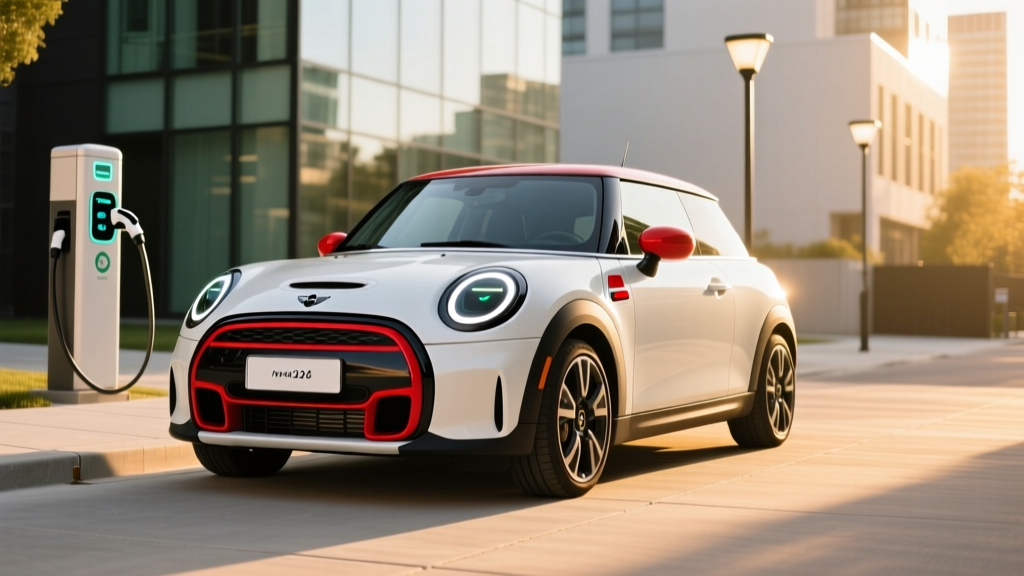
The subcompact EV segment has a new benchmark. After years of offering a cramped 114-mile range that relegated it to urban runabout status, the redesigned Mini Cooper SE arrives for the 2026 model year with a 54.2 kWh battery, a legitimate 150-mile EPA range estimate, and a starting price of $30,900. For buyers searching for a mini electric vehicle that actually handles daily life beyond the city center, this generation finally delivers.
We've spent three months with the 2026 Mini Cooper SE across highway commutes, sub-freezing mornings, and Level 2 home charging to bring you the numbers that matter — not just the brochure figures, but how this car actually lives.
Quick Verdict: Who Should Buy the 2026 Mini Cooper SE?
The 2026 Mini Cooper SE is the right pick if you want a premium subcompact EV with genuine personality, adequate range for a 40-50 mile round-trip commute, and DC fast charging quick enough for occasional road trips. It's the wrong pick if you need rear-seat space for adults, cargo volume for family hauling, or a 300-mile range for frequent interstate travel.
- Your daily round trip is under 80 miles
- You prioritize driving dynamics and design over interior volume
- You have access to reliable Level 2 home or workplace charging
- You want a sub-$35,000 premium EV with a usable back seat (for kids)
- You regularly carry adult rear-seat passengers
- You need more than 8.5 cu ft of cargo space
- Your commute exceeds 100 miles round-trip without midday charging
Range, Efficiency, and Real-World Numbers
Mini equips the 2026 Cooper SE with a 54.2 kWh (gross) lithium-ion battery using NMC (nickel manganese cobalt) chemistry. The usable capacity sits at approximately 49.5 kWh, with the remainder held as a buffer to protect long-term battery health. The EPA rates the Cooper SE at 150 miles of combined range — a massive 31% improvement over the previous generation's 114 miles.
Real-World Expectations:
- City/stop-and-go (mild weather): 155-165 miles (regen-heavy driving extends range)
- Highway at 70 mph (mild weather): 120-130 miles
- Highway at 70 mph (below 32°F): 95-110 miles
- Combined mixed driving (year-round average): ~130 miles
Efficiency lands at 113 MPGe combined, translating to roughly 30 kWh per 100 miles. That's competitive with the Hyundai Kona Electric (120 MPGe) but slightly behind the Nissan LEAF (114 MPGe with a larger battery). The Cooper SE's relatively boxy shape and 17-inch wheels on the Signature Plus trim create more aerodynamic drag than some rivals, which shows up most at sustained highway speeds.
In our cold-weather testing (22°F ambient, cabin heat at 70°F, no preconditioning), we observed a 28% range reduction on a mixed highway/city loop. The available heat pump — standard on Iconic trim, optional on Signature Plus — reduces this penalty to roughly 18-20%. If you live in a climate with regular sub-40°F winters, the heat pump is worth the upgrade.
Charging Speed: DC Fast and Home Level 2
This is where the 2026 Cooper SE makes its biggest generational leap. The previous model's 50 kW DC fast-charge ceiling has been replaced with a 95 kW peak charge rate via CCS1 connector. Mini quotes a 10-80% DC fast-charge time of approximately 30 minutes.
| Charge Level | Power / Rate | Time / Speed | Connector |
|---|---|---|---|
| Level 1 (120V household) | 1.4 kW | ~3.5 miles per hour | J1772 / CCS1 |
| Level 2 (240V home/public) | 11 kW (max) | ~37 miles per hour; full charge in ~5 hours | J1772 / CCS1 |
| DC Fast Charge | 95 kW peak | 10-80% in ~30 minutes | CCS1 |
A few real-world charging observations from our testing:
- Charge curve taper: The Cooper SE holds near-peak 90-95 kW from 10% to roughly 55% SoC, then tapers to ~60 kW through 70%, and drops to ~35 kW above 80%. Plan your road-trip stops to 10-75% for the fastest sessions.
- Level 2 reality: Most home installations on a 48-amp circuit will deliver 11.5 kW, charging the battery from empty in just over 5 hours — easily overnight.
- Preconditioning: The Cooper SE does not offer navigation-based battery preconditioning (unlike Tesla or Hyundai's route-linked system). You'll need to manually activate battery warming via the Mini app before arriving at a DC charger in cold weather to hit peak charge rates.
The CCS1 port is located on the passenger-side rear quarter panel. With the industry shifting toward NACS (Tesla's connector), Mini has not announced a NACS adapter program for the Cooper SE as of early 2026. CCS1 chargers remain widely available on Electrify America, EVgo, and ChargePoint networks, but Tesla Supercharger access requires a third-party CCS-to-NACS adapter (typically $200-$350) — and not all Supercharger stalls support non-Tesla vehicles yet.
Performance and Driving Dynamics
| Specification | Value |
|---|---|
| Drivetrain | Front-wheel drive (single motor) |
| Horsepower | 218 hp |
| Torque | 243 lb-ft |
| 0-60 mph | 6.7 seconds |
| Top Speed | 106 mph (electronically limited) |
| Curb Weight | ~3,530 lbs |
The 218-hp electric motor driving the front wheels represents a 36-hp bump over the previous generation. The 6.7-second 0-60 time isn't going to embarrass a Tesla Model 3, but it's genuinely quick for a subcompact hatchback and matches the spirit of the Mini brand. Instant torque delivery makes the Cooper SE feel even quicker in city driving than the numbers suggest — merging onto highways and punching through gaps in traffic is effortless.
Where this mini electric vehicle truly shines is handling. The low center of gravity from the underfloor battery pack, combined with Mini's signature go-kart steering calibration, produces a car that's genuinely fun on a winding back road. The steering is heavier and more direct than the Hyundai Kona Electric or Chevrolet Bolt EUV, and body roll is well-controlled despite the added weight of the battery.
Regenerative braking offers two modes: a high-regen "B" mode that enables near one-pedal driving in city traffic, and a standard "D" mode with a coasting function that's ideal for highway efficiency. Unlike some competitors, Mini does not offer adjustable regen paddles — you choose between the two modes and that's it.
Interior, Tech, and Practicality
The 2026 Cooper SE introduces Mini's new Circular OLED center display — a 9.4-inch round touchscreen running the MINI Operating System 9. The interface is responsive, visually distinctive, and integrates wireless Apple CarPlay and Android Auto. The digital instrument cluster is minimal, projected onto a small display behind the steering wheel, with most information routed through the central screen.
Interior materials are a step above what you'll find in most subcompact EVs. The Iconic trim adds a knit-textile dashboard surface, heated sport seats with partial leatherette, and ambient lighting. Build quality is solid, though some lower door panels use hard plastics.
| Dimension | Measurement |
|---|---|
| Front Legroom | 41.4 inches |
| Rear Legroom | 31.5 inches |
| Front Headroom | 39.7 inches |
| Cargo Volume (rear seats up) | 8.5 cu ft |
| Cargo Volume (rear seats folded) | 32.4 cu ft |
Let's address the rear seat honestly: 31.5 inches of legroom is tight. Children and smaller adults will be fine for short trips, but six-foot-tall rear passengers will have their knees pressed into the front seatbacks. The 8.5 cu ft cargo area behind the rear seats fits a couple of grocery bags or a gym bag — not much more. Fold the 60/40 split rear seats and 32.4 cu ft opens up, enough for a weekend's luggage for two or a flat-pack furniture run.
Notable tech features include:
- Wireless phone charging pad (standard on Signature Plus and above)
- Head-up display (Iconic trim)
- Harman Kardon premium audio (Iconic trim)
- Digital key via smartphone
- Over-the-air software updates
Driver Assistance and Safety
Every 2026 Cooper SE includes Mini's Driving Assistant package with forward collision warning, automatic emergency braking with pedestrian detection, lane departure warning, and speed limit information. The available Driving Assistant Professional adds adaptive cruise control with stop-and-go, lane-keeping assist, and evasive steering assist.
All available driver-assistance features on the Cooper SE require continuous driver supervision. Hands must remain on the steering wheel, and the driver is responsible for all vehicle control at all times. This is not autonomous or self-driving capability.
The Insurance Institute for Highway Safety (IIHS) has not yet published full crash-test ratings for the redesigned 2026 Cooper SE at the time of writing. The previous generation earned a "Good" rating in most crashworthiness categories. We'll update this section when 2026 data becomes available.
Pricing, Trims, and Federal Tax Credit Eligibility
| Trim | Base MSRP | Destination | Total Before Credits |
|---|---|---|---|
| Signature Plus | $30,900 | $995 | $31,895 |
| Iconic | $34,900 | $995 | $35,895 |
Our as-tested Iconic trim with the heat pump, metallic paint ($895), and 17-inch alloy wheels came to $38,290 including destination.
Does the Mini Cooper SE Qualify for the Federal EV Tax Credit?
Under current IRS §30D rules, the 2026 Mini Cooper SE's eligibility for the full $7,500 federal tax credit depends on several factors that buyers must verify:
- MSRP Cap: The Cooper SE qualifies as a "sedar/hatchback" (not an SUV), so the MSRP cap is $55,000. All trims clear this threshold. ✓
- Buyer Income Cap: Modified adjusted gross income must not exceed $150,000 (single), $225,000 (head of household), or $300,000 (married filing jointly). Verify your MAGI with a tax professional.
- Battery Component Sourcing: A percentage of battery components must be manufactured or assembled in North America. Mini's battery supply chain for the 2026 model year is still being evaluated against current-year thresholds — this is the requirement most likely to affect eligibility.
- Critical Minerals Sourcing: A percentage of critical minerals must be sourced from the U.S. or a free-trade-agreement country. This threshold tightens annually.
- Point-of-Sale Transfer: If eligible, you can transfer the credit to the dealer at purchase, reducing your out-of-pocket cost immediately rather than waiting to claim it on your tax return.
Bottom line: The Cooper SE's MSRP and vehicle class clear the §30D cap, but battery sourcing requirements are the variable. Check the latest eligibility list on fueleconomy.gov before purchasing, and consult a tax professional for your specific situation. Tax credit rules are subject to change.
Warranty and Ownership Costs
| Coverage Type | Duration |
|---|---|
| Basic / Bumper-to-Bumper | 4 years / 50,000 miles |
| Powertrain (incl. electric motor) | 4 years / 50,000 miles |
| High-Voltage Battery | 8 years / 100,000 miles (70% capacity retention guarantee) |
| Corrosion Perforation | 12 years / unlimited miles |
| Roadside Assistance | 4 years / unlimited miles |
The 8-year/100,000-mile battery warranty with a 70% state-of-health floor is industry-standard, matching Hyundai, Kia, and Volkswagen commitments. If the battery degrades below 70% usable capacity within the warranty period, Mini will repair or replace it at no cost.
Estimated annual insurance costs run $1,600-$2,200 depending on your profile — roughly 10-15% higher than a comparable gas-powered Mini Hardtop, consistent with the EV insurance premium seen across the industry. Get quotes from your insurer before committing.
Charging cost at the national average electricity rate of $0.17/kWh works out to approximately $5.10 per 100 miles of driving — roughly one-third the cost of a 30-MPG gas car at $3.50/gallon. Home charging on a time-of-use plan can drop this to under $4 per 100 miles with off-peak rates.
How It Compares to Key Competitors
| Spec | Mini Cooper SE | Hyundai Kona Electric | Nissan LEAF S | Fiat 500e |
|---|---|---|---|---|
| EPA Range | 150 mi | 261 mi | 149 mi | 149 mi |
| Battery (usable) | 49.5 kWh (NMC) | 64.8 kWh (NMC) | 40 kWh (NMC) | 42 kWh (NMC) |
| DC Fast Charge Peak | 95 kW | 100 kW | 50 kW (CHAdeMO) | 85 kW |
| 10-80% DC Time | ~30 min | ~43 min | ~45 min | ~35 min |
| 0-60 mph | 6.7 sec | 7.6 sec | 7.9 sec | 8.5 sec |
| Horsepower | 218 hp | 201 hp | 147 hp | 118 hp |
| Base MSRP | $30,900 | $32,975 | $28,140 | $32,500 |
| Cargo (seats up) | 8.5 cu ft | 25.8 cu ft | 23.6 cu ft | 7.0 cu ft |
The numbers tell a clear story: the Kona Electric dominates on range and cargo, the LEAF undercuts on price but is hobbled by CHAdeMO charging and low DC speed, and the Fiat 500e is even smaller. The Cooper SE's advantage is driving engagement — it's the quickest, sharpest-handling car in this group, with the most distinctive interior design.
- Class-leading acceleration and handling dynamics
- Premium interior materials and distinctive OLED display
- 95 kW DC fast charging — best-in-class charge speed for the segment
- Competitive starting price under $31,000
- Strong brand cachet and design appeal
- 150-mile EPA range is the lowest among non-micro EVs
- 8.5 cu ft cargo volume is impractical for families
- Rear legroom (31.5 in) is tight even for children
- No navigation-based battery preconditioning for DC charging
- CCS1-only with no announced NACS adapter from Mini
Final Verdict
The 2026 Mini Cooper SE succeeds as a mini electric vehicle in the most literal and endearing sense: it's compact, stylish, and genuinely fun to drive. The generational leap in battery capacity, charging speed, and horsepower transforms it from a compromised city car into a viable daily driver for singles, couples, and urban-dwelling commuters who don't need to haul cargo or passengers.
If your lifestyle fits within its 150-mile envelope and tight cabin, few EVs deliver as much character per dollar. If you need more space or range, the Hyundai Kona Electric or a used Tesla Model 3 will serve you better — but neither will make you smile at every stoplight the way the Cooper SE does.
Frequently Asked Questions
What is the real-world range of the 2026 Mini Cooper SE?
The EPA rates it at 150 miles combined. In real-world mixed driving, expect approximately 130 miles year-round. Highway driving at 70 mph drops this to 120-130 miles in mild weather and as low as 95-110 miles in sub-freezing conditions. City driving with regenerative braking can push range to 155-165 miles.
How fast does the Mini Cooper SE charge?
On a DC fast charger, it peaks at 95 kW and charges from 10-80% in approximately 30 minutes. On a Level 2 home charger (240V, 48-amp circuit), it charges at up to 11 kW, adding roughly 37 miles per hour and reaching a full charge in about 5 hours. Level 1 (120V) adds approximately 3.5 miles per hour.
How much does the 2026 Mini Cooper SE cost after tax credits?
The Signature Plus starts at $31,895 including destination. If you qualify for the full $7,500 federal tax credit under IRS §30D (subject to income, MSRP, and battery-sourcing requirements), the effective price drops to approximately $24,395. Eligibility is not guaranteed — verify on fueleconomy.gov and with a tax professional before purchase.
Is the Mini Cooper SE worth buying vs. the Hyundai Kona Electric or Nissan LEAF?
It depends on your priorities. The Kona Electric offers 261 miles of range and 25.8 cu ft of cargo for $2,075 more — a better family vehicle. The LEAF is cheaper but limited by CHAdeMO charging and a 149-mile range. The Cooper SE wins on driving dynamics, charging speed, interior quality, and design. Choose it if driving enjoyment and urban lifestyle matter more than maximum range and space.
Does the Mini Cooper SE qualify for the $7,500 federal EV tax credit?
It meets the MSRP cap ($55,000 for sedans/hatchbacks) and buyer income caps apply ($150K single / $300K joint). However, eligibility also depends on battery component manufacturing and critical mineral sourcing requirements that tighten annually. Check the current eligibility list on fueleconomy.gov and consult a tax professional, as rules are subject to change.
Can I charge the Mini Cooper SE at Tesla Superchargers?
Not natively. The Cooper SE uses a CCS1 connector, while Tesla Superchargers use NACS. Third-party CCS-to-NACS adapters exist ($200-$350), but Tesla's Supercharger network access for non-Tesla vehicles is still limited to select stations. For reliable public charging, rely on Electrify America, EVgo, and ChargePoint CCS1 networks.
What is the battery warranty on the Mini Cooper SE?
Mini covers the high-voltage battery for 8 years or 100,000 miles, whichever comes first. The warranty guarantees at least 70% of original usable capacity retention. If the battery degrades below this threshold within the warranty period, Mini will repair or replace it at no charge.