Quick Verdict: The Standard-Range Lightning Still Makes Sense
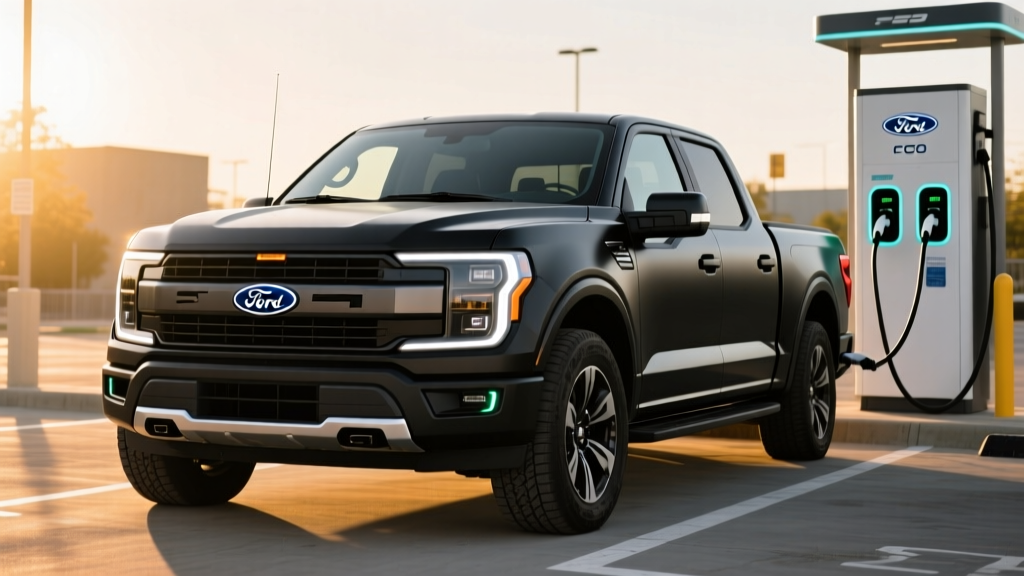
The Ford F-150 Lightning equipped with the 95 kWh usable battery pack (commonly referred to as the standard-range configuration) remains the most accessible full-size electric pickup on the market. For buyers who don't need 320 miles of range and primarily drive within a 150-mile daily radius, the 95 kWh Lightning delivers 563 horsepower, a functional work-truck bed, and over-the-air updates that have matured considerably since the truck's 2022 debut. The trade-off is real-world highway range that lands closer to 200 miles when loaded or towing — a limitation worth understanding before you sign.
| Spec | Value |
|---|---|
| EPA Range | 240 miles (XLT base config) |
| Battery (usable) | ~95 kWh, NMC (nickel manganese cobalt) |
| Max DC Fast Charge | 150 kW peak |
| 10–80% DC Charge Time | ~38 minutes |
| Level 2 Home Charge Rate | 11.5 kW (30 mi/hr added) |
| Horsepower | 563 hp (dual-motor AWD) |
| Torque | 775 lb-ft |
| 0–60 mph | ~4.0 seconds |
| Max Towing (w/ Max Tow Pkg) | 7,700 lbs |
| Max Payload | 2,235 lbs |
| MPGe (combined) | 76 MPGe |
| Efficiency | 44 kWh/100 mi |
| Base MSRP (XLT) | $54,995 |
| Battery Warranty | 8 years / 100,000 miles |
Range and Efficiency: What 240 EPA Miles Actually Means on the Road
EPA Sticker: 240 miles
Real-World Highway (70 mph, unloaded): ~200–215 miles
Real-World Mixed Commuting: ~215–230 miles
Cold Weather (below 30°F): ~170–190 miles
Towing (5,000-lb trailer, flat terrain): ~120–140 miles
The 95 kWh NMC battery pack provides a 240-mile EPA combined estimate on the XLT trim with standard 18-inch wheels. Upgrade to the Lariat with 22-inch wheels and you'll see that figure dip to roughly 230 miles due to increased rolling resistance and weight.
In real-world driving, the Lightning's boxy aerodynamics work against it at highway speeds. Expect roughly 200–215 miles of usable range at 70 mph on a warm day with no cargo. The truck's efficiency sits at 44 kWh per 100 miles — competitive with the Rivian R1T but thirstier than a Tesla Model Y, which benefits from a far sleeker profile. City driving with frequent regenerative braking opportunities pushes efficiency closer to the EPA number, sometimes exceeding it in stop-and-go traffic.
Cold weather is the equalizer for all EVs, and the Lightning is no exception. Below 30°F, expect a 20–30% range reduction. Ford's heat pump (standard on 2025+ models and carried into 2026) mitigates cabin-heating energy draw, but battery chemistry itself slows in the cold, reducing both available capacity and charge acceptance. Preconditioning the battery via the FordPass app while plugged in at home is essential in winter — it warms the pack for better efficiency and faster DC charging upon departure.
Charging: DC Fast, Level 2, and the Charge Curve Reality
| Level | Power | Speed (miles added) | Notes |
|---|---|---|---|
| Level 1 (120V) | 1.4 kW | ~3 mi/hr | Emergency/top-off only |
| Level 2 (240V, 48A) | 11.5 kW | ~30 mi/hr | Full charge in ~9 hours |
| DC Fast Charge | 150 kW peak | ~120 mi in 20 min | 10–80% in ~38 min |
The 95 kWh Lightning peaks at 150 kW on a DC fast charger — adequate but no longer class-leading. The Chevrolet Silverado EV and Tesla Cybertruck both accept higher peak rates. More importantly, the Lightning's charge curve tapers noticeably above 80% state of charge (SoC). The truck holds close to peak power from roughly 15% to 55% SoC, then gradually steps down. A 10–80% session takes approximately 38 minutes at a 150 kW or higher station; a 10–90% session stretches past 55 minutes due to the taper.
For home charging, the onboard 11.5 kW AC charger is the sweet spot. On a 48-amp Level 2 circuit (requiring a 60-amp breaker), you'll recover about 30 miles of range per hour, meaning a full 0–100% charge takes roughly 9 hours overnight. This is the primary refueling method for most Lightning owners and is where the truck's ownership experience excels — wake up to a full "tank" every morning. Installation of a 240V/60A circuit typically runs $800–$2,500 depending on panel proximity and local permit requirements; factor in a potential $1,500–$3,000 panel upgrade if your home still has a 100-amp service.
Ford's Blue Oval Charge Network aggregates access to over 90,000 public chargers, and since 2024, Lightning owners have had adapter-based access to Tesla Supercharger stalls (NACS). This dramatically improves road-trip charging feasibility, though the adapter adds a step and you'll want to confirm station power levels — not all Supercharger stalls deliver the V3 250 kW that the Lightning can't fully utilize anyway.
Performance, Drivetrain, and Towing
Every 95 kWh F-150 Lightning comes with dual-motor all-wheel drive — there is no single-motor RWD option for the standard-range pack. The combined output of 563 horsepower and 775 lb-ft of torque is available instantly, launching the 6,500-pound truck to 60 mph in approximately 4.0 seconds. That's sports-car territory in a body-on-frame pickup, and it never stops being surprising on a merge ramp.
The independent rear suspension (a departure from the live axle on gas F-150s) gives the Lightning genuinely composed ride quality for a truck. Unloaded, it rides better than any gas F-150. The trade-off appears when you tow: max towing capacity with the optional Max Trailer Tow Package is 7,700 lbs on the standard-range battery. That's 2,300 lbs less than the extended-range Lightning's 10,000-lb rating, and well below what a properly equipped gas F-150 can pull.
Towing also decimates range. With a 5,000-lb enclosed trailer on flat highway at 65 mph, expect range to drop to roughly 120–140 miles. Add hills or headwinds and it falls further. If towing is central to your truck use case, the 95 kWh pack will limit your radius severely. For occasional light towing — a small boat, a utility trailer, a couple of dirt bikes — the standard range works fine.
Interior, Cargo, and Tech That Actually Matters
The Lightning cabin mirrors the gas F-150 from the A-pillars forward, which is a compliment: it's spacious, functional, and well-isolated. Rear legroom measures 43.6 inches, and the flat floor (no transmission tunnel) makes the middle seat genuinely usable for a third adult. Behind the rear seats, you get 52.8 cubic feet of cargo volume in the SuperCrew bed (5.5-foot box).
The frunk (front trunk) remains one of the Lightning's signature features: 14.1 cubic feet of lockable, weather-sealed storage with a 400-lb payload capacity. It's a genuine differentiator vs. the Rivian R1T's smaller frunk and the Cybertruck's lack of one. Ford includes a drain plug, making it usable as a cooler for tailgating.
The 12-inch touchscreen (standard on XLT, upgraded to 15.5-inch portrait on Lariat and above) runs Ford's SYNC 4 system. Wireless Apple CarPlay and Android Auto are standard. The available Pro Power Onboard system — 2.4 kW standard, upgradable to 9.6 kW — turns the Lightning into a mobile generator with 120V and 240V outlets in the bed. This is the feature that sells trucks on job sites and at campgrounds alike: you can run power tools, a welder, or an entire tailgate setup directly from the truck's traction battery.
On the driver-assistance front, Ford Co-Pilot360 2.0 is standard, bundling adaptive cruise control, lane-centering, automatic emergency braking, and blind-spot monitoring. BlueCruise (Ford's hands-free highway driving system) is available on Lariat and above. It's an SAE Level 2 system — you must remain attentive and the system monitors your eyes via an infrared camera. It works on over 130,000 miles of pre-mapped divided highways and is genuinely useful for reducing fatigue, but it does not handle construction zones, unmapped roads, or complex urban driving.
Pricing, Trims, and the Federal Tax Credit Picture
| Trim | Base MSRP | Est. Tax-Credit-Adjusted* |
|---|---|---|
| XLT (base) | $54,995 | $47,495 |
| XLT (312A package) | $59,995 | $52,495 |
| Lariat | $67,995 | $60,495 |
*Assumes full $7,500 §30D federal credit eligibility. See IRS rules below — not all buyers qualify.
The 95 kWh battery is available on XLT and Lariat trims. The Platinum trim requires the extended-range 131 kWh pack and is priced above $90,000. For the standard-range models, the XLT at $54,995 is the value play; the 312A equipment group adds BlueCruise, a 360-degree camera, and upgraded interior materials for $5,000 more.
Federal tax credit (§30D) eligibility for 2026: The F-150 Lightning qualifies as a light truck, so the MSRP cap is $80,000 — all 95 kWh trims clear this threshold. However, buyer income caps apply: modified adjusted gross income (MAGI) must not exceed $150,000 (single), $225,000 (head of household), or $300,000 (joint). Additionally, the battery must meet critical-mineral and battery-component sourcing requirements that tighten annually. Ford has worked to localize battery cell production via its BlueOval SK joint venture in Kentucky, but exact credit amounts can shift based on supply-chain compliance. The credit can now be transferred to the dealer at point of sale, reducing your purchase price directly rather than waiting for a tax refund. Confirm current eligibility on fueleconomy.gov before purchasing.
Warranty, Battery Longevity, and Ownership Costs
Ford covers the Lightning's battery and electric powertrain for 8 years or 100,000 miles, whichever comes first. The warranty guarantees the battery will retain at least 70% of its original capacity during that period. The bumper-to-bumper warranty is 3 years / 36,000 miles.
NMC battery chemistry in the Lightning has shown moderate degradation in real-world fleet data. Owners reporting on forums and tracked via NHTSA data suggest roughly 5–8% capacity loss over the first 50,000 miles, with the curve flattening afterward. This is consistent with liquid-cooled NMC packs in general. To maximize longevity: avoid routinely charging to 100% (set a daily limit of 80–90%), use DC fast charging sparingly (it's fine for road trips, but daily Level 2 is gentler), and precondition in extreme temperatures.
Insurance costs for the Lightning run 15–25% higher than a comparable gas F-150, averaging $2,200–$2,800 annually depending on your state and driving record. Maintenance savings partially offset this: no oil changes, no transmission fluid, no spark plugs, and regenerative braking extends pad life significantly. Ford recommends a cabin air filter replacement and tire rotation every 10,000 miles — that's the bulk of your scheduled service.
Pros, Cons, and Who Should Buy the 95 kWh Lightning
Pros
- 14.1 cu-ft frunk with 400-lb payload is class-best utility
- Pro Power Onboard (up to 9.6 kW) is a genuine jobsite and camping asset
- 563 hp / 775 lb-ft standard AWD — effortless performance
- Overnight home charging eliminates gas station visits for daily drivers
- Comfortable independent rear suspension; quiet, spacious cabin
- BlueCruise hands-free driving on mapped highways (Lariat+)
- Eligible for full $7,500 federal tax credit (income/sourcing permitting)
Cons
- Real-world highway range closer to 200 mi; towing cuts it nearly in half
- 150 kW DC peak charge rate lags newer competitors (Silverado EV, Cybertruck)
- Max towing 7,700 lbs — significantly less than gas F-150 or extended-range Lightning
- Insurance premiums 15–25% higher than gas equivalent
- BlueCruise requires subscription after trial period (~$75/mo or $800/yr)
- Cold-weather range loss of 20–30% is significant for northern-climate owners
Who this truck suits best: The 95 kWh F-150 Lightning is ideal for homeowners with Level 2 charging access who need a full-size truck for daily commuting, light hauling, and occasional job-site use — but who don't regularly tow heavy trailers over long distances. It's a strong fit for contractors who can charge overnight and use Pro Power Onboard during the day, suburban families who want truck utility without fuel costs, and fleet operators with predictable daily routes under 150 miles. If you regularly tow over 5,000 lbs or take road trips exceeding 250 miles between stops, look at the extended-range 131 kWh Lightning, the Rivian R1T (Max Pack), or the Chevrolet Silverado EV instead.
Frequently Asked Questions
What is the real-world range of the F-150 Lightning with the 95 kWh battery?
The EPA rates it at 240 miles combined, but expect roughly 200–215 miles on the highway at 70 mph, 215–230 miles in mixed driving, and 170–190 miles in freezing temperatures. Towing a 5,000-lb trailer drops range to approximately 120–140 miles.
How fast does the 95 kWh F-150 Lightning charge?
On a DC fast charger, it peaks at 150 kW and charges from 10–80% in about 38 minutes. At home on a 240V Level 2 charger (11.5 kW), it adds roughly 30 miles of range per hour, fully charging in about 9 hours.
Does the F-150 Lightning qualify for the $7,500 federal EV tax credit?
The 95 kWh trims (XLT, Lariat) are under the $80,000 MSRP cap for trucks. However, buyer income must not exceed $150K single / $300K joint, and the battery must meet 2026 critical-mineral and component sourcing thresholds. The credit can be applied at point of sale. Verify current eligibility on fueleconomy.gov and consult a tax professional.
Is the F-150 Lightning worth buying over the Rivian R1T or Silverado EV?
For work-truck utility (frunk, Pro Power, bed payload) and dealer service network access, the Lightning wins. The Rivian R1T offers better range (up to 420 mi with Max Pack), a more refined interior, and stronger off-road capability — but starts higher and lacks a traditional dealer network. The Silverado EV offers more range and faster charging but is newer with less proven reliability data. The Lightning is the pragmatic, serviceable choice for traditional truck buyers going electric.
What's the biggest drawback of the 95 kWh Lightning?
Range under load. The 240-mile EPA figure shrinks substantially when towing, hauling heavy payloads, or driving in cold weather. If your use case involves regular towing or long highway stretches without reliable charging, the standard-range pack will feel limiting.
How long will the Lightning's NMC battery last?
Ford warranties the battery for 8 years / 100,000 miles at a minimum 70% capacity retention. Real-world data from early 2022–2024 models suggests 5–8% degradation at 50,000 miles, with the rate slowing afterward. With proper care (avoiding routine 100% charges, minimizing daily DC fast charging), the pack should remain functional well beyond the warranty period. Full replacement, if ever needed, currently runs $15,000–$25,000 depending on labor.