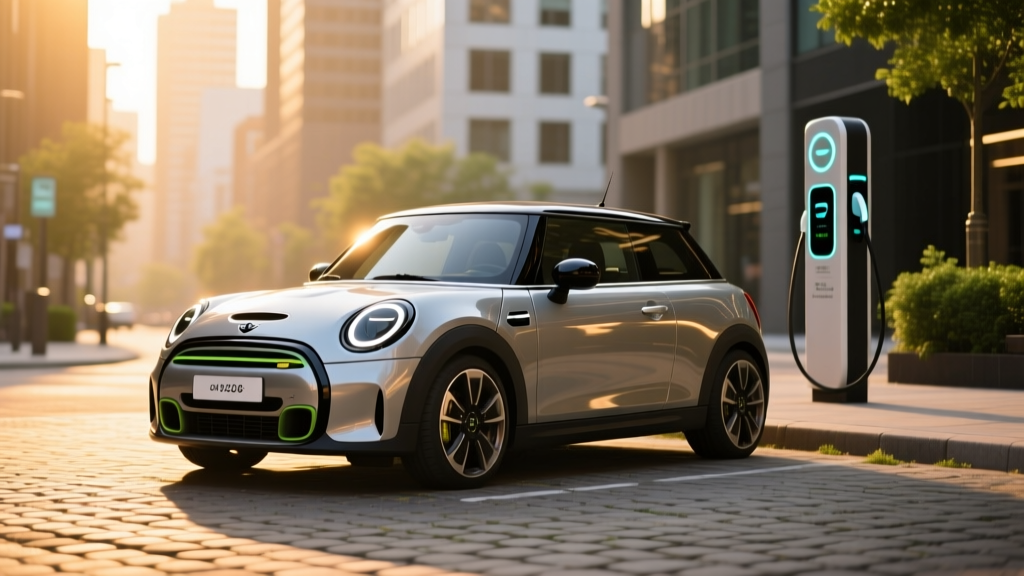
Quick Verdict: The 2026 MINI Cooper S Electric delivers an EPA-estimated 200 miles of range from its 54.2 kWh (usable) NMC battery, peaks at 95 kW DC fast charging (10–80% in ~30 minutes), and starts around $36,950 before incentives. It's a compelling urban EV for drivers with home charging and commutes under 80 miles round-trip, but its compact battery and limited DC charge rate make frequent road-trippers look elsewhere.
Range, Battery, and Real-World Efficiency
MINI equips the Cooper S Electric with a 54.2 kWh usable lithium-ion battery pack using NMC (nickel manganese cobalt) chemistry. The EPA rates it at approximately 200 miles of combined range, with a combined efficiency of roughly 110 MPGe (about 30 kWh/100 miles).
EPA Range: 200 miles
Real-World Expectation: 160–180 miles on the highway at 70 mph; 130–150 miles in freezing temperatures with cabin heat. City driving with regen can push past 210 miles in mild weather.
That real-world gap matters. The Cooper S Electric's relatively small battery means highway speeds and cold weather eat into range faster than larger-pack EVs. If your daily driving stays under 60 miles and you can charge at home overnight, you'll rarely notice. If you regularly drive 100+ miles in winter without mid-day charging access, the margin gets thin.
| Spec | Value |
|---|---|
| Battery (usable) | 54.2 kWh, NMC |
| EPA Range | ~200 miles |
| Efficiency | ~110 MPGe / 30 kWh/100 mi |
| Motor Output | 218 hp / 243 lb-ft torque |
| 0–60 mph | 6.7 seconds |
| DC Fast Charge (peak) | 95 kW |
| 10–80% DC Charge | ~30 minutes |
| Level 2 AC Charge | 11 kW (~4.5 hrs 0–100%) |
| Connector | CCS1 (NACS adapter available) |
| Base MSRP | ~$36,950 |
| Battery Warranty | 8 years / 100,000 miles |
Charging Speed and Infrastructure Reality
The Cooper S Electric's 95 kW peak DC fast-charge rate is adequate but not class-leading. Competitors like the Hyundai Kona Electric peak around 100+ kW, while larger EVs push 200–350 kW. On a 150 kW or 350 kW Electrify America or EVgo station, you'll see the Cooper S peak near 95 kW up to roughly 40% state of charge, then taper progressively. Expect the 10–80% session to take about 30 minutes under ideal thermal conditions.
Preconditioning the battery is critical here. If you navigate to a DC fast charger using the car's built-in routing, the thermal management system will warm or cool the pack to optimize charge speed. Arriving at a charger without preconditioning — especially in cold weather — can stretch that 10–80% time well past 40 minutes.
| Level | Power | Miles Added Per Hour | Typical Use |
|---|---|---|---|
| Level 1 (120V) | ~1.4 kW | ~4–5 mi/hr | Emergency / overnight trickle |
| Level 2 (240V) | 11 kW (max) | ~35–40 mi/hr | Home / workplace daily charging |
| DC Fast | 95 kW (peak) | ~180 mi/hr (peak) | Road trips, quick top-ups |
For home charging, a Level 2 wallbox on a 48-amp circuit will replenish the 54.2 kWh pack in roughly 4.5 hours. That's practical for overnight charging — plug in at bedtime, wake up full. If your electrical panel supports a 60-amp circuit, installation typically runs $800–$2,000 depending on run length and local permit requirements, according to Energy.gov home charging guidelines. A panel upgrade (to 200A service) can add $1,500–$3,000 if your home has older 100-amp service.
EV vs Gas Cooper S: The Cost Breakdown
The gas-powered MINI Cooper S starts around $33,000 and returns roughly 31 MPG combined per fueleconomy.gov. Let's compare five-year ownership costs for both, assuming 12,000 miles/year, $3.50/gallon regular premium (Cooper S requires premium), and $0.14/kWh average home electricity.
| Category | Cooper S Electric | Gas Cooper S |
|---|---|---|
| Base MSRP | $36,950 | $33,000 |
| Est. Federal Tax Credit (§30D) | Up to $7,500* | $0 |
| Effective Purchase Price | ~$29,450 | $33,000 |
| Fuel/Energy (5 yrs, 60k mi) | ~$2,520 (home charging) | ~$6,774 (premium gas) |
| Maintenance (5 yrs) | ~$1,200 | ~$3,500 |
| Insurance (5 yrs est.) | ~$8,500 | ~$7,200 |
| 5-Year Total (est.) | ~$41,670 | ~$50,474 |
*Federal §30D tax credit eligibility depends on MSRP caps (vans/SUVs/trucks: $80k; other vehicles: $55k — the Cooper S Electric qualifies on MSRP), buyer income limits ($150k single / $300k joint AGI), and battery critical-mineral and component sourcing requirements that shift annually. The credit can be transferred to the dealer as a point-of-sale discount. Always verify current eligibility on IRS.gov §30D and consult a tax professional.
The electric Cooper S wins on energy and maintenance costs decisively. No oil changes, no spark plugs, fewer moving parts, and regenerative braking extends pad life. The gap narrows if you can't charge at home and rely on public DC fast charging at $0.35–$0.50/kWh, which would push five-year energy costs closer to $5,000–$7,000.
What First-Time EV Buyers Must Know
If you're coming from a gas car, the Cooper S Electric demands a few adjustments to your routine:
- Home charging is nearly essential. Without it, you'll spend 30+ minutes at public chargers 2–3 times a week. With it, you start every morning with a full "tank" and rarely visit a public station.
- kW is power, kWh is energy. Think of kW as the hose diameter (how fast energy flows) and kWh as the tank size (how much energy is stored). The Cooper S has a 54.2 kWh tank that fills at up to 95 kW.
- Cold weather reduces range 20–30%. Battery chemistry slows in the cold, and cabin heating draws significant energy. The Cooper S Electric's heat pump (standard on most trims) helps, but plan for ~140–160 miles of real winter range.
- One-pedal driving takes a week to learn. The Cooper S Electric offers adjustable regen levels. Max regen lets you drive mostly without touching the brake pedal — lifting off the accelerator slows the car substantially.
- Insurance costs more. EVs generally carry 15–25% higher premiums due to repair costs and battery replacement values. Get quotes before purchasing.
Common Misconceptions — Myth vs Fact
| Myth | Fact |
|---|---|
| "200 miles of range isn't enough." | The average American drives ~37 miles/day (FHWA data). 200 miles covers 95%+ of daily driving with home charging. |
| "The battery will need replacing in 5 years." | NMC batteries in modern thermal-managed EVs typically retain 85–90% capacity after 100,000 miles. MINI warranties the pack for 8 years/100,000 miles against dropping below ~70% capacity. |
| "Charging takes too long." | Home Level 2 charging happens while you sleep — zero active waiting. Road-trip DC fast charges take ~30 min (10–80%), which aligns with a rest stop. |
| "EVs are worse for the environment because of battery mining." | Lifecycle analyses from the ICCT show EVs produce fewer total emissions than gas cars over their lifetime, even accounting for battery manufacturing, in every US grid region. |
| "I can't take road trips." | You can, but the Cooper S Electric's 200-mi range and 95 kW charge rate mean stops every ~150 miles and ~30-min sessions. It's viable but slower than a 300+ mile EV. |
Decision Framework: Is the Cooper S Electric Right for You?
Choose the Cooper S Electric if:
- You have home Level 2 charging (or can install it)
- Your daily driving is under 80 miles round-trip
- You want a premium, fun-to-drive urban commuter
- Road trips are occasional (a few times per year), not weekly
- You qualify for the §30D credit, bringing effective price below $30k
Look elsewhere if:
- You can't charge at home and public infrastructure is sparse near you
- You regularly drive 200+ miles in a day or road-trip frequently
- You live in a region with extreme winters and no mid-day charging option
- You need more than ~20 cubic feet of cargo space
- You want the fastest DC charging in the segment
Consider a PHEV instead if: You want electric commuting (20–30 miles) with gas flexibility for long trips. The MINI Countryman PHEV offers ~30 miles electric plus 300+ total range, bridging both worlds at a slightly higher starting price.
Ownership Costs, Incentives, and Warranty
Beyond the purchase price, the Cooper S Electric's ownership profile is shaped by lower running costs and a strong battery warranty. MINI covers the high-voltage battery for 8 years or 100,000 miles against degradation below approximately 70% state of health. The vehicle limited warranty runs 4 years / 50,000 miles, matching BMW Group's standard coverage.
Maintenance is minimal: cabin air filter replacement (~$60–$100 every 2 years), brake fluid flush (~$120 every 2–3 years), tire rotation, and wiper fluid. Expect to replace tires sooner than on a gas Cooper S — EVs are heavier and deliver instant torque, which accelerates tire wear. Budget ~$600–$900 for a set of four all-season tires every 30,000–40,000 miles.
State and local incentives can stack on top of the federal credit. Some states offer rebates of $1,000–$4,000, utility companies may provide $250–$500 for home charger installation, and HOV lane access is available in several states for EVs. Check your state's energy office and local utility for current programs — these vary by jurisdiction and change frequently.
Frequently Asked Questions
Does the 2026 MINI Cooper S Electric qualify for the $7,500 federal tax credit?
It qualifies on MSRP (under the $55,000 cap for non-SUV vehicles). However, your personal eligibility depends on adjusted gross income limits ($150k single / $300k joint), and the vehicle must meet battery critical-mineral and component sourcing requirements that are updated annually. The credit can be applied as a point-of-sale reduction at the dealer. Verify current rules at IRS.gov before relying on the credit in your budget.
How long does it take to charge the Cooper S Electric at home?
On a Level 2 (240V) wallbox delivering 11 kW, a full 0–100% charge takes approximately 4.5 hours. Most owners plug in overnight and wake to a full battery. On a standard 120V outlet (Level 1), expect roughly 4–5 miles of range per hour of charging — adequate only for very low daily mileage or emergency trickle charging.
What is the real-world highway range?
Expect approximately 160–180 miles at sustained 70 mph in mild weather (60–80°F). In freezing conditions with cabin heat, that drops to roughly 130–150 miles. City driving with regenerative braking can exceed the EPA estimate, reaching 210+ miles in ideal conditions.
Is the Cooper S Electric good for road trips?
It's workable but not ideal. The 200-mile EPA range and 95 kW peak DC charge rate mean you'll stop every ~150 miles and spend ~30 minutes charging (10–80%). A 500-mile trip requires 3 charging stops and adds roughly 90 minutes of total charging time. If road trips are frequent, consider an EV with 300+ miles of range and 150+ kW charging.
How does the Cooper S Electric compare to the gas Cooper S in driving feel?
The electric version delivers 243 lb-ft of torque instantly from a stop, making it feel quicker around town than the gas Cooper S despite similar 0–60 times (6.7 seconds EV vs ~6.3 seconds gas). The EV is heavier (roughly 3,600 lbs vs ~2,900 lbs), which you'll feel in corners, but the low center of gravity keeps body roll controlled. The gas Cooper S still wins on raw lightweight agility.