Quick Verdict: A Purpose-Built City EV With Charm, Not Range
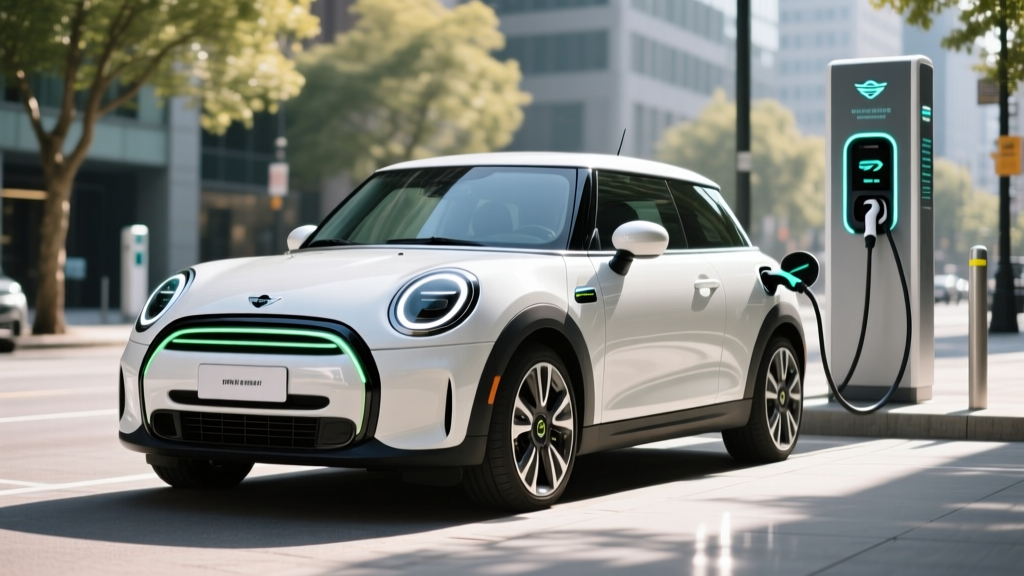
The 2026 Mini Cooper Electric (officially the Mini Cooper SE in the U.S. market, now sold under the simplified "Cooper Electric" badge) is not trying to be a road-trip cruiser. With an EPA-estimated 114 miles of range from a 40.7 kWh (usable) battery, it's an unapologetic urban commuter that trades highway legs for go-kart handling, premium interior materials, and one of the smallest footprints in the EV market. If your daily drive is under 50 miles round-trip and you have reliable home charging, the Cooper Electric delivers a uniquely engaging experience. If you need 250+ miles of range or frequent DC fast-charging corridors, look at the Hyundai Kona Electric or Chevrolet Bolt EUV instead.
EPA sticker: 114 miles
Real-world city/mixed driving: 100–115 miles (regen-heavy routes can match or slightly exceed EPA)
Real-world highway (70+ mph): 85–95 miles (aerodynamic drag and lack of large battery buffer hit hard)
Cold weather (below 32°F): 75–90 miles (expect 20–30% range loss without preconditioning)
The Cooper Electric's modest battery means efficiency discipline matters more than in larger EVs. Use the max-regen "One Pedal" mode in the city to recapture energy, and precondition the cabin while plugged in to preserve range in winter.
Range, Battery & Efficiency: The Numbers Behind 114 Miles
The 2026 Cooper Electric uses a floor-mounted lithium-ion pack with NMC (nickel manganese cobalt) chemistry — not the LFP cells some competitors have adopted for cost and longevity. Total pack capacity is approximately 40.7 kWh usable (roughly 44 kWh gross), paired with a front-mounted permanent-magnet synchronous motor.
Efficiency is rated at 110 MPGe combined (city 118 / highway 101), which translates to roughly 31 kWh per 100 miles in mixed driving. That's competitive for the subcompact EV segment, though the Hyundai Kona Electric edges it out at around 120 MPGe thanks to a slightly more aerodynamic shape and larger battery.
| Spec | Value |
|---|---|
| EPA Range | 114 miles |
| Battery (Usable / Gross) | 40.7 kWh / ~44 kWh |
| Battery Chemistry | NMC (Nickel Manganese Cobalt) |
| Motor | Front-mounted PMSM, FWD |
| Horsepower | 184 hp (135 kW) |
| Torque | 214 lb-ft |
| 0–60 mph | 6.5 seconds |
| Efficiency (Combined) | 110 MPGe / 31 kWh/100mi |
| Max DC Fast Charge | 95 kW (CCS) |
| 10–80% DC Charge Time | ~28 minutes |
| Level 2 (240V) Charge Rate | 11 kW (~37 mi/hr) |
| Base MSRP (Classic) | $30,900 |
| Battery Warranty | 8 years / 100,000 miles |
The 114-mile EPA figure is honest, but context matters. In our experience, city drivers who rely on regenerative braking and keep speeds under 45 mph routinely see 105–115 miles before needing a charge. Highway commuters doing 70–80 mph will watch the range meter drop noticeably faster — plan for 85–95 miles of usable range on open roads. In sub-freezing temperatures without preconditioning, that number can dip below 80 miles.
Charging Speed: DC Fast, Level 2 & Home Setup
The Cooper Electric supports up to 95 kW DC fast charging via a CCS1 connector (the U.S. standard for non-Tesla EVs, though Mini's parent company BMW has committed to NACS adoption in future model years). At peak rate, a 10–80% charge takes approximately 28 minutes.
| Charging Level | Power / Voltage | Speed | Use Case |
|---|---|---|---|
| Level 1 (120V) | ~1.4 kW | ~4.5 mi/hr | Overnight trickle, emergency top-off |
| Level 2 (240V, home) | 11 kW (48A) | ~37 mi/hr | Daily charging — full charge in ~4 hours |
| DC Fast Charge | Up to 95 kW | 10–80% in ~28 min | Road-trip stops, quick top-ups |
Charging curve reality: The 95 kW peak rate only sustains from roughly 10–40% state of charge. Above 50%, the curve tapers significantly — expect 60–70 kW through the mid-range and a crawl below 25 kW past 80%. If you're DC fast charging on a road trip, plan stops at 20–80% rather than trying to fill to 100%, which will add 20+ minutes for minimal range gain.
At home on a Level 2 wallbox (240V, 48-amp circuit), the Cooper Electric's 11 kW onboard charger refills the battery from empty in roughly 4 hours. That's fast for a home charger and means even a short overnight window easily covers a full replenishment. A standard 120V outlet adds about 4.5 miles per hour — workable for low-mileage drivers but painfully slow for anyone who drives 40+ miles daily.
Performance & Driving Dynamics: The Mini Magic, Electrified
With 184 horsepower and 214 lb-ft of instant torque routed through the front wheels, the Cooper Electric hits 60 mph in 6.5 seconds. That's not Tesla-rapid, but it feels punchy in a car this small, especially in city traffic where torque delivery is immediate and seamless.
The single-speed transmission and low center of gravity (battery pack under the floor) give the Cooper Electric the go-kart feel Mini is famous for. Steering is quick, body roll is well-controlled, and the 2,900-pound curb weight keeps it nimble. The trade-off: the front-mounted motor can induce torque steer under hard acceleration, and the firm suspension — a Mini hallmark — may feel harsh on rough pavement compared to comfort-tuned competitors like the Nissan Leaf or Bolt EUV.
Regenerative braking offers two modes: a low-regen coast mode for highway cruising and a strong one-pedal mode for stop-and-go city driving. The one-pedal implementation isn't quite as aggressive as a Chevrolet Bolt's, but it's sufficient to eliminate most brake-pedal use in urban traffic.
Interior, Tech & Cargo: Premium Feel, Compact Space
Mini's interior quality punches above its price class. The 2026 Cooper Electric features a 9.4-inch circular OLED touchscreen as the centerpiece — an updated version of the iconic round display — running Mini's latest Operating System 9. Wireless Apple CarPlay and Android Auto are standard, along with a digital instrument cluster and ambient lighting with multiple color themes.
Driver assistance includes adaptive cruise control, lane-keeping assist, automatic emergency braking with pedestrian detection, and parking sensors with a rearview camera. These are SAE Level 1 features — they assist but do not automate driving. There is no hands-free system comparable to GM's Super Cruise or Ford's BlueCruise available on this model.
Cargo space is the Cooper Electric's most significant compromise:
- Behind rear seats: 8.7 cubic feet
- Rear seats folded: 32.3 cubic feet
- Rear legroom: 30.8 inches (tight for adults on longer trips)
- Front headroom: 38.8 inches
For comparison, the Chevrolet Bolt EUV offers 16.3 cu ft of cargo space, and the Hyundai Kona Electric provides 25.8 cu ft. If you regularly haul more than groceries and a gym bag, the Cooper Electric will feel cramped. The rear seats accommodate children or occasional adult passengers for short trips, but taller riders will find legroom restrictive.
Pricing, Trims & Federal Tax Credit Eligibility
The 2026 Mini Cooper Electric is offered in two primary trims:
| Trim | Base MSRP | As-Tested (Typical) | §30D Credit Eligible? |
|---|---|---|---|
| Classic | $30,900 | $32,500–$34,000 | Potentially up to $3,750* |
| Signature | $34,900 | $37,000–$40,000 | Potentially up to $3,750* |
*Federal tax credit eligibility under IRS §30D depends on multiple factors that change annually. The Cooper Electric's battery sourcing and critical-mineral content have historically qualified it for a partial credit ($3,750), not the full $7,500. Verify current-year eligibility at irs.gov before purchasing.
Key §30D eligibility rules for 2026:
- MSRP cap: The Cooper Electric (under $55,000 for sedans/hatchbacks) clears this threshold easily.
- Buyer income cap: Modified AGI must not exceed $150,000 (single) / $300,000 (joint). Check your tax situation.
- Battery sourcing: The credit splits into two halves ($3,750 each) — one for critical-mineral sourcing, one for battery-component manufacturing. The Cooper Electric has historically met one of the two requirements, yielding a $3,750 credit.
- Point-of-sale transfer: Eligible buyers can transfer the credit to the dealer at purchase, reducing the out-of-pocket price immediately rather than waiting for a tax refund.
With a $3,750 point-of-sale credit applied, the Classic trim effectively starts around $27,150 — competitive with the base Kona Electric and significantly cheaper than a Tesla Model 3. However, the range gap is substantial (Kona offers ~261 miles EPA), so value depends entirely on your use case.
Warranty & Ownership Costs
Mini backs the Cooper Electric's battery and electric powertrain with an 8-year / 100,000-mile warranty (whichever comes first), with a capacity-retention threshold of 70% — standard for the industry. The basic vehicle warranty is 4 years / 50,000 miles, and complimentary scheduled maintenance covers 3 years / 36,000 miles.
Real-world degradation on the current-generation Cooper Electric platform has been modest. Owners reporting on forums and tracking tools typically see 5–8% capacity loss after 3 years and 30,000–40,000 miles — well within the warranty buffer. NMC chemistry generally holds up well with moderate charge habits (keeping daily SoC between 20–80% and avoiding prolonged 100% storage).
Insurance premiums for the Cooper Electric tend to run 10–15% higher than the gas-powered Mini Hardtop, a common EV pattern driven by higher repair costs and parts pricing. Shop quotes from EV-friendly insurers before committing.
Pros, Cons & Who Should Buy
- Engaging, go-kart handling that few EVs match
- Premium interior materials and distinctive circular OLED display
- Compact footprint — ideal for tight city parking
- Fast Level 2 home charging (11 kW, ~4 hr full charge)
- Low starting price after potential tax credit (~$27,150)
- Wireless CarPlay/Android Auto standard
- 114-mile EPA range limits highway and road-trip use
- Only 8.7 cu ft cargo space behind rear seats
- Rear legroom (30.8 in) is tight for adults
- DC fast charge capped at 95 kW — slower than 150+ kW competitors
- Firm ride quality may fatigue on rough roads
- Partial ($3,750) federal credit, not the full $7,500
Best suited for: Urban commuters driving under 50 miles daily, couples or singles without frequent passenger or cargo needs, and drivers who value driving engagement and design over maximum range. The Cooper Electric shines as a second car or dedicated city runabout.
Not ideal for: Families needing rear-seat space, highway commuters with 60+ mile round trips, road-trip enthusiasts, or anyone without reliable home/workplace Level 2 charging.
How It Compares: Cooper Electric vs. Key Rivals
The subcompact EV segment offers credible alternatives with more range and space, though none match the Mini's personality:
- Hyundai Kona Electric: 261 miles EPA, 150 kW DC charging, ~$33,000 base. More practical, less fun.
- Chevrolet Bolt EUV: 247 miles EPA, spacious interior, but limited to 55 kW DC charging. Discontinued after 2025 — used market only.
- Nissan Leaf (SV Plus): 212 miles EPA, CHAdeMO connector (declining infrastructure), aging platform.
- Tesla Model 3 RWD: 272 miles EPA, Supercharger network, but starts ~$38,990 and is a larger vehicle class.
The Cooper Electric wins on driving dynamics, interior design, and city-friendly size. It loses on range, cargo, and charging speed. Your priorities determine which matters more.
Frequently Asked Questions
What is the real-world range of the Mini Cooper Electric?
The EPA rates it at 114 miles. In real-world city driving with regenerative braking, expect 100–115 miles. Highway driving at 70+ mph drops that to roughly 85–95 miles, and cold weather (below freezing) without preconditioning can reduce range to 75–90 miles.
How fast does the Cooper Electric charge at home and on DC fast chargers?
At home on a 240V Level 2 charger, it accepts up to 11 kW, adding about 37 miles of range per hour and fully charging in roughly 4 hours. On a DC fast charger, it peaks at 95 kW, reaching 10–80% in approximately 28 minutes — though the charge curve tapers significantly above 50% SoC.
Does the Mini Cooper Electric qualify for the federal EV tax credit?
It may qualify for a partial $3,750 credit under IRS §30D, depending on current-year battery-sourcing and critical-mineral requirements. It clears the MSRP cap (under $55,000) easily, but buyer income limits ($150K single / $300K joint) apply. Always verify at irs.gov before purchase, and ask the dealer about point-of-sale transfer eligibility.
Is the Cooper Electric worth buying over the Hyundai Kona Electric?
It depends on your priorities. The Kona Electric offers more than double the range (261 vs. 114 miles), faster DC charging (150 kW vs. 95 kW), and significantly more cargo space. The Cooper Electric wins on driving engagement, interior design quality, and compact city maneuverability. If range and practicality matter most, choose the Kona. If driving feel and urban style are paramount, the Mini delivers.
What's the biggest drawback of the Cooper Electric?
Range is the primary limitation. At 114 miles EPA, this EV demands disciplined route planning for anything beyond a daily commute. Combined with modest 95 kW DC charging and a small 8.7 cu ft cargo area, the Cooper Electric is a specialist, not a generalist. Make sure your driving patterns fit before committing.
How long will the battery last?
Mini warranties the battery for 8 years or 100,000 miles (70% capacity retention). Real-world data from current-generation models suggests 5–8% degradation after 3 years and 30,000–40,000 miles with normal use. Following best practices — keeping daily charge between 20–80%, avoiding prolonged storage at 100%, and preconditioning in extreme temperatures — should keep degradation minimal over the vehicle's life.
Sources: EPA Fuel Economy, IRS Clean Vehicle Credit, Mini USA