Quick Answer: Is the Nissan Ariya Being Discontinued?
As of early 2026, Nissan has not officially announced a full discontinuation of the Ariya EV in the United States. However, the model has seen limited marketing push, sparse dealer inventory, and no major refresh for the 2026 model year — leading to widespread speculation about its future. If you're considering an Ariya, it remains available new at select dealers, but buyers should weigh Nissan's uncertain EV commitment against strong alternatives like the Hyundai Ioniq 5, Tesla Model Y, and Chevrolet Equinox EV. If the Ariya is eventually discontinued, parts and service support will continue under Nissan's standard EV warranty (8 years/100,000 miles battery), but resale values could soften.
The Nissan Ariya in 2026: Where Things Stand
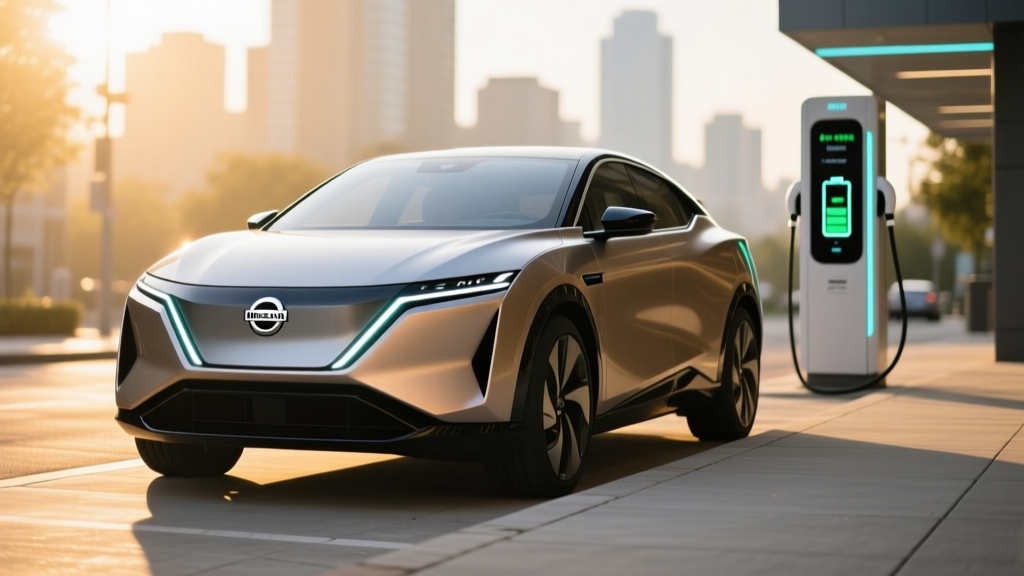
The Nissan Ariya launched in the U.S. for the 2023 model year as Nissan's first dedicated EV crossover since the original Leaf. Built on the Renault-Nissan-Mitsubishi Alliance's CMF-EV platform, it offered a competitive package: up to 304 miles of EPA range, DC fast charging up to 130 kW, and a starting price around $43,000 before incentives. But the Ariya arrived into an increasingly crowded segment, and Nissan's broader EV strategy has been inconsistent — the company scaled back its "Ambition 2030" EV targets in mid-2025, citing slower-than-expected global EV adoption and tariff-related supply chain pressures.
For 2026, the Ariya carries over with minimal changes. Dealer inventory is thin in many regions, and Nissan has not confirmed a next-generation model or a major mid-cycle update. That doesn't mean the Ariya is dead — but it does mean buyers should go in with eyes open about long-term support, resale trajectory, and the competitive landscape.
2026 Nissan Ariya: Specs, Range, and Charging at a Glance
| Specification | Standard Range (FWD) | Extended Range (FWD) | e-4ORCE (AWD) |
|---|---|---|---|
| Battery (usable) | 63 kWh (NMC) | 87 kWh (NMC) | 87 kWh (NMC) |
| EPA Range | 216 mi | 304 mi | 272 mi |
| Real-World Range (highway, 70°F) | ~175–190 mi | ~250–270 mi | ~225–245 mi |
| Real-World Range (cold, 20°F) | ~140–160 mi | ~195–220 mi | ~175–200 mi |
| Horsepower | 214 hp | 242 hp | 389 hp |
| 0–60 mph | ~7.5 sec | ~7.2 sec | ~4.8 sec |
| Peak DC Fast Charge | 130 kW | 130 kW | 130 kW |
| 10–80% DC Charge Time | ~35 min | ~40 min | ~40 min |
| Level 2 Charging (kW) | 7.2 kW | 7.2 kW | 7.2 kW |
| MPGe (combined) | 109 MPGe | 97 MPGe | 95 MPGe |
| Base MSRP (2026) | ~$39,590 | ~$43,190 | ~$47,190 |
| Battery Warranty | 8 yr / 100,000 mi (capacity ≥ 66% per Nissan's degraded-capacity threshold) | ||
Sources: EPA / fueleconomy.gov, Nissan USA specifications.
Real-World Range Reality Check
The Ariya's 304-mile EPA figure (Extended Range FWD) is competitive on paper. But in real-world highway driving at 70–75 mph, expect 250–270 miles in mild weather. In freezing temperatures (20°F or below), range drops 25–35% due to battery resistance and cabin heating demands — figure roughly 195–220 miles on a full charge. The Ariya uses NMC (nickel-manganese-cobalt) chemistry, which offers strong energy density but is more sensitive to cold than LFP. If your commute regularly exceeds 80 miles round-trip in winter, the Standard Range trim will feel tight.
Ariya vs. Gas and Hybrid Crossovers: The Cost Math
If you're cross-shopping the Ariya against a gas compact SUV (like a Toyota RAV4) or a hybrid (like the RAV4 Hybrid), the economics depend heavily on your driving volume, electricity rates, and how long you plan to keep the vehicle. Here's a 5-year total-cost snapshot:
| Cost Factor (5 yr / 75,000 mi) | Nissan Ariya (Extended Range FWD) | Toyota RAV4 Hybrid (AWD) | Toyota RAV4 Gas (AWD) |
|---|---|---|---|
| Purchase Price (base MSRP) | $43,190 | $33,575 | $31,575 |
| Est. Federal Tax Credit (§30D) | Up to $7,500 (eligibility varies) | $0 | $0 |
| Effective Purchase Price | ~$35,690 | $33,575 | $31,575 |
| Fuel / Energy Cost | ~$3,750 (home charging at $0.14/kWh) | ~$6,560 (39 MPG, $3.42/gal) | ~$9,375 (30 MPG, $3.42/gal) |
| Maintenance (est.) | ~$1,200 | ~$2,800 | ~$3,200 |
| Insurance (avg. 5 yr) | ~$9,500 | ~$7,800 | ~$7,500 |
| 5-Year Total (purchase + fuel + maint. + ins.) | ~$50,140 | ~$50,735 | ~$51,650 |
Assumptions: 15,000 mi/yr; electricity $0.14/kWh (national avg. home rate); gas $3.42/gal (EIA 2026 avg.); insurance based on national EV avg. vs. ICE avg. Tax credit eligibility subject to IRS §30D rules including income caps, MSRP caps, and battery sourcing requirements. Consult a tax professional.
The Ariya's higher upfront cost is largely offset by the federal credit and lower fuel/maintenance costs over five years. The hybrid RAV4 nearly matches it on total cost without charging infrastructure requirements. The gas RAV4 costs more to run but has the lowest entry price. Your break-even point depends on whether you can charge at home cheaply and whether you qualify for the full credit.
What If the Ariya Is Discontinued? Ownership Implications
Discontinuation doesn't mean abandonment — but it does introduce real considerations:
Parts and Service
Federal law requires manufacturers to maintain parts availability for a minimum period after discontinuation (typically 10 years for safety-related components, and Nissan's dealer network will continue servicing the Ariya's powertrain, brakes, and electronics). The CMF-EV platform is shared with the Renault Scenic E-Tech in Europe, which helps ensure component supply. However, body panels, trim-specific interior pieces, and proprietary infotainment hardware can become harder to source 5–7 years post-discontinuation.
Resale Value
Discontinued EV models historically see a 10–20% additional depreciation hit in the first 2–3 years after the announcement, beyond normal EV depreciation curves. The Chevrolet Bolt EV, for instance, saw resale values dip when GM announced its initial discontinuation (before reversing course with the refreshed Equinox EV). If you plan to keep the Ariya 8+ years, this matters less. If you trade in every 3–4 years, the risk is real.
Software and OTA Updates
Nissan's infotainment and ProPILOT Assist systems receive periodic over-the-air updates. A discontinued model typically sees reduced update cadence — security patches continue, but feature enhancements slow or stop. Don't expect major new ADAS capabilities on a sunsetted model.
Battery Longevity
The Ariya's NMC battery pack is liquid-cooled and carries an 8-year/100,000-mile warranty. Nissan's warranty guarantees the battery will retain a minimum capacity threshold (historically 9 bars out of 12 on the Leaf's gauge, translating to roughly 66–70% State of Health). Real-world NMC degradation data from similar platforms suggests 8–12% capacity loss over 5 years / 75,000 miles under normal use. That's acceptable, and Nissan must honor the warranty regardless of whether the model is still in production.
Charging the Ariya: Home Setup and Public Network Reality
The Ariya uses a CCS1 connector for DC fast charging and a J1772 inlet for Level 1/Level 2 AC charging. (Nissan adopted NACS for future models but the 2026 Ariya retains CCS1.) Here's what charging looks like in practice:
| Charging Level | Power | Miles Added per Hour | Use Case |
|---|---|---|---|
| Level 1 (120V household) | ~1.4 kW | ~4–5 mi/hr | Emergency / overnight trickle |
| Level 2 (240V home) | 7.2 kW | ~22–25 mi/hr | Daily home charging (full charge in ~12 hr for 87 kWh pack) |
| DC Fast Charge | Peak 130 kW | N/A (time-based) | Road trips; 10–80% in ~35–40 min |
Home charging installation for a Level 2 setup (like a ChargePoint Home Flex or Emporia Level 2) typically runs $500–$1,800 total, depending on whether your electrical panel needs an upgrade. A 200-amp panel with spare capacity can accommodate a 40-amp circuit (supporting 32A continuous / 7.7 kW) for roughly $500–$800 in electrician labor plus $350–$600 for the charger unit. A panel upgrade to 200A adds $1,500–$3,000.
On the road, the Ariya's 130 kW peak DC charge rate is its weakest competitive spec. The Hyundai Ioniq 5 charges at up to 240 kW (10–80% in ~18 minutes on a 350 kW station), and the Tesla Model Y peaks around 250 kW. The Ariya's charge curve also tapers noticeably above 80% SoC — a common NMC behavior to protect cell longevity, but it means that last 20% can take as long as the first 70%. Plan road-trip stops accordingly: target 10–80% charges and skip the top-off unless you're ending the day.
Common Misconceptions About the Ariya (and Discontinued EVs)
| Myth | Fact |
|---|---|
| "If Nissan discontinues the Ariya, my warranty is void." | False. Federal law and Nissan's contractual obligation require honoring the 8-yr/100,000-mi battery and 5-yr/60,000-mi powertrain warranty regardless of production status. |
| "The Ariya qualifies for the full $7,500 federal tax credit." | Not guaranteed. The §30D credit has income caps ($150K single / $300K joint), MSRP caps ($80K for SUVs), and critical-mineral/battery-component sourcing requirements that change annually. Verify current eligibility on IRS.gov or at the point of sale. |
| "130 kW DC charging is fast enough for any road trip." | It's adequate but not competitive. A 40-minute 10–80% charge is 15–20 minutes slower than a Hyundai Ioniq 5 or Kia EV6 at a comparable station. On multi-day trips, that adds up. |
| "The Ariya's 304-mile range means I'll always get 300+ miles." | EPA estimates assume mixed driving at moderate temperatures. Sustained highway speeds (75 mph) in summer heat yield ~250–270 mi; winter cold drops it to ~195–220 mi. |
| "Discontinued EVs are impossible to insure." | Insurers price based on repair cost data, parts availability, and vehicle value. A discontinued Ariya will remain insurable through all major carriers, though premiums may adjust as the vehicle ages and parts availability shifts. |
Decision Framework: Should You Buy the Ariya in 2026?
Buy the Nissan Ariya If:
- You find a strong dealer discount ($4,000–$7,000 off MSRP is common on slow-moving Ariya inventory) that makes the effective price competitive with an Ioniq 5 SEL or Model Y.
- You value a quiet, comfort-tuned ride over sporty dynamics — the Ariya's suspension and cabin isolation are among the best in the segment.
- You plan to keep the vehicle 7+ years, reducing the resale-value risk of discontinuation.
- You have reliable home Level 2 charging and a daily commute under 80 miles round-trip.
- The e-4ORCE AWD system's dual-motor torque vectoring appeals to you for snow/rain traction (it's genuinely well-engineered for inclement weather).
Look at Alternatives If:
- Charging speed matters to you: The Hyundai Ioniq 5 (240 kW peak, 10–80% in ~18 min) or Kia EV6 crush the Ariya on road-trip convenience.
- You want long-term platform support: The Tesla Model Y and Ford Mustang Mach-E have clearer multi-year product roadmaps and larger service networks.
- You need maximum range: The Chevrolet Equinox EV (319 mi EPA, starting ~$33,000) or Hyundai Ioniq 5 (310+ mi on Long Range trims) offer more miles per dollar.
- Resale value is a priority: Toyota's upcoming bZ4X successor or a plug-in hybrid like the RAV4 Prime (42 mi electric-only, no range anxiety) may hold value better if the Ariya is sunsetted.
- You lack home charging: The Ariya's slower DC charging makes public-charging-dependent ownership more painful than in an Ioniq 5 or Model Y.
The Bottom Line for First-Time EV Buyers
If the Nissan Ariya EV discontinuation rumors are what brought you here, the practical takeaway is this: the Ariya is a competent, comfortable electric crossover with respectable range and solid build quality, but it's hampered by middling DC charge speeds and an uncertain product future. It's not a bad EV — it's just not the segment leader it needed to be when Nissan priced it against the Ioniq 5 and Model Y.
For a first-time EV buyer, the Ariya can still make sense if the price is right and your driving patterns align with its strengths (comfortable commuting, home charging, moderate road-trip needs). But go in knowing that a potential discontinuation means softer resale, slower software evolution, and a smaller owner community compared to Tesla or Hyundai's EV ecosystems.
Test-drive the Ariya back-to-back with an Ioniq 5 and a Model Y. Compare the real charge times at a DC fast charger, not just the spec sheet. And if you do buy, negotiate hard — dealers with aging Ariya inventory are often willing to deal.
Frequently Asked Questions
Has Nissan officially confirmed the Ariya EV discontinuation?
No. As of early 2026, Nissan has not issued a formal discontinuation notice for the U.S.-market Ariya. However, the model has received minimal marketing support and no significant updates for 2026, and Nissan's revised EV strategy has deprioritized several planned electric models. Monitor Nissan's U.S. press site and dealer communications for official updates.
Will I still get warranty service if Nissan discontinues the Ariya?
Yes. Nissan is contractually and legally obligated to honor all factory warranties — including the 8-year/100,000-mile battery warranty and 5-year/60,000-mile powertrain coverage — regardless of whether the model remains in production. Authorized Nissan dealers will continue to perform warranty repairs.
How does the Ariya's charging speed compare to rivals?
The Ariya's 130 kW peak DC charge rate is below the segment average for 2026. The Hyundai Ioniq 5 and Kia EV6 peak at ~240 kW (10–80% in ~18 min on a 350 kW charger). The Tesla Model Y peaks around 250 kW. The Ariya takes roughly 35–40 minutes for a 10–80% charge — adequate but noticeably slower on road trips.
Does the 2026 Ariya qualify for the $7,500 federal EV tax credit?
Eligibility depends on multiple factors under IRS §30D: your adjusted gross income (capped at $150K single / $300K joint for new EVs), the vehicle's MSRP (must be under $80,000 for SUVs), and battery component/critical mineral sourcing requirements that tighten annually. The Ariya's eligibility has shifted as sourcing rules evolve. Check the latest qualified vehicle list at fueleconomy.gov and confirm with your tax advisor before purchasing.
What's a realistic monthly cost to own the Ariya vs. a gas crossover?
Assuming a $43,000 purchase with a $7,500 credit applied, financing at 6.5% over 60 months yields roughly $695/month. Add ~$160/month for insurance and ~$60/month for home electricity (at 15,000 mi/yr and $0.14/kWh). Total: approximately $915/month. A comparable gas RAV4 at $31,575 with no credit, same financing terms: ~$615/month + ~$125/month insurance + ~$155/month gas = ~$895/month. The Ariya's monthly cost is comparable when the credit applies, with the advantage shifting further in the EV's favor as gas prices rise.
Is the Ariya a good first EV if I don't have home charging?
It's workable but not ideal. The Ariya's 130 kW DC charge rate means longer sessions at public chargers compared to 800V-architecture rivals. If you rely solely on public charging, you'll spend roughly 40 minutes per session to go from 10–80%, versus 18–20 minutes in an Ioniq 5. Factor in your local public charging network's reliability, pricing (typically $0.30–$0.48/kWh at DC stations), and availability before committing.