Why the U.S. Military Is Investing in Tesla EVs
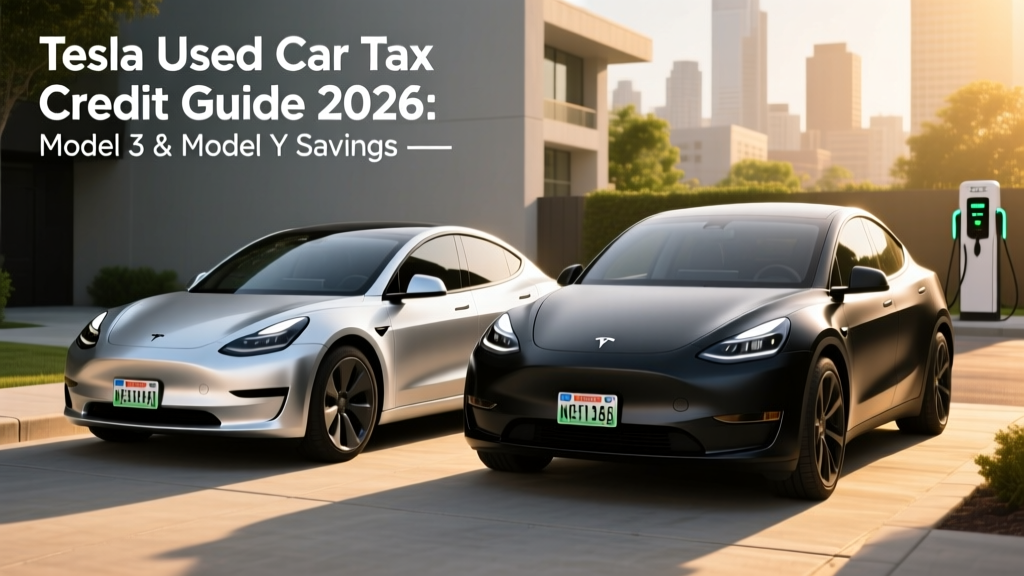
The phrase "military Tesla" has gained traction as the U.S. Department of Defense (DoD) accelerates its adoption of electric vehicles across bases, motor pools, and even tactical applications. From the Air Force integrating Tesla Model Y and Model 3 vehicles into administrative fleets to the U.S. military testing the Tesla Cybertruck for light tactical roles, electrification has become a strategic priority for the armed forces.
This isn't just about environmental goals. Military installations spend millions annually on petroleum-based fuels for non-combat vehicles. The DoD's Federal Fleet Management initiative targets a transition to zero-emission vehicles for light-duty administrative and support roles across hundreds of bases worldwide. Tesla, with its established Supercharger network, proven reliability data, and competitive pricing after federal incentives, has become a natural supplier.
For civilian EV shoppers, military adoption matters because it validates long-term durability, fleet-scale maintenance economics, and the viability of EVs in demanding operational environments. When the armed forces put an EV through its paces, the data benefits everyone considering an electric purchase.
Which Tesla Models the Military Actually Uses
The U.S. military does not operate a single monolithic "military Tesla" vehicle. Instead, multiple Tesla models serve distinct roles across branches:
| Model | Military Role | Branches Reported | Fleet Size (Est.) |
|---|---|---|---|
| Tesla Model Y (Long Range AWD) | Base administrative transport, staff vehicles | Air Force, Army, Navy | Several hundred units |
| Tesla Model 3 (RWD / Long Range) | Commuter fleet, MP/security patrol | Air Force, Marine Corps | Several hundred units |
| Tesla Cybertruck (AWD / Cyberbeast) | Light tactical evaluation, utility transport | Air Force (testing) | Limited evaluation units |
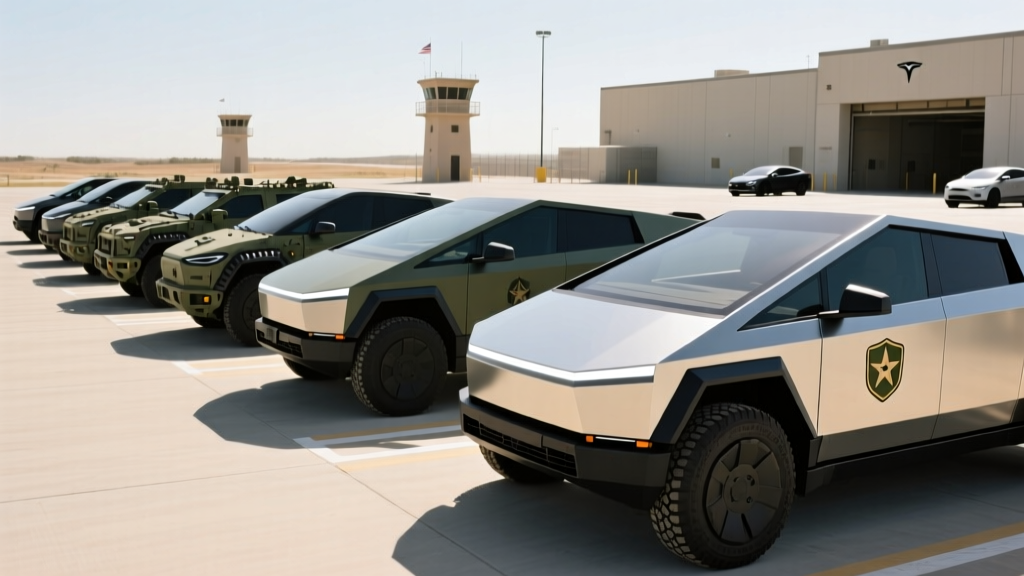
The Model Y has emerged as the most common military Tesla, largely due to its crossover practicality, strong EPA range, dual-motor AWD traction, and cargo versatility. The Cybertruck has drawn the most public attention due to its stainless-steel exoskeleton and angular design, which visually evokes a tactical vehicle — though its military role remains limited to evaluation and light utility rather than combat applications.
2026 Tesla Model Y Long Range: The Military Fleet Workhorse — Full Specs
Because the Model Y Long Range AWD is the backbone of military Tesla fleet procurement, here's a complete breakdown of what the 2026 model delivers:
| Specification | 2026 Tesla Model Y Long Range AWD |
|---|---|
| EPA Range | 320 miles |
| Battery Capacity (usable) | ~75 kWh, NMC chemistry |
| Drivetrain | Dual-motor AWD |
| Horsepower | 384 hp (combined) |
| 0-60 mph | 4.8 seconds |
| Efficiency | 122 MPGe combined / 28 kWh/100 mi |
| Max DC Fast Charge | 250 kW (peak) |
| 10-80% DC Fast Charge | ~27 minutes |
| Level 2 Home Charge Rate | 11.5 kW (~44 mi/hr) |
| Cargo Volume (rear seats up) | 30.2 cu ft |
| Cargo Volume (rear seats folded) | 72.1 cu ft |
| Rear Legroom | 41.6 inches |
| Battery/Drive Unit Warranty | 8 years / 120,000 miles |
| Base MSRP | $44,990 |
Charging Infrastructure: How Military Bases Power Tesla Fleets
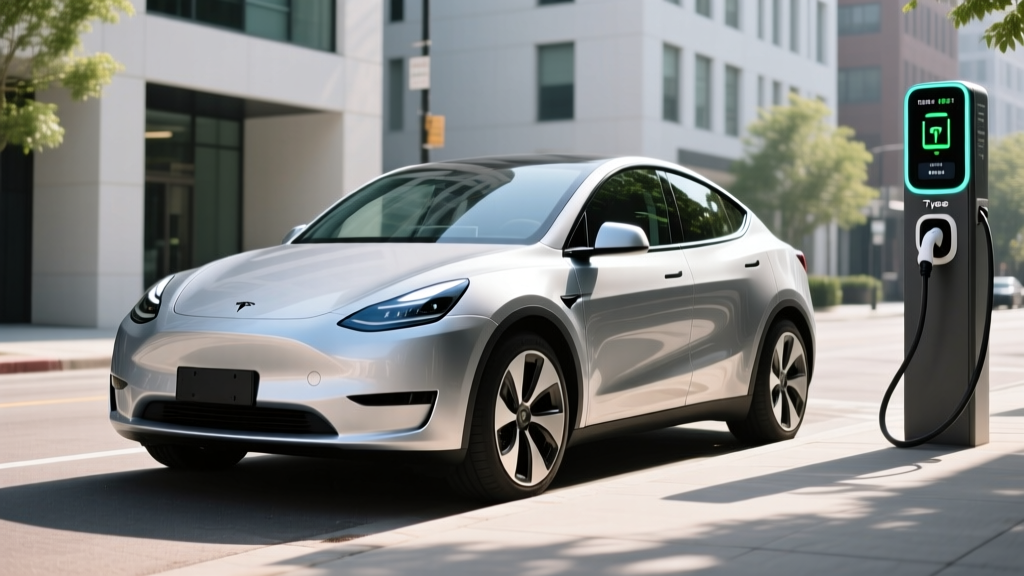
One reason Tesla has gained traction in military procurement is the Supercharger network's coverage near most major U.S. installations. But on-base charging is equally critical:
| Charging Level | Power (kW) | Miles Added per Hour | Military Use Case |
|---|---|---|---|
| Level 1 (120V standard outlet) | ~1.4 kW | ~5 mi/hr | Overnight trickle for parked fleet |
| Level 2 (240V, Wall Connector) | 11.5 kW | ~44 mi/hr | Primary base motor-pool charging |
| DC Fast Charge (Supercharger V3) | 250 kW (peak) | ~1,000 mi/hr (peak) | Rapid top-up for off-base missions |
Most military installations that have adopted Tesla fleets have installed clusters of Level 2 Tesla Wall Connectors in motor pools and parking areas. A typical Model Y arriving at 20% State of Charge (SoC) will reach full overnight on a Level 2 unit — ideal for fleet rotation schedules where vehicles are used during the day and charged at night.
For off-base operations, the Tesla Supercharger network's presence near virtually every major U.S. military base makes road-trip logistics straightforward. The Model Y's 10-80% charge time of approximately 27 minutes at a V3 Supercharger means a driver can add roughly 200 miles of range during a standard lunch stop.
Charging curve reality: The 250 kW peak rate applies only between roughly 10-30% SoC. As the battery fills, the charge rate tapers — by 60% SoC, you're typically seeing 100-120 kW, and above 80% it drops below 50 kW. This is why the 10-80% metric matters more than peak kW for practical trip planning.
The Cybertruck in Military Testing: What's Real and What's Hype
The Tesla Cybertruck has generated outsized attention as a "military Tesla" candidate. In 2023-2024, the U.S. Air Force confirmed it was evaluating the Cybertruck for light utility and non-combat transport roles. However, it's essential to separate fact from viral speculation:
What the Cybertruck offers for military evaluation:
- Stainless-steel exoskeleton with high dent/scratch resistance
- AWD with up to 340 miles EPA range (AWD trim)
- 11,000-lb towing capacity — useful for light trailer/equipment hauling
- Vault bed with 6.5-ft length and powered tonneau cover
- Powershare capability (V2L) — up to 11.5 kW of onboard power for tools and equipment in the field
What it does NOT offer:
- Ballistic armor or blast protection (it is not an MRAP or HMMWV replacement)
- MIL-STD electromagnetic hardening
- Combat-rated suspension or run-flat tactical tires
- Any classified or restricted military variant
The Cybertruck remains a civilian production vehicle that the military is testing for support roles — not a purpose-built tactical platform. For actual combat vehicles, the DoD relies on specialized manufacturers and programs like the Joint Light Tactical Vehicle (JLTV).
Pricing, Tax Credits, and Fleet Procurement Economics
For civilian buyers interested in the same Tesla models the military uses, pricing and federal incentives play a major role in the purchase decision:
| Model / Trim | Base MSRP (2026) | Federal §30D Credit Eligibility | Effective Price After Credit |
|---|---|---|---|
| Model Y Long Range AWD | $44,990 | Eligible (under $80K SUV MSRP cap) | ~$37,490 (if buyer qualifies) |
| Model 3 RWD | $38,990 | Eligible (under $55K sedan MSRP cap) | ~$31,490 (if buyer qualifies) |
| Model 3 Long Range AWD | $45,240 | Eligible (under $55K sedan MSRP cap) | ~$37,740 (if buyer qualifies) |
| Cybertruck AWD | $79,990 | Eligible (under $80K truck MSRP cap) | ~$72,490 (if buyer qualifies) |
- MSRP Cap: Sedans ≤ $55,000; SUVs/pickups/vans ≤ $80,000
- Buyer Income Cap: AGI ≤ $150,000 (single) / $300,000 (joint) / $225,000 (head of household)
- Battery Sourcing: Critical minerals and battery components must meet phased-in percentage thresholds from U.S. or FTA-partner countries
- FEOC Exclusion: No battery components from Foreign Entities of Concern (e.g., certain Chinese manufacturers)
- Point-of-Sale Transfer: Eligible buyers can transfer the credit to the dealer at purchase for an immediate price reduction
Consult a tax professional to confirm your eligibility. Rules are subject to change, and Tesla's battery sourcing compliance can shift by model year and production batch.
For military fleet procurement, vehicles purchased by the federal government follow a different acquisition path — the DoD buys directly through GSA schedules and is not subject to consumer §30D credit rules. However, the government benefits from Tesla's competitive pricing and lower per-mile operating costs versus gasoline equivalents, which is a primary driver of adoption.
Tech Features and Driver-Assist Systems
Tesla vehicles used in military fleets come with the same technology available to civilian buyers. Key features include:
Standard on all models:
- 15.4-inch central touchscreen with navigation, media, and vehicle controls
- Tesla Autopilot (SAE Level 2): adaptive cruise control, lane-keeping assist, automatic emergency braking
- Over-the-air (OTA) software updates for continuous feature improvements
- Tesla mobile app for remote climate control, location tracking, and charge monitoring
- Dashcam and Sentry Mode (valuable for fleet security and incident documentation)
Optional Full Self-Driving (Supervised):
- Enhanced lane-change, intersection, and parking capabilities
- Still SAE Level 2 — driver must remain fully engaged and hands-on at all times
For military fleet managers, Sentry Mode and the built-in dashcam system provide valuable accountability — every trip can be reviewed, and parked vehicles record their surroundings. This has been cited as an unexpected operational benefit of Tesla adoption on bases.
Pros and Cons: Military Tesla Models for Civilian Buyers
Pros
- Strong EPA range (320 mi Model Y LR) with real-world highway usability
- Extensive Supercharger network — most reliable public charging in the U.S.
- Low per-mile energy cost vs. gasoline (electricity at ~$0.13/kWh ≈ $0.04/mi)
- OTA updates keep fleet vehicles current without dealer visits
- Dual-motor AWD handles snow, rain, and unpaved base roads well
- Sentry Mode and dashcam provide built-in fleet security
- Federal §30D credit can reduce effective price by $7,500 for eligible buyers
- Minimal scheduled maintenance (no oil changes, fewer brake replacements with regen)
Cons
- Cold-weather range loss of 15-25% is significant in northern climates
- No physical instrument cluster — all info on central screen can distract
- Cybertruck pricing ($79,990+) puts it at the edge of the §30D truck MSRP cap
- Tesla service centers can have long wait times in some metro areas
- Insurance premiums tend to be higher than comparable ICE vehicles
- NACS connector is standard (Tesla's own) — adapters needed for some CCS networks
- Build quality inconsistencies still reported, though improving in recent model years
Who Should Buy (and Who Shouldn't)
Choose a Tesla (Model Y / Model 3) if:
- You want the same proven platform trusted by military fleet programs
- You have home charging access (Level 2 strongly recommended)
- You prioritize low operating cost and minimal maintenance
- You drive 30-80 miles daily and want to charge overnight at home
- You need AWD for inclement weather (Model Y Long Range AWD)
- You value the Supercharger network for road trips
Look elsewhere if:
- You regularly drive 300+ miles in cold weather without charging stops
- You need a traditional instrument cluster and physical controls
- You live in an area with limited Tesla service center access
- You want a plug-in hybrid bridge option before going full EV
- You need heavy-duty towing beyond the Cybertruck's 11,000-lb rating
Frequently Asked Questions
What is the real-world range of the military-used Tesla Model Y?
The EPA rates the 2026 Model Y Long Range AWD at 320 miles. Real-world highway driving at sustained speeds typically yields 265-285 miles. In freezing temperatures, expect 210-240 miles. Military fleet operators in cold-climate bases plan routes around these reduced figures.
How fast does the Tesla Model Y charge on base and off base?
On a Level 2 Tesla Wall Connector (11.5 kW), the Model Y adds approximately 44 miles of range per hour — a full overnight charge from 20% to 100% takes about 7 hours. At a Supercharger V3 (250 kW peak), a 10-80% charge takes approximately 27 minutes.
How much does a Tesla cost after federal tax credits?
The 2026 Model Y Long Range AWD starts at $44,990. If you meet all IRS §30D requirements (income cap, MSRP cap, battery sourcing), the $7,500 credit brings the effective price to approximately $37,490. The Model 3 RWD at $38,990 can drop to around $31,490. Always verify current eligibility at irs.gov and with a tax professional.
Is the Tesla Cybertruck actually used as a military combat vehicle?
No. The Cybertruck is being evaluated by the Air Force for light utility and non-combat transport roles. It does not have ballistic armor, blast protection, or MIL-STD hardening. It is a civilian vehicle being tested for support functions, not a tactical combat platform.
Does Tesla qualify for the federal EV tax credit?
Yes — as of 2026, the Model Y, Model 3, and Cybertruck are eligible for the §30D credit, subject to buyer income caps (≤$150K single / ≤$300K joint), MSRP caps ($55K sedan / $80K SUV-truck), and battery component/critical-mineral sourcing requirements. Eligibility can change based on supply-chain shifts, so always confirm at the point of purchase.
Is a military Tesla worth buying as a civilian?
If the Model Y Long Range AWD fits your needs — crossover space, 320-mile EPA range, AWD, Supercharger access — it's one of the strongest value propositions in the EV market, especially after the federal credit. Military adoption validates its durability and low operating cost at fleet scale, which translates to strong long-term ownership economics for individuals.