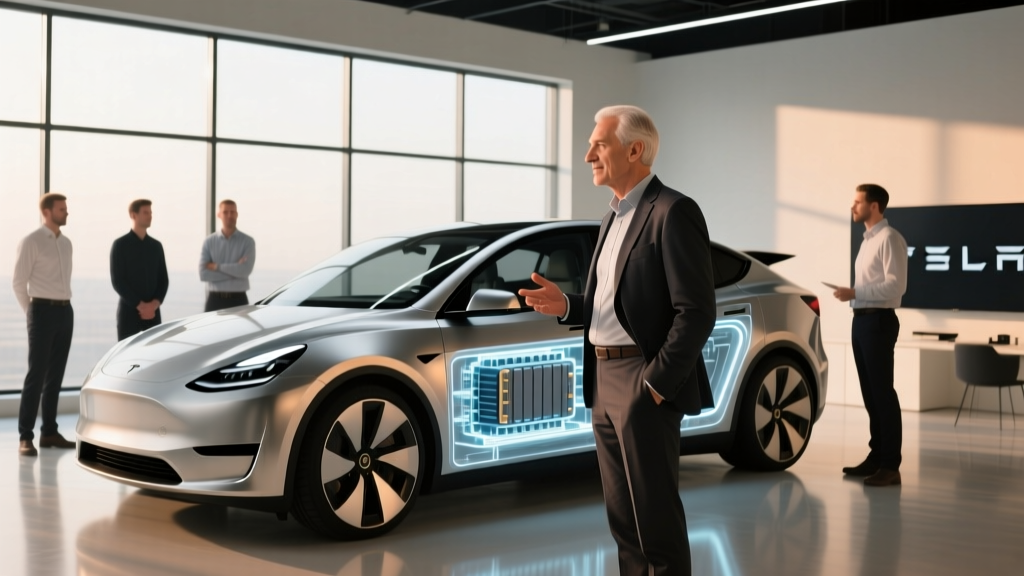
Searches for Milan Kovac Tesla nationality have grown as the engineer has become one of the most visible technical leaders behind Tesla's Autopilot and Full Self-Driving (Supervised) systems. But for most EV shoppers, the more useful question is: what does the vehicle he helped engineer actually deliver in 2026? Below, we cover Kovac's background briefly, then spend the bulk of this review on the 2026 Tesla Model Y — the car that carries his team's software on every drive.
Who Is Milan Kovac? Nationality, Background, and Tesla Role
Milan Kovac is a Slovak (Slovak Republic) engineer who has spent much of his career in the United States. He studied computer science and machine learning before joining Tesla, where he rose to lead the Autopilot software team and later became Vice President of Software Engineering, closely tied to Tesla's AI and FSD efforts. His public profile grew during Tesla's AI Day presentations and through FSD beta testing cycles.
For buyers, the relevance is practical: Kovac's team is responsible for the vision-only neural-net stack that powers Autopilot and FSD (Supervised) on every new Model Y, Model 3, Model S, and Model X. Understanding his role helps explain why Tesla's driver-assist behaves the way it does — and where its limits still are.
2026 Tesla Model Y: Quick Verdict
The refreshed Model Y (internally called "Juniper") carries over the 800V-class electrical architecture introduced with the Model 3 Highland refresh and pairs it with a quieter cabin, updated suspension tuning, and the latest HW4 vision stack. It remains the default midsize electric SUV for buyers who want Supercharger access, strong efficiency, and a software-first interior. The trade-offs are familiar: a minimalist cabin, no traditional instrument cluster, and FSD that still requires full driver attention.
| Spec | Long Range AWD | Performance |
|---|---|---|
| EPA Range | 320 mi | 285 mi |
| Battery (usable) | ~75 kWh, NMC | ~75 kWh, NMC |
| Drivetrain | Dual-motor AWD | Dual-motor AWD |
| Horsepower | ~384 hp | ~510 hp |
| 0–60 mph | 4.8 sec | 3.5 sec |
| Efficiency | 122 MPGe / 28 kWh/100mi | 111 MPGe / 30 kWh/100mi |
| Max DC Fast Charge | 250 kW peak | 250 kW peak |
| 10–80% DC Time | ~25 min | ~25 min |
| Level 2 (11.5 kW) | ~44 mi/hr | ~44 mi/hr |
| Cargo (rear seats up) | 30.2 cu ft | 30.2 cu ft |
| Cargo (seats folded) | 72.0 cu ft | 72.0 cu ft |
| Base MSRP | $48,990 | $55,490 |
Real-World Range: What the EPA Number Doesn't Tell You
EPA 320 miles (Long Range AWD) — expect ~260–280 miles at sustained 75 mph highway speeds in mild weather, and ~220–240 miles in freezing temperatures with cabin heat on. The Model Y's heat pump helps, but cold still cuts range roughly 20–25%.
Tesla's efficiency remains a genuine advantage. At 28 kWh/100mi for the Long Range, the Model Y uses less energy per mile than most rival electric SUVs, which translates directly into cheaper charging and longer real-world distance from the same-size pack. For context, the Hyundai Ioniq 5 AWD sits around 30–32 kWh/100mi in similar driving.
If your commute is mostly city and suburban with regular regen braking, you can actually approach or match the EPA sticker. Highway, hills, and cold are where the gap shows.
Charging: Supercharger Network and Home Level 2
The Model Y still uses the North American Charging Standard (NACS) connector natively — no adapter needed on Tesla Superchargers, and increasingly no adapter needed on third-party networks (Electrify America, ChargePoint, EVgo) that have deployed NACS cables through 2025–2026.
| Level | Power | Speed (approx.) |
|---|---|---|
| Level 1 (120V) | ~1.4 kW | ~5 mi/hr |
| Level 2 (240V, 48A) | 11.5 kW | ~44 mi/hr |
| DC Fast (V3 Supercharger) | 250 kW peak | 10–80% in ~25 min |
| DC Fast (V4 Supercharger) | 250 kW (vehicle-limited) | 10–80% in ~25 min |
A realistic note on the charge curve: the 250 kW peak is reached only at low state of charge (roughly 10–25%) and with a preconditioned battery. By 60% SoC, rate drops to roughly 120–140 kW, and above 80% it falls further to protect the NMC pack. Plan fast-charging stops to 80% unless you need the last stretch — the final 20% can take as long as the first 70%.
For home charging, a Wall Connector on a 60A circuit (48A continuous) adds about 44 miles per hour of charging, which is ample for overnight replenishment. Most owners will never need to DC fast-charge at home.
Performance, Ride, and the Autopilot Stack Kovac Oversees
The Long Range AWD's 4.8-second 0–60 mph time is quick by any SUV standard, and the Performance trim's 3.5-second run is sports-sedan territory. More relevant day-to-day is the instant torque for merging and the one-pedal regen feel, which is smooth and predictable.
The Juniper refresh brought meaningful NVH (noise, vibration, harshness) improvements: acoustic glass, additional insulation, and retuned dampers. At 70 mph, the cabin is noticeably quieter than the pre-refresh Model Y and closer to what you'd expect from a Genesis GV70 or BMW iX.
SAE Level 2 driver assist. Autopilot and FSD (Supervised) are not self-driving. The driver must keep eyes on the road and hands ready to take over at all times. Tesla monitors engagement via a cabin camera. True driver-out Level 4 services (e.g., Waymo) operate in geofenced areas with no human behind the wheel.
FSD (Supervised) in 2026 handles city streets, stoplights, and highway lane changes more smoothly than earlier v12/v13 builds, but it still makes conservative or inexplicable routing choices in construction zones and unprotected left turns. It is a workload-reducer on long trips, not a replacement for attention.
Pricing, Trims, and Federal Tax Credit Eligibility
| Trim | Base MSRP | Est. Destination | Potential §30D Credit | Effective Price* |
|---|---|---|---|---|
| Long Range AWD | $48,990 | $1,390 | Up to $7,500 | ~$42,880 |
| Performance | $55,490 | $1,390 | Up to $7,500 | ~$49,380 |
*Effective price assumes full §30D eligibility. Confirm with a tax professional.
Under current IRS §30D rules, the Model Y qualifies as an SUV for the $80,000 MSRP cap (well above its sticker), but buyers must also meet:
- Income caps: $150,000 single / $225,000 head of household / $300,000 joint MAGI.
- Battery sourcing: Critical-mineral and battery-component percentages must meet annual thresholds, which tighten each year. Tesla's shifting supply chain means eligibility can change mid-year.
- Point-of-sale transfer: The credit can be applied at purchase to reduce the out-of-pocket price, subject to IRS registration.
Always verify current eligibility on IRS.gov and at fueleconomy.gov before signing paperwork.
Interior, Cargo, and Daily Practicality
The minimalist interior remains polarizing. A single 15.4-inch touchscreen handles everything, including climate controls and the glovebox release. The refreshed Model Y adds ventilated front seats, ambient lighting, and a rear-seat touchscreen for passengers — meaningful quality-of-life upgrades.
Legroom is generous: 41.8 inches front, 37.4 inches rear. Cargo volume is 30.2 cu ft behind the second row and 72.0 cu ft folded, plus a small front trunk (frunk) useful for charging cables and groceries. Towing capacity is rated at 3,500 lbs with the optional hitch — enough for a small trailer or two e-bikes, but not a large boat.
Warranty and Ownership Costs
- Basic vehicle: 4 years / 50,000 miles
- Battery & drive unit: 8 years / 120,000 miles (Long Range/Performance), with at least 70% capacity retention guaranteed
- Insurance: Typically 15–25% higher than a comparable RAV4 Hybrid; get quotes before buying
- Maintenance: No oil changes; expect cabin-filter, wiper, tire, and brake-fluid service. Tires wear faster than on ICE cars due to torque and weight.
Pros, Cons, and Who Should Buy the 2026 Model Y
Pros
- Best-in-class Supercharger network access
- Excellent efficiency (28 kWh/100mi LR AWD)
- Strong real cargo and passenger space
- Over-the-air updates continuously add features
- Competitive pricing after potential §30D credit
Cons
- Minimalist interior not for everyone; no physical buttons
- FSD (Supervised) still Level 2 and subscription-costly
- 250 kW peak DC charge is no longer class-leading
- Ride still firm on broken pavement vs luxury rivals
- Insurance and tire costs above segment average
Best for: Commuters and small families who want one car for daily driving and road trips, value the Supercharger network, and are comfortable with a screen-centric cabin. Less ideal for: Buyers who prioritize plush ride quality, physical controls, or who need to tow more than 3,500 lbs — consider the Rivian R1S or Hyundai Ioniq 9 instead.
FAQ: Milan Kovac, Tesla, and the 2026 Model Y
What is Milan Kovac's nationality?
Milan Kovac is Slovak, from the Slovak Republic. He has worked in the United States for much of his career and leads software/AI efforts at Tesla tied to Autopilot and FSD.
What is the real-world range of the 2026 Model Y?
EPA-rated 320 miles for Long Range AWD. Expect ~260–280 mi on the highway in mild weather, and ~220–240 mi in freezing conditions.
How fast does the Model Y charge at home and on DC?
Up to 11.5 kW on Level 2 (~44 mi/hr). DC fast-charging peaks at 250 kW, with 10–80% in roughly 25 minutes when preconditioned.
Does the 2026 Model Y qualify for the federal EV tax credit?
It can qualify for up to $7,500 under IRS §30D, but buyer income, MSRP cap, and battery-sourcing rules all apply. Verify on IRS.gov before purchasing.
Is FSD (Supervised) self-driving?
No. It is an SAE Level 2 driver-assist system. The driver must remain engaged, eyes on the road, and ready to take over at any moment.
Is the Model Y worth buying vs the Hyundai Ioniq 5 or Ford Mustang Mach-E?
If Supercharger access, efficiency, and software updates are your top priorities, yes. If you prefer a more traditional cabin layout, physical controls, or a smoother ride, the Ioniq 5 or Mach-E are strong alternatives worth cross-shopping.
Sources: fueleconomy.gov, IRS.gov §30D, Tesla Model Y specs.