The Short Answer: Is a Midsize EV Truck Right for You?
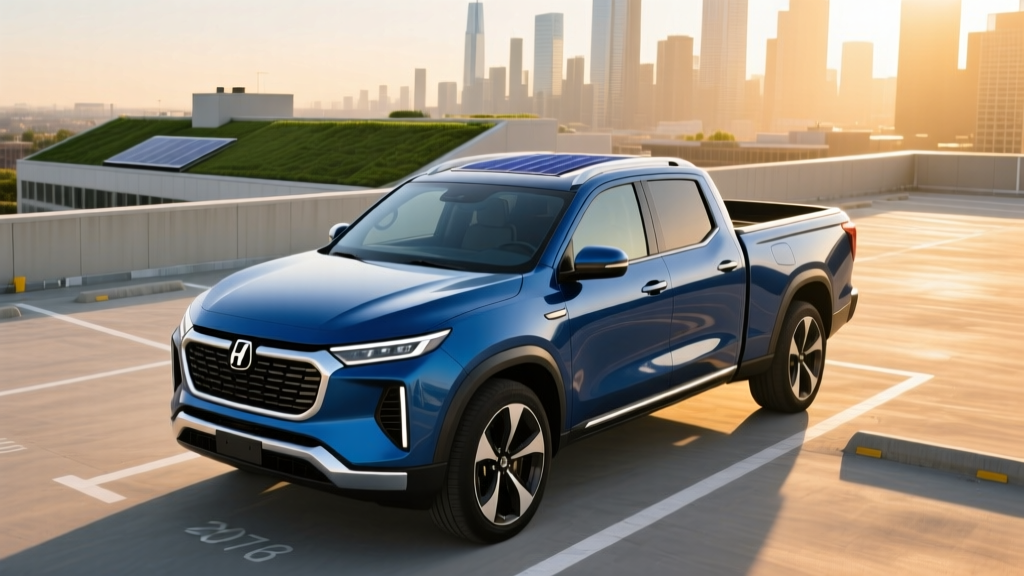
The midsize EV truck segment in 2026 centers on the Ford Maverick EV (starting ~$29,995, EPA est. 270–310 miles) and the Rivian R2T (starting ~$45,000, EPA est. 300–340 miles). If you drive under 40 miles daily, can charge at home, and don't regularly tow over 4,000 lbs, a midsize EV truck saves $1,200–$1,800/year in fuel and maintenance versus a gas equivalent. If you tow heavy, live in a charging desert, or lack home charging access, a hybrid like the Maverick Hybrid (42 MPG combined) remains the pragmatic choice.
The 2026 Midsize EV Truck Lineup at a Glance
| Model | Battery (kWh) | EPA Range | Peak DC Charge | 0–60 mph | Base MSRP | §30D Credit Eligible |
|---|---|---|---|---|---|---|
| Ford Maverick EV | 74 kWh (LFP) | 310 mi (FWD) | 150 kW | 7.2 sec | $29,995 | Yes (full $7,500)* |
| Rivian R2T | 92 kWh (NMC) | 340 mi (Dual-Motor) | 220 kW | 4.5 sec | $45,000 | Partial ($3,750)* |
| Chevrolet Colorado EV (announced) | ~85 kWh (NMC est.) | ~290 mi (est.) | ~190 kW (est.) | ~5.8 sec (est.) | ~$38,000 (est.) | TBD |
* §30D eligibility depends on buyer income caps ($150K single / $300K joint), MSRP caps ($80K trucks), and battery mineral sourcing. Verify at IRS.gov before purchase. Point-of-sale transfer available at participating dealers.
Real-World Range: What the EPA Sticker Doesn't Tell You
🛣️ EPA vs. Reality
Ford Maverick EV (310 mi EPA): Expect ~260–280 miles in mixed real-world driving. Highway-only at 75 mph drops to ~240 miles. In freezing temperatures (below 25°F), plan for ~200–220 miles — the LFP chemistry is more cold-sensitive than NMC.
Rivian R2T (340 mi EPA): Real-world mixed: ~290–310 miles. Highway: ~260 miles. Cold weather: ~230–250 miles. The NMC pack handles low temperatures better, and the standard heat pump reduces HVAC energy draw.
Towing penalty: Both trucks lose 35–50% of range when towing near max capacity (Maverick: 2,000 lbs; R2T: 5,000 lbs). A 310-mile Maverick towing 1,800 lbs becomes a ~170-mile truck.
The Maverick EV uses LFP (lithium iron phosphate) chemistry — heavier and less energy-dense than NMC, but cheaper, longer-lasting (3,000+ cycle life vs. ~1,500 for NMC), and safe to charge to 100% daily without degradation concerns. The R2T uses NMC (nickel manganese cobalt), which is lighter and more cold-tolerant but benefits from an 80% daily charge limit for longevity.
Charging Speed and Infrastructure Reality
| Level | Power (kW) | Miles Added/Hour | Use Case |
|---|---|---|---|
| Level 1 (120V) | 1.4 kW | ~4 mi/hr | Overnight trickle (30 mi in 8 hrs) |
| Level 2 (240V, 48A) | 11.5 kW | ~33 mi/hr | Home overnight (full charge in ~7 hrs) |
| DC Fast (Maverick) | 150 kW peak | ~400 mi/hr (peak) | 10–80% in ~28 min |
| DC Fast (R2T) | 220 kW peak | ~550 mi/hr (peak) | 10–80% in ~20 min |
Charging curve reality: The Maverick's 150 kW peak only sustains from roughly 10–40% State of Charge. From 40–80%, it tapers to ~90 kW, and above 80% drops below 40 kW. The R2T holds its 220 kW peak longer (10–50%) before tapering. Always precondition the battery via the navigation system before arriving at a DC fast charger — skipping preconditioning in cold weather can double your charge time.
Connector note: Both the Maverick EV and R2T ship with the NACS (North American Charging Standard) port in 2026, granting native access to Tesla Supercharger stations (now open to all brands). CCS1 adapters are included for Electrify America and other legacy networks.
Total Cost of Ownership: EV Truck vs. Gas Truck
| Category (5 years / 75K mi) | Maverick EV ($29,995) | Maverick Hybrid ($28,490) | Maverick Gas ($25,490) |
|---|---|---|---|
| Purchase (after §30D credit) | $22,495* | $28,490 | $25,490 |
| Fuel / Energy | $3,200 (home charging) | $5,400 (gas) | $9,100 (gas) |
| Maintenance | $1,100 | $2,800 | $3,500 |
| Insurance (avg) | $8,400 | $7,200 | $6,900 |
| Home Charger Install | $1,200 | $0 | $0 |
| 5-Year Total | $36,395 | $43,890 | $44,990 |
* Assumes full §30D credit eligibility. Insurance averages ~20% higher for EVs due to repair costs and parts pricing. Energy cost assumes $0.14/kWh national average; verify your local utility rate. Source: fueleconomy.gov, IRS §30D.
The EV wins on 5-year cost primarily through the tax credit and fuel savings. Remove the §30D credit (due to income caps or sourcing rules) and the Maverick Hybrid becomes the cost leader. Public DC fast charging exclusively (at $0.35–$0.50/kWh) erases most of the EV's fuel advantage — home charging is where the economics work.
Myths vs. Facts: Midsize EV Truck Ownership
| Myth | Fact |
|---|---|
| "EV batteries need replacing every 5 years." | Both Ford and Rivian warrant their batteries for 8 years / 100,000 miles with a minimum 70% capacity retention threshold. Real-world degradation data from similar packs shows ~8–12% loss over 8 years. A full replacement (rarely needed) costs $8,000–$14,000 out of warranty. |
| "You can't tow with an EV truck." | You can — the R2T tows 5,000 lbs and the Maverick EV tows 2,000 lbs. But range drops 35–50% under load. For frequent heavy towing, a gas or hybrid truck is still more practical. |
| "EV trucks can't handle cold weather." | They handle cold, but range drops 15–35% below 25°F due to battery chemistry and cabin heating demands. The R2T's heat pump reduces this penalty to ~15–20%. Preconditioning while plugged in recovers much of the loss. |
| "I'll save money immediately." | Break-even depends on your §30D eligibility, local electricity rates, annual mileage, and insurance. With the full credit and home charging, break-even vs. gas is ~2.5 years. Without the credit, it's 4–5 years. |
Decision Framework: Which Midsize EV Truck (or Not) Should You Buy?
✅ Buy the Ford Maverick EV if:
- Your budget is under $35,000 and you qualify for the §30D credit
- You drive under 50 miles daily and can charge at home
- You want a commuter truck with a usable 4.5-ft bed
- You don't regularly tow more than 1,500 lbs
- You value low running costs over performance
✅ Buy the Rivian R2T if:
- Your budget is $45,000–$55,000
- You need AWD, more towing capacity (5,000 lbs), or off-road capability
- You want faster DC charging (220 kW) for road trips
- You drive in cold climates (heat pump + NMC chemistry)
- You want a tech-forward platform with regular OTA updates
✅ Buy a Maverick Hybrid instead if:
- You lack reliable home charging access (apartment, street parking)
- You regularly tow 2,000+ lbs or take long road trips in charging-sparse regions
- You don't qualify for the §30D credit (income above $300K joint / $150K single)
- Your budget is firm at $28,000–$32,000 with no flexibility
- You live in an area with very high electricity rates (above $0.25/kWh)
⏳ Wait for the Chevrolet Colorado EV if:
- You need a larger bed (5+ ft) and higher tow rating than the Maverick
- You want a body-on-frame platform at a sub-$40K price
- You're comfortable with announced/preliminary specs (expected late 2026)
First-Time EV Truck Buyer Checklist
- Verify home charging feasibility. You need a 240V outlet (NEMA 14-50) or a hardwired Level 2 charger. Installation runs $800–$2,500 depending on panel capacity and run length. If your panel is 100A and near capacity, a $2,000–$4,000 panel upgrade may be required.
- Check your §30D eligibility. Income caps: $150K single, $225K head of household, $300K joint. MSRP cap: $80,000 for trucks. Battery sourcing requirements change annually — verify the specific VIN's eligibility at the dealer or on fueleconomy.gov.
- Map your daily driving. If 90%+ of your driving is under 60 miles round-trip, any midsize EV truck covers your needs with range to spare. If you regularly exceed 200 miles one-way, plan DC fast-charging stops.
- Test your local charging network. Download the PlugShare, EVgo, and Electrify America apps. Check how many reliable DC fast chargers exist within 10 miles of your home and along your common road-trip routes.
- Get insurance quotes before buying. EV truck insurance averages 15–25% higher than gas equivalents. Get a firm quote — don't estimate.
- Understand the warranty. Both Ford and Rivian cover the battery and powertrain for 8 years / 100,000 miles. The bumper-to-bumper is 3/36,000 (Ford) and 5/60,000 (Rivian).
Frequently Asked Questions
Can I charge a midsize EV truck on a standard 120V outlet?
Yes, but slowly. Level 1 charging at 120V/12A delivers ~1.4 kW, adding roughly 4 miles of range per hour. That's ~48 miles overnight — adequate for light commuters but insufficient if you drive 80+ miles daily. A 240V Level 2 setup is strongly recommended as a primary charging solution.
How long will the battery last before it needs replacement?
Based on degradation data from similar LFP and NMC packs in the field, expect 85–92% capacity retention at 100,000 miles. Both manufacturers warrant 70% retention at 8 years/100,000 miles. Complete battery failure is rare; gradual capacity loss is the norm. Plan for usable battery life of 15–20 years for most owners.
What happens to an EV truck battery at end of life?
EV batteries are 95%+ recyclable. Companies like Redwood Materials and Li-Cycle recover lithium, nickel, cobalt, and other materials for reuse in new batteries. Most retired EV batteries still hold 70–80% capacity and find second lives in stationary energy storage before recycling.
Is the Rivian R2T worth $15,000 more than the Maverick EV?
It depends on what you need. The R2T delivers 30 more miles of EPA range, 80 kW faster DC charging, 3,000 more lbs of towing capacity, standard AWD, a larger bed, and a more premium interior. If those capabilities matter, the premium is justified. If you just need a daily commuter with a bed, the Maverick EV is the better value — especially after the §30D credit.
Will a midsize EV truck handle off-road use?
The Rivian R2T offers genuine off-road capability with 10.6 inches of ground clearance, approach/departure angles suited for trail use, and a quad-motor option with torque vectoring. The Maverick EV is a unibody crossover-truck aimed at pavement and light gravel — it's not an off-roader. Match the truck to your actual use case.
Sources: EPA fueleconomy.gov, IRS Clean Vehicle Credit, Ford and Rivian manufacturer specification pages (2026 model year). All pricing and specifications reflect announced or published data as of early 2026 and are subject to change. Verify final figures with your dealer.