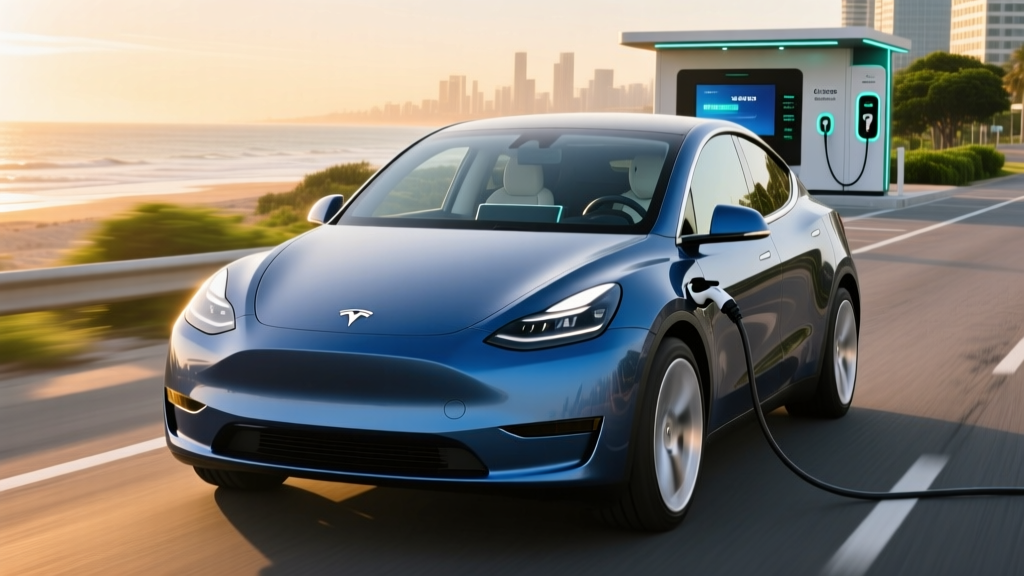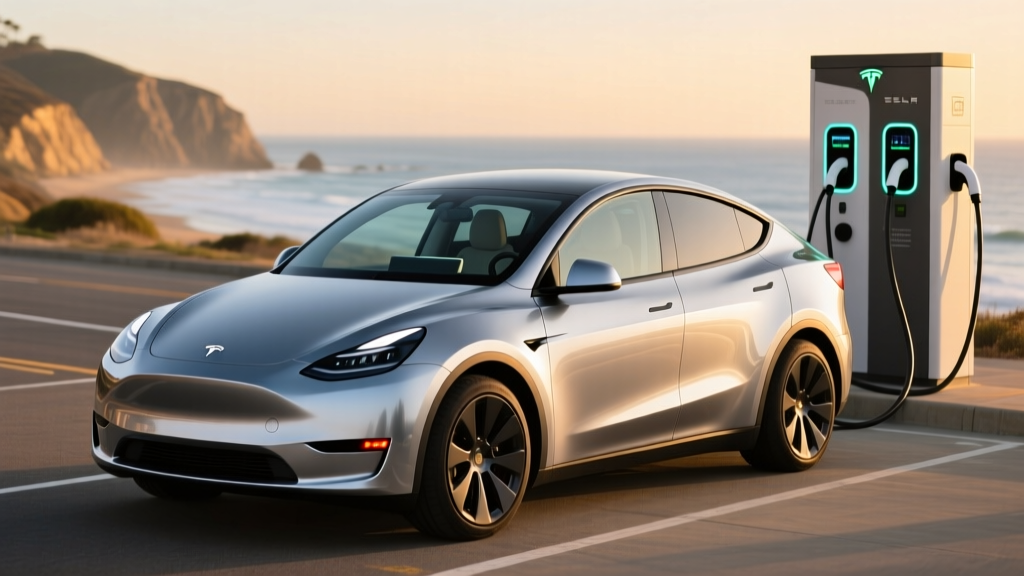
The Midnight Silver Metallic finish has been one of Tesla's most popular no-cost paint options since its introduction, and for good reason: it hides road grime better than white, avoids the upcharge of premium colors, and carries a stealthy, monochromatic appeal that photographs well and ages gracefully. But paint is only skin-deep. What matters for buyers in 2026 is whether the refreshed Tesla Model Y — now in its second year of the "Juniper" redesign — delivers on range, charging speed, and daily livability. This review covers the Midnight Silver Metallic Tesla Model Y across every metric that matters to real owners.
2026 Tesla Model Y at a Glance: Key Specifications
| Specification | Value |
|---|---|
| EPA Estimated Range | 320 miles |
| Battery Capacity (usable) | 78.1 kWh (NMC) |
| Drivetrain | Dual Motor AWD |
| Horsepower | 384 hp (combined) |
| 0–60 mph | 4.8 seconds |
| Max DC Fast Charge Rate | 250 kW (peak) |
| 10–80% DC Charge Time | ~27 minutes |
| Level 2 Home Charge Rate | 11.5 kW (~44 mi/hr) |
| Efficiency | 122 MPGe combined / 28 kWh/100 mi |
| Cargo Volume (rear seats up) | 30.2 cu ft |
| Cargo Volume (rear seats folded) | 72.1 cu ft |
| Rear Legroom | 40.5 inches |
| Battery & Drive Unit Warranty | 8 years / 120,000 miles |
| Base MSRP (Long Range AWD) | $47,990 |
The Midnight Silver Metallic paint is available across all Model Y trims — Long Range AWD, Performance, and the base Rear-Wheel Drive — at no additional cost. Tesla's five premium colors (Ultra Red, Deep Blue Metallic, Solid Black, Quicksilver, and Star White Pearl) carry a $1,000–$2,500 upcharge, making Midnight Silver one of the most value-conscious choices in the lineup.
Real-World Range: What 320 EPA Miles Actually Means
EPA Sticker: 320 miles (Long Range AWD)
Real-World Highway (70–75 mph, mild weather): ~265–285 miles
Real-World City/Mixed Commute: ~290–310 miles
Cold Weather (below 30°F, highway): ~220–250 miles
The 320-mile EPA figure for the Long Range AWD is among the best in the compact electric SUV segment, but EPA testing cycles favor lower-speed mixed driving with generous regenerative braking recovery. On sustained highway runs at 75 mph — the scenario that matters most for road trips — expect to use roughly 30–32 kWh/100 mi, which translates to approximately 265–285 miles before you'd want to stop. The Model Y's heat pump, standard since the 2022 refresh, mitigates cold-weather losses better than resistive heating systems, but physics still wins: sub-freezing temperatures reduce usable range by 20–30% depending on cabin heating demand and whether you precondition the battery.
The Rear-Wheel Drive trim, which uses a smaller LFP (lithium iron phosphate) battery of approximately 60 kWh, carries an EPA rating of 268 miles. LFP chemistry trades energy density for longevity and allows routine 100% charging without degradation concerns — a meaningful advantage for daily commuters who can charge at home every night.
Charging Speed: DC Fast Charging and Home Level 2
Charging infrastructure is where Tesla retains a tangible advantage in 2026. The Supercharger network now exceeds 6,500 stations and 65,000 individual stalls across North America, and with the broader industry adoption of the NACS connector, Tesla vehicles charge natively without adapters at their own stalls while competitors juggle CCS-to-NACS dongles.
| Charging Level | Power / Rate | Miles Added per Hour | Notes |
|---|---|---|---|
| Level 1 (120V household) | ~1.4 kW | ~5 mi/hr | Emergency/top-up only |
| Level 2 (240V home, 48A) | 11.5 kW | ~44 mi/hr | Full overnight charge in ~7–8 hrs |
| DC Fast Charge (V3 Supercharger) | 250 kW peak | ~1,000 mi/hr at peak | 10–80% in ~27 min; tapers above 50% |
| DC Fast Charge (V4 Supercharger) | Up to 350 kW capable | — | Model Y currently capped at ~250 kW |
A critical nuance that spec sheets obscure: the 250 kW peak rate is sustained only between roughly 10% and 35% state of charge. The charge curve tapers progressively — dropping to ~150 kW around 50% SoC, ~90 kW at 70%, and ~50 kW above 85%. This is why Tesla and the EPA quote 10–80% times rather than 0–100%. For road-trip planning, budget roughly 25–30 minutes per stop when arriving at 10–15% SoC and charging to 80%. Battery preconditioning, triggered automatically when you navigate to a Supercharger, is essential for hitting peak rates in cold weather.
For home charging, the Tesla Wall Connector at 48 amps on a 60-amp circuit delivers the full 11.5 kW the onboard charger supports. A complete 10–100% charge takes roughly seven to eight hours — ideal for overnight replenishment. Installation costs typically range from $800 to $2,000 depending on panel proximity and whether your electrical panel needs a service upgrade (consult a licensed electrician for a site-specific quote).
Performance, Efficiency, and Driving Dynamics
The Long Range AWD's dual-motor setup produces 384 combined horsepower and delivers a 4.8-second 0–60 mph time — brisk by any measure and substantially quicker than most gas-powered compact SUVs. The Performance trim drops that to 3.5 seconds with 456 hp and a lower ride height, though it sacrifices roughly 15 miles of EPA range (305 miles) and carries a $5,000 premium.
Efficiency is a Tesla strong suit. At 122 MPGe combined (28 kWh/100 mi), the Model Y Long Range is among the most efficient vehicles in its class, edging out the Ford Mustang Mach-E Extended Range AWD (101 MPGe) and rivaling the Hyundai Ioniq 5 AWD (110 MPGe). This efficiency directly translates to lower charging costs: at the national average residential electricity rate of ~$0.17/kWh, a full home charge costs roughly $13.28 for 320 miles — about $0.042 per mile. A comparable gas SUV at 25 mpg and $3.40/gallon costs $0.136 per mile, roughly 3.2× more.
The Juniper-refreshed Model Y also received revised suspension tuning, additional acoustic glass, and improved sound deadening — addressing the two most common complaints about the pre-2025 model: ride harshness on rough pavement and cabin noise at highway speeds. The result is a noticeably more refined driving experience that narrows the gap with luxury competitors.
Interior, Cargo, and Technology
The 2025 Juniper redesign brought meaningful interior upgrades: ventilated front seats, ambient lighting, a rear-seat touchscreen for climate and media control, power-folding second-row seats, and a front-row passenger touchscreen. The minimalist dashboard remains polarizing — there are no physical stalks (turn signals are steering-wheel buttons) and no instrument cluster — but the 15.4-inch center display is responsive and handles all vehicle functions through Tesla's continuously updated software.
Cargo space is generous: 30.2 cubic feet behind the second row and 72.1 cubic feet with seats folded, plus a small front trunk (frunk) useful for charging cables and groceries. Rear legroom at 40.5 inches accommodates adults comfortably on longer trips. The panoramic glass roof creates an airy cabin but contributes to solar heat gain in summer — Tesla includes a tinted panel, though many owners add an aftermarket shade.
On the driver-assistance front, Tesla's Autopilot (standard) and Full Self-Driving Supervised ($8,000 option or $99/month) remain SAE Level 2 systems. This means the driver must maintain active supervision at all times — hands on the wheel, eyes on the road. FSD Supervised has improved substantially in city-street navigation, but it is not autonomous driving. For a detailed breakdown of Tesla's automation claims versus reality, see NHTSA's automated vehicle safety guidance.
Pricing, Trims, and Federal Tax Credit Eligibility
| Trim | Base MSRP | EPA Range | §30D Credit Eligible? | Effective Price (with credit) |
|---|---|---|---|---|
| Long Range RWD | $44,990 | 320 mi | Yes (if income/MSRP caps met) | ~$37,490 |
| Long Range AWD | $47,990 | 320 mi | Yes (if income/MSRP caps met) | ~$40,490 |
| Performance AWD | $52,490 | 305 mi | Yes (under $80K SUV cap) | ~$44,990 |
The Midnight Silver Metallic paint adds $0 to any trim. Destination fees add $1,390. A fully loaded Long Range AWD with FSD Supervised, 20-inch wheels, and premium interior lands around $58,000 before incentives.
Federal tax credit (§30D) eligibility for 2026: The Model Y qualifies for up to $7,500 under current IRS rules, but several conditions apply:
- MSRP cap: The vehicle must be under $80,000 for SUVs — all Model Y trims clear this easily.
- Buyer income cap: Modified adjusted gross income must not exceed $150,000 (single), $225,000 (head of household), or $300,000 (joint filers).
- Battery sourcing requirements: At least 50% of critical minerals and 100% of battery components must be sourced from the U.S. or free-trade-agreement partners to receive the full $7,500. Tesla has significantly localized its supply chain, and the Model Y currently qualifies for the full credit — but sourcing rules tighten annually. Verify current eligibility at IRS.gov §30D before purchasing.
- Point-of-sale transfer: Since 2024, buyers can transfer the credit to the dealer at purchase, reducing the out-of-pocket price immediately rather than waiting for a tax refund.
Pros, Cons, and Who Should Buy
✓ Pros
- 320-mile EPA range — class-leading for the segment
- Supercharger network access — still the most reliable public DC network
- 122 MPGe efficiency keeps per-mile cost very low
- Juniper refresh fixes ride quality and cabin noise complaints
- Over-the-air updates add features post-purchase
- No-cost Midnight Silver Metallic paint is practical and attractive
- Strong resale value relative to EV segment average
✗ Cons
- No physical turn-signal stalks — steering-wheel buttons take adaptation
- FSD Supervised is expensive ($8,000) and still Level 2 only
- Rear visibility is limited; relies heavily on backup camera
- 250 kW peak DC charge rate trails Hyundai/Kia's 800V architecture (~350 kW)
- Insurance premiums run 15–25% higher than comparable gas SUVs
- Glass roof causes noticeable heat gain in hot climates
Best for: Daily commuters with home charging access, small families needing cargo versatility, and frequent road-trippers who value the Supercharger network. The Long Range AWD at $47,990 (potentially $40,490 after the federal credit) is the value sweet spot in the lineup.
Consider alternatives if: You need three rows (look at the Kia EV9), you prioritize the fastest possible DC charging (Hyundai Ioniq 5 with 800V architecture charges 10–80% in ~18 minutes), or you prefer a traditional cockpit layout with physical controls.
Frequently Asked Questions
What is the real-world range of the Midnight Silver Metallic Tesla Model Y?
The EPA rates the 2026 Model Y Long Range AWD at 320 miles. In real-world highway driving at 70–75 mph, expect 265–285 miles. City and mixed driving with regenerative braking recovery yields closer to the EPA number, around 290–310 miles. Cold weather below 30°F can reduce range by 20–30%, bringing highway range to approximately 220–250 miles.
How fast does the 2026 Model Y charge at home and on the road?
On a Level 2 home charger (240V, 48A), the Model Y charges at 11.5 kW, adding roughly 44 miles of range per hour — a full charge takes about 7–8 hours. On a V3 Supercharger, it peaks at 250 kW and charges from 10–80% in approximately 27 minutes, though the charge curve tapers significantly above 50% SoC.
Does the Midnight Silver Metallic Tesla Model Y qualify for the $7,500 federal tax credit?
As of 2026, the Model Y qualifies for the full $7,500 §30D federal tax credit, provided the buyer meets income caps ($150K single / $300K joint) and the vehicle's battery sourcing meets current-year critical-mineral and component requirements. Tesla's U.S. supply chain currently satisfies these rules, but they tighten annually — verify at IRS.gov before purchase. The credit can be applied at point of sale.
Is the Tesla Model Y worth buying over competitors in 2026?
The Model Y remains the segment benchmark for range, efficiency, and charging-network access. Its 320-mile EPA range and Supercharger ecosystem are hard to match. However, the Hyundai Ioniq 5 charges faster on compatible 350 kW stations, the Ford Mustang Mach-E offers a more conventional interior, and the Kia EV9 provides three-row seating. If Supercharger reliability and efficiency are your top priorities, the Model Y is the strongest choice.
Does the Midnight Silver Metallic paint cost extra?
No. Midnight Silver Metallic is one of Tesla's two no-cost paint options (along with Pearl White Multi-Coat) across all Model Y trims. Premium colors like Ultra Red and Quicksilver add $1,000–$2,500.
What is the battery warranty on the 2026 Model Y?
Tesla covers the battery pack and drive units for 8 years or 120,000 miles (whichever comes first) on the Long Range and Performance trims, with a minimum 70% capacity retention threshold. The base RWD trim with LFP chemistry carries an 8-year/100,000-mile warranty. Tesla's warranty is competitive with the segment standard set by Hyundai/Kia (10 years/100,000 miles) and slightly exceeds Ford's 8-year/100,000-mile coverage.
Sources: EPA efficiency data via fueleconomy.gov; IRS §30D clean vehicle credit rules via irs.gov; Tesla Model Y specifications via tesla.com.