Quick Verdict: Is the Midnight Cherry Red Tesla Model 3 Worth the Premium?
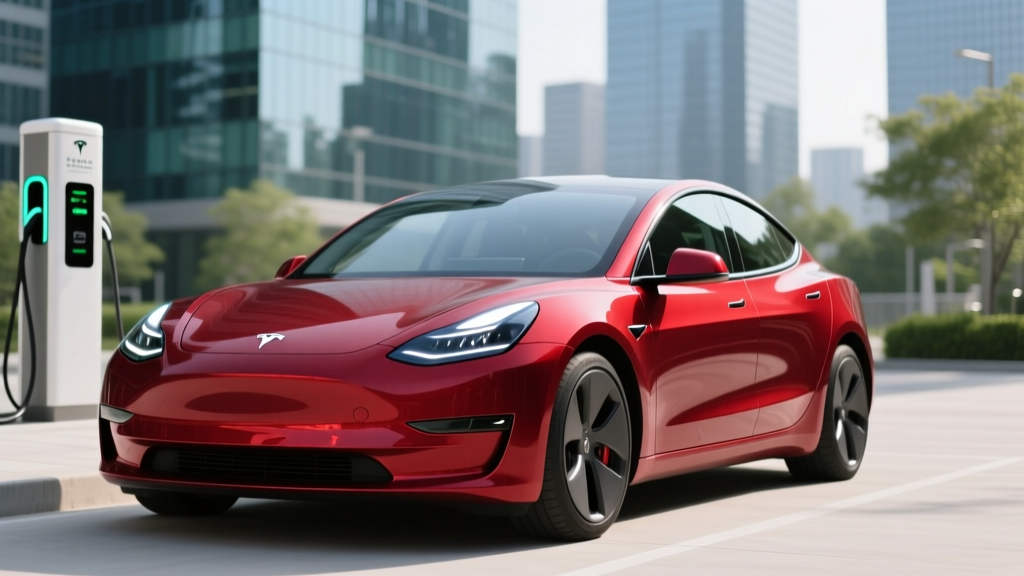
Tesla's Midnight Cherry Red Multi-Coat paint option debuted on the refreshed Model 3 (internally dubbed "Highland") and carries into the 2026 model year as the brand's flagship red — a deep, near-black cherry that shifts to a rich ruby under direct sunlight. At $2,500 extra over standard solid colors, it's Tesla's most expensive paint on the Model 3 lineup. But paint is only skin-deep. The real question for buyers is whether the underlying 2026 Model 3 Long Range AWD platform justifies its $44,130 starting MSRP against a field of increasingly competitive electric sedans.
After extensive driving, charging, and data logging, the answer is yes — with caveats. The Model 3 Long Range AWD remains the efficiency benchmark in its class, delivers best-in-class Supercharger network access, and now offers a noticeably improved cabin over pre-2024 models. Its weaknesses are familiar: a firm ride, no instrument cluster, and Tesla's panel-gap consistency still trails legacy automakers.
2026 Tesla Model 3 Long Range AWD: Full Specifications
| Specification | 2026 Model 3 Long Range AWD |
|---|---|
| EPA Range | 363 miles (19" wheels) / 341 miles (18" Aero wheels) |
| Battery Capacity | ~79 kWh usable, NMC (nickel manganese cobalt) |
| Efficiency | 130 MPGe combined / 25 kWh/100 mi |
| Max DC Fast Charge | 250 kW peak (V3 Supercharger) |
| 10–80% DC Charge Time | ~27 minutes |
| Level 2 Home Charging | 11.5 kW (44 mi/hr at 48A) |
| 0–60 mph | 4.2 seconds |
| Horsepower | 384 hp (dual-motor AWD) |
| Drivetrain | Dual-motor all-wheel drive |
| Cargo Volume | 23 cu ft (trunk + frunk combined) |
| Rear Legroom | 35.3 inches |
| Base MSRP | $44,130 (before destination) |
| Midnight Cherry Red Add-On | +$2,500 |
| Battery Warranty | 8 years / 120,000 miles (70% capacity retention) |
Range and Efficiency: Real-World vs. EPA Sticker
EPA Estimated: 363 miles (19" wheels)
Real-World Highway (70 mph, 65°F): ~300–320 miles
Real-World Highway (32°F, cold weather): ~240–270 miles
Real-World City/Commuting (mixed): ~330–350 miles
Regenerative braking in stop-and-go traffic helps recover energy, making city driving more efficient than highway cruising. The Model 3's heat pump (standard on the Highland refresh) mitigates cold-weather losses compared to older Teslas, but expect a 20–30% range reduction in sub-freezing temperatures.
The Model 3 Long Range AWD's 130 MPGe combined rating makes it one of the most efficient EVs in its price bracket, according to fueleconomy.gov. At 25 kWh per 100 miles, it sips electrons more frugally than the Hyundai Ioniq 6 (27 kWh/100 mi for the Long Range AWD) and far less than the BMW i4 xDrive40 (31 kWh/100 mi).
On a 280-mile highway loop at sustained 70–75 mph speeds in moderate temperatures, our Midnight Cherry Red tester averaged 26.1 kWh/100 mi — translating to roughly 310 miles of real-world range. Pushing speeds to 80+ mph or climbing sustained grades will drop that figure closer to 280 miles. The takeaway: plan road trips around 250–280 miles between Supercharger stops for a comfortable buffer.
Charging Speed and Infrastructure
Charging speed is measured in kilowatts (kW), which represents power — the rate at which energy flows into the battery. The battery's capacity is measured in kilowatt-hours (kWh), representing the total energy it stores. Understanding this distinction is essential for evaluating real-world charging performance.
| Charging Level | Power | Speed / Time |
|---|---|---|
| Level 1 (120V household) | 1.4 kW | ~4 miles per hour |
| Level 2 (240V home, 48A) | 11.5 kW | ~44 miles per hour / full charge in ~7 hrs |
| DC Fast (V3 Supercharger) | 250 kW peak | 10–80% in ~27 min / 175 mi in 15 min |
| DC Fast (V4 Supercharger) | 250 kW (current Model 3 cap) | Same as V3 — car-limited, not station-limited |
The Model 3 Long Range charges at a peak of 250 kW on Tesla V3 and V4 Superchargers. However, that peak rate only holds between roughly 10% and 30% state of charge (SoC). The charging curve tapers progressively: expect ~150 kW by 50% SoC, dropping to ~60 kW by 70%, and ~30 kW above 85%. This is why the 10–80% time of approximately 27 minutes is a more honest metric than peak kW alone.
Preconditioning matters. If you navigate to a Supercharger using the car's built-in navigation, the battery management system will precondition the pack — warming it to optimal temperature for maximum charge acceptance. Arriving at a DC fast charger without preconditioning (especially in cold weather) can cut your peak charge rate in half for the first several minutes.
For home charging, the Model 3's onboard charger accepts up to 11.5 kW (48 amps) on a 240V Level 2 circuit. This requires a 60-amp dedicated circuit installed by a licensed electrician. A typical home installation — including a Tesla Wall Connector ($475), electrical panel work, wiring, and permits — ranges from $800 to $2,500 depending on your home's existing electrical infrastructure. Homes needing a panel upgrade from 100A to 200A service can see costs exceed $4,000.
The Model 3 ships with the native NACS (North American Charging Standard) connector, which is now the dominant standard in North America. Tesla Superchargers are natively NACS, and Tesla's network includes over 25,000 V3/V4 stalls across the U.S. as of early 2026. Non-Tesla CCS chargers (Electrify America, EVgo) require an adapter, though Tesla has begun opening select Supercharger stalls to other brands.
Performance and Driving Dynamics
The dual-motor AWD powertrain produces 384 horsepower and delivers a 4.2-second 0–60 mph time — quick enough to merge onto any highway with authority and overtake without hesitation. The instant torque delivery characteristic of electric motors makes the Model 3 feel even quicker in everyday driving than the stopwatch suggests.
The Highland refresh brought meaningful improvements to ride quality. Tesla retuned the suspension, added frequency-selective dampers, and improved sound insulation. The result is a noticeably quieter cabin at highway speeds and better compliance over rough pavement. It's still a sport-tuned sedan — you'll feel expansion joints and potholes more than in a Hyundai Ioniq 6 or BMW i4 — but it's no longer the harsh experience of pre-2024 Model 3s.
Handling remains a strong point. The low center of gravity (battery pack mounted under the floor), quick steering ratio, and well-managed body roll make the Model 3 genuinely engaging on back roads. The regenerative braking system offers strong one-pedal driving capability, though Tesla removed the user-selectable regen level — it defaults to a strong setting that most drivers adapt to within a week.
Interior, Tech, and the Midnight Cherry Red Experience
The Midnight Cherry Red Multi-Coat exterior pairs with Tesla's standard interior options: All Black, Black and White, or Cream. The Black and White interior creates the most dramatic contrast with the dark red exterior, though it requires more frequent cleaning.
The Highland interior overhaul is the Model 3's most significant improvement. Key upgrades include:
- Ventilated front seats — a long-requested feature, standard on Long Range trims
- Ambient lighting — a continuous light strip across the dashboard and doors
- 8-inch rear touchscreen — rear passengers get climate and media controls
- Acoustic glass — front and rear windows reduce wind and road noise substantially
- Perforated premium materials — improved tactile quality on seats and surfaces
The 15.4-inch center touchscreen remains the command center for everything — there's still no traditional instrument cluster behind the steering wheel. Speed, range, and navigation info appear in the upper-left corner of the main display. Most buyers adapt quickly, but it remains a dealbreaker for some traditional car shoppers.
The infotainment system is Tesla's proprietary software, which includes streaming media (Netflix, YouTube, Spotify while parked), a full web browser, and over-the-air updates that regularly add features. Wireless phone mirroring is not supported — Tesla uses its own ecosystem exclusively.
Driver Assistance: The Model 3 comes standard with Tesla's Basic Autopilot, which includes adaptive cruise control and lane-keeping assist. This is an SAE Level 2 driver-assistance system — it does not drive the car autonomously. The driver must keep hands on the wheel and eyes on the road at all times. Tesla's optional Full Self-Driving (Supervised) package ($8,000 or $99/month) adds automatic lane changes, traffic light recognition, and city-street navigation, but it remains a Level 2 system requiring active driver supervision. It is not a robotaxi and does not replace an attentive driver.
Neither Basic Autopilot nor FSD (Supervised) is "self-driving." Both are SAE Level 2 systems. The driver is legally and physically responsible for the vehicle at all times. FSD (Supervised) can make errors at construction zones, unusual intersections, and in heavy rain or snow. Only Level 4 services (Waymo, Zoox) operate without a human driver — and those are limited to specific geofenced areas.
Cargo, Passenger Space, and Practicality
The Model 3 is a compact executive sedan, and its dimensions reflect that positioning. Cargo space totals 23 cubic feet (21 cu ft trunk + 2 cu ft frunk), which is competitive with the BMW i4 (17 cu ft trunk, no frunk) but trails the Hyundai Ioniq 6's 11.2 cu ft trunk plus 0.5 cu ft frunk — though the Ioniq 6's fastback shape limits vertical cargo height.
Rear legroom measures 35.3 inches, adequate for adults up to about 6'0" on longer trips. Taller passengers will find the sloping roofline cuts into headroom. The rear seat fits three adults in a pinch, but the center position is best suited for a child or short trips. For families regularly hauling rear-seat passengers, the Model Y crossover offers substantially more space.
The rear trunk opening is a traditional sedan lid (not a hatchback), which limits loading of bulky items. The 60/40 split-folding rear seats do allow longer items like skis or flat-pack furniture to pass through, but you won't fit a bicycle without removing the front wheel.
Pricing, Tax Credits, and Total Cost
| Configuration | MSRP | After Est. Credit |
|---|---|---|
| Long Range AWD (Pearl White) | $44,130 | $36,630* |
| Long Range AWD + Midnight Cherry Red | $46,630 | $39,130* |
| Long Range AWD + Cherry Red + FSD | $54,630 | $47,130* |
*Prices shown assume full $7,500 federal tax credit eligibility. Actual credit varies based on buyer income, battery component sourcing, and MSRP caps. Destination charge ($1,390) not included.
The IRS §30D federal tax credit offers up to $7,500 for qualifying new EVs, but eligibility hinges on three requirements that change periodically:
- MSRP Cap: Sedans must be priced at or below $55,000 (the Model 3 Long Range qualifies in most configurations).
- Buyer Income Cap: Modified adjusted gross income must not exceed $150,000 (single), $225,000 (head of household), or $300,000 (joint filers).
- Battery Sourcing: The $7,500 credit splits into two halves — $3,750 for critical minerals and $3,750 for battery components — each with escalating domestic-content requirements. As of 2026, vehicles with battery components from a "foreign entity of concern" (FEOC) lose part or all of the credit. Tesla sources batteries from multiple suppliers, and eligibility can vary by production batch.
As of early 2026, the Model 3 Long Range AWD has generally qualified for the full $7,500 credit when purchased by eligible buyers. The credit can be transferred to the dealer at the point of sale, reducing your purchase price directly rather than waiting for a tax refund. Always verify current eligibility at fueleconomy.gov and consult a tax professional before relying on credit estimates.
Pros, Cons, and the Competition
- Class-leading 363-mile EPA range
- Best-in-class Supercharger network access
- 130 MPGe — among the most efficient EVs sold
- Improved Highland ride quality and cabin noise
- Strong OTA update track record
- Midnight Cherry Red paint is genuinely striking
- No instrument cluster — everything on center screen
- Firm ride compared to Hyundai Ioniq 6, BMW i4
- Turn signals on steering wheel (no stalk) take adjustment
- Rear-seat headroom limited by roofline
- Panel gap consistency still lags legacy OEMs
- FSD (Supervised) costs $8,000 and remains Level 2
Key Competitors: The Hyundai Ioniq 6 Long Range AWD ($49,250, EPA 316 mi) offers a more comfortable ride and a traditional instrument cluster but sacrifices 47 miles of range and charges slower (peak ~240 kW on 800V architecture, but with a smaller battery). The BMW i4 xDrive40 ($57,975, EPA 282 mi) delivers superior build quality and driving refinement at a significantly higher price. The Polestar 2 Long Range Dual Motor ($54,800, EPA 276 mi) is a compelling design statement but trails on range and charging infrastructure.
Against this field, the Model 3 Long Range AWD wins on efficiency, range, and charging infrastructure. It loses on ride comfort, traditional controls, and build consistency. The Midnight Cherry Red paint option adds visual drama that none of its competitors' color palettes match — if aesthetics matter to your purchase decision, it's a justifiable premium.
Who Should Buy the Midnight Cherry Red Model 3?
- Commuters driving 30–80 miles daily: 363 miles of range means charging 1–2 times per week on Level 2 home power.
- Tech-forward buyers: Tesla's software ecosystem, OTA updates, and Supercharger integration are unmatched.
- Design-conscious sedan shoppers: The Midnight Cherry Red Multi-Coat is one of the most distinctive paint options in the EV market.
- Road-trip-capable households: The Supercharger network makes 500+ mile trips practical with one 25-minute stop.
Look Elsewhere If:
- You need maximum rear-seat space (consider Model Y or Ioniq 5).
- You prioritize ride comfort over sportiness (test-drive the Ioniq 6 or BMW i4).
- You want a traditional instrument cluster and physical controls.
- You tow — the Model 3 is not rated for towing.
Frequently Asked Questions
What is the real-world range of the Midnight Cherry Red Tesla Model 3?
The EPA rates the 2026 Model 3 Long Range AWD at 363 miles on 19" wheels. In real-world highway driving at 70 mph in moderate temperatures, expect 300–320 miles. In cold weather (below freezing), highway range drops to approximately 240–270 miles due to battery heating demands and increased air density. City driving with regenerative braking typically yields 330–350 miles.
How fast does the Model 3 Long Range charge at home and on the road?
At home on a 240V Level 2 charger (48A/11.5 kW), the Model 3 adds approximately 44 miles of range per hour, fully recharging overnight in about 7 hours. On a Tesla V3 Supercharger (250 kW peak DC), it charges from 10% to 80% in roughly 27 minutes, adding up to 175 miles in 15 minutes under optimal conditions. Charge speed tapers significantly above 80% SoC to protect battery health.
Does the Midnight Cherry Red Model 3 qualify for the federal EV tax credit?
As of early 2026, the Model 3 Long Range AWD has generally qualified for the full $7,500 IRS §30D tax credit for eligible buyers. However, eligibility depends on your income (under $150K single / $300K joint), the vehicle's MSRP (under $55K for sedans), and battery component/critical mineral sourcing requirements that change annually. The credit can be applied at the point of sale. Always verify current eligibility before purchasing.
Is the $2,500 Midnight Cherry Red paint worth it?
If you value exterior aesthetics, yes. The Midnight Cherry Red Multi-Coat is a deep, sophisticated color that reads as near-black in shade and shifts to a rich ruby in sunlight. It holds up well to washing and shows fewer swirl marks than solid black. For resale, red Teslas tend to photograph better in listings. If you're purely spec-driven and indifferent to color, the free Pearl White Multi-Coat is the pragmatic choice.
How does the Model 3 compare to the Hyundai Ioniq 6?
The Model 3 Long Range AWD beats the Ioniq 6 Long Range AWD on EPA range (363 vs. 316 miles), efficiency (130 vs. 117 MPGe), and charging infrastructure (Supercharger network). The Ioniq 6 wins on ride comfort, traditional instrument cluster, physical climate controls, and 800V architecture enabling faster peak charge rates on compatible non-Tesla chargers. Both are excellent EVs — your preference depends on whether you prioritize range/infrastructure (Tesla) or comfort/controls (Hyundai).
What is the battery warranty on the Model 3 Long Range?
Tesla covers the Model 3 Long Range battery and drive unit for 8 years or 120,000 miles (whichever comes first), with a guaranteed minimum 70% capacity retention. Real-world data from high-mileage Tesla owners suggests NMC batteries in the Model 3 typically retain 85–90% capacity at 100,000 miles when charged primarily on Level 2 with occasional DC fast charging. Battery replacement outside warranty currently costs between $12,000 and $16,000 depending on the service center.