Quick Answer: Jeep's Electric Lineup in 2026
Jeep currently sells one fully electric vehicle in the U.S.: the Wagoneer S, a premium midsize SUV with 300 miles of EPA-estimated range, a 100-kWh battery, and a starting MSRP of $65,200. A second model, the boxy off-road-focused Recon EV, has been announced with an estimated MSRP near $49,995 and preliminary range targets around 300+ miles, but it is not yet available for delivery. Both use the Stellantis STLA Large platform with standard dual-motor all-wheel drive. Neither currently qualifies for the full $7,500 federal §30D tax credit due to battery-sourcing requirements — always verify current eligibility at IRS.gov before purchasing.
Jeep Wagoneer S: The Electric SUV You Can Actually Buy
The 2026 Wagoneer S is Jeep's first purpose-built battery-electric vehicle sold in North America. It's positioned as a performance-oriented luxury SUV rather than a Wrangler replacement. Think of it as Jeep's answer to the Tesla Model Y Performance and BMW iX — quick, tech-heavy, and road-focused, with Jeep's Selec-Terrain system providing confidence in light off-pavement situations.
| Spec | Value |
|---|---|
| EPA-estimated range | 300 miles |
| Battery (usable) | ~100 kWh, NMC chemistry |
| Drivetrain | Dual-motor AWD |
| Horsepower | 600 hp (Launch Edition) |
| 0–60 mph | 3.4 seconds |
| Peak DC fast charge | ~200 kW |
| 10–80% DC charge time | ~23 minutes (est.) |
| Level 2 charging (240V) | ~11.5 kW (~33 mi/hr) |
| Base MSRP (Launch Edition) | $65,200 |
| Battery/powertrain warranty | 8 years / 100,000 miles |
Real-World Range Expectations
The 300-mile EPA sticker is a useful baseline, but real-world results depend heavily on conditions. Expect roughly 260–280 miles on a highway road trip at 70–75 mph, and potentially 210–240 miles in sub-freezing winter weather without preconditioning. The NMC battery chemistry delivers strong energy density but is more sensitive to cold than LFP. Always precondition the battery before DC fast charging to avoid a sluggish charge curve.
Jeep Recon EV: Announced but Not Yet Available
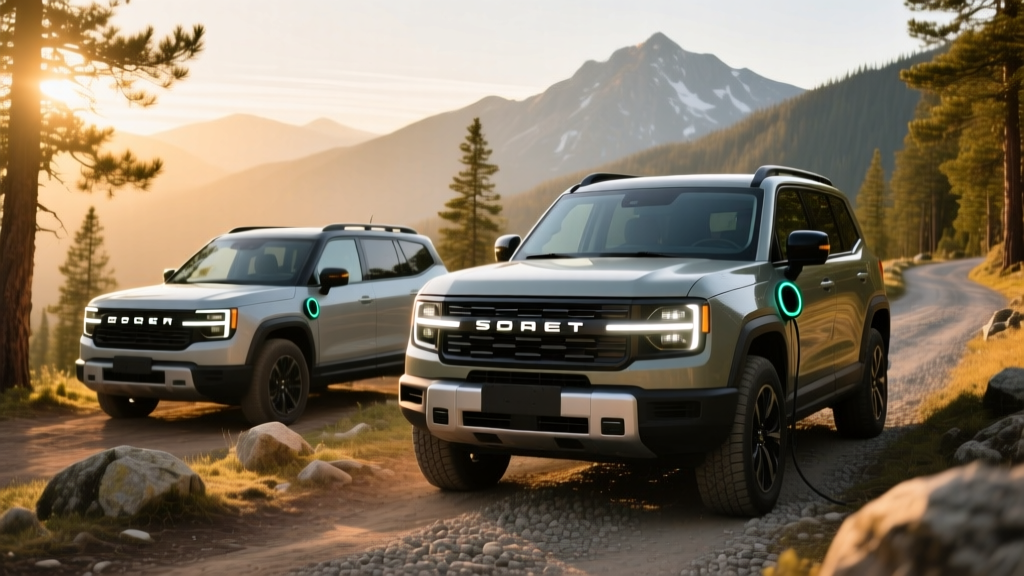
The Recon is Jeep's electric off-roader — boxy, rugged, and designed to evoke the Wrangler's spirit without sharing its platform. Based on the same STLA Large architecture as the Wagoneer S, it features removable doors, a power-folding soft top, and Jeep's Selec-Terrain and electronic locking differentials adapted for electric torque delivery.
Preliminary specs (announced, subject to change):
- Estimated range: 300+ miles (EPA TBD)
- Dual-motor AWD with off-road-tuned torque vectoring
- Estimated MSRP: ~$49,995 (base trim)
- Expected availability: late 2026 or early 2027
Because the Recon is not yet in customer hands, all specs remain preliminary. Jeep has not published final battery capacity, charge rates, or EPA certification numbers. We'll update this guide when official data is released. Do not base a purchase decision on announced specs — wait for EPA-certified figures.
Jeep EV vs. Gas Jeep: Cost and Capability Comparison
Many Jeep shoppers cross-shop the Wrangler or Grand Cherokee. Here's how the Wagoneer S stacks up against a comparably equipped gas Jeep Grand Cherokee (4xe PHEV and conventional V6) on the metrics that matter for daily ownership.
| Metric | Wagoneer S (EV) | Grand Cherokee V6 (Gas) | Grand Cherokee 4xe (PHEV) |
|---|---|---|---|
| Starting MSRP | $65,200 | $40,995 | $53,995 |
| EPA combined efficiency | ~90 MPGe | ~22 MPG | ~56 MPGe / 25 MPG (gas-only) |
| Annual fuel/energy cost (15k mi) | ~$650 (home charging) | ~$2,250 | ~$1,200 (mixed) |
| Annual maintenance (est.) | ~$300 | ~$700 | ~$600 |
| Federal tax credit eligibility | Unlikely (sourcing) | N/A | Limited (check IRS) |
The Wagoneer S commands a roughly $24,000 premium over a base gas Grand Cherokee, but the annual fuel and maintenance savings of approximately $1,900 narrow that gap over time. The math improves significantly if you have access to cheap home electricity (under $0.12/kWh) and drive more than 15,000 miles per year. If you qualify for a state EV rebate (check your local energy agency), the effective price drops further.
Charging the Wagoneer S: Home and On the Road
Charging infrastructure access is the single biggest variable in EV satisfaction. The Wagoneer S uses the CCS1 connector for DC fast charging (with NACS adapter compatibility expanding Tesla Supercharger access as Stellantis transitions the fleet).
| Level | Power | Miles Added per Hour | Typical Use Case |
|---|---|---|---|
| Level 1 (120V) | ~1.4 kW | ~4 mi/hr | Emergency/top-up only |
| Level 2 (240V, 48A) | ~11.5 kW | ~33 mi/hr | Daily home charging |
| DC Fast Charge | Peak ~200 kW | N/A (see time) | Road trips; 10–80% in ~23 min |
Home charging reality: A full Level 2 home installation (240V, 60-amp circuit, hardwired wall connector) typically costs $1,200–$2,800 including equipment, licensed electrician labor, and permits. If your electrical panel is maxed out or you need a 200-amp service upgrade, add $2,000–$4,000. Always get a quote from a licensed electrician before committing to the vehicle.
Charging curve reality: The Wagoneer S's ~200 kW peak rate applies only at low state-of-charge (around 10–30%). Expect the rate to taper to ~120 kW around 50% SoC and below 60 kW above 80%. This is normal lithium-ion behavior, not a defect — but it means the last 20% takes significantly longer. Plan road-trip stops around 10–80% charges for the best time efficiency.
Total Ownership Cost: What the Sticker Doesn't Show
| Category | Wagoneer S | Grand Cherokee V6 |
|---|---|---|
| Purchase price (MSRP) | $65,200 | $40,995 |
| Estimated tax credit/rebate | $0–$2,000 (state dependent) | $0 |
| 5-year fuel/energy | $3,250 | $11,250 |
| 5-year maintenance | $1,500 | $3,500 |
| 5-year insurance (est. avg) | $12,500 | $9,000 |
| Estimated depreciation (5yr) | $32,600 (50%) | $18,450 (45%) |
| 5-year total (approx.) | $82,450 | $65,195 |
Key takeaways: The Wagoneer S saves roughly $8,000 in fuel and maintenance over five years, but that's offset by higher insurance premiums (EV insurance averages 15–25% more than comparable gas vehicles) and steeper projected depreciation. The total cost gap narrows if you drive high annual miles, have cheap home electricity, or qualify for state incentives. For lower-mileage drivers without home charging, the gas Grand Cherokee remains the more economical choice.
Common Misconceptions About Jeep's Electric Cars
| Myth | Fact |
|---|---|
| "The Wagoneer S gets the full $7,500 federal tax credit." | As of 2026, battery-sourcing and critical-mineral requirements under §30D disqualify most Stellantis EVs. Always verify at IRS.gov before purchase. |
| "Electric Jeeps can't go off-road." | Instant electric torque and precise torque vectoring actually benefit low-speed rock crawling. However, the Wagoneer S is a road-focused SUV — the Recon will be the dedicated off-road EV. |
| "EV batteries need replacing every few years." | Modern NMC batteries are warrantied for 8 years/100,000 miles with a guaranteed capacity retention threshold (typically 70%). Industry data shows average degradation of ~10–15% over 8 years under normal use. |
| "I can charge on any Tesla Supercharger." | NACS adapter access is expanding, but not all Superchargers are open to non-Tesla vehicles yet. Check the Tesla app or your vehicle's nav for compatible stations. |
| "The Recon EV is available to buy now." | The Recon is announced but not in production. No deliveries have occurred. All specs are preliminary. |
Decision Framework: Is a Jeep Electric Car Right for You?
Choose the Wagoneer S if:
- You have reliable Level 2 home charging (or can install it)
- You want a 300-mile-range premium SUV with sub-3.5-second 0–60 performance
- Your daily commute is under 80 miles round-trip and you road-trip 3–4 times per year
- You value low running costs and don't mind a $65K+ entry price
- You don't need serious off-road capability (ground clearance is moderate)
Wait for the Recon if:
- Off-road capability is a priority (locking diffs, high clearance, removable doors)
- You want a lower entry price closer to $50,000
- You're willing to wait until late 2026 or 2027 for production and EPA-certified specs
Stick with a gas or PHEV Jeep if:
- You lack home or workplace charging access
- You regularly tow more than 3,500 lbs (EV towing slashes range by 30–50%)
- You live in a region with sparse DC fast-charging infrastructure
- Your budget is under $45,000
Frequently Asked Questions
What is the range of the Jeep Wagoneer S?
The EPA-estimated range is 300 miles. Real-world highway driving typically yields 260–280 miles, and cold-weather driving (below 32°F) can reduce range to 210–240 miles without battery preconditioning.
Does the Jeep Wagoneer S qualify for the $7,500 federal tax credit?
As of 2026, it is unlikely to qualify for the full credit due to §30D battery-sourcing and critical-mineral requirements. Eligibility can change as Stellantis adjusts its supply chain. Always confirm at IRS.gov or with your tax professional before purchasing. Point-of-sale transfer is available if you do qualify.
Can I take the Wagoneer S off-road?
The Wagoneer S has Selec-Terrain modes and AWD, making it capable on dirt roads, snow, and mild trails. It is not a Wrangler substitute — ground clearance, approach/departure angles, and underbody protection are tuned for on-road performance. Wait for the Recon for dedicated off-road EV capability.
How long does it take to charge the Wagoneer S at home?
On a Level 2 (240V, 11.5 kW) home charger, a full 0–100% charge takes roughly 9–10 hours. Most owners charge overnight from 20–80%, which takes about 5–6 hours and provides roughly 240 miles of range.
Is the Jeep Recon available to order?
No. The Recon has been announced with preliminary specs and an estimated starting price near $49,995, but production has not begun. Expected availability is late 2026 or early 2027. Final EPA range, battery capacity, and pricing have not been confirmed.
What connector does the Wagoneer S use?
The Wagoneer S uses CCS1 for DC fast charging and J1772 for Level 2 AC charging. Stellantis is adopting NACS (Tesla's connector) across its lineup, and a NACS adapter enables access to compatible Tesla Superchargers.