The Short Answer on the Microlino
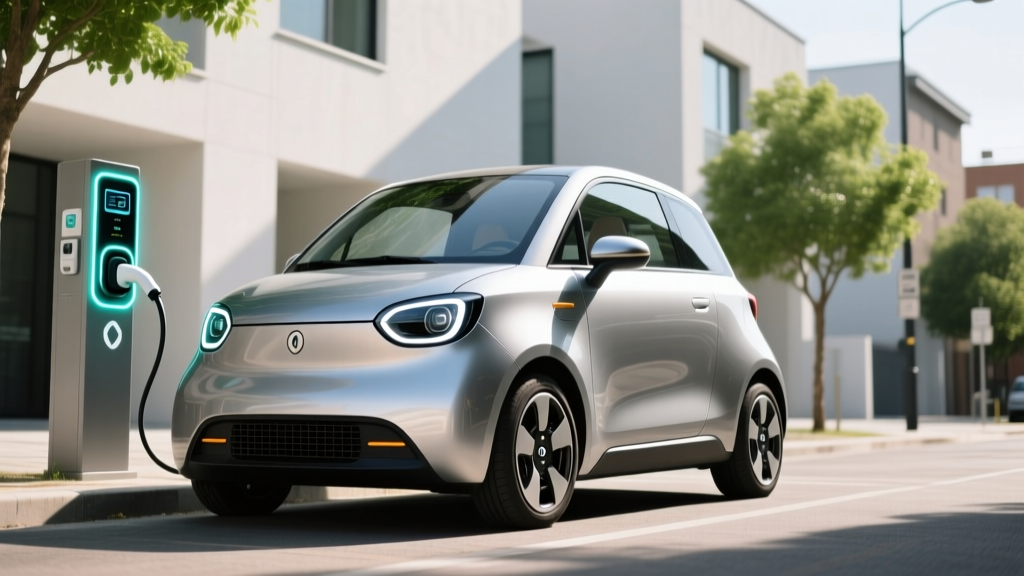
The Microlino electric car is a compact, three-wheeled (technically quadricycle-class) urban EV made by Swiss company Micro Mobility Systems. It offers up to 177 km (110 miles) of WLTP range from a 10.5 kWh battery, charges on a standard household outlet in about 4 hours, and starts around €17,990 in Europe. As of 2026, the Microlino is not available for purchase in the United States and has no announced US launch date. It does not qualify for the federal §30D EV tax credit. If you're a US-based buyer looking for a similar micro-EV concept, your closest legal alternatives are the Arcimoto FUV (discontinued), the upcoming Aptera, or a used BMW i3 for compact urban duty.
What Is the Microlino, Exactly?
The Microlino is the spiritual successor to the BMW Isetta — the iconic 1950s bubble car with a front-opening door. Designed by Micro Mobility Systems (the company behind the Micro Kickboard scooter brand), the Microlino 2.0 entered European production in 2022 at a facility in Turin, Italy. It's classified under European L7e heavy quadricycle regulations, which means it doesn't have to meet full passenger-car crash standards. That classification is central to understanding both its appeal and its limitations.
Physically, the Microlino is tiny: roughly 2.5 meters long (about 8.2 feet), seating two adults side by side with a small rear cargo shelf. The single front-hinged door swings open like the original Isetta, and the entire vehicle weighs under 500 kg (about 1,100 lbs) without the battery. It's designed exclusively for city driving — short commutes, grocery runs, and dense urban environments where parking is scarce.
Specs: Battery, Range, and Charging
Let's get into the numbers that matter for any EV purchase decision.
| Specification | Value |
|---|---|
| Battery Capacity (usable) | 10.5 kWh (Lithium-ion, NMC chemistry) |
| WLTP Range (max config) | 177 km / ~110 miles |
| WLTP Range (base 6 kWh) | 95 km / ~59 miles |
| Motor Output | 12.5 kW (17 hp) continuous / 19 kW (26 hp) peak |
| Top Speed | 90 km/h (56 mph) |
| 0–50 km/h (31 mph) | ~5.0 seconds |
| AC Charging (230V household) | ~4 hours (10.5 kWh battery, 0–100%) |
| AC Charging (Type 2, 3.3 kW) | ~3 hours (0–100%) |
| DC Fast Charging | Not supported |
| Vehicle Weight (with battery) | ~495 kg (1,091 lbs) |
| Cargo Volume | ~230 liters (rear shelf) |
| Starting Price (Europe) | €17,990 (~$19,500 USD at current rates) |
Real-world range reality check: The 177 km WLTP figure applies to the larger 10.5 kWh battery under ideal conditions. In real-world urban driving with climate control, expect roughly 85–100 km (53–62 miles) from the base 6 kWh pack and 130–150 km (80–93 miles) from the 10.5 kWh pack. Cold weather (below 40°F / 5°C) can reduce range by 20–30%, as the Microlino uses resistive cabin heating rather than a heat pump — a significant efficiency penalty in winter. At highway speeds (which this vehicle isn't designed for), range drops further due to the boxy aerodynamics.
Why the Microlino Isn't Available in the US
The most common question from American EV enthusiasts is whether Micro Mobility Systems plans to bring the Microlino stateside. As of early 2026, the answer remains no. There are three structural reasons:
1. FMVSS Compliance. The United States requires all vehicles sold for road use to meet Federal Motor Vehicle Safety Standards (FMVSS), which include rigorous crash testing, airbag requirements, electronic stability control, and dozens of other mandates. The Microlino's L7e quadricycle classification exempts it from Europe's equivalent full-car standards, but the US has no parallel exemption for vehicles this small. Retrofitting the Microlino to meet FMVSS would require a fundamental redesign — adding weight, cost, and complexity that would destroy the vehicle's core value proposition.
2. No Federal Tax Credit Eligibility. Even if the Microlino were sold in the US, it would almost certainly not qualify for the IRS §30D clean vehicle credit. That credit requires a vehicle to have a gross vehicle weight rating under 14,000 lbs (which it meets) but also to be produced by a manufacturer meeting specific battery-sourcing and critical-mineral requirements, and to fall under MSRP caps ($55,000 for sedans, $80,000 for SUVs/vans). The bigger hurdle is that the vehicle must be assembled in North America or by a manufacturer with a qualifying trade agreement structure — Micro's Italian production facility doesn't currently meet these criteria.
3. Market economics. The US EV market is dominated by larger vehicles — crossovers, SUVs, and trucks. A two-seat, 56-mph micro-car priced near $20,000 would compete against used Tesla Model 3s, new Chevrolet Equinox EVs, and conventional subcompacts that offer far more utility. The addressable market for a Microlino-class vehicle in the US is small and concentrated in a handful of dense cities.
How the Microlino Compares to Real US Alternatives
Since you can't buy a Microlino in America, here's how its specs stack up against EVs you actually can purchase, along with one gas-car baseline for cost context:
| Spec | Microlino (EU only) | Chevrolet Equinox EV 2LT (2026) | Nissan LEAF S (2025) | Honda Civic (gas baseline) |
|---|---|---|---|---|
| EPA/WLTP Range | 110 mi (WLTP) | 319 mi (EPA) | 149 mi (EPA) | ~420 mi (tank) |
| Battery | 10.5 kWh | 85 kWh (usable) | 40 kWh (usable) | N/A |
| DC Fast Charge | None | 150 kW peak, 10–80% in ~25 min | 50 kW (CHAdeMO), 10–80% in ~45 min | ~5 min fill-up |
| Top Speed | 56 mph | 112 mph | 90 mph (governed) | 130+ mph |
| Seats | 2 | 5 | 5 | 5 |
| Starting MSRP | ~$19,500 (EU) | $34,900 | $28,140 | $24,950 |
| Federal Tax Credit | None | Up to $7,500 (§30D, verify eligibility) | Up to $3,750 (§30D, sourcing-dependent) | None |
| Fuel/Energy Cost per Mile | ~$0.04 (home charging) | ~$0.04 (home charging) | ~$0.04 (home charging) | ~$0.14 (gas at $3.50/gal, 33 MPG) |
The comparison reveals the core problem: the Microlino's range and speed make it strictly a city runabout, while for $10,000–$15,000 more, US buyers can get a full-size EV with 150–320 miles of EPA range, DC fast charging, five seats, and full safety compliance. After applying the §30D federal tax credit (where eligible), the effective price gap narrows further.
Ownership Cost Breakdown: What a Microlino-Class EV Would Cost
Let's model what ownership would look like if the Microlino were available in the US, using realistic assumptions for a compact urban EV. We'll compare it against a gasoline Honda Civic over 5 years and 60,000 miles of predominantly city driving.
| Cost Category | Microlino (hypothetical US) | Honda Civic (gas) |
|---|---|---|
| Purchase Price | $19,500 | $24,950 |
| Federal Tax Credit | $0 (not eligible) | $0 |
| Fuel / Electricity (60k mi) | $2,400 (home charging at $0.15/kWh) | $6,360 (33 MPG, $3.50/gal) |
| Maintenance (5 years) | ~$800 (tires, cabin filter, brake fluid) | ~$3,200 (oil changes, filters, brakes, belts) |
| Insurance (avg/year × 5) | ~$7,500 ($1,500/yr est.) | ~$6,500 ($1,300/yr est.) |
| Depreciation (est.) | ~$10,000 (niche vehicle, uncertain resale) | ~$9,000 (strong resale market) |
| Total 5-Year Cost | ~$30,200 | ~$41,010 |
The Microlino-class EV saves roughly $10,800 over five years in this model, driven almost entirely by fuel and maintenance savings. However, the depreciation estimate carries high uncertainty — there's no established US resale market for micro-EVs, which could make the actual total cost higher or lower depending on residual value.
Insurance note: Micro-EVs often carry higher per-dollar insurance premiums than mainstream vehicles because repair networks are sparse, parts availability is limited, and insurers have less actuarial data. Expect quotes 10–20% above equivalent mainstream vehicles until the model establishes a claims history.
Common Misconceptions About the Microlino
| Myth | Fact |
|---|---|
| "It's a full car, just small." | The Microlino is classified as a heavy quadricycle (L7e) in Europe. It does not meet full passenger-car crash-test standards (Euro NCAP or NHTSA). Safety protections are significantly lower than any mainstream car. |
| "You can import one to the US." | Importing a non-FMVSS-compliant vehicle for road use is effectively prohibited for individuals. The NHTSA's 25-year import exemption doesn't apply to new vehicles. Show-or-display exemptions are extremely limited and do not cover production micro-cars. |
| "110 miles of range is enough for anyone in a city." | 110 miles WLTP translates to roughly 80–93 real-world miles. Add cold-weather losses of 20–30%, and winter range drops to 55–70 miles. That's fine for a 10-mile commute but tight for errands, detours, and climate use. |
| "It charges at any EV station." | The Microlino only supports AC charging (household outlet or Type 2 connector). It cannot use any DC fast charger — no Tesla Superchargers, no Electrify America, no CCS or CHAdeMO stations. Public charging options are limited to Level 2 AC points. |
| "It qualifies for EV tax incentives." | Even in Europe, incentive eligibility varies by country. In the US (if it were available), it would not meet §30D requirements due to assembly location and battery-sourcing rules. Some state/local incentives might apply, but verify with your jurisdiction. |
Real-World Ownership Considerations
Home Charging Access
The Microlino's biggest practical advantage is that it charges from a standard 230V European household outlet (or 120V in theory, though slower). With a 10.5 kWh battery, a full charge draws about the same energy as running a space heater for 8–10 hours. If you have a garage or dedicated parking spot with an outlet, "refueling" is effortless. However, if you live in an apartment without dedicated parking or rely on street parking, you'd need access to a Level 2 public charger — and even those won't replenish the Microlino quickly due to its low onboard charger rate (3.3 kW max).
Climate and Seasonality
The Microlino's small battery is its Achilles' heel in cold climates. A 20–30% range reduction in winter means the 10.5 kWh model drops to roughly 55–70 real-world miles. Resistive cabin heating is a significant energy drain. If you live in a city with harsh winters (Chicago, Boston, Minneapolis), the Microlino concept becomes marginal for daily use. It's best suited to mild-climate cities: Lisbon, Barcelona, Los Angeles, or Miami — if it were available in those markets.
Driving Patterns
This vehicle makes sense only if your daily driving is under 40 miles round-trip, your speeds stay under 50 mph, and you never need to carry more than one passenger and a few grocery bags. For anyone who occasionally drives on highways, carries rear-seat passengers, or takes weekend trips, the Microlino simply cannot function as a primary vehicle.
Decision Framework: Should You Wait for the Microlino or Buy Now?
Who Should Keep Watching the Microlino
- You live in Europe (specifically Italy, Germany, Switzerland, or France where it's currently sold) and need a second car strictly for urban errands.
- You have guaranteed home charging — a garage or driveway with an outlet.
- Your daily driving is under 30 miles, entirely on surface streets, in a mild climate.
- You already own a primary vehicle for highway driving, trips, and bad weather.
- You value parking ease and novelty over crash safety ratings and resale predictability.
Who Should Buy a US-Available EV Instead
- You need one vehicle to do everything — commuting, road trips, carrying passengers or cargo.
- You live in the US and need FMVSS-compliant, NHTSA-regulated safety.
- You want DC fast charging for road trips or apartment-dweller convenience.
- You want to claim the §30D federal tax credit (up to $7,500 for eligible buyers and vehicles — check current IRS guidelines for income caps, MSRP limits, and battery-sourcing requirements).
- You drive in cold weather and need a heat pump, larger battery buffer, and proven cold-range performance.
For US buyers drawn to the Microlino's compact urban concept, the smartest current alternatives include a used BMW i3 (153-mile EPA range, ~$15,000–$20,000 on the used market, DC fast charging available, full safety compliance) or a new Mini Cooper SE (114-mile EPA range, ~$30,900 MSRP, compact footprint, full crash-test ratings). Both deliver the "small, fun, electric city car" experience with US legality, established service networks, and predictable insurance rates.
Frequently Asked Questions
Is the Microlino coming to the United States?
No. As of 2026, Micro Mobility Systems has not announced any US launch plans. The vehicle would require substantial redesign to meet FMVSS safety standards, and the US market for micro-EVs is too small to justify the investment. Don't hold your breath.
How much does the Microlino cost?
In Europe, the Microlino starts at approximately €17,990 (~$19,500 USD) for the base model with the 6 kWh battery. The larger 10.5 kWh battery and higher trims push the price above €22,000 (~$24,000 USD). These prices do not include any European local incentives, which vary by country.
What is the real-world range of the Microlino?
The WLTP-rated range is 177 km (110 miles) for the 10.5 kWh battery and 95 km (59 miles) for the 6 kWh battery. Real-world urban driving yields roughly 80–93 miles and 45–55 miles respectively. Cold weather can reduce these figures by 20–30%.
Can the Microlino use DC fast chargers?
No. The Microlino only supports AC charging — either a standard household outlet or a Type 2 AC connector at up to 3.3 kW. A full charge takes 3–4 hours. It cannot connect to any DC fast-charging network (CCS, CHAdeMO, NACS/Tesla Supercharger).
Is the Microlino safe?
The Microlino is built to L7e heavy quadricycle standards, which are significantly less stringent than full passenger-car regulations. It has not been crash-tested by Euro NCAP or NHTSA. While it includes basic safety features like seatbelts and a reinforced steel frame, it lacks airbags, electronic stability control, and the crumple-zone engineering of a modern car. In any collision with a full-size vehicle, occupants are at substantially greater risk.
Does the Microlino qualify for any EV tax credits?
In the US, no — it is not available for purchase. In Europe, incentive eligibility varies by country. For US buyers considering other EVs, the IRS §30D credit offers up to $7,500 for qualifying new EVs, subject to buyer income caps ($150K single / $300K joint), vehicle MSRP caps, and battery-sourcing requirements. Always verify current eligibility with a tax professional.