Quick Answer: Should You Buy a Micro EV Car?
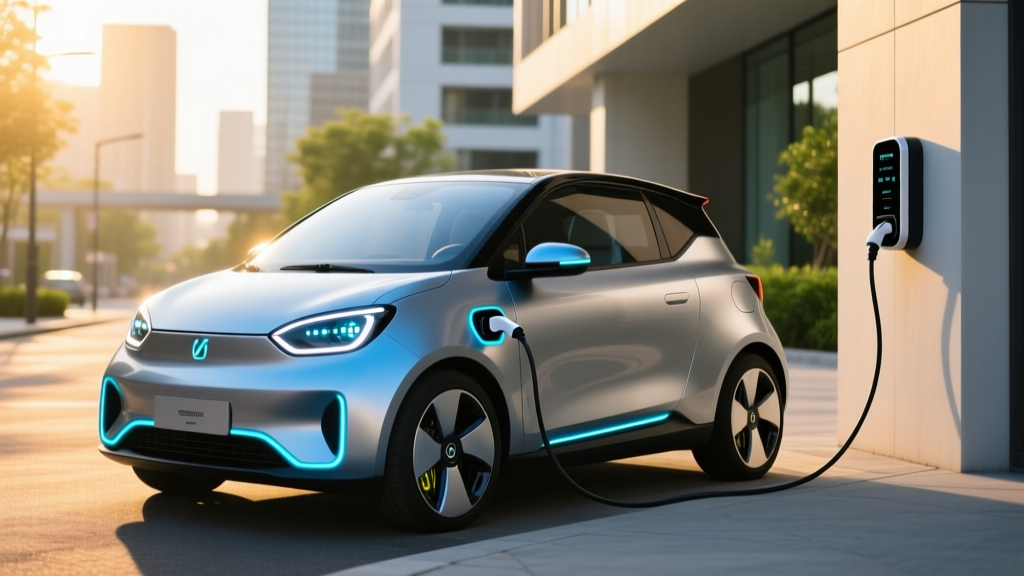
A micro EV car — a compact, lightweight electric vehicle typically under 4,500 lbs and 160 inches long — is best suited as a secondary household vehicle for urban commuting under 60 miles round-trip. Expect 80–150 miles of EPA range, base prices from $20,000–$38,000, and Level 2 charging times of 3–5 hours from empty. They cost roughly $0.03–$0.05 per mile to charge at home versus $0.12–$0.16 per mile for a comparable gas car. However, limited cargo space, modest highway performance, and reduced eligibility for the full $7,500 federal §30D tax credit on some models are real trade-offs. If your daily drive is short, you have home charging, and you need a second car for errands, a micro EV is a practical, low-cost electrified option.
What Exactly Is a Micro EV Car?
The term "micro EV car" doesn't map to an official EPA or NHTSA vehicle class, but in the U.S. market it generally describes battery-electric vehicles that are significantly smaller than a compact crossover. Think vehicles like the MINI Cooper SE, Fiat 500e, and the Nissan LEAF (which sits at the upper boundary of the category). These vehicles share common traits:
- Length: Under ~160 inches (compared to ~185" for a typical compact SUV)
- Curb weight: Under ~3,500–4,000 lbs
- Battery capacity: Typically 28–52 kWh usable
- EPA range: 80–220 miles depending on model and battery
- Seating: 4 passengers (often with tight rear legroom)
- Cargo: 7–14 cu ft behind rear seats
In 2026, the micro EV segment is modest but growing, driven by urban buyers and fleets who want a low-cost, easy-to-park electric runabout. China and Europe have far more options (Wuling Hongguang Mini EV, Dacia Spring), but U.S. availability remains limited to a handful of models that meet federal safety and crash-test standards.
2026 Micro EV Car Options: Specs and Pricing
Here's how the primary U.S.-available micro EVs stack up for the 2026 model year. All figures are from manufacturer specifications and EPA fueleconomy.gov data.
| Spec | 2026 MINI Cooper SE | 2026 Fiat 500e | 2025 Nissan LEAF S (upper-micro) |
|---|---|---|---|
| EPA Range | ~150 mi | ~149 mi | ~149 mi (40 kWh) / ~212 mi (60 kWh) |
| Battery (usable) | ~40.7 kWh (NMC) | ~42 kWh (NMC) | 40 kWh / 60 kWh (NMC) |
| Horsepower | 215 hp | 118 hp | 147 hp / 214 hp |
| 0–60 mph | ~6.6 sec | ~8.5 sec | ~7.4 sec / ~6.5 sec |
| Max DC Fast Charge | 95 kW (CCS2/NACS adapter) | 85 kW (CCS) | 50 kW (CHAdeMO) — LEAF's key weakness |
| 10–80% DCFC Time | ~28 min | ~35 min | ~40–60 min (50 kW cap) |
| Level 2 (240V) Rate | 11 kW | 11 kW | 6.6 kW |
| Base MSRP | ~$31,900 | ~$32,000 | ~$29,135 (S) / ~$37,135 (SV Plus) |
| Federal §30D Credit | Up to $7,500 (verify sourcing) | Up to $7,500 (verify sourcing) | Up to $7,500 (verify sourcing) |
| Battery Warranty | 8 yr / 100,000 mi | 8 yr / 100,000 mi | 8 yr / 100,000 mi |
Real-World Range Reality: The EPA sticker says 149–150 miles for the MINI Cooper SE and Fiat 500e, but expect 110–130 miles in mixed highway driving and as low as 90–110 miles in sub-30°F winter conditions. Lithium-ion battery chemistry loses efficiency in cold weather, and cabin heating draws directly from the traction battery. If your round-trip commute is over 80 miles with highway segments, these vehicles will require mid-day charging or careful preconditioning.
Micro EV vs Gas Car vs Hybrid: Cost and Efficiency
The strongest argument for a micro EV car is operating cost. Here's a data-driven comparison across a 15,000-mile annual driving scenario, assuming $0.14/kWh home electricity and $3.45/gallon regular unleaded:
| Metric | 2026 MINI Cooper SE (EV) | 2026 Toyota Corolla Hybrid (HEV) | 2026 Honda Civic (Gas, 33 MPG combined) |
|---|---|---|---|
| EPA Efficiency | 110 MPGe / 30 kWh/100mi | 52 MPG combined | 33 MPG combined |
| Annual Fuel/Energy Cost | ~$630 (home charging) | ~$995 | ~$1,568 |
| Cost Per Mile | ~$0.042 | ~$0.066 | ~$0.105 |
| 5-Year Fuel/Energy Cost | ~$3,150 | ~$4,975 | ~$7,840 |
| Annual Maintenance (est.) | ~$300 (tire rotation, cabin filter, fluid top-off) | ~$550 (oil changes, filters, brakes) | ~$600 (oil changes, filters, brakes) |
| 5-Year Maintenance | ~$1,500 | ~$2,750 | ~$3,000 |
| Total 5-Yr Fuel + Maintenance | ~$4,650 | ~$7,725 | ~$10,840 |
Over five years, a micro EV car saves roughly $3,075 versus a hybrid and $6,190 versus a gas compact in fuel and maintenance alone. That's before factoring in any federal or state tax credits.
However, the upfront purchase price matters. A base Corolla Hybrid starts around $24,000, while the MINI Cooper SE starts near $32,000. Even with a full $7,500 federal credit, the MINI's net price of ~$24,400 barely undercuts the Corolla Hybrid — and the Toyota offers 530+ miles of total range, no charging dependency, and a larger back seat.
Federal Tax Credit: What Micro EV Buyers Must Know
The IRS §30D Clean Vehicle Credit can reduce your federal tax liability by up to $7,500 for a qualifying new EV, or be transferred to the dealer at point of sale as an upfront discount. But eligibility is not guaranteed. For 2026, the key requirements are:
- MSRP cap: Vehicle base price must not exceed $55,000 for sedans/hatchbacks (all current micro EVs qualify)
- Buyer income cap: Modified AGI ≤ $150,000 (single) / $300,000 (married filing jointly)
- Battery sourcing: Increasing percentages of critical minerals and battery components must be sourced from the U.S. or free-trade-agreement partners — this requirement tightens annually and may disqualify some models mid-year
- Final assembly: Must occur in North America (verify via VIN at fueleconomy.gov)
- Point-of-sale transfer: You can elect to transfer the credit to the dealer, reducing your purchase price at closing — but you must still meet income requirements or repay the credit at tax time
Always verify a specific VIN's eligibility before signing a purchase agreement. Sourcing requirements have disqualified several previously eligible models since 2024, and the list can change mid-year.
Charging a Micro EV Car: Home and Public Reality
Micro EVs have smaller batteries, which means shorter charging sessions — a genuine advantage if you're relying on public DC fast charging or have limited home electrical capacity.
| Charging Level | Power (kW) | Miles Added per Hour | Full Charge Time (42 kWh battery) |
|---|---|---|---|
| Level 1 (120V outlet) | ~1.4 kW | ~4–5 mi/hr | ~30 hours |
| Level 2 (240V, 32A) | ~7.7 kW | ~25–28 mi/hr | ~5.5 hours |
| Level 2 (240V, 48A) | ~11.5 kW | ~35–38 mi/hr | ~3.5 hours |
| DC Fast Charge (85–95 kW peak) | 85–95 kW | ~200+ mi/hr (at peak) | 10–80% in 28–35 min |
kW vs kWh reminder: kW (kilowatts) measures charging power — how fast energy flows. kWh (kilowatt-hours) measures battery capacity — how much energy is stored. A 42 kWh battery charged at 11 kW takes roughly 3.8 hours; the same battery at 1.4 kW takes 30 hours.
Home Level 2 Charger Installation Cost Estimate
| Item | Typical Cost Range |
|---|---|
| Level 2 EVSE hardware (32A–48A, hardwired) | $400–$700 |
| Electrician labor (240V circuit, 50–60A breaker) | $600–$1,500 |
| Permit and inspection | $50–$200 |
| Panel upgrade (if needed, 100A → 200A) | $1,500–$3,500 |
| Total (no panel upgrade) | $1,050–$2,400 |
| Total (with panel upgrade) | $2,550–$5,900 |
Source: Licensed electrician estimates vary by region. Always get a site-specific quote. Some utilities offer rebates of $200–$500 for EVSE installation.
The Nissan LEAF's CHAdeMO problem: The LEAF remains the only major U.S. EV still using the CHAdeMO DC fast-charging standard. With Tesla opening its Supercharger network (NACS) to other brands via adapters, and Electrify America prioritizing CCS and NACS connectors, CHAdeMO public charging infrastructure is shrinking. If you're considering a LEAF, map your local CHAdeMO stations before committing.
Real Ownership Considerations: Where a Micro EV Car Falls Short
Honesty about limitations is essential for a good purchase decision:
Highway driving is inefficient. Micro EVs are optimized for city speeds. At 75 mph, aerodynamic drag and rolling resistance drain the battery significantly faster than the EPA combined estimate. Expect 25–35% range loss on sustained highway trips compared to the EPA sticker.
Cold weather is a real constraint. At 20°F, lithium-ion batteries lose 20–30% of effective range due to increased internal resistance and cabin heating load. A 150-mile EPA micro EV may deliver only 100–115 miles in a Midwestern or Northeastern winter. Preconditioning the battery while plugged in helps, but only if you have home charging.
Cargo is minimal. The Fiat 500e offers roughly 7.7 cu ft of cargo space behind the rear seats. The MINI Cooper SE provides about 11 cu ft. For comparison, a Honda Civic sedan trunk holds 14.8 cu ft. Groceries for a family of four will be tight.
Insurance costs can be higher. EVs typically carry 10–20% higher insurance premiums than equivalent gas cars due to higher repair costs (specialized body panels, battery protection requirements, and fewer qualified body shops). Get a quote before purchasing.
Public charging dependency is a deal-breaker without home access. If you live in an apartment without charging, rely on street parking, or live in a charging desert, a 150-mile range EV with 35-minute DCFC sessions becomes a daily logistics challenge. A hybrid or PHEV is a better fit in these scenarios.
| Myth | Fact |
|---|---|
| "Micro EVs are unsafe because they're small" | Modern micro EVs include standard AEB, lane-keeping, and multiple airbags. The LEAF earned IIHS Good ratings in multiple categories. However, physics favors mass in collisions — a 3,200-lb micro EV absorbs less crash energy than a 4,500-lb crossover. |
| "The battery will need replacing in 5 years" | Federal law mandates 8-year/100,000-mile battery warranties. Real-world NMC degradation data shows 8–15% capacity loss over 8 years with normal use. A 150-mile new range might become 130 miles by year 8 — still adequate for urban commuting. |
| "You'll save $7,500 on any micro EV" | The §30D credit requires meeting income caps, MSRP caps, and battery-sourcing rules that change annually. Some model years or trim levels may lose eligibility mid-year. Always verify by VIN. |
| "Micro EVs charge at the same speed as big EVs" | Peak DC fast-charge rates for micro EVs (85–95 kW) are lower than larger EVs (200–350 kW), but because the battery is smaller, 10–80% times are competitive at 28–35 minutes. |
Decision Framework: Is a Micro EV Car Right for You?
Choose a Micro EV Car If:
- Your daily round-trip commute is under 60–70 miles, mostly city/suburban driving
- You have reliable home Level 2 charging (garage, driveway, or dedicated parking spot with a 240V outlet)
- This is a secondary vehicle — you have another car for road trips, hauling, and long drives
- You live in a mild-to-moderate climate (limited sub-20°F winters)
- You value low per-mile operating cost and minimal maintenance over cargo space and highway range
- Your household income is under the §30D cap and you can verify battery-sourcing eligibility
Choose a Hybrid or PHEV Instead If:
- You drive over 100 miles daily or take frequent highway road trips
- You lack home charging access (apartment, street parking, no 240V circuit)
- You live in a region with harsh winters (consistent sub-20°F temperatures) and need full range year-round
- You need cargo capacity for family gear, sports equipment, or large grocery runs
- This is your only vehicle
Choose a Larger EV (Compact SUV/Sedan) If:
- You want 250+ miles of range for flexible road-trip capability
- You need seating for 5 adults comfortably
- You want DC fast charging above 150 kW for quicker public charging stops
- Your budget allows $40,000+ before incentives
Total Cost of Ownership: 5-Year Breakdown
| Cost Category | 2026 MINI Cooper SE (with $7,500 credit) | 2026 Toyota Corolla Hybrid LE |
|---|---|---|
| Net Purchase Price (after credit) | ~$24,400 | ~$24,000 |
| 5-Year Fuel/Energy | $3,150 | $4,975 |
| 5-Year Maintenance | $1,500 | $2,750 |
| Home Charger Install (one-time) | $1,500 (avg, no panel upgrade) | $0 |
| 5-Year Insurance (est.) | $8,500 (higher EV premiums) | $7,200 |
| Estimated Depreciation (5 yr) | $12,000 | $10,500 |
| Total 5-Year Cost | ~$51,050 | ~$49,425 |
The numbers are close. The micro EV car wins on fuel and maintenance savings but gives ground on insurance premiums, charger installation, and depreciation (EV resale values remain more volatile than proven hybrids). The gap narrows further if your state offers additional EV rebates or if your electricity rate is below the national average.
Frequently Asked Questions
Are micro EV cars legal on U.S. highways?
Yes. Unlike Neighborhood Electric Vehicles (NEVs), which are limited to 25 mph and low-speed roads, the micro EVs discussed here (MINI Cooper SE, Fiat 500e, Nissan LEAF) are full-speed, federally certified passenger vehicles. They meet all NHTSA crash-test standards and are legal on all roads including interstates.
Can I take a micro EV car on a road trip?
Technically yes, but plan carefully. With 130–150 real-world miles of range and 28–40 minute DCFC sessions (10–80%), a 300-mile trip requires at least two charging stops adding 60–90 minutes total. Route planning via PlugShare or your vehicle's navigation is essential, and winter or mountain driving will reduce range further. A micro EV is best as a second car while a gas/hybrid handles long trips.
How long will a micro EV battery last?
Based on current NMC chemistry data, expect 8–15% capacity loss over 8 years with normal use (daily charging to 80%, occasional DCFC, moderate climates). The federal warranty guarantees at least 70% capacity retention over 8 years / 100,000 miles. A full battery replacement, if needed out of warranty, runs $8,000–$15,000 depending on the model — though catastrophic failures within the warranty period are rare.
Do micro EVs qualify for the $7,500 federal tax credit?
They can, but it depends on battery-sourcing compliance, your income, and the vehicle's MSRP. Per IRS §30D rules, all current micro EVs fall under the $55,000 sedan MSRP cap. However, battery mineral sourcing requirements tighten each year, and eligibility can change mid-year. Verify your specific VIN at fueleconomy.gov before purchase.
Is a micro EV car cheaper than a gas car long-term?
It depends on your driving pattern, electricity rate, and whether you qualify for the federal credit. For a 15,000-mile/year urban commuter with home charging at $0.14/kWh and the full $7,500 credit, a micro EV breaks even with a comparable hybrid around year 4–5 and pulls ahead after that. Without the credit or with high commercial charging rates ($0.35–$0.50/kWh), the savings shrink significantly.
What's the best first-time EV buyer advice for micro EVs?
Start by measuring your actual daily mileage — most people overestimate it. If your real commute is under 50 miles round-trip, a 150-mile micro EV is more than adequate. Install a Level 2 home charger before taking delivery. Set your daily charge limit to 80% to maximize battery longevity. And always test-drive in conditions that match your actual driving (highway merge, winter cold if applicable, loaded with passengers).