The Quick Answer on MG EV Cars
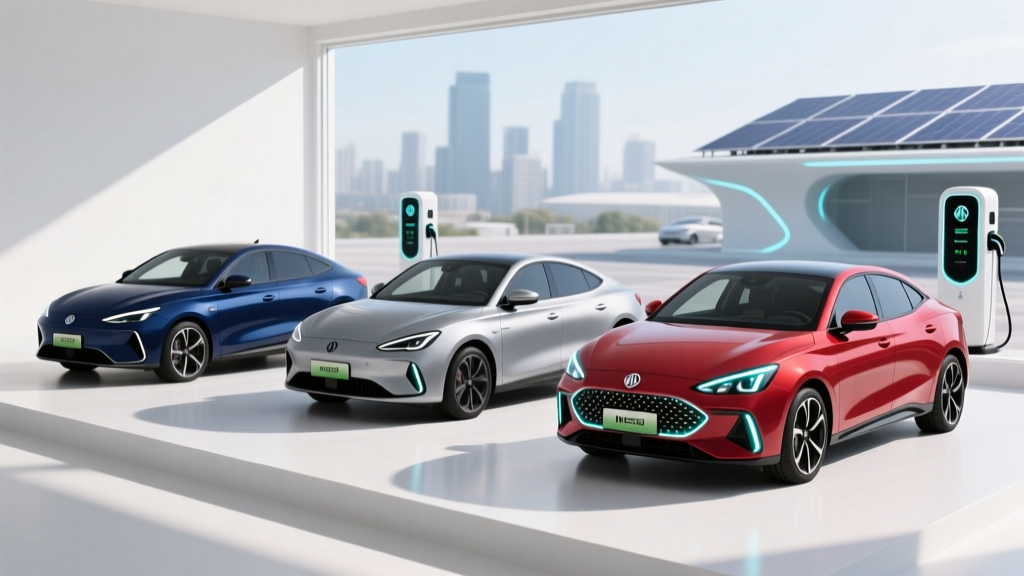
MG (Morris Garages), now owned by China's SAIC Motor, produces several compelling electric vehicles globally — including the MG4, MG ZS EV, and the upcoming MG Cyberster. However, as of 2026, MG EV cars are not officially sold in the United States. U.S. tariffs on Chinese-manufactured vehicles (currently 100% under Section 301) make importing them economically unviable. If you're a U.S. buyer researching MG EVs, you're likely either considering a grey-market import, planning for a future market entry, or comparing specs against domestically available alternatives like the Hyundai Kona Electric, Chevrolet Equinox EV, or Nissan Leaf. Below, we break down the global MG EV lineup, real-world specs, and what comparable U.S.-market options offer instead.
MG's Global EV Lineup: What Exists Today
MG has built one of the most affordable EV lineups in Europe, Australia, and Southeast Asia. Here's a spec-driven look at the models currently in production for the 2025-2026 model years:
| Model | Body Style | Battery (kWh) | WLTP Range | Peak DC Charge | 0-100 km/h | Global Price (approx.) |
|---|---|---|---|---|---|---|
| MG4 EV (Standard) | Hatchback | 51 kWh (LFP) | 350 km / 217 mi | 92 kW | 7.7 sec | €30,000 / ~$33,000 |
| MG4 EV (Long Range) | Hatchback | 64 kWh (NMC) | 450 km / 280 mi | 135 kW | 6.5 sec | €36,000 / ~$39,500 |
| MG4 XPOWER | Hatchback (AWD) | 64 kWh (NMC) | 385 km / 239 mi | 135 kW | 3.8 sec | €43,000 / ~$47,000 |
| MG ZS EV (2025+) | Subcompact SUV | 72 kWh (NMC) | 440 km / 273 mi | 100 kW | 8.4 sec | £33,000 / ~$42,000 |
| MG Cyberster | Roadster | 77 kWh (NMC) | 500 km / 311 mi | 140 kW | 3.2 sec (AWD) | £55,000 / ~$70,000 |
Important note on range: MG publishes WLTP figures, which tend to run 10-15% higher than EPA estimates used in the U.S. If the MG4 Long Range were EPA-rated, expect roughly 235-245 miles rather than the 280-mile WLTP claim. In real-world highway driving at 70 mph in moderate temperatures, plan for approximately 200-215 miles of usable range before needing to charge.
Why MG EV Cars Aren't Available in the U.S.
The barrier isn't technical — it's geopolitical and economic. In May 2024, the Biden administration raised tariffs on Chinese-made EVs to 100% under Section 301 of the Trade Act, effective 2024 and continuing through 2026. This means a $33,000 MG4 would carry roughly $33,000 in import duties alone before dealer markup, shipping, and compliance modifications.
SAIC Motor has not announced plans for a U.S. market entry, and the company's previous attempts to sell MG-branded vehicles in America (the MG TF sports car, discontinued in the mid-2000s) predated their EV era entirely. European markets, which impose lower tariffs, have been MG's primary expansion target, where the MG4 became one of the best-selling EVs in the UK by unit volume.
For U.S. buyers, grey-market importation of a non-federalized MG EV is theoretically possible but would require crash-test certification, EPA emissions compliance (even for EVs, due to onboard systems), and NHTSA approval — a process that typically costs $50,000-$150,000+ per vehicle and takes 1-2 years. It is not a practical path.
U.S. Alternatives: What to Buy Instead
If the MG4's value proposition — an affordable, practical electric hatchback — appeals to you, here's how the closest U.S.-market competitors stack up for the 2025-2026 model year:
| Spec | MG4 LR (Global) | Hyundai Kona Electric (2025) | Chevrolet Equinox EV 3RS (2025) | Nissan Leaf SV Plus (2025) |
|---|---|---|---|---|
| EPA Range | ~240 mi (est.) | 261 mi | 319 mi | 212 mi |
| Battery | 64 kWh NMC | 65.4 kWh NMC | 85 kWh NMC | 60 kWh NMC |
| Peak DC Charge | 135 kW | 100+ kW | 150+ kW | 100 kW (CHAdeMO) |
| 10-80% DC Time | ~26 min | ~43 min | ~20 min | ~40 min |
| 0-60 mph | 6.2 sec | 7.6 sec | ~8.0 sec | 6.9 sec |
| MSRP (base) | N/A in U.S. | $32,975 | $43,400 | $36,190 |
| §30D Tax Credit | N/A | $3,750 | $7,500 | $3,750 |
| Connector | CCS2 (global) | NACS (2025+) | NACS (2025+) | CHAdeMO |
The value gap: The MG4 Long Range sells for roughly $39,500 globally before incentives, but that price is unattainable in the U.S. The closest value competitor is the Hyundai Kona Electric at $32,975 before any federal credit — which actually undercuts the MG4's global price while offering more EPA-rated range and access to Tesla Superchargers via its NACS connector.
Real Cost of Ownership: EV vs. Gas Comparison
Even without the MG4 available stateside, the ownership math for the U.S. alternatives versus a comparable gas hatchback is worth examining. Below is a 5-year total cost of ownership (TCO) comparison using the Kona Electric vs. the Mazda CX-30 (a similarly sized gas crossover):
| Cost Category (5 yr / 75,000 mi) | Hyundai Kona Electric SEL | Mazda CX-30 2.5 S |
|---|---|---|
| Purchase Price (after credit) | $29,225 ($32,975 - $3,750) | $26,550 |
| Fuel / Electricity | $3,375 (home L2 at $0.14/kWh) | $7,875 (28 MPG avg at $3.50/gal) |
| Maintenance | $1,200 (tire rotations, cabin filter, fluid top-offs) | $3,500 (oil changes, brakes, filters, spark plugs) |
| Insurance (avg.) | $7,500 | $6,250 |
| Depreciation (est.) | $12,000 | $10,500 |
| Total 5-Year Cost | $53,300 | $54,675 |
The EV wins on fuel and maintenance by over $6,800 across five years, but loses some ground on insurance (EV premiums average 15-20% higher per III data) and depreciation. Net savings are modest — roughly $1,375 over 5 years — but the Kona Electric delivers a smoother, quieter drive with zero tailpipe emissions. The equation improves dramatically if you have access to free or low-cost workplace charging, or if your utility offers off-peak rates below $0.10/kWh.
Common Misconceptions About MG and Chinese EVs
| Myth | Fact |
|---|---|
| "MG is a British brand" | MG was British (founded 1924), but SAIC Motor of China acquired the brand in 2007. All current MG EVs are designed and manufactured in China. |
| "Chinese EVs have poor battery quality" | MG uses cells from major suppliers including CATL (the world's largest battery maker). The MG4's LFP pack in the Standard trim offers excellent cycle life — LFP chemistry typically sustains 80% capacity after 3,000+ cycles. |
| "I can import an MG4 to the U.S. easily" | Federalizing a non-U.S.-spec EV requires NHTSA approval, crash testing, and compliance modifications that cost $50K-$150K+. It's not feasible for individual buyers. |
| "MG will launch in the U.S. soon" | SAIC has made no official announcement. With 100% tariffs in place, there is no economic case for U.S. entry in the near term. |
| "The MG4 qualifies for the U.S. tax credit" | The §30D federal EV tax credit only applies to vehicles purchased new from a U.S.-licensed dealer. Since MG has no U.S. dealer network, no MG qualifies. |
First-Time EV Buyer Decision Framework
If You Were Considering an MG EV, Here's What to Do Instead
IF you wanted the MG4 for its affordable hatchback format:
→ Look at the Hyundai Kona Electric ($32,975, 261 mi EPA) or the Chevrolet Bolt EV (if 2025+ production resumes). Both offer competitive range, U.S. dealer support, and §30D credit eligibility. Check current credit status at IRS.gov.
IF you wanted the MG ZS EV for its SUV practicality:
→ The Chevrolet Equinox EV ($43,400, 319 mi EPA, $7,500 credit) offers more range and a larger battery, or consider the Hyundai Ioniq 5 ($42,500) for faster 800V charging.
IF you wanted the MG Cyberster as a fun electric roadster:
→ No direct U.S. equivalent exists at that price. The closest options are the Ford Mustang Mach-E GT ($59,995, 3.5 sec 0-60) or waiting for the next-gen Tesla Roadster (announced, no firm date).
IF you don't have home charging access:
→ A PHEV like the Toyota Prius Prime (44 mi electric-only, 52 MPG combined after battery depletion) may be more practical than any full EV. You can charge overnight on a standard 120V outlet and still drive long distances on gas.
IF you live in a cold climate (below 20°F winters):
→ Budget for 25-35% range loss in winter. A vehicle rated at 260 miles EPA may deliver only 170-195 miles in January. Prioritize models with heat pumps (Kona Electric, Ioniq 5, Equinox EV all have them) and preconditioning capability.
Charging Realities: What First-Time Buyers Must Know
Whether you choose a Kona Electric, Equinox EV, or any other U.S.-market alternative to an MG EV, the charging infrastructure picture is the same — and it's the single biggest adjustment from gas ownership.
Home charging is the foundation. A Level 2 home charger (240V, 32-48A) adds roughly 25-35 miles of range per hour of charging. Most EV owners do 80%+ of their charging at home. Expect to spend $800-$2,500 on a Level 2 unit plus professional installation, depending on whether your electrical panel needs an upgrade to 200A service. If you're in an apartment or lack a dedicated parking spot with outlet access, public charging becomes your primary option — and it's slower, more expensive, and less reliable.
Public DC fast charging varies wildly. Peak rates (150-350 kW) only apply at the beginning of a session when the battery is below ~50% State of Charge. As the battery fills, the charge rate tapers dramatically. A "150 kW charger" doesn't deliver 150 kW for the entire session — expect an average of 60-80 kW over a 10-80% session. This is physics, not a defect: lithium-ion cells limit charge speed as they approach full capacity to prevent damage.
Cost per mile: Home charging at the U.S. average of $0.14/kWh costs roughly $0.04-$0.05 per mile for a typical EV getting 3-4 mi/kWh. Public DC fast charging at $0.35-$0.50/kWh pushes that to $0.10-$0.15 per mile. For comparison, a 28 MPG gas car at $3.50/gallon costs $0.125 per mile. Home charging is the clear winner; exclusive reliance on public DC fast charging erases most of the fuel-cost advantage.
Frequently Asked Questions
Will MG ever sell EVs in the United States?
There is no confirmed timeline. SAIC Motor would need to either absorb the 100% Section 301 tariff (making their cars uncompetitive), build a factory in a tariff-free trade partner country, or wait for a change in U.S. trade policy. Industry analysts consider U.S. entry unlikely before 2028 at the earliest, and even that is speculative.
Is the MG4 a good car based on international reviews?
Yes — European and Australian reviews consistently praise the MG4 for its rear-wheel-drive handling, practical hatchback cargo space (363 liters / 12.8 cu ft rear seats up), and aggressive pricing. Its weaknesses include mediocre infotainment software, limited ADAS refinement compared to Hyundai/Kia rivals, and relatively slow DC charging on the Standard trim (92 kW peak). It earned a 5-star Euro NCAP safety rating.
What's the cheapest EV I can actually buy in the U.S. right now?
As of early 2026, the most affordable new EVs are the Nissan Leaf S (~$28,140 before credit, 149 mi range) and the Hyundai Kona Electric SE (~$32,975 before credit, 261 mi range). If you qualify for the §30D point-of-sale credit, the effective prices drop further. For used EVs, the §25E credit offers up to $4,000 on vehicles priced under $25,000.
Do I need a special electrical panel for home EV charging?
Not always, but possibly. A Level 2 charger drawing 32A requires a dedicated 40A circuit. If your home has a 100A main panel that's already near capacity (common in older homes), you may need a panel upgrade to 200A — which adds $1,500-$3,500 to your installation cost. Have a licensed electrician perform a load calculation before purchasing equipment. Some newer smart chargers can dynamically adjust draw to avoid overloading your panel.
How does the federal EV tax credit actually work in 2026?
The §30D Clean Vehicle Credit offers up to $7,500 for qualifying new EVs, but eligibility depends on several factors: your income (AGI caps of $150K single / $300K joint), the vehicle's MSRP (under $55K for cars, $80K for SUVs/trucks), battery component and critical mineral sourcing requirements, and final assembly in North America. Since 2024, the credit can be transferred to the dealer at point of sale as an instant discount. Always verify current rules at IRS.gov and consult a tax professional — the sourcing requirements eliminate many models.
Is an LFP battery better than NMC?
It depends on your priorities. LFP (lithium iron phosphate) batteries, like the one in the MG4 Standard, offer longer cycle life (3,000+ cycles vs. ~1,500-2,000 for NMC), better thermal stability, and lower cost. The trade-off is lower energy density — meaning a heavier, bulkier pack for the same range — and reduced performance in very cold temperatures. For daily commuting and warm climates, LFP is excellent. For maximum range and cold-weather driving, NMC remains the better choice.