Why the BMW i4 Continues to Attract EV Buyers
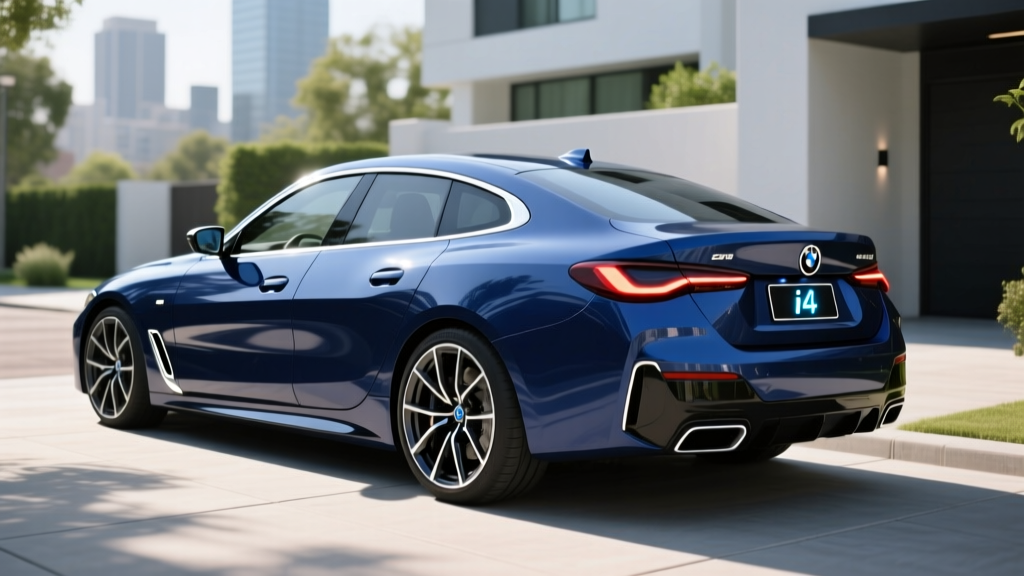
The BMW i4 occupies a specific niche in the luxury EV sedan market: it delivers the driving dynamics and interior quality of a 4 Series Gran Coupe while running on BMW's fifth-generation eDrive powertrain. For shoppers researching BMW i4 sales trends, the appeal is straightforward — it's an electric sedan that doesn't look or feel like a science experiment. It drives like a BMW, charges on the CCS network (with NACS adapters now widely available), and undercuts the Tesla Model S on price while matching or exceeding its build quality.
For the 2026 model year, BMW continues the i4 lineup with three primary trims: the single-motor rear-wheel-drive eDrive40, the dual-motor all-wheel-drive xDrive40, and the performance-oriented M50. The eDrive35 entry variant has been phased out for 2026, consolidating the lineup around higher-capacity battery configurations. Let's break down the exact specifications that matter to real buyers.
Range, Battery, and Real-World Efficiency
The 2026 BMW i4 eDrive40 carries an 83.9 kWh usable battery pack (NMC chemistry — nickel manganese cobalt) and earns an EPA-estimated 307 miles of range. The xDrive40 drops to approximately 287 miles due to the second motor's weight and drivetrain losses, while the M50 sits at around 270 miles with its performance-tuned calibration.
The EPA 307-mile figure for the eDrive40 assumes mixed driving. On a 70 mph highway run in 65°F weather, expect approximately 265–280 miles before reaching 10% SoC. In cold weather (below 32°F), range drops to roughly 220–240 miles due to cabin heating demands and reduced battery efficiency. City driving with regenerative braking can exceed the EPA estimate, reaching 315–325 miles in mild conditions. The i4's heat pump (standard on 2026 models) mitigates some cold-weather loss but doesn't eliminate it.
| Specification | eDrive40 | xDrive40 | M50 |
|---|---|---|---|
| EPA Range | 307 mi | 287 mi | 270 mi |
| Battery (usable) | 83.9 kWh (NMC) | 83.9 kWh (NMC) | 83.9 kWh (NMC) |
| Drivetrain | RWD, single motor | AWD, dual motor | AWD, dual motor |
| Horsepower | 335 hp | 396 hp | 536 hp |
| 0–60 mph | 5.5 sec | 4.6 sec | 3.7 sec |
| MPGe (combined) | 109 MPGe | 100 MPGe | 93 MPGe |
| Efficiency (kWh/100mi) | 31 kWh/100mi | 34 kWh/100mi | 36 kWh/100mi |
| Max DC Charge Rate | 205 kW | 205 kW | 205 kW |
| 10–80% DCFC Time | ~31 min | ~31 min | ~31 min |
| Level 2 Charge Rate | 11 kW (AC) | 11 kW (AC) | 11 kW (AC) |
| Base MSRP | $57,900 | $62,900 | $70,700 |
Charging Speed: DC Fast and Home Level 2
BMW equips all 2026 i4 models with a 205 kW peak DC fast-charge capability via the CCS1 connector. On a 350 kW Electrify America or Ionity station, the i4's charge curve peaks near 205 kW at low state-of-charge, holding above 150 kW through approximately 50% SoC before tapering. The 10–80% charge takes approximately 31 minutes under optimal conditions (battery preconditioned via the iDrive navigation system routing to a charger).
| Charge Level | Power | Time / Rate | Notes |
|---|---|---|---|
| Level 1 (120V household) | ~1.4 kW | ~3 mi/hr added | Emergency/trickle only; full charge in 60+ hours |
| Level 2 (240V home/public) | 11 kW max | ~36 mi/hr added | Full 10–100% in ~8.5 hours; ideal for overnight |
| DC Fast Charge (CCS1) | 205 kW peak | 10–80% in ~31 min | Precondition battery via nav routing for best speed |
For home charging, the i4's onboard charger accepts up to 11 kW on a 240V Level 2 circuit. With a 48-amp hardwired wallbox (such as the BMW Wallbox or a ChargePoint Home Flex), you'll add roughly 36 miles of range per hour of charging. A full overnight session from 20% to 100% takes approximately 8–9 hours — perfectly suited to a standard overnight routine. A 14-50 outlet on a 40-amp circuit delivers about 9.6 kW, adding roughly 31 miles per hour.
NACS adapter note: The 2026 i4 ships with a CCS1 inlet. BMW offers a NACS adapter (approximately $200) that enables access to Tesla Supercharger V3 and V4 stalls equipped with the Magic Dock or native NACS connectors. With the adapter, expect peak Supercharger speeds of approximately 150 kW — slower than the i4's native 205 kW CCS capability, but useful for route flexibility on road trips.
Performance and Driving Dynamics
The i4 eDrive40's single rear motor produces 335 hp and 295 lb-ft of torque, reaching 60 mph in 5.5 seconds. That's brisk enough for confident highway merging and passing, and the RWD layout preserves the balanced chassis feel BMW is known for. The xDrive40's dual-motor AWD setup bumps output to 396 hp (6.0 seconds to 60 mph corrected to 4.6 seconds) with improved traction in rain and snow.
The M50 is the enthusiast pick: 536 hp, 586 lb-ft, and a 3.7-second 0–60 time put it in serious performance territory. However, the M50's stiffer adaptive suspension and lower-profile tires trade some ride comfort for cornering capability. On real roads, the eDrive40's compliant ride and one-pedal driving capability (with adjustable regen levels via paddle shifters) make it the best daily-driver compromise.
Pricing, Trims, and Federal Tax Credit Eligibility
The 2026 BMW i4 eDrive40 starts at $57,900 (including destination). The xDrive40 begins at $62,900, and the M50 starts at $70,700. These are base MSRPs — BMW's typical options packages (Premium Package, Driving Assistance Professional, Harman Kardon audio, M Sport Package) can add $5,000–$12,000 to the as-tested price.
| Trim | Base MSRP | Typical As-Tested | §30D Credit Eligibility | Effective Price (est.) |
|---|---|---|---|---|
| eDrive40 | $57,900 | $62,000–$65,000 | Partial to full ($3,750–$7,500)* | $50,400–$61,250 |
| xDrive40 | $62,900 | $67,000–$72,000 | Partial to full ($3,750–$7,500)* | $55,400–$68,250 |
| M50 | $70,700 | $75,000–$82,000 | Partial to full ($3,750–$7,500)* | $63,200–$78,250 |
*Federal tax credit (IRS §30D) eligibility for the BMW i4 requires meeting several conditions:
- MSRP cap: The i4 qualifies as a sedan — the §30D cap for sedans is $55,000. The eDrive40 base MSRP of $57,900 exceeds this cap, meaning no i4 trim qualifies for the full new-vehicle credit based on MSRP alone under current rules. However, point-of-sale transfer and manufacturer incentive restructuring may shift eligibility. Always verify with your dealer and a tax professional.
- Buyer income limits: Modified AGI must not exceed $150,000 (single), $225,000 (head of household), or $300,000 (joint filers).
- Battery sourcing: Critical mineral and battery component sourcing requirements phase in progressively. BMW's battery supply chain (cells from CATL and Samsung SDI) may partially or fully meet these requirements depending on the production batch.
- Assembly: The i4 is assembled in Munich, Germany — this disqualifies it from the §30D new-vehicle credit under the North American final assembly requirement.
Given the assembly location, the BMW i4 does not currently qualify for the $7,500 new-vehicle federal tax credit. However, it may qualify for state-level incentives (California's CVRP, Colorado's state credit, New York's Drive Clean Rebate, etc.) and lease incentives — BMW Financial Services often passes the $7,500 commercial clean vehicle credit through as a lease reduction, which can substantially lower monthly payments. Consult IRS.gov §30D guidelines and your tax advisor for current eligibility.
Interior, Cargo, and Technology
The i4's cabin uses BMW's Curved Display layout: a 12.3-inch digital instrument cluster merged with a 14.9-inch touchscreen running iDrive 8.5. Wireless Apple CarPlay and Android Auto are standard, as is a Wi-Fi hotspot. The center console retains a physical iDrive rotary controller — a usability win over touchscreen-only interfaces.
Cargo and passenger space:
- Cargo volume (rear seats up): 16.6 cu ft (hatchback-style liftgate improves usability vs. a traditional sedan trunk)
- Cargo volume (rear seats folded): 45.6 cu ft
- Front legroom: 41.5 inches
- Rear legroom: 35.2 inches (tight for taller passengers on long trips)
- No front trunk (frunk) — the space is occupied by drive electronics
The hatchback liftgate is a practical advantage over the Tesla Model 3's conventional trunk, making loading bulky items significantly easier. However, the rear seat is tighter than the Hyundai Ioniq 6 or Tesla Model 3, and the center tunnel hump (a legacy of the CLAR platform shared with ICE 4 Series models) limits the middle-rear seat to short trips.
Driver Assistance and Safety
The i4 comes standard with BMW's Active Driving Assistant, which includes forward collision warning, automatic emergency braking, lane departure warning, and blind-spot monitoring. The optional Driving Assistance Professional Package ($1,700) adds adaptive cruise control with stop-and-go, lane centering, and automatic lane change on highways.
The i4's driver-assistance systems are SAE Level 2 — the vehicle can manage steering, acceleration, and braking under specific conditions, but the driver must remain fully attentive with hands on or near the wheel. This is not self-driving. BMW's system is competent for highway cruising but requires continuous driver supervision.
Safety ratings from the IIHS and NHTSA have historically been strong for the i4 platform, with top marks in crashworthiness. Check current-year ratings for the latest assessments.
BMW i4 vs. Key Competitors
Shoppers cross-shopping the i4 typically consider the Tesla Model 3, Hyundai Ioniq 6, Polestar 2, and the Genesis Electrified G80. Here's how the i4 eDrive40 stacks up on the metrics that matter:
| Metric | BMW i4 eDrive40 | Tesla Model 3 LR | Hyundai Ioniq 6 SEL | Polestar 2 LR SM |
|---|---|---|---|---|
| EPA Range | 307 mi | 363 mi | 361 mi | 320 mi |
| Battery | 83.9 kWh NMC | ~79 kWh NMC | 77.4 kWh NMC | 82 kWh NMC |
| Peak DC Charge | 205 kW | 250 kW | 240 kW | 205 kW |
| 10–80% DCFC | ~31 min | ~25 min | ~18 min | ~30 min |
| 0–60 mph | 5.5 sec | 4.2 sec | 6.1 sec | 5.9 sec |
| Base MSRP | $57,900 | $42,490 | $42,450 | $51,300 |
| §30D Credit | No (Germany) | Yes (partial/full)* | Yes (partial/full)* | No (China/EU) |
| Cargo (rear up) | 16.6 cu ft | 23 cu ft | 12.3 cu ft | 14.4 cu ft |
*Credit eligibility varies by trim, sourcing, and buyer income. Verify at purchase.
The Model 3 wins on range, charging speed, price, and tax credit access. The Ioniq 6 offers the fastest 10–80% charging in this group at just 18 minutes thanks to its 800V architecture. But the i4 wins on interior material quality, cabin quietness, ride refinement, and the intangible "premium sedan" feel that BMW executes better than almost anyone in this price range.
Warranty and Long-Term Ownership
BMW covers the i4 with a competitive warranty package:
- New vehicle limited warranty: 4 years / 50,000 miles
- Battery and high-voltage components: 8 years / 100,000 miles (capacity retention guaranteed to 70% minimum)
- Maintenance: 3 years / 36,000 miles of complimentary scheduled maintenance (BMW Ultimate Care)
- Roadside assistance: 4 years / unlimited miles
The 70% battery capacity retention threshold is standard for the industry. Based on data from similar BMW eDrive powertrains (iX, i7), degradation in the first 100,000 miles is typically 8–12% under normal use — meaning most owners will retain 88–92% of original capacity, well above the warranty threshold. The NMC chemistry in the i4 has proven durable, though LFP packs (used in the Tesla Model 3 RWD) generally show slower long-term degradation at the cost of lower energy density.
- Premium interior quality — best in class at this price
- Hatchback liftgate adds real cargo utility (16.6 cu ft)
- Smooth, quiet ride with excellent highway manners
- iDrive 8.5 is intuitive with physical controller backup
- 335 hp eDrive40 is quick and efficient
- Heat pump standard for cold-weather efficiency
- No federal §30D credit — assembled in Germany
- Base MSRP above $55K sedan cap regardless
- 205 kW peak DC charge is slower than Hyundai/Kia's 800V rivals
- Rear seat legroom (35.2 in) is tight for the class
- No frunk — charge cable storage eats cargo space
- CCS1 port requires adapter for Tesla Supercharger access
Who Should Buy the BMW i4?
The BMW i4 is best suited for luxury-oriented commuters and road-trippers who prioritize interior refinement, quiet highway cruising, and brand cachet over maximum range-per-dollar. If you're replacing a 3 Series or 4 Series and want to go electric without changing the fundamental BMW driving experience, the i4 is the most seamless transition available.
It is not the right choice if:
- You need the lowest possible cost-per-mile of range (the Model 3 and Ioniq 6 dominate here)
- You rely on the federal tax credit to make the math work
- You frequently carry rear-seat passengers over long distances
- Fastest possible DC charging speed is your top priority
Choose the BMW i4 eDrive40 if: You value luxury interior quality, BMW driving dynamics, hatchback utility, and can absorb the higher effective price without the federal credit. Lease to capture the pass-through commercial credit.
Choose the Tesla Model 3 Long Range if: Range (363 mi), charging speed (250 kW), Supercharger network access, and federal credit eligibility are your top priorities.
Choose the Hyundai Ioniq 6 if: You want the fastest DC charging (18 min 10–80%), competitive range (361 mi), and a lower starting price with potential credit eligibility.
Frequently Asked Questions
What is the real-world range of the BMW i4?
The EPA rates the eDrive40 at 307 miles. In real-world highway driving at 70 mph, expect 265–280 miles. In cold weather (below freezing), plan for 220–240 miles. City driving with regenerative braking can stretch to 315+ miles in mild temperatures.
How fast does the BMW i4 charge at home and on DC fast chargers?
On a Level 2 home charger (240V, 48A), the i4 charges at up to 11 kW, adding about 36 miles of range per hour — a full overnight charge. On DC fast chargers, it peaks at 205 kW and reaches 10–80% in approximately 31 minutes with battery preconditioning.
Does the BMW i4 qualify for the $7,500 federal EV tax credit?
No. The BMW i4 is assembled in Munich, Germany, which disqualifies it from the §30D new clean vehicle credit regardless of MSRP. Additionally, the eDrive40's base MSRP of $57,900 exceeds the $55,000 sedan cap. However, leasing through BMW Financial Services may pass through a $7,500 commercial credit as a capitalized cost reduction — ask your dealer. State incentives may still apply.
Is the BMW i4 worth buying vs. the Tesla Model 3 or Hyundai Ioniq 6?
It depends on your priorities. The i4 wins on interior luxury, ride quality, and brand prestige. The Model 3 wins on range, charging speed, price, and tax credit access. The Ioniq 6 wins on charging speed and value. If luxury and driving feel matter more than cost-per-mile efficiency, the i4 is the stronger pick.
What are the biggest drawbacks of the BMW i4?
The main drawbacks are: no federal tax credit eligibility (German assembly), slower DC charging than 800V competitors (205 kW vs. 240–350 kW), tight rear seat legroom, no front trunk, and a higher starting price than rivals. The CCS port also requires an adapter for Tesla Supercharger access.
What is the BMW i4's battery warranty?
BMW covers the high-voltage battery for 8 years or 100,000 miles, guaranteeing a minimum of 70% capacity retention. Real-world data from BMW's eDrive platform suggests typical degradation of 8–12% over the first 100,000 miles under normal use.
Sources: EPA Fuel Economy, IRS §30D Clean Vehicle Credits, BMW USA i4 Specifications.