Quick Answer: MG Electric Cars and US Buyers
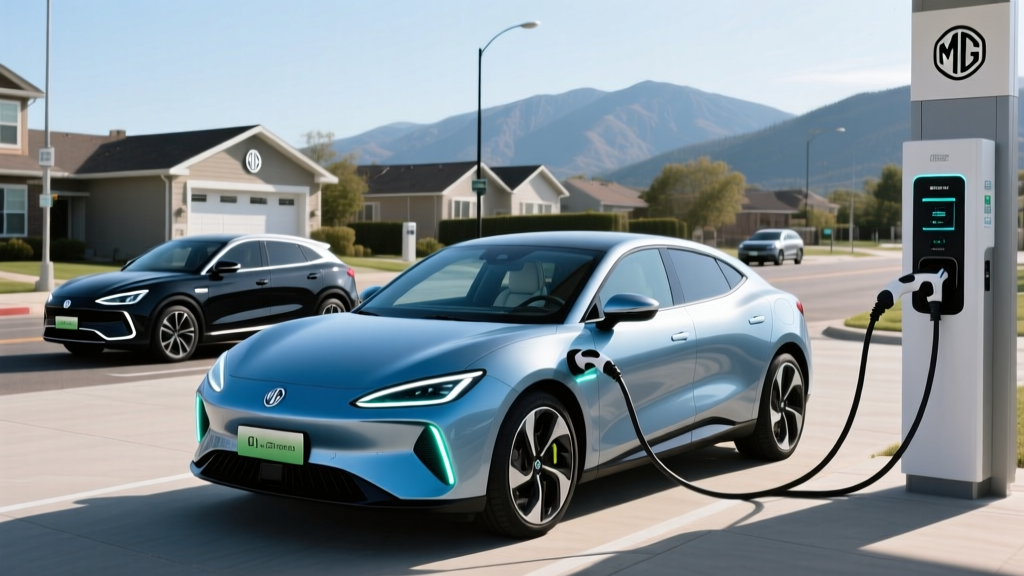
MG electric cars are not officially sold in the United States as of 2026. Models like the MG4 (281-mile WLTP range, ~$30,000 equivalent), MG ZS EV, and MG Marvel R are available in Europe, the UK, Australia, and parts of Asia — but MG Motor (owned by SAIC Motor) has not established a US dealer network or begun federal homologation for American sales. If you're in the US, you cannot currently purchase or import a new MG EV through legal consumer channels. For buyers in markets where MG is available, these cars offer strong value with competitive range and charging specs — but US shoppers should look to alternatives like the Hyundai Kona Electric, Chevrolet Equinox EV, or Volvo EX30 in the same price bracket.
Why MG Electric Cars Generate So Much Interest
Search interest in MG electric cars has grown steadily as international automotive media highlights the brand's aggressive pricing. The MG4 EV, launched globally in 2023 and refreshed for 2025, undercuts most rivals by 15-25% on price while delivering respectable range and a rear-wheel-drive platform that reviewers praise for driving dynamics. In the UK, the MG4 became one of the best-selling EVs by volume, and European registrations through ACEA data confirm strong market penetration.
For US-based EV shoppers encountering this coverage, the natural question is: can I get one, and should I wait? The short answer is no on both counts for the foreseeable future. But understanding what MG offers internationally helps benchmark what you should expect from similarly priced EVs that are available stateside.
MG's Current EV Lineup: Specs That Matter
Here's what MG sells in export markets as of the 2025-2026 model cycle. Note that WLTP range figures (used in Europe) typically overstate real-world distance by 10-15% compared to EPA testing methodology used in the US.
| Model | Battery (kWh usable) | Range (WLTP) | Est. EPA Equiv. | Peak DC Charge (kW) | 10-80% Time | Power (HP) | 0-100 km/h | Approx. Price (USD equiv.) |
|---|---|---|---|---|---|---|---|---|
| MG4 EV Standard | 51 kWh (LFP) | 218 mi | ~185 mi | 117 kW | ~28 min | 168 hp | 7.7s | $28,000 |
| MG4 EV Long Range | 64 kWh (NMC) | 281 mi | ~240 mi | 135 kW | ~26 min | 201 hp | 6.5s | $33,000 |
| MG4 XPOWER | 64 kWh (NMC) | 239 mi | ~205 mi | 135 kW | ~26 min | 429 hp (AWD) | 3.8s | $39,000 |
| MG ZS EV (facelift) | 51 kWh (LFP) | 198 mi | ~170 mi | 76 kW | ~36 min | 176 hp | 8.6s | $30,000 |
| MG Marvel R | 70 kWh (NMC) | 252 mi | ~215 mi | 90 kW | ~40 min | 288 hp (AWD) | 4.9s | $44,000 |
Key takeaways: The MG4 Long Range is the standout — a ~240-mile EPA-equivalent range with a 64 kWh NMC pack and 135 kW peak DC charging is competitive with the Hyundai Kona Electric (261 mi EPA, $32,675) and Chevrolet Equinox EV 3LT (315 mi EPA, ~$33,400). The LFP chemistry in the Standard and ZS EV variants offers longer cycle life and lower degradation risk, a trade-off worth understanding if you're comparing battery technologies.
Why MG Isn't Sold in the US (and When That Might Change)
Several structural barriers keep MG electric cars out of the American market:
- Tariffs on Chinese-manufactured vehicles: The US imposes a 27.5% tariff on imported Chinese-built automobiles (2.5% base + 25% Section 301 tariff). Since MG vehicles are manufactured by SAIC in China, this tariff makes their value proposition non-viable in the US market.
- Homologation and safety compliance: Vehicles sold in the US must meet NHTSA Federal Motor Vehicle Safety Standards (FMVSS), which differ from European UN-ECE regulations. MG has not begun the costly multi-year certification process.
- Dealer network absence: Unlike legacy automakers or Tesla's direct-sales model, MG has no US retail infrastructure, service centers, or parts supply chain.
- Geopolitical risk: SAIC Motor's state-owned status adds regulatory scrutiny under current US trade and data-security policies.
Industry analysts have speculated about MG entering the US market through a Mexican or South American manufacturing partnership to sidestep tariffs, but as of early 2026, SAIC has made no official announcement. Don't plan a purchase around this possibility.
What US Buyers Should Consider Instead
If MG's value proposition appeals to you — affordable pricing, solid range, practical hatchback or crossover form factors — here's how the closest US-market alternatives stack up:
| Model | EPA Range | Battery | Peak DC kW | 10-80% | Base MSRP | Federal Credit Eligible? |
|---|---|---|---|---|---|---|
| Chevrolet Equinox EV 3LT | 315 mi | 85 kWh (NMC) | 150 kW | ~24 min | $33,400 | Yes — up to $7,500 (§30D) |
| Hyundai Kona Electric SEL | 261 mi | 65 kWh (NMC) | 100 kW | ~30 min | $32,675 | No (Korea-sourced battery) |
| Volvo EX30 Plus | 275 mi | 69 kWh (NMC) | 153 kW | ~25 min | $36,450 | No (China assembly) |
| Nissan Leaf SV Plus | 212 mi | 60 kWh (NMC) | 100 kW (CHAdeMO) | ~35 min | $36,190 | Yes — up to $3,750 (§30D) |
| Tesla Model 3 RWD | 272 mi | 60 kWh (LFP) | 170 kW | ~22 min | $38,990 | Yes — up to $7,500 (§30D) |
The Equinox EV and Tesla Model 3 RWD are the strongest value plays when the §30D federal tax credit applies. Under current IRS rules, eligibility requires meeting battery component and critical mineral sourcing thresholds, buyer income caps ($150K single / $300K joint AGI), and MSRP caps ($55,000 for sedans, $80,000 for SUVs/trucks). The credit can now be transferred to the dealer at point of sale, effectively reducing your purchase price immediately. Always verify current eligibility on irs.gov before committing, as sourcing requirements tighten annually.
Real Costs: EV vs Gas at This Price Point
Whether you're eyeing an MG4 internationally or a Chevrolet Equinox EV in the US, the ownership economics follow a similar pattern. Here's a 5-year cost comparison using the Equinox EV versus a comparably priced gas crossover (Toyota RAV4 LE, ~$30,000 MSRP):
| Cost Category | Chevy Equinox EV (after $7,500 credit) | Toyota RAV4 LE (Gas) |
|---|---|---|
| Purchase price (net of incentives) | $25,900 | $30,000 |
| Fuel/energy (5 years) | $3,750 (home charging, $0.13/kWh avg) | $9,375 ($3.50/gal, 30 MPG combined) |
| Maintenance (5 years) | $1,200 (tire rotations, cabin filter, wiper fluid) | $3,500 (oil changes, filters, brakes) |
| Insurance (5 years) | $8,500 (EV premium ~15-20% higher) | $7,000 |
| Estimated depreciation | $12,000 (46% over 5 yrs) | $11,500 (38% over 5 yrs) |
| Total 5-year cost | $51,350 | $61,375 |
The EV saves roughly $10,000 over five years in this scenario, driven primarily by fuel and maintenance savings. However, this assumes reliable home Level 2 charging access at residential electricity rates. If you're dependent on public DC fast charging at $0.35-$0.50/kWh, your energy costs nearly triple, erasing much of the advantage.
First-Time EV Buyer Considerations
If MG's international coverage has piqued your interest in going electric, here's what actually determines whether an EV works for your life:
Decision Framework: Is an EV Right for You?
Choose a BEV (full electric) if:
- You can install a Level 2 home charger (240V, 32-48A) — expect $500-$2,500 for installation depending on panel capacity and run length
- Your daily driving is under 80 miles round-trip (covers ~95% of US commutes per FHWA data)
- You take road trips fewer than 6 times per year, and routes have DC fast-charging corridors (check PlugShare)
- You want minimal maintenance and lower per-mile fueling costs
Choose a PHEV (plug-in hybrid) if:
- You lack reliable home charging (apartment, street parking)
- You regularly drive 200+ miles in a day or tow frequently
- You want EV-like daily commuting with gas-engine flexibility for longer trips
Wait or choose a gas/hybrid vehicle if:
- You live in extreme cold climates (-20°F regular) without garage parking — expect 30-40% range loss
- You have zero charging access at home or work and your area lacks public infrastructure
- Your budget can't absorb higher insurance premiums or the upfront cost differential
Charging Reality Check
MG4 Long Range owners in Europe report real-world DC charging that peaks at 135 kW but tapers significantly above 60% SoC — a typical session from 10-80% takes roughly 26 minutes, but the last 20% (80-100%) can add another 25-30 minutes. This charge-curve taper is universal across EVs and matters for road-trip planning. US alternatives like the Tesla Model 3 and Hyundai Ioniq 5 sustain higher charge rates longer, making them genuinely faster on long trips despite similar peak kW ratings.
Common Misconceptions About MG and Budget EVs
| Myth | Fact |
|---|---|
| "MG is a British brand so it's European-made" | MG is owned by SAIC Motor (Shanghai). All current EVs are manufactured in China. The brand heritage is British; the engineering and production are Chinese. |
| "Cheap EVs have terrible batteries" | The MG4 uses CATL and other tier-1 supplier cells — the same manufacturers supplying Tesla, BMW, and Hyundai. LFP chemistry in the Standard Range variant offers 3,000+ cycle life with minimal degradation. |
| "I can import an MG4 to the US myself" | Federal law prohibits importing non-conforming vehicles less than 25 years old for personal use unless they pass full FMVSS certification at the importer's expense — a process costing $100K+ and rarely approved. |
| "WLTP and EPA range numbers are the same" | WLTP (European standard) is ~10-15% more generous than EPA. An MG4 Long Range at 281 mi WLTP would likely sticker at ~240 mi EPA — always convert when comparing to US-market vehicles. |
| "All EVs qualify for the $7,500 tax credit" | Under §30D rules, eligibility depends on battery sourcing, vehicle assembly location, MSRP caps, and buyer income. Many EVs — including those assembled outside North America — receive $0 or a partial credit. Check fueleconomy.gov for the current list. |
Battery Warranty and Longevity: What to Expect
MG offers a 7-year/80,000-mile battery warranty in European markets, guaranteeing 70% state of health (SoH) retention. This is comparable to Hyundai's 10-year/100,000-mile warranty (70% SoH) and slightly behind Tesla's 8-year/120,000-mile coverage. For context, real-world degradation data aggregated from fleet operators shows most modern NMC batteries retain 88-92% capacity after 100,000 miles, while LFP packs often exceed 95% — meaning the warranty threshold is rarely breached in normal use.
If MG ever enters the US market, expect warranty terms to align with the competitive standard of 8 years/100,000 miles to match Hyundai, Kia, and Tesla offerings.
Frequently Asked Questions
Will MG electric cars ever be sold in the United States?
There is no confirmed timeline. The 27.5% tariff on Chinese-built vehicles, FMVSS certification costs, and geopolitical factors make near-term US entry unlikely. SAIC has not announced any US market plans as of early 2026.
What is the closest US equivalent to the MG4 EV?
The Chevrolet Equinox EV ($33,400, 315 mi EPA) and Hyundai Kona Electric ($32,675, 261 mi EPA) are the closest in price and form factor. The Tesla Model 3 RWD ($38,990, 272 mi EPA) offers more range and faster charging but at a higher price point before tax credits.
Is the MG4 a good electric car?
By international reviews, yes — it offers strong driving dynamics, competitive range, and aggressive pricing. However, charging speeds (135 kW peak on Long Range) lag behind rivals like the Hyundai Ioniq 5 (240 kW) and Tesla Model 3 (170 kW), meaning longer road-trip stops.
Can I import an MG4 from Europe or the UK?
Practically, no. NHTSA regulations prohibit importing vehicles that don't meet FMVSS standards, and the MG4 was not built to those specifications. The cost and legal complexity of individual certification make this economically impossible for a consumer vehicle.
Does MG use LFP or NMC batteries?
Both. The MG4 Standard Range uses a 51 kWh LFP (lithium iron phosphate) pack — heavier but with longer cycle life and better thermal stability. The Long Range and XPOWER use 64 kWh NMC (nickel manganese cobalt) packs for higher energy density and more range.
How does MG's charging speed compare to Tesla?
The MG4 Long Range peaks at 135 kW DC; the Tesla Model 3 RWD peaks at 170 kW. More importantly, Tesla sustains higher charge rates longer due to superior thermal management, resulting in faster real-world 10-80% sessions (~22 min vs ~26 min for the MG4). Tesla's Supercharger network reliability is also a significant advantage in the US.