Quick Verdict: Is the MG Comet EV Worth It?
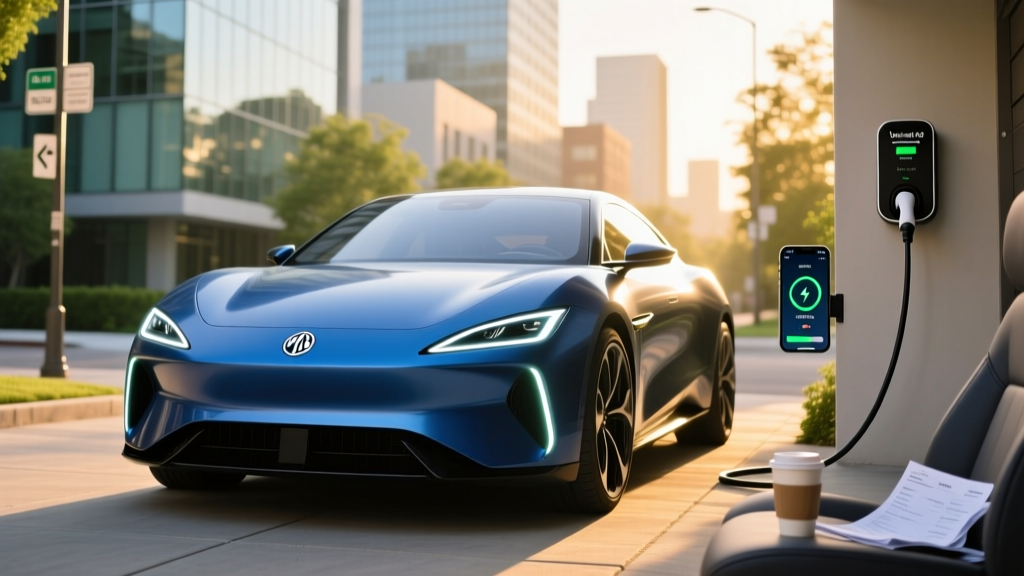
The MG Comet EV is a compact urban commuter built for one job: short daily trips at the lowest possible running cost. With a 17.3 kWh battery, a claimed range of approximately 230 km (143 miles), and a starting price near ₹798,000 (roughly $9,500 USD before any local incentives), it undercuts nearly every four-wheeled EV on the market. However, its real-world highway range drops to roughly 150–170 km (93–106 miles), it lacks DC fast charging, and it is currently sold only in India and select emerging markets — not the U.S. If your commute is under 40 km round-trip and you have access to home or workplace AC charging, the Comet's per-km cost is nearly unbeatable. If you need highway capability, fast charging, or U.S. availability, look elsewhere.
MG Comet EV: Specs at a Glance
| Specification | MG Comet EV (2025–2026 Model Year) |
|---|---|
| Battery Capacity | 17.3 kWh (LFP chemistry) |
| Claimed Range (ARAI/MIDC) | ~230 km (143 miles) |
| Real-World Range (City, Mixed) | ~170–190 km (106–118 miles) |
| Real-World Range (Highway/AC Load) | ~140–160 km (87–99 miles) |
| Motor Output | 42 PS (31 kW) / 110 Nm torque |
| 0–60 km/h | ~8.5 seconds |
| Top Speed | ~100 km/h (62 mph) |
| AC Charging (Level 2 equivalent) | 3.3 kW onboard charger |
| Full Charge Time (AC) | ~5–6 hours (0–100%) |
| DC Fast Charging | Not available |
| Connector Type | Type 2 AC (varies by market) |
| Length × Width × Height | 2,974 × 1,505 × 1,640 mm |
| Seating | 4 (tight rear) |
| Cargo Volume | Minimal (rear seats up) |
| Starting Price (India, ex-showroom) | ~₹798,000 (~$9,500 USD) |
| Battery Warranty | 8 years / 120,000 km |
Range Reality: Sticker vs. the Street
The MG Comet EV's 17.3 kWh lithium iron phosphate (LFP) battery is rated at roughly 230 km under India's MIDC test cycle — a standard that tends to overstate range compared to the U.S. EPA cycle or real-world driving. Here is what to actually expect:
Real-World Range Breakdown
- City driving, mild weather (25°C): 170–190 km — regen braking helps recover energy in stop-and-go traffic.
- City driving with A/C on (35°C+): 150–170 km — compressor load cuts 10–15% from battery.
- Highway at 80–90 km/h: 140–160 km — small frontal area helps, but the motor runs near peak output continuously.
- Cold weather (below 10°C, relevant for northern India winters): 150–170 km — LFP cells lose efficiency in the cold, and cabin heating (resistive) draws significant power.
Bottom line: Plan for 150 km of usable range on a typical mixed commute. That covers most urban round-trips but leaves no margin for detours or highway stretches.
LFP chemistry is a deliberate choice here. Compared to NMC (nickel manganese cobalt) batteries, LFP offers longer cycle life (often 2,000–3,000+ full cycles before 80% capacity retention), better thermal stability, and lower cost — at the expense of energy density. For a micro EV where cost matters more than range maximization, LFP is the correct engineering call.
Charging: Home-Only, and That's the Limitation
The Comet EV charges exclusively via AC — there is no DC fast-charging port. This is the single biggest ownership constraint and the first thing buyers must understand.
| Charging Method | Power | Time (0–100%) | Range Added per Hour |
|---|---|---|---|
| Standard Household Outlet (15A, India) | ~3.3 kW | ~5–6 hours | ~30–38 km |
| Dedicated AC Wallbox (3.3 kW) | 3.3 kW | ~5–6 hours | ~30–38 km |
| DC Fast Charging | N/A | N/A | N/A |
At 3.3 kW, an overnight charge fully replenishes the battery. For a daily commuter who parks at home or at an office with an AC outlet, this is adequate. But it means:
- No road trips. Without DC fast charging, a 200 km drive requires a multi-hour stop — impractical for intercity travel.
- Apartment dwellers face hurdles. If your building lacks dedicated EV parking with a 15A outlet, charging becomes a daily logistics problem. MG includes a portable charging cable, but it requires a grounded, adequately rated socket.
- Public AC chargers are sparse. India's public charging infrastructure is growing but remains concentrated in metro areas and skewed toward DC stations designed for larger EVs like the Tata Nexon EV or MG ZS EV.
Running Costs: Comet EV vs. a Comparable Gas Car
The Comet's strongest argument is economics. Here is a side-by-side comparison against a popular petrol microcar, the Maruti Suzuki S-Presso, over 5 years and 60,000 km of city driving.
| Cost Category | MG Comet EV | Maruti S-Presso (Petrol) |
|---|---|---|
| Purchase Price (ex-showroom) | ~₹798,000 | ~₹425,000 |
| Fuel / Electricity (60,000 km) | ~₹54,000 (₹9/kWh × 6,000 kWh) | ~₹216,000 (20 km/L × ₹72/L) |
| Maintenance (5 years) | ~₹15,000 (minimal — no oil, filters) | ~₹60,000 (oil, filters, spark plugs, belts) |
| Insurance (5 years est.) | ~₹75,000 | ~₹50,000 |
| Total 5-Year Cost | ~₹942,000 | ~₹751,000 |
| Cost per km (fuel only) | ~₹0.90 | ~₹3.60 |
The Comet EV's per-km energy cost is roughly one-quarter that of the petrol alternative. Over 60,000 km, you save approximately ₹162,000 on fuel and ₹45,000 on maintenance — a combined ₹207,000. That narrows the purchase-price gap from ₹373,000 to roughly ₹166,000. If you drive more than 80,000 km over five years, or if petrol prices rise further, the Comet crosses the breakeven point.
Insurance runs higher on EVs due to battery replacement cost exposure, though LFP batteries rarely need replacement within the warranty period. MG's 8-year/120,000 km battery warranty (covering capacity below 70%) provides meaningful protection.
Who Should Buy the MG Comet EV — and Who Shouldn't
Decision Framework
Buy the MG Comet EV if:
- Your daily round-trip is under 50 km, mostly in city traffic.
- You have a dedicated parking spot with access to a 15A grounded outlet (home or workplace).
- You want the lowest per-km running cost of any four-wheeled vehicle.
- You are a second-car buyer adding a pure commuter to a household that already has a longer-range vehicle.
- You value easy parking in congested urban areas (the Comet is under 3 meters long).
Skip the MG Comet EV if:
- You need to drive highways regularly or take intercity trips.
- You live in an apartment without EV charging access and cannot install it.
- You regularly carry more than two passengers or need cargo space.
- You expect fast-charging capability for spontaneous longer drives.
- You live outside the Comet's current markets (India, Indonesia, select SE Asia).
Common Misconceptions About the MG Comet EV
| Myth | Fact |
|---|---|
| "230 km range means I can drive 230 km anytime." | The 230 km figure is from the MIDC test cycle. Real-world mixed driving yields 150–180 km. Plan around 150 km to maintain a safety buffer. |
| "I can charge it at any public EV station." | The Comet uses AC charging only. Many public stations in India are DC CCS2 chargers designed for larger EVs. You need a Type 2 AC outlet or a 15A household socket. |
| "LFP batteries degrade quickly." | LFP cells typically endure 2,000–3,000+ full charge cycles before dropping to 80% capacity. At 17.3 kWh and daily full cycles, that's 5.5–8+ years before meaningful degradation — well within the warranty. |
| "It qualifies for the U.S. federal EV tax credit." | The MG Comet EV is not sold in the United States and does not qualify for the IRS §30D clean vehicle credit. In India, check current FAME-II or state-level subsidy eligibility, which varies by state and changes frequently. |
| "It's unsafe because it's small." | Size alone does not determine safety, but micro EVs inherently have less crumple-zone mass. The Comet includes dual airbags, ABS, and a rear parking camera. It has not been crash-tested by Global NCAP as of early 2026 — check for updated ratings before purchasing. |
| "EV batteries need replacement every few years." | Modern LFP packs like the Comet's are designed to outlast 150,000+ km with gradual capacity loss, not sudden failure. Budget for eventual replacement (est. ₹150,000–₹250,000 out of warranty), but most owners will sell the car before this becomes necessary. |
First-Time EV Buyer Checklist
If the MG Comet EV is your first electric vehicle, work through these practical items before signing:
- Verify your charging setup. Do you have a grounded 15A outlet within cable reach of your parking spot? If you're in an apartment, get written permission from your housing society before relying on a common-area outlet. An electrician can confirm your circuit can handle sustained 3.3 kW draw without overheating.
- Map your actual commute. Use Google Maps to measure your daily round-trip, including detours for school runs or errands. If it exceeds 60 km, the Comet's 150 km real-world range leaves insufficient buffer for A/C use and battery preservation (avoid regularly draining below 10% SoC).
- Check local subsidies. India's EV incentive landscape is fragmented. Some states offer road-tax exemption, registration waivers, or direct purchase subsidies. These change annually — verify current rules with your state transport department, not the dealer.
- Get an insurance quote before buying. EV insurance premiums in India can run 20–40% higher than equivalent petrol cars. Get a binding quote from at least two insurers to avoid surprises at registration.
- Test the rear seat and cargo. The Comet's 2+2 seating is tight. Adults over 5'8" will find the rear cramped. Cargo space with rear seats up is minimal — a single grocery bag, not a suitcase. Confirm this fits your actual use case.
- Understand the warranty. MG covers the battery for 8 years / 120,000 km against capacity dropping below 70%. The vehicle warranty is typically 3 years / 100,000 km. Clarify what "capacity below 70%" means in practice — a degraded 17.3 kWh pack at 70% holds just 12.1 kWh, cutting real range to roughly 105–120 km.
How the Comet EV Compares to Other Budget EVs
In the micro-EV segment, the Comet faces limited direct competition. Here is how it stacks up against two alternatives available in India:
| Spec | MG Comet EV | Tata Tiago EV | Citroën eC3 |
|---|---|---|---|
| Battery | 17.3 kWh (LFP) | 24.0 kWh (LFP) | 29.2 kWh (LFP) |
| Claimed Range | ~230 km | ~315 km | ~320 km |
| Real-World Range | ~150–180 km | ~200–250 km | ~210–260 km |
| DC Fast Charging | No | Yes (50 kW) | Yes (50 kW) |
| 10–80% DC Time | N/A | ~58 min | ~57 min |
| Price (ex-showroom) | ~₹798,000 | ~₹869,000 | ~₹1,150,000 |
| Seating | 4 (tight) | 5 | 5 |
The Tiago EV costs roughly ₹71,000 more but delivers meaningfully more range, proper 5-seat practicality, and critically, DC fast charging. For buyers who can stretch the budget, the Tiago EV is the more versatile daily driver. The Comet wins purely on price and parking footprint — it is the cheapest way into a new four-wheeled EV in India.
Ownership Costs Over 5 Years: The Full Picture
Beyond the purchase price, here is what Comet EV ownership actually costs, assuming 12,000 km/year (a typical Indian urban commute):
| Year | Electricity | Maintenance | Insurance (est.) | Annual Total |
|---|---|---|---|---|
| Year 1 | ₹10,800 | ₹1,500 | ₹18,000 | ₹30,300 |
| Year 2 | ₹10,800 | ₹2,500 | ₹15,000 | ₹28,300 |
| Year 3 | ₹10,800 | ₹3,000 | ₹14,000 | ₹27,800 |
| Year 4 | ₹10,800 | ₹3,500 | ₹13,000 | ₹27,300 |
| Year 5 | ₹10,800 | ₹4,500 | ₹12,000 | ₹27,300 |
| 5-Year Total | ₹54,000 | ₹15,000 | ₹72,000 | ₹141,000 |
That works out to roughly ₹2,350 per month in running costs — compared to ₹6,000–₹8,000 per month for a comparable petrol car. The savings are real, but they accumulate slowly against the higher upfront price. At current electricity and petrol rates, the Comet reaches cost parity with a Maruti S-Presso around the 55,000–65,000 km mark.
One cost many first-time EV buyers overlook: resale value. Micro EVs in India have limited secondary-market demand, and battery health uncertainty suppresses used prices further. Expect higher depreciation than a mainstream petrol hatchback. Factor this into your total-cost calculation if you plan to sell within 5 years.
Frequently Asked Questions
Is the MG Comet EV available in the United States?
No. As of 2026, MG (owned by SAIC Motor) sells the Comet EV only in India and select Southeast Asian markets. It is not homologated for U.S. sale, does not meet NHTSA or EPA certification requirements, and does not qualify for the U.S. federal §30D tax credit. U.S. buyers looking for a budget EV should consider the Chevrolet Bolt EV (if available in your market year) or the Nissan Leaf.
Can I install a home charger for the Comet EV in an apartment?
Possibly, but it requires coordination. You need a dedicated 15A grounded circuit near your parking spot and permission from your housing society or building management. A licensed electrician should verify the building's electrical panel can handle sustained 3.3 kW draw. In many Indian apartment complexes, this requires a separate meter or sanctioned load upgrade — costs vary from ₹5,000 to ₹25,000+ depending on the building.
How long will the MG Comet EV battery last?
LFP batteries are rated for 2,000–3,000+ full charge cycles before degrading to 80% of original capacity. If you charge fully once daily, that translates to roughly 5.5 to 8+ years. MG's warranty covers the battery for 8 years or 120,000 km against capacity falling below 70%. To maximize longevity, avoid leaving the battery at 100% SoC for extended periods and try not to regularly drain below 15–20%.
Does the Comet EV have regenerative braking?
Yes. The Comet EV features regenerative braking that recovers kinetic energy during deceleration, extending range in stop-and-go city traffic. However, it does not offer true one-pedal driving — you still need the friction brake for complete stops. The regen effect is moderate compared to larger EVs with more powerful motors.
What happens if I run out of charge on the road?
Unlike a gas car, you cannot walk to a station with a jerrycan. If the battery depletes, you will need a flatbed tow to the nearest AC charging point. Roadside assistance coverage (included with MG's warranty in India) typically handles this, but response times outside metro areas can be lengthy. Always maintain a 15–20% charge buffer for unexpected detours.
How does the Comet EV compare to a two-wheeler electric scooter?
An electric scooter like the Ather 450X or Ola S1 Pro costs ₹120,000–₹150,000, offers 80–120 km real range, and charges in 4–5 hours. The Comet costs 5–6× more but provides weather protection, four seats, and significantly more safety structure. If your commute is solo and weather isn't a concern, a scooter remains the cheapest electric mobility option. The Comet makes sense when you need a car's protection and capacity but want EV running costs.
Sources: MG Motor India – Comet EV specifications; Vahan / Ministry of Road Transport and Highways, India for registration and subsidy context. U.S. readers: the Comet EV is not sold in the U.S.; for federal EV credit rules on eligible vehicles, see IRS §30D Clean Vehicle Credits.