Quick Answer: Mercedes offers three battery-electric SUVs for 2026: the compact 7-seat EQB (EPA 251 mi, from ~$54,500), the midsize EQE SUV (EPA 279 mi, from ~$79,050), and the flagship EQS SUV (EPA 305 mi, from ~$105,550). All use 400-volt architectures with CCS1 connectors (NACS adapter available), and none currently qualify for the full $7,500 federal §30D tax credit due to battery-sourcing requirements. The best pick depends on whether you prioritize third-row seating (EQB), value-per-mile efficiency (EQE SUV), or luxury and range (EQS SUV).
The 2026 Mercedes SUV EV Lineup at a Glance
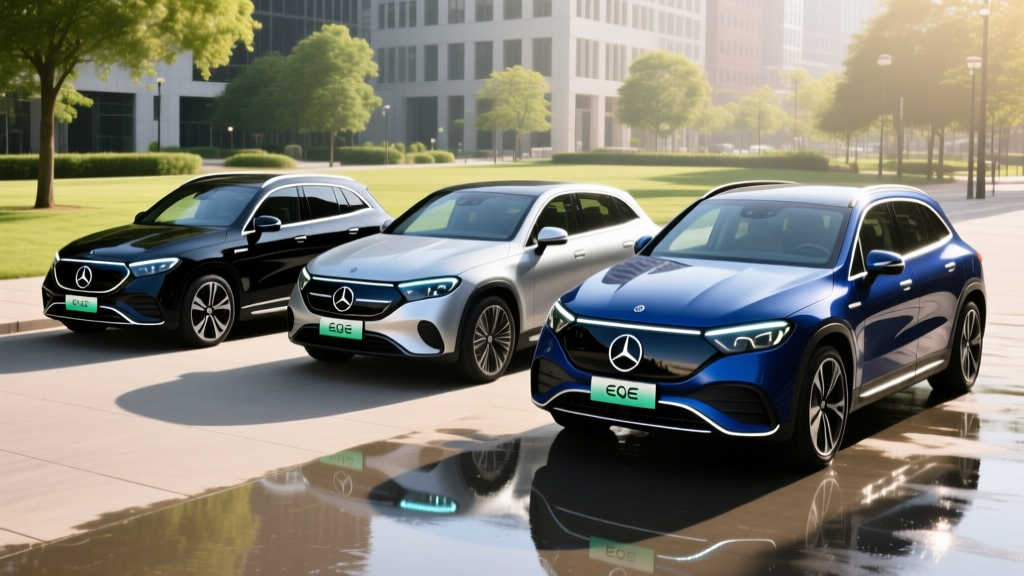
Mercedes-Benz structures its electric SUV portfolio across three distinct size and price tiers. Unlike the sedan-focused EQE and EQS, the SUV variants prioritize cabin volume and ride height while sharing the EVA2 platform architecture. The EQB remains the sole compact option and the only one offering an optional third row, while the EQE SUV and EQS SUV target the premium midsize and full-size luxury segments respectively.
All three models use NMC (nickel manganese cobalt) lithium-ion battery packs with liquid thermal management. None use LFP chemistry, which means Mercedes recommends charging to 80% for daily use and 100% only for long trips to preserve long-term battery health.
| Spec | EQB 300 4MATIC | EQE 350+ SUV | EQS 450+ SUV |
|---|---|---|---|
| EPA Range | 251 mi | 279 mi | 305 mi |
| Battery (usable) | 66.5 kWh (NMC) | 90.6 kWh (NMC) | 108.4 kWh (NMC) |
| Efficiency (MPGe) | 96 MPGe | 92 MPGe | 89 MPGe |
| Peak DC Charge | 100 kW | 170 kW | 200 kW |
| 10–80% DCFC | ~32 min | ~32 min | ~31 min |
| Level 2 (AC) | 9.6 kW | 9.6 kW | 9.6 kW (22 kW opt.) |
| Horsepower | 225 hp | 288 hp | 355 hp |
| 0–60 mph | 7.7 sec | 6.4 sec | 5.9 sec |
| Seating | 5 or 7 | 5 | 5 (7 opt.) |
| Base MSRP | $54,500 | $79,050 | $105,550 |
| Battery Warranty | 8 yr / 100k mi | 8 yr / 100k mi | 8 yr / 100k mi |
Real-World Range Reality: EPA estimates assume mixed driving at moderate temperatures. Expect highway range to drop 10–15% at sustained 75 mph speeds due to aerodynamic drag, and cold-weather range loss of 20–30% below freezing without preconditioning. The EQS SUV's heat pump (standard) helps mitigate winter losses compared to the EQB, which uses resistance heating in some trims. On a 300-mile road trip at 70 mph in 40°F weather, the EQS 450+ will realistically deliver ~230–245 miles per charge.
Charging Speeds and the 400V Limitation
One of the most important ownership factors for any Mercedes SUV EV is the 400-volt architecture. While competitors like the Hyundai Ioniq 5, Kia EV9, and Porsche Macan Electric use 800V systems enabling 250–350 kW peak charging, Mercedes caps out at 200 kW on the EQS SUV and just 100 kW on the EQB.
This matters at modern 350 kW chargers: a Mercedes SUV EV will never use more than its peak rating, and the charge curve tapers significantly above 80% SoC. The published 10–80% times (~31–32 minutes) are competitive, but a 10–100% session on the EQS SUV can stretch past 50 minutes. Plan accordingly for road trips — target 80% stops and move on rather than waiting for a full battery.
| Level | Power | EQB Miles/Hr | EQE SUV Miles/Hr | EQS SUV Miles/Hr |
|---|---|---|---|---|
| Level 1 (120V) | 1.4 kW | ~4 mi | ~4 mi | ~4 mi |
| Level 2 (240V) | 9.6 kW | ~27 mi | ~28 mi | ~28 mi |
| DC Fast Charge | 100–200 kW | ~120 mi/30 min | ~170 mi/30 min | ~200 mi/30 min |
Connector note: All 2026 Mercedes SUV EVs ship with a CCS1 port. Mercedes offers a NACS adapter for Tesla Supercharger access, and beginning with the 2027 model year, the brand is transitioning to native NACS ports. For current buyers, the adapter solution works but adds a step at Supercharger stalls.
Mercedes SUV EV vs. Gas and Hybrid Alternatives
Understanding the financial case for a Mercedes SUV EV requires comparing it against the brand's own combustion alternatives. The GLB, GLE, and GLS serve as the gas-powered counterparts to the EQB, EQE SUV, and EQS SUV respectively.
| Metric | EQE 350+ SUV | GLE 350 (Gas) |
|---|---|---|
| Base MSRP | $79,050 | $62,550 |
| Fuel/Energy (5 yr, 60k mi) | ~$4,200 (home L2) | ~$11,400 (premium) |
| Maintenance (5 yr) | ~$1,800 | ~$4,500 |
| Insurance (5 yr est.) | ~$14,500 | ~$12,200 |
| Depreciation (est. 5 yr) | ~$38,000 | ~$28,000 |
| Total 5-Yr Cost | ~$137,550 | ~$118,650 |
| Cost Per Mile | ~$2.29 | ~$1.98 |
The numbers reveal a pattern common to luxury EVs: the energy and maintenance savings are real (roughly $9,900 over five years), but they don't fully offset the higher purchase price, steeper depreciation, and elevated insurance premiums. According to fueleconomy.gov, the EQE SUV's 92 MPGe combined translates to about $0.07 per mile on the national average electricity rate of $0.17/kWh, versus $0.19 per mile for the GLE 350 on premium fuel at $4.00/gallon.
The hybrid alternative: The GLE 450e PHEV (EPA 45 mi electric-only, 56 MPGe) offers a compelling middle ground — shorter electric commutes with gas flexibility, a lower MSRP than the EQE SUV, and no range anxiety on road trips. For buyers without reliable home charging, the PHEV path deserves serious consideration.
Federal Tax Credit and Incentive Reality
This is where many Mercedes SUV EV shoppers encounter disappointment. Under current IRS §30D rules, the federal clean vehicle credit of up to $7,500 requires that the vehicle's battery meet critical-mineral sourcing and battery-component manufacturing thresholds. As of 2026, no Mercedes-Benz EV qualifies for the full $7,500 credit because the battery cells and modules are predominantly sourced and assembled outside the qualifying supply chain (primarily in Germany and South Korea, with mineral inputs that do not meet the FEOC-free requirement).
- MSRP Cap: SUVs must be under $80,000 — this eliminates the EQS SUV entirely and most EQE SUV trims
- Income Cap: AGI ≤ $150,000 (single) / $300,000 (joint) — many Mercedes buyers exceed this
- Battery Sourcing: Critical minerals and components must meet escalating domestic/FEOC-free thresholds
- Point-of-Sale Transfer: Eligible buyers can transfer the credit to the dealer at purchase — but only if the vehicle qualifies
- State Incentives: Vary widely — check your state's EV rebate page or the AFDC incentive database
Some buyers may qualify for state-level rebates (California's CVRP, Colorado's state credit, etc.) that can partially offset the cost. Consult a tax professional before relying on any credit in your purchase decision.
Real-World Ownership: What First-Time Buyers Need to Know
Buying a Mercedes SUV EV as your first electric vehicle involves practicalities that brochures gloss over. Here's what experience teaches:
Home Charging Is Non-Negotiable for Satisfaction
Owners who rely exclusively on public charging report significantly lower satisfaction. A Level 2 home charger (240V, 40A circuit) adds roughly 25–28 miles of range per hour, meaning an overnight session fully replenishes any of these vehicles. Budget $800–$2,500 for a quality Level 2 unit (ChargePoint Home Flex, Emporia Vue, or Wallbox Pulsar Plus) plus $500–$2,000 for electrician installation, depending on panel proximity and whether a 200A service upgrade is needed.
Insurance Premiums Run 15–25% Higher
EV insurance costs more due to higher repair complexity, battery replacement risk, and elevated purchase prices. Get quotes before committing — the difference between insurers can be $1,000+ annually for an EQS SUV.
Maintenance Is Lighter but Not Zero
Expect cabin air filter changes, brake fluid flushes (every 2 years), tire rotations, and wiper fluid top-ups. Tire wear is 15–25% faster on EVs due to instant torque and heavier curb weight. Budget for premium tire replacement every 25,000–35,000 miles.
The MBUX Software Experience
Mercedes' MBUX infotainment system handles EV-specific functions well — route planning with charging stops, preconditioning scheduling, and energy-flow displays. However, the hyperscreen option (standard on EQS SUV, available on EQE SUV) can be distracting. Over-the-air updates have improved stability since the EQ platform's early years.
| Myth | Fact |
|---|---|
| "The EQS SUV goes 305 miles no matter what" | EPA 305 mi assumes mixed driving at moderate temps. Highway at 75 mph: ~260 mi. Cold weather (20°F): ~215–230 mi. |
| "I'll save $7,500 with the federal tax credit" | No 2026 Mercedes EV currently qualifies for the full §30D credit due to battery-sourcing rules and MSRP caps. |
| "The battery will need replacing in 5 years" | Mercedes warranties the battery for 8 years/100,000 miles against degradation below 70% capacity. NMC packs in liquid-cooled systems typically retain 85–90% at 100k miles. |
| "It charges as fast as a Tesla at Superchargers" | Mercedes uses 400V architecture (100–200 kW peak) vs. Tesla's 250 kW. Expect 30+ minute stops for 10–80%, not 15-minute stops. |
| "AWD is standard on all trims" | The EQE 350+ and EQS 450+ are rear-wheel drive. 4MATIC AWD is available on higher trims (350 4MATIC, 450 4MATIC, 580 4MATIC) at a range and price premium. |
Decision Framework: Which Mercedes SUV EV Fits You?
Choose the EQB if:
- You need an occasional third row for kids or cargo flexibility
- Your daily commute is under 100 miles round-trip
- You want the lowest entry price into a Mercedes electric SUV
- You primarily charge at home and rarely road-trip more than 200 miles
Choose the EQE SUV if:
- You want the best balance of range, interior space, and price in the lineup
- You commute 40–80 miles daily and want to charge every 2–3 days at home
- You value a quieter, more refined ride than the EQB without the EQS price tag
- You don't need a third row
Choose the EQS SUV if:
- Budget allows $105k+ and you want maximum range and luxury features
- You regularly drive 250+ mile trips and want fewer charging stops
- You want the hyperscreen, rear-axle steering, and executive rear seating
- Optional third-row seating for a full-size luxury EV is important
Choose a PHEV (GLE 450e) instead if:
- You lack reliable home Level 2 charging access
- You frequently drive 400+ mile trips in rural areas with sparse DCFC coverage
- You want electric-only commuting (45 mi) with gas flexibility for road trips
- The federal tax credit or total cost of ownership is a primary concern
Long-Term Battery Health and Warranty
Mercedes covers all EV battery packs with an 8-year/100,000-mile warranty guaranteeing at least 70% of original capacity. Independent data from fleet operators and European-market EQ vehicles (which have been on sale longer) suggest NMC packs in Mercedes' thermal management system retain approximately 88–92% capacity at 60,000 miles under normal use.
To maximize longevity: charge to 80% for daily use, avoid frequent DC fast charging when Level 2 is available, use the vehicle's scheduled preconditioning feature (which warms or cools the battery while plugged in), and don't let the battery sit at 0% or 100% for extended periods. Following these guidelines, a Mercedes SUV EV battery should comfortably outlast the warranty period with minimal degradation concerns.
Replacement cost, should it ever be needed out of warranty, is estimated at $15,000–$25,000 depending on the model and pack size — a figure worth noting for second-owners or those planning to keep the vehicle past 150,000 miles.
Frequently Asked Questions
Can I use Tesla Superchargers with a Mercedes SUV EV?
Yes, but only with the official Mercedes NACS-to-CCS adapter. The adapter enables access to Tesla's Supercharger network, which significantly expands DC fast-charging coverage on road trips. Native NACS ports are expected starting with the 2027 model year.
How much does it cost to charge a Mercedes SUV EV at home?
At the national average residential rate of $0.17/kWh, fully charging an EQE SUV (90.6 kWh) costs roughly $15.40, yielding about 279 miles of EPA range. That's approximately $0.055 per mile — roughly one-quarter the per-mile cost of premium gasoline in a comparable GLE.
Is the Mercedes EQB too small for a family?
The EQB offers 62.0 cu ft of cargo volume with both rear rows folded and an optional third row suitable for children. For families with older kids or frequent cargo needs, the EQE SUV (59.2 cu ft behind the second row alone) provides significantly more usable space without the cramped third-row compromise.
How does cold weather affect range on the EQS SUV?
In sustained temperatures below 32°F, expect 20–30% range reduction depending on cabin heating use and whether the battery is preconditioned. The EQS SUV's standard heat pump is more efficient than resistance heating, limiting losses compared to the EQB. Preconditioning while plugged in recovers most of the loss.
Does Mercedes offer any EV that qualifies for the $7,500 tax credit?
As of 2026, no Mercedes-Benz EV qualifies for the full federal §30D clean vehicle credit. Battery-sourcing requirements and MSRP caps on SUVs ($80,000) eliminate most of the lineup. Check IRS.gov for the most current qualifying vehicle list, as sourcing rules evolve annually.