Quick Answer: Is the 2026 Mercedes-Benz GLC EV Worth It?
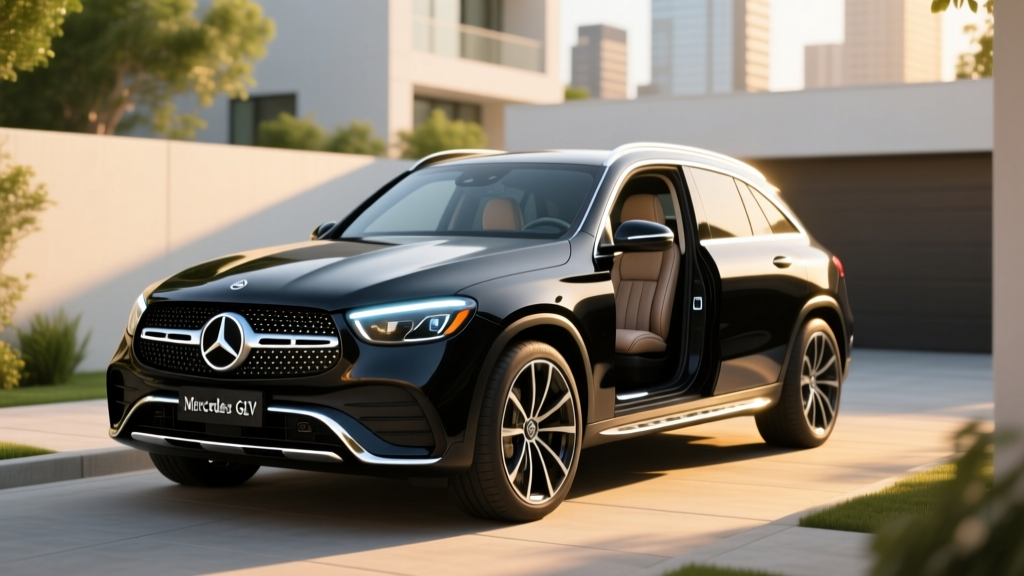
The 2026 Mercedes-Benz GLC EV (officially the GLC EQ variant on the new MB.EA platform) is a luxury compact electric SUV targeting buyers who want GLC practicality with zero tailpipe emissions. Expect an EPA-estimated range around 280–310 miles from an ~85 kWh usable NMC battery, peak DC fast charging near 220 kW (10–80% in roughly 22–25 minutes), and a starting MSRP in the $62,000–$65,000 range before incentives. It qualifies for partial or full §30D federal tax credit depending on battery-sourcing compliance and buyer income limits. Compared to the gas GLC 300, the EV version costs roughly $12,000–$15,000 more upfront but can save $4,000–$7,000 in fuel and maintenance over five years depending on local electricity rates and driving patterns.
GLC EV Range, Battery, and Efficiency: The Real Numbers
The 2026 GLC EV rides on Mercedes-Benz's dedicated MB.EA (Mercedes-Benz Electric Architecture) platform, shared with the upcoming electric C-Class. The dual-motor 4MATIC variant is expected to use an NMC (nickel manganese cobalt) lithium-ion pack with approximately 85 kWh of usable capacity.
| Specification | GLC 350e 4MATIC (Est.) | GLC 400e 4MATIC (Est.) |
|---|---|---|
| Battery (usable) | ~85 kWh NMC | ~85 kWh NMC |
| EPA Range | ~280 mi | ~310 mi |
| Efficiency | ~92 MPGe (36 kWh/100mi) | ~98 MPGe (34 kWh/100mi) |
| Motor Output | 288 hp / 398 lb-ft | 355 hp / 479 lb-ft |
| 0–60 mph | ~6.2 sec | ~5.4 sec |
| Peak DC Charge Rate | 220 kW | 220 kW |
| 10–80% DC Fast Charge | ~25 min | ~22 min |
| Level 2 (240V/48A) | ~9.5 hours (0–100%) | ~9.5 hours (0–100%) |
| Starting MSRP | ~$62,500 | ~$67,000 |
| Battery Warranty | 8 yr / 100,000 mi | 8 yr / 100,000 mi |
Real-World Range Reality Check
The EPA sticker will say ~310 miles for the higher-efficiency trim. Plan for ~250–270 miles in real-world highway driving at 70–75 mph, and ~210–230 miles in sub-30°F winter conditions. Cold weather reduces battery efficiency and increases cabin heating load — the GLC EV's standard heat pump helps, but it doesn't eliminate the loss. On road trips, budget your stops around 200-mile intervals for a comfortable buffer.
Mercedes equips the GLC EV with a heat pump as standard, which recovers waste heat from the drivetrain to warm the cabin — reducing winter range loss by roughly 10–15% compared to resistive heating. Preconditioning the battery while the car is still plugged in (via the Mercedes me app) is essential for achieving peak charge rates at DC fast chargers.
Charging the GLC EV: Home, Public, and What It Costs
The GLC EV uses the NACS (North American Charging Standard) connector, giving it native access to Tesla Supercharger stations (now open to non-Tesla EVs) in addition to Electrify America, EVgo, and other networks. This is a significant practical advantage over CCS-only vehicles for road-trip coverage.
| Charging Level | Power | Miles Added per Hour | Best For |
|---|---|---|---|
| Level 1 (120V outlet) | ~1.4 kW | ~4–5 mi/hr | Emergency / overnight trickle |
| Level 2 (240V, 48A) | ~11.5 kW | ~32–35 mi/hr | Daily home charging |
| DC Fast Charge | Up to 220 kW | ~180+ mi in 15 min | Road trips / quick top-ups |
Understanding kW vs kWh: kW (kilowatts) measures the rate of charging — like water flow from a hose. kWh (kilowatt-hours) measures the battery's total energy capacity — like the size of the tank. The GLC EV's 85 kWh battery charged at 11.5 kW (Level 2) takes about 85 ÷ 11.5 ≈ 7.4 hours from empty, though charging slows near 100%.
Charging Curve Reality
The 220 kW peak rate is not sustained across the full session. Expect peak power between roughly 10–40% state of charge (SoC), tapering to ~150 kW by 60%, and dropping sharply above 80%. A 10–80% session takes ~22–25 minutes; pushing from 80–100% can add another 25–30 minutes. On road trips, charge to 80% and go — the time cost of filling the last 20% is rarely worth it.
Home Charging Installation Costs
| Item | Estimated Cost Range |
|---|---|
| Level 2 EVSE (Wallbox, ChargePoint, etc.) | $500 – $800 |
| Electrician labor (240V/50A circuit run) | $800 – $2,500 |
| Permit & inspection | $100 – $300 |
| Electrical panel upgrade (if needed, 200A) | $1,500 – $3,500 |
| Total (typical, no panel upgrade) | $1,400 – $3,600 |
Most GLC EV buyers will want a dedicated Level 2 home charger — it's the single biggest quality-of-life factor in EV ownership. A 50-amp circuit delivering 48A continuous is ideal. Always get a licensed electrician to assess your panel capacity before committing to equipment; older homes with 100A service may need an upgrade.
GLC EV vs Gas GLC 300: Five-Year Cost Comparison
The gas-powered GLC 300 4MATIC starts around $48,000 and gets an EPA-rated 26 MPG combined. Here's how the math works over five years and 75,000 miles for a typical buyer.
| Cost Category | GLC EV (400e est.) | Gas GLC 300 4MATIC |
|---|---|---|
| Base MSRP | $67,000 | $48,000 |
| Federal Tax Credit (§30D, if eligible) | –$3,750 to –$7,500 | $0 |
| Effective Purchase Price | $59,500 – $63,250 | $48,000 |
| Fuel / Energy (75,000 mi) | $3,400 – $4,800 | $8,700 – $10,200 |
| Maintenance (5 yr) | $1,200 – $1,800 | $3,500 – $4,500 |
| Insurance (5 yr avg.) | $12,500 – $14,500 | $10,000 – $12,000 |
| 5-Year Total Cost | $76,600 – $84,350 | $70,200 – $74,700 |
Key assumptions: electricity at $0.14/kWh (home) and $0.40/kWh (public DC fast charging), gas at $3.60/gallon. EV insurance tends to run 15–25% higher due to repair costs and battery replacement exposure — get quotes before purchasing. The EV's fuel and maintenance savings are substantial ($4,000–$7,000 over five years), but they don't fully close the upfront price gap unless you qualify for the full $7,500 federal credit and your state offers additional rebates.
The break-even point typically arrives around year 6–8 for most buyers, or sooner if you drive more than 15,000 miles annually or have access to low-cost home charging (under $0.12/kWh).
Federal Tax Credit Eligibility: What GLC EV Buyers Must Know
Under IRS §30D rules, the clean vehicle credit provides up to $7,500 — split into $3,750 for battery component manufacturing and $3,750 for critical minerals sourcing. Eligibility is not guaranteed and changes as supply chains shift.
- MSRP cap: SUVs must be under $80,000 MSRP. The GLC EV should clear this at base, but loaded AMG-Line trims may exceed it.
- Buyer income cap: Modified AGI must not exceed $150,000 (single), $225,000 (head of household), or $300,000 (joint).
- Battery sourcing: Percentages of critical minerals and battery components must be sourced from the US or FTA partners — thresholds increase annually. For 2026, 80% of critical minerals and 100% of battery components must qualify or you lose the corresponding $3,750 half.
- Point-of-sale transfer: You can transfer the credit to the dealer at purchase to reduce the sale price directly, rather than waiting for a tax refund.
- Foreign entity of concern (FEOC): Battery components from China, Russia, North Korea, or Iran disqualify the vehicle entirely.
Mercedes-Benz has been working to localize battery cell and module production in the US (Bibb County, Alabama), but exact credit eligibility for the GLC EV depends on the specific model year's supply chain. Always verify current eligibility on fueleconomy.gov before signing paperwork.
Real-World Ownership: Who the GLC EV Actually Works For
Not every luxury SUV buyer is ready for an EV, and the GLC EV isn't a universal fit. Here's a practical framework based on driving patterns and access.
Decision Framework: Should You Buy the GLC EV?
Choose the GLC EV if:
- You can install a Level 2 charger at home (garage or driveway with 240V access)
- Your daily commute is under 80 miles round-trip (covers 90%+ of US drivers)
- You take road trips of 300+ miles fewer than 4–5 times per year
- You qualify for at least $3,750 in federal tax credits
- You value quiet, instant-torque acceleration and minimal maintenance
Stick with the gas GLC or a PHEV if:
- You live in an apartment or condo with no charging access and rely on street parking
- You regularly tow over 2,000 lbs (EV range drops 30–50% under heavy towing loads)
- You frequently drive 400+ miles in single stretches through areas with sparse DC fast-charging infrastructure
- You live in an extremely cold climate (sustained sub-10°F) and cannot precondition from a garage
- The $12,000–$15,000 upfront premium is a dealbreaker regardless of long-term savings
What First-Time EV Buyers Should Know
If the GLC EV is your first electric vehicle, prepare for a learning curve that pays dividends quickly:
- Plan charging, not just routes. Apps like A Better Routeplanner, PlugShare, and the Mercedes me EV navigation system factor in charger locations, speeds, and battery preconditioning.
- Regenerative braking takes adjustment. The GLC EV offers multiple regen levels including a near-one-pedal-driving mode. Expect the first week to feel unfamiliar, then you'll rarely touch the brake pedal in city traffic.
- Tire wear accelerates. EVs are heavier (the GLC EV will likely weigh 4,800–5,000 lbs) and deliver instant torque. Budget for tire replacement every 25,000–35,000 miles instead of the 40,000–50,000 you'd get on a gas car.
- Maintenance is minimal but not zero. No oil changes, spark plugs, or transmission fluid. You'll still need cabin air filters, brake fluid checks, wiper fluid, and coolant top-offs — but annual maintenance costs run 50–70% less than the gas GLC.
Common GLC EV Misconceptions, Corrected
| Myth | Fact |
|---|---|
| "The battery will need replacing in 5 years." | Modern NMC packs retain ~85–90% capacity at 100,000 miles. Mercedes warranties the battery for 8 years / 100,000 miles against dropping below 70% capacity. Most packs outlast the car. |
| "I'll be stranded without a charger." | With 280–310 miles of range and a NACS connector giving access to 20,000+ Supercharger stalls nationwide, plus Electrify America and EVgo networks, coverage is robust in most metro and highway corridors. |
| "EVs are worse in the cold." | Range drops 15–30% in extreme cold, but the GLC EV's heat pump, heated seats/steering wheel, and preconditioning mitigate this. Winter driving is comfortable — just plan shorter intervals between charges. |
| "Charging takes too long on road trips." | A 22-minute stop every 200 miles aligns naturally with rest breaks. Most drivers find they're more refreshed on EV road trips because they stop more regularly. |
| "The GLC EV is self-driving." | The GLC EV's Drive Pilot system is a SAE Level 2/2+ driver-assist feature. You must remain engaged, hands on or near the wheel, and eyes on the road at all times. Mercedes has a Level 3 system (Drive Pilot) available in limited markets, but it operates only under 40 mph on mapped highways — it is not full autonomy. |
SAE Automation Level Clarification
Level 2 (GLC EV standard): Adaptive cruise + lane centering. Driver must supervise at all times.
Level 3 (Drive Pilot, limited availability): Conditional automation under 40 mph on approved roads. Driver can disengage visually but must be ready to resume.
Level 4 (Waymo, Zoox robotaxis): Full driverless operation in geofenced areas. Not applicable to consumer vehicles like the GLC EV.
GLC EV Interior, Tech, and Practicality
The GLC EV carries over the latest-generation MBUX infotainment system with a 12.3-inch digital instrument cluster and an 11.9-inch portrait-oriented center touchscreen. EV-specific features include:
- Intelligent route planning that factors in battery SoC, terrain, temperature, and charger availability
- Battery preconditioning triggered automatically when a DC fast charger is set as your navigation destination
- Over-the-air (OTA) updates for powertrain calibration, infotainment, and ADAS features
- Vehicle-to-load (V2L) capability (if equipped) allowing you to power small devices or appliances from the traction battery
Cargo space is competitive at an estimated 21–22 cubic feet behind the rear seats (with a small frunk adding 1–2 cu ft for charging cables). The flat floor from the dedicated EV platform improves rear-seat legroom compared to the gas GLC.
GLC EV FAQ
What is the estimated price of the 2026 Mercedes-Benz GLC EV?
Base pricing is expected around $62,500 for the 350e 4MATIC and $67,000 for the 400e 4MATIC, before destination charges and options. Loaded examples could reach $78,000–$82,000, which may exceed the $80,000 MSRP cap for federal tax credit eligibility on SUVs.
Does the GLC EV qualify for the $7,500 federal tax credit?
Partial or full eligibility depends on battery-sourcing compliance at time of purchase. Mercedes is localizing battery production in Alabama, but the critical minerals requirement is stringent. Check fueleconomy.gov and consult a tax professional for your specific situation. The credit can be transferred to the dealer at point of sale to reduce your purchase price.
How long does it take to charge the GLC EV at home?
On a Level 2 home charger (240V, 48A, ~11.5 kW), a full charge from empty takes approximately 9–10 hours. In practice, most owners plug in nightly and wake up to a full battery — a typical 40-mile daily commute uses about 12–14 kWh, which replenishes in roughly 1–1.5 hours on Level 2.
Is the GLC EV better than the gas GLC 300?
It depends on your priorities. The EV offers lower running costs, smoother acceleration, zero tailpipe emissions, and less maintenance. The gas GLC 300 wins on upfront price, towing range, and refueling convenience in remote areas. For daily commuting with home charging access, the EV is the stronger ownership experience. For frequent long-distance towing or apartment living without charging, the gas or PHEV variant may be more practical.
What happens if the GLC EV battery degrades?
Mercedes-Benz warranties the high-voltage battery for 8 years or 100,000 miles against capacity loss below 70%. Real-world data from similar NMC packs suggests 85–92% capacity retention at 100,000 miles under normal use. Full battery replacement (rarely needed) would cost an estimated $12,000–$18,000 out of warranty, though prices continue to decline as battery manufacturing scales.
Can I use Tesla Superchargers with the GLC EV?
Yes. The 2026 GLC EV uses the NACS connector natively, giving it direct access to Tesla's Supercharger network — over 20,000 stalls across North America — without an adapter. This is one of the strongest practical advantages for road-trip charging.
Sources: Mercedes-Benz USA, fueleconomy.gov (EPA), IRS §30D Clean Vehicle Credits. Specifications are based on manufacturer preliminary data and industry analysis for the 2026 model year. Final EPA certification figures may differ. Verify tax credit eligibility at point of purchase.