Quick Answer: Is the Mercedes GLB Electric (EQB) Right for You?
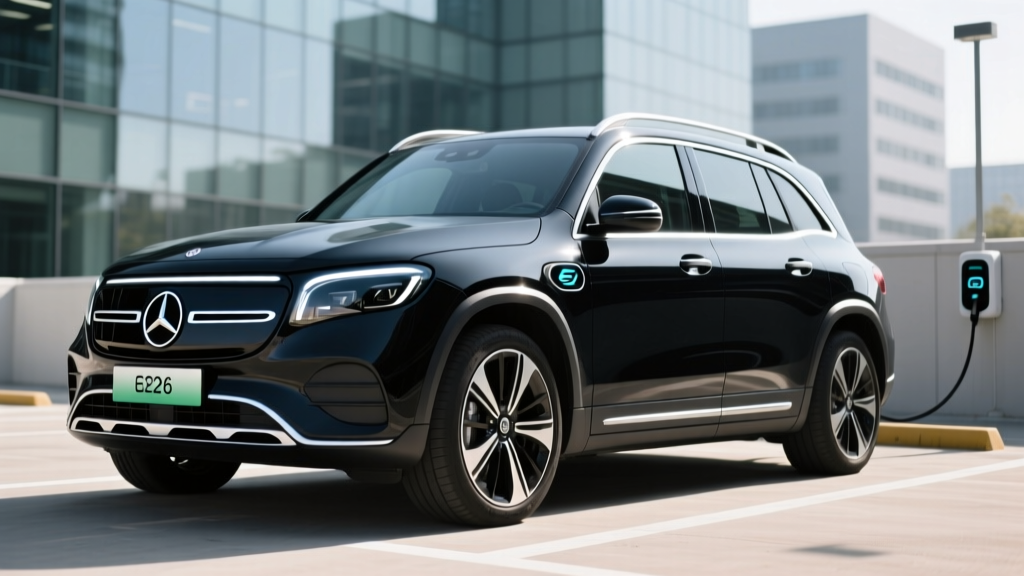
The Mercedes-Benz EQB is the all-electric version of the compact GLB SUV, offering an EPA-estimated 245 miles of range (EQB 300 4MATIC), a 66.5 kWh usable battery, and DC fast charging up to 100 kW (10–80% in roughly 32 minutes). Starting around $54,350 MSRP before incentives, the EQB targets luxury-minded families who want a premium badge, third-row seating, and daily electric commuting — but its modest range and relatively slow charging curve compared to rivals like the Tesla Model Y or Hyundai Ioniq 5 mean it works best for drivers with reliable home charging and commutes under 100 miles round-trip. Federal §30D tax credit eligibility depends on battery sourcing, MSRP caps, and buyer income limits — check current IRS rules before counting on the full $7,500.
2026 Mercedes EQB: What You're Actually Getting
The EQB rides on Mercedes' MFA2 platform — a shared architecture with the gas GLB — rather than a dedicated EV skateboard. That engineering choice defines the ownership experience: the battery is relatively small, packaging is slightly compromised compared to ground-up EVs, but the cabin quality, MBUX infotainment, and available third row carry over from the gas model.
| Spec | EQB 300 4MATIC | EQB 350 4MATIC |
|---|---|---|
| EPA Range | ~245 mi | ~227 mi |
| Battery (usable) | 66.5 kWh (NMC) | 66.5 kWh (NMC) |
| Drivetrain | Dual-motor AWD | Dual-motor AWD (more power) |
| Horsepower | 225 hp | 288 hp |
| 0–60 mph | ~7.7 sec | ~6.0 sec |
| Max DC Charge Rate | 100 kW | 100 kW |
| 10–80% DC Charge | ~32 min | ~32 min |
| Level 2 Charge (AC) | 11 kW (~7.5 hrs) | 11 kW (~7.5 hrs) |
| MPGe (combined) | ~83 MPGe | ~78 MPGe |
| Base MSRP | ~$54,350 | ~$58,350 |
| Battery Warranty | 8 yr / 100,000 mi | 8 yr / 100,000 mi |
Real-World Range Reality Check
The EPA sticker says 245 miles for the EQB 300. In practice, expect 200–220 miles on the highway at 70–75 mph, and potentially 170–190 miles in cold weather (below 30°F) without preconditioning. The EQB lacks a heat pump on some trims, meaning cabin heating draws directly from the traction battery. If your daily driving exceeds 150 miles round-trip, plan your charging carefully or consider a longer-range alternative.
EQB vs. Gas GLB: The Numbers Side by Side
The most direct comparison for shoppers cross-referencing the GLB lineup is the gas-powered GLB 250 4MATIC. Here's how they stack up on paper and at the pump (or plug).
| Metric | EQB 300 4MATIC (Electric) | GLB 250 4MATIC (Gas) |
|---|---|---|
| Base MSRP | ~$54,350 | ~$43,550 |
| Energy/Fuel Cost per Mile | ~$0.045 (home L2, $0.14/kWh) | ~$0.16 (28 MPG avg, $3.50/gal) |
| Annual Energy Cost (12k mi) | ~$540 | ~$1,920 |
| Annual Maintenance (est.) | ~$300 | ~$700 |
| 0–60 mph | 7.7 sec | 6.9 sec |
| Cargo (behind 2nd row) | ~22 cu ft | ~24 cu ft |
| Third Row | Available (tight) | Available (tight) |
| Federal Tax Credit | Up to $7,500 (§30D, varies) | $0 |
The EQB carries an ~$10,800 price premium over the gas GLB 250 before incentives. At current electricity and gas prices, annual fuel savings of roughly $1,380 mean the break-even point on the price gap alone is about 5–6 years if you qualify for no tax credit — or 2–3 years if you capture the full $7,500 federal credit plus any state incentives. Maintenance savings (no oil changes, fewer brake replacements due to regen) add another ~$400/year.
Real Ownership Costs: 5-Year Breakdown
Buying an EV is a multi-year financial commitment. Here's a realistic 5-year/60,000-mile cost projection for the EQB 300, assuming home Level 2 charging, moderate public DC fast charging, and average insurance rates.
| Category | EQB 300 4MATIC | GLB 250 4MATIC |
|---|---|---|
| Purchase Price (MSRP) | $54,350 | $43,550 |
| Federal Tax Credit (§30D) | –$3,750 (est. partial)* | $0 |
| Net Purchase | $50,600 | $43,550 |
| Energy (5 yrs, 60k mi) | $2,700 | $9,600 |
| Maintenance (5 yrs) | $1,500 | $3,500 |
| Insurance (5 yrs, est.) | $9,500 | $7,800 |
| Depreciation (est. 50%) | $27,175 | $19,600 |
| 5-Year Total | ~$91,475 | ~$84,050 |
*Federal credit shown as a partial $3,750 estimate reflecting current critical-mineral and battery-component sourcing thresholds under §30D. Full $7,500 requires meeting both requirements. Always verify at irs.gov before purchase. Point-of-sale transfer is available if eligible.
The EQB's higher insurance premiums (typically 15–25% above the gas GLB due to repair costs and battery value) and steeper depreciation are real headwinds. Where the EQB wins is in dramatically lower fueling and maintenance costs. For buyers who plan to keep the vehicle 7+ years, the operating-cost advantage compounds significantly.
Charging at Home and on the Road: What to Expect
The EQB's 100 kW peak DC fast-charge rate is its most debated spec. In a market where the Hyundai Ioniq 5 peaks at 240 kW and the Tesla Model Y at 250 kW, the EQB's charging speed is a generation behind. Here's what that means practically:
Home Charging (Level 2)
The EQB accepts up to 11 kW on AC Level 2, meaning a full charge from near-empty takes roughly 7.5 hours on a 48-amp home charger (like a ChargePoint Home Flex or Wallbox Pulsar Plus). Most owners will plug in overnight and wake up to a full battery. A standard home installation on a 240V/50A circuit typically costs $800–$2,000 (equipment + electrician + permit), assuming your electrical panel has capacity. A panel upgrade (200A service) can add $1,500–$3,500.
Public DC Fast Charging
On a 150+ kW DC fast charger, the EQB peaks at 100 kW but — critically — it does not sustain that rate. The charge curve tapers significantly above 60% SoC:
- 10–40%: Near peak ~95–100 kW (~15 min)
- 40–60%: Tapers to ~75 kW (~10 min)
- 60–80%: Tapers further to ~50 kW (~12 min)
- 10–80% total: ~32 minutes
For road trips, plan for 30–35 minute stops every 180–200 miles. The EQB uses the CCS1 connector (or NACS on 2025+ models via adapter/access), giving you access to Electrify America, EVgo, and — with a NACS adapter — Tesla Superchargers. Always precondition the battery by setting a charging destination in MBUX navigation before arriving at a DC fast charger; cold batteries charge significantly slower.
Federal Tax Credit & Incentive Eligibility
The IRS §30D clean vehicle credit offers up to $7,500, but eligibility for the EQB depends on several factors that change frequently:
- MSRP Cap: SUVs must have an MSRP at or below $80,000 — the EQB qualifies on all trims.
- Buyer Income Cap: AGI must not exceed $150,000 (single), $225,000 (head of household), or $300,000 (joint).
- Battery Sourcing: Up to $3,750 for meeting critical-minerals requirements, plus up to $3,750 for battery-component sourcing. Mercedes-Benz has been working to localize supply chains, but the exact credit amount shifts by model year. Verify the current status at fueleconomy.gov.
- Point-of-Sale Transfer: You can transfer the credit to the dealer at purchase, reducing your out-of-pocket cost immediately rather than waiting for tax filing.
- State Incentives: Many states offer additional rebates (e.g., California, Colorado, New York). Check your state's energy office or DMV.
Common Misconceptions About the EQB
| Myth | Fact |
|---|---|
| "It charges as fast as other luxury EVs." | At 100 kW peak, the EQB charges roughly 2.5× slower than a Tesla Model Y or Hyundai Ioniq 5 at their peak rates. Road-trip stops take longer. |
| "The third row is practical for adults." | The third row fits children or very short trips. Adults will find it cramped — this is true for both the EQB and gas GLB. |
| "I'll always get 245 miles of range." | Highway driving at 75 mph yields ~200–220 miles. Cold weather (below 30°F) without preconditioning can drop range to 170–190 miles. |
| "EVs have no maintenance costs." | EVs have lower maintenance — no oil changes, less brake wear — but tires wear faster due to vehicle weight and instant torque. Budget ~$300/year. |
| "The $7,500 tax credit is guaranteed." | Eligibility depends on your income, the vehicle's battery sourcing, and MSRP. The EQB may qualify for $3,750, $7,500, or $0 depending on the production batch and your AGI. |
Decision Framework: Should You Buy the Mercedes EQB?
Buy the EQB If:
- You have home Level 2 charging and your daily commute is under 100 miles round-trip.
- You value Mercedes-Benz brand prestige, MBUX tech, and build quality over maximum range.
- You occasionally need a third row for children and want the smallest luxury SUV that offers one.
- You qualify for at least a partial federal tax credit and possibly state incentives, narrowing the price gap with the gas GLB.
- You mostly drive in urban and suburban settings where regenerative braking maximizes efficiency.
Look Elsewhere If:
- You regularly take road trips over 300 miles — the 100 kW charge rate and 245-mile range mean frequent, longer stops. Consider the Tesla Model Y (330 mi, 250 kW) or Hyundai Ioniq 5 (310 mi, 240 kW).
- You lack home charging access and would rely entirely on public infrastructure. The slower charge rate makes this painful.
- You need genuine adult-sized third-row seating — look at the Kia EV9 or Rivian R1S.
- Your priority is maximum range per dollar — the EQB's efficiency (~83 MPGe) trails rivals significantly.
- You live in a cold climate and can't install a heat pump or garage the vehicle. Cold-weather range loss is substantial on the EQB.
First-Time EV Buyer Checklist for the EQB
If this is your first electric vehicle, here's what you need to arrange before delivery day:
- Get a home charging assessment. Have a licensed electrician evaluate your panel capacity. A 48-amp Level 2 charger needs a 60-amp circuit. Budget $800–$2,000 for a standard install, more if a panel upgrade is needed.
- Download charging apps. PlugShare, Electrify America, and EVgo are essential for finding public chargers. If your EQB has a NACS port or adapter, add the Tesla app for Supercharger access.
- Learn preconditioning. Set a departure time in MBUX or navigate to a charger before arriving — this warms the battery for faster DC charging and better range.
- Understand the charge curve. Charging from 80–100% takes nearly as long as 10–80%. For daily driving, set your charge limit to 80% to preserve battery health (NMC chemistry benefits from avoiding sustained 100% SoC).
- Verify tax credit eligibility. Use the IRS's vehicle eligibility tool and consult a tax professional if your income is near the cap. Request point-of-sale transfer at the dealership to reduce your upfront cost.
- Check insurance quotes. EV insurance is typically 15–25% higher than comparable gas vehicles. Get quotes from multiple carriers before committing.
Frequently Asked Questions
Does the Mercedes EQB qualify for the full $7,500 federal tax credit?
It depends on the model year, battery sourcing compliance, and your adjusted gross income. The EQB meets the MSRP cap (under $80,000 for SUVs), but the critical-mineral and battery-component sourcing requirements determine whether you receive $3,750, $7,500, or nothing. Always verify at irs.gov and confirm with your dealer before purchase.
How long does the EQB battery last, and what does replacement cost?
Mercedes warranties the battery for 8 years or 100,000 miles against degradation below 70% capacity. NMC chemistry typically retains 85–90% capacity at 100,000 miles under normal use. Out-of-warranty replacement is estimated at $12,000–$18,000 including labor, though prices continue to decline. Most owners will sell or trade the vehicle before battery replacement becomes necessary.
Can I use Tesla Superchargers with the Mercedes EQB?
Newer EQB models (2025+) may come with a NACS charge port, granting native access to Tesla's Supercharger network. Earlier CCS-equipped models can use a NACS-to-CCS adapter (approximately $200–$300) to access Superchargers that support non-Tesla vehicles. Always check adapter compatibility with your specific model year.
Is the EQB a good choice for cold climates?
It's workable but not ideal. Without a heat pump (standard on some trims, optional on others), cabin heating draws directly from the traction battery, reducing winter range by 20–35%. Preconditioning while plugged in mitigates this. If you live in Minnesota, Montana, or New England and can't garage the vehicle, a heat-pump-equipped EV (like the Ioniq 5 or Model Y) will serve you better.
How does the EQB compare to the Tesla Model Y?
The Model Y offers significantly more range (~330 miles EPA), faster DC charging (250 kW peak, 10–80% in ~18 min), more cargo space, and access to the Supercharger network natively. The EQB counters with superior interior materials, a more traditional luxury aesthetic, available third-row seating (Model Y's third row was discontinued), and Mercedes dealer service. If range and charging speed are priorities, the Model Y wins on data. If cabin quality and brand cachet matter more, the EQB holds its ground.