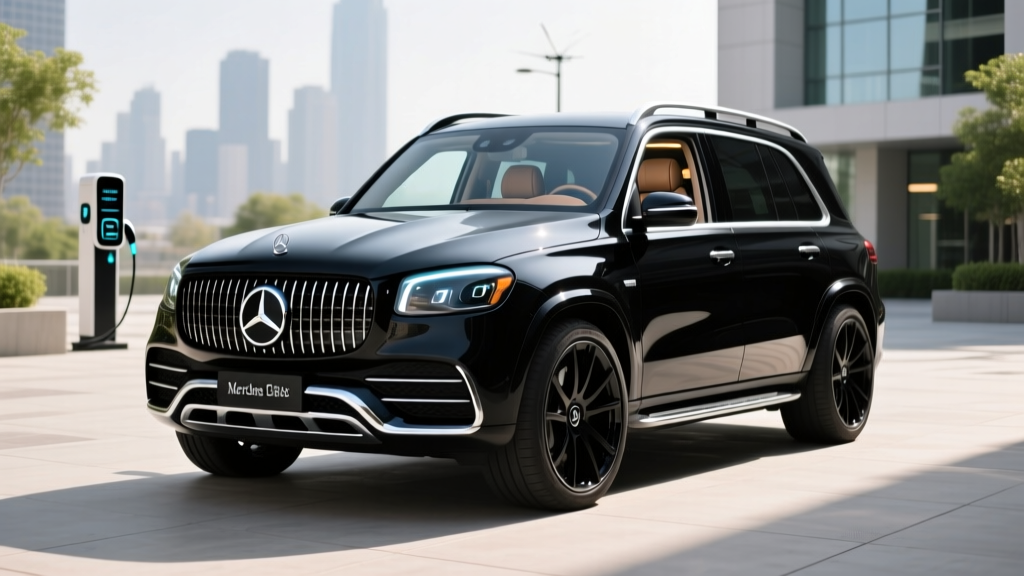
If you're researching the all electric G Wagon, you're looking at the 2026 Mercedes-Benz G580 with EQ Technology — a quad-motor, body-on-frame luxury off-roader with an EPA-estimated 240 miles of range, 579 horsepower, and a starting MSRP near $164,900. It replaces nothing; it sits alongside the gas G550 as an electrified alternative that trades V8 rumble for instant torque and silent trail crawling. Real-world highway range will land closer to 200–215 miles, and fast charging peaks at roughly 200 kW (10–80% in about 32 minutes). It does not qualify for the federal §30D tax credit due to its MSRP and battery sourcing. This guide breaks down the real costs, ownership practicalities, and how it compares to its gas sibling.
Quick Verdict: Is the Electric G Wagon Worth It?
The G580 is a legitimate off-road EV wrapped in an iconic box — but it's a luxury statement, not a value play. Buy it if you want silent trail capability, daily-driver comfort, and can charge at home. Skip it if range is your top priority or you need a three-row family hauler.
Range, Battery, and Efficiency: What the EPA Says vs. Reality
The G580 packs a 116 kWh usable lithium-ion battery (NMC chemistry) mounted low in the frame for a lower center of gravity. The EPA rates it at 240 miles combined, with an efficiency of roughly 58 MPGe (about 58 kWh/100mi). That's thirsty by EV standards — blame the aerodynamics of a brick-shaped, 6,600-pound SUV.
Real-World Range Expectations
EPA Sticker: 240 miles combined
Highway (70–80 mph): ~200–215 miles (aerodynamic drag dominates)
Cold Weather (below 32°F): ~175–195 miles (battery resistance + cabin heating)
Off-Road / Low-Speed Trail: ~220–240 miles (regen-friendly, low aero penalty)
The boxy shape means highway efficiency drops sharply above 65 mph. If your commute is mostly city and suburban, you'll see numbers closer to the EPA sticker. Sustained interstate travel will require more frequent stops.
Charging Speed and Infrastructure: kW, Times, and Connectors
The G580 uses the CCS1 connector standard for DC fast charging and supports up to 200 kW peak on compatible stations. Here's what charging actually looks like across levels:
| Charging Level | Power (kW) | Miles Added per Hour | Time (10–80%) | Best Use |
|---|---|---|---|---|
| Level 1 (120V household) | ~1.4 kW | ~2–3 mi/hr | ~60+ hours | Emergency / trickle only |
| Level 2 (240V home) | 9.6–11.5 kW | ~18–22 mi/hr | ~10–12 hours | Daily overnight charging |
| DC Fast Charge | Up to 200 kW peak | ~150+ mi in 15 min | ~32 minutes | Road trips |
Charging-curve reality: The 200 kW peak only holds briefly at low state of charge (roughly 10–30%). Expect sustained rates around 120–150 kW through the mid-range, then a significant taper above 80%. That 10–80% time of 32 minutes assumes a well-conditioned battery at an optimal-temperature 350 kW-class station. At a 150 kW Electrify America unit, plan on 40–45 minutes.
Preconditioning the battery via the MBUX navigation system (routing to a charger) warms the pack for faster DC charging. Skipping this step in cold weather can add 10–15 minutes to your charge session.
Performance: Quad Motors and Off-Road Capability
Four independently controlled motors — one near each wheel — produce a combined 579 hp and 869 lb-ft of torque. The 0–60 mph time lands at approximately 4.6 seconds, which is remarkable for a vehicle weighing over three tons. But straight-line speed isn't the point.
The G580's party trick is G-Turn: spinning the vehicle 360 degrees in place by counter-rotating left and right wheel pairs. It's a party trick on pavement and a genuine recovery tool on loose terrain. The G-Steering feature brakes the inside rear wheel to dramatically tighten the turning circle off-road.
Ground clearance is 9.8 inches, with approach/departure/breakover angles of 32°/30.7°/20.3° respectively — competitive with the gas G550. Water wading depth reaches 33.5 inches, slightly better than the gas model thanks to sealed electric drivetrain components.
Electric G Wagon vs. Gas G550: The Numbers
The G580 doesn't replace the G550 — it complements it. Here's how they stack up for a buyer cross-shopping both:
| Spec | G580 (Electric) | G550 (Gas, 2026) |
|---|---|---|
| Base MSRP | ~$164,900 | ~$149,900 |
| Powertrain | Quad-motor BEV | 3.0L Turbo I6 + 48V mild hybrid |
| Horsepower | 579 hp | 443 hp |
| 0–60 mph | 4.6 sec | 5.5 sec |
| Range / Tank | 240 mi (EPA) | ~370 mi (~22 gal tank, 17 mpg combined) |
| Efficiency | 58 MPGe | 17 MPG combined |
| Fuel/Energy Cost per Mile | ~$0.05–$0.07 (home charging) | ~$0.23 (at $3.90/gal) |
| Annual Fuel/Energy (12k mi) | ~$600–$840 | ~$2,760 |
| Federal Tax Credit | Not eligible (MSRP cap + sourcing) | N/A |
| Off-Road Capability | G-Turn, G-Steering, silent | Proven mechanical lockers |
| Maintenance | Minimal (no oil, filters, spark plugs) | Regular service intervals |
The G580 costs roughly $15,000 more up front but saves about $1,900–$2,100 per year in energy costs (assuming home Level 2 charging at national-average electricity rates). That gap closes in about 7–8 years — longer than most ownership cycles for a vehicle in this price bracket. The real savings argument is maintenance reduction and the driving experience, not payback math.
Total Ownership Cost Breakdown (5 Years)
| Cost Category | G580 Electric | G550 Gas |
|---|---|---|
| Purchase Price (MSRP) | $164,900 | $149,900 |
| Federal Tax Credit | $0 | $0 |
| Energy/Fuel (5 yr, 60k mi) | ~$3,500 | ~$13,800 |
| Maintenance (5 yr) | ~$1,800 | ~$5,500 |
| Insurance (5 yr est.) | ~$24,000 | ~$21,000 |
| Home Charger Install | ~$1,200–$2,500 | $0 |
| Estimated Depreciation (5 yr) | ~$72,000 | ~$60,000 |
| Total 5-Year Cost | ~$267,400–$268,700 | ~$250,200 |
Insurance runs higher on the G580 due to its purchase price and EV-specific repair costs (battery enclosure damage, sensor recalibration). Depreciation estimates are preliminary — the electric G-Class is too new for long-term resale data, though Mercedes G-Class vehicles historically hold value exceptionally well. According to Mercedes-Benz USA, the G580 includes a 10-year/155,000-mile battery warranty with a 70% capacity retention threshold.
First-Time EV Buyer Considerations: What You Actually Need
If the G580 is your first electric vehicle, several ownership realities deserve attention before signing:
Home charging is nearly essential. A 116 kWh battery on Level 1 (120V) is impractical — you'd add roughly 2–3 miles of range per hour. A Level 2 home charger (240V, 48A circuit) adds 18–22 miles per hour, meaning an overnight session easily replenishes a day's driving. Budget $1,200–$2,500 for a quality Level 2 unit plus professional installation by a licensed electrician. If your home has a 200-amp electrical panel with spare capacity, installation is straightforward. Older panels may require a $1,500–$3,000 upgrade.
Public charging works, but plan ahead. The G580's CCS1 connector is compatible with Electrify America, EVgo, and most major networks — but not Tesla Superchargers without a CCS-to-NACS adapter (Mercedes is transitioning to NACS on future models). For road trips, route planning through the MBUX system helps precondition the battery and locate compatible stations.
Cold weather is real. In sustained sub-freezing temperatures, expect 15–25% range reduction. The G580 uses a heat pump for cabin heating (more efficient than resistive heaters), but battery chemistry still suffers in the cold. If you live in northern climates, a heated garage helps significantly.
The §30D federal tax credit does not apply. The G580 exceeds the IRS §30D MSRP cap of $80,000 for SUVs, and battery critical-mineral sourcing requirements further complicate eligibility. Some states offer their own EV rebates — check your local DMV or energy office for current programs.
Common Misconceptions: Myths vs. Facts
| Myth | Fact |
|---|---|
| "Electric means it can't off-road." | The G580 matches or exceeds the gas G550 in ground clearance, wading depth, and approach angles. Instant torque and G-Turn provide capabilities no gas G-Wagon has. |
| "The battery will need replacing soon and cost a fortune." | Mercedes warranties the battery for 10 years/155,000 miles at 70% capacity. NMC degradation typically averages 10–15% over 8–10 years with proper care (avoiding frequent 100% charges and DC fast charging). |
| "It qualifies for the $7,500 federal tax credit." | It does not. The MSRP exceeds the §80,000 SUV cap, and battery sourcing rules add further barriers. Consult a tax professional for your specific situation. |
| "I can charge it anywhere." | CCS1 is widely available but not universal. Tesla Superchargers require an adapter. Rural areas and some road-trip corridors remain charging deserts for CCS vehicles. |
| "It's self-driving with all those screens." | The G580's driver-assistance features (Active Distance Assist, Active Steering Assist) are SAE Level 2 — you must remain engaged, hands on or near the wheel, at all times. |
Decision Framework: Should You Buy the Electric G Wagon?
Choose the G580 Electric If:
- You have reliable home Level 2 charging access (garage or dedicated driveway circuit)
- Your daily driving is under 150 miles and you take road trips fewer than 6–8 times per year
- You want silent off-road capability and unique features like G-Turn
- You value instant torque and a smoother ride over V8 character
- You're comfortable spending $165K+ without expecting a tax credit offset
Choose the G550 Gas If:
- You regularly drive 300+ miles between stops or travel in charging-desert regions
- You live in an apartment or condo without charging access
- You want the traditional V8 (now turbo I6) sound and feel
- You plan to keep the vehicle 10+ years and want proven long-term resale data
- Upfront cost matters and you'd rather save the $15K price premium
Consider a Plug-in Hybrid Alternative If:
- You want some electric daily driving but need gas flexibility — though no PHEV G-Class exists, vehicles like the Range Rover PHEV or BMW XM offer a bridge
Frequently Asked Questions
What is the real-world range of the all electric G Wagon?
The EPA rates the G580 at 240 miles combined. In real-world highway driving at 70–80 mph, expect 200–215 miles. In cold weather (below freezing), plan for 175–195 miles. Off-road and city driving can approach or match the EPA figure thanks to regenerative braking.
How long does it take to charge the G580 at home?
On a Level 2 home charger (240V, ~11.5 kW), a full charge from 10% to 100% takes roughly 10–12 hours. Most owners charge overnight and never deplete below 20–30%, making a typical session 6–8 hours.
Does the electric G Wagon qualify for any tax credits?
Not the federal §30D credit — the G580's MSRP exceeds the $80,000 SUV cap set by the IRS. Some state and local incentives may apply. Always verify current rules with a tax professional before purchasing.
Can the G580 actually off-road as well as the gas G Wagon?
Yes, and in some scenarios better. Ground clearance, approach/departure angles, and wading depth are competitive. The quad-motor setup enables G-Turn (tank turns) and G-Steering (tight virtual turning radius) that the gas model cannot replicate. Mechanical locking differentials on the gas G550 are proven, but the G580's torque vectoring provides comparable traction control.
What happens if the battery degrades over time?
Mercedes-Benz warranties the high-voltage battery for 10 years or 155,000 miles, guaranteeing at least 70% of original capacity. Based on NMC chemistry data from comparable EVs, expect roughly 10–15% degradation over 8–10 years with moderate DC fast charging and routine 20–80% state-of-charge habits.
Is the G580 self-driving?
No. The G580's Active Distance Assist and Active Steering Assist are SAE Level 2 driver-assistance systems. The driver must remain fully attentive and in control at all times. No production vehicle sold to consumers is currently self-driving — only Level 4 robotaxi services like Waymo operate without a human driver, and only in geofenced areas.
What connector does the G580 use?
The G580 uses the CCS1 (Combined Charging System) connector for DC fast charging and J1772 for Level 2 AC charging. It is not natively compatible with Tesla's NACS connector, though aftermarket adapters exist. Mercedes has announced a transition to NACS on future models.