Quick Answer: Is the G580 Electric Worth It?
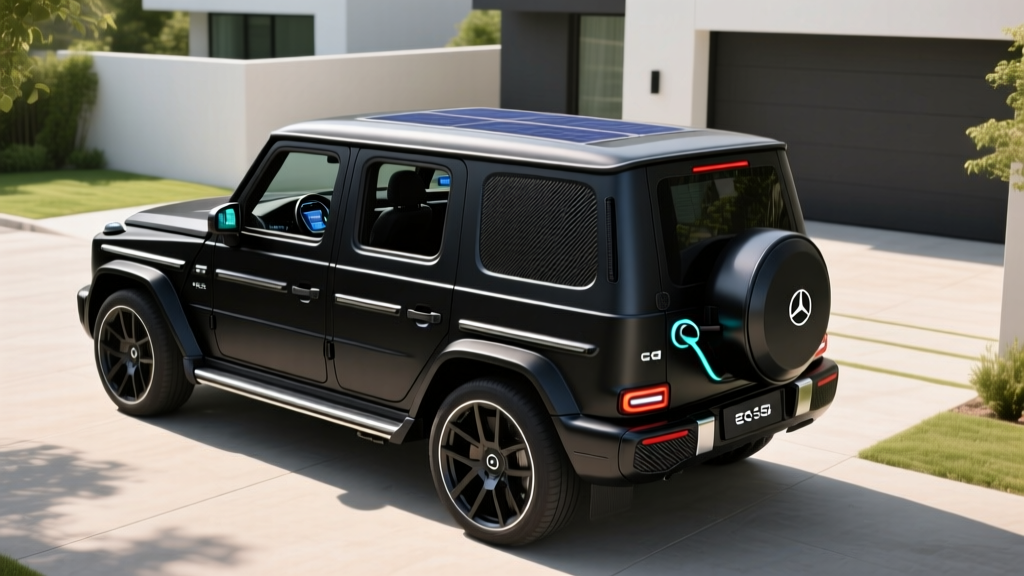
The 2026 Mercedes-Benz G580 Electric (formerly known as the EQG) is a $160,000+ luxury off-road EV with an EPA-estimated 239 miles of range, a 116 kWh usable battery, and up to 200 kW DC fast charging. It delivers 579 horsepower, a 0–60 mph time of 4.6 seconds, and genuine off-road capability via four independent motors. However, real-world highway range drops to roughly 190–210 miles, and charging at peak speed takes about 32 minutes from 10–80%. It does not qualify for the federal §30D tax credit due to its MSRP exceeding the $80,000 SUV cap. This vehicle is for buyers who want iconic G-Wagen presence with silent, torque-rich electric power — not for those prioritizing efficiency or value.
G580 Electric Specs: Range, Battery, and Charging
| Specification | 2026 G580 Electric |
|---|---|
| EPA Range | 239 miles |
| Real-World Range (highway/cold) | ~180–210 miles |
| Battery Capacity (usable) | 116 kWh (NMC chemistry) |
| Peak DC Fast Charge Rate | 200 kW |
| 10–80% DC Charge Time | ~32 minutes |
| Level 2 AC Charge Rate | 11 kW (~9.5 hrs 0–100%) |
| Horsepower | 579 hp |
| 0–60 mph | 4.6 seconds |
| Drivetrain | Quad-motor AWD |
| EPA Efficiency | ~47 MPGe combined |
| Towing Capacity | ~4,400 lbs (est.) |
The G580 uses an NMC (nickel manganese cobalt) lithium-ion pack mounted low in the ladder frame. The 116 kWh usable capacity is large, but the vehicle's 6,600+ lb curb weight and boxy aerodynamics punish efficiency. Expect roughly 2.0–2.3 kWh per mile in mixed driving — about double what a Tesla Model X consumes per mile.
Real-World Range Reality Check
EPA sticker: 239 miles
Highway driving (70–75 mph): ~190–210 miles
Cold weather (below 32°F): ~160–185 miles
Combined realistic expectation: ~200 miles on a typical day
The G580's brick-like shape generates substantial aerodynamic drag at highway speeds. Unlike a sedan or crossover, you lose proportionally more range at 75 mph than at 55 mph. In winter, the NMC battery also loses efficiency without a dedicated heat pump for cabin heating, compounding range loss.
Charging the G580 Electric: What Owners Need to Know
| Charging Level | Power (kW) | Miles Added per Hour | Use Case |
|---|---|---|---|
| Level 1 (120V outlet) | 1.4 kW | ~3–4 mi/hr | Emergency only |
| Level 2 (240V, 48A) | 11 kW | ~25–28 mi/hr | Home overnight charging |
| DC Fast Charge | Up to 200 kW | ~140 mi/hr (peak) | Road trips |
Home charging: With an 11 kW onboard charger, a full 0–100% charge takes roughly 9.5 hours on a properly installed Level 2 circuit. Most owners will plug in overnight and wake up to a full battery. A 48-amp Level 2 charger requires a dedicated 60-amp circuit — installation typically costs $800–$2,500 depending on your electrical panel's capacity, per Energy.gov estimates.
DC fast charging: The 200 kW peak rate is competitive but not class-leading. The charge curve tapers significantly above 80% state of charge (SoC), which is standard for NMC batteries to preserve longevity. Expect the 10–80% session to take about 32 minutes at a 350 kW-capable Electrify America or EVgo station. At a 150 kW station, plan for 38–42 minutes.
Connector: The G580 Electric uses the CCS1 connector for DC fast charging in the US market. Mercedes-Benz has not yet transitioned to NACS (Tesla's connector) for the 2026 model year on this vehicle, though adapters may become available.
G580 Electric vs. Gas G550: Cost & Capability Comparison
| Factor | G580 Electric (2026) | G550 (2026 Gas) |
|---|---|---|
| Base MSRP | ~$160,000 | ~$148,000 |
| Horsepower | 579 hp | 416 hp |
| 0–60 mph | 4.6 sec | 5.5 sec |
| EPA Range / MPG | 239 mi / 47 MPGe | ~14 MPG combined |
| Fuel/Charge Cost per Mile | ~$0.10–$0.14/mi (home L2) | ~$0.32/mi (premium gas @ $4.50/gal) |
| Annual Fuel/Energy (12K mi) | ~$1,200–$1,680 | ~$3,840 |
| Federal Tax Credit (§30D) | $0 (MSRP exceeds cap) | $0 |
| Annual Maintenance | ~$400–$600 | ~$1,200–$1,800 |
| Off-Road Capability | 4 motors, torque vectoring, G-Turn | 3 locking diffs, proven trail cred |
The gas G550's 4.0L twin-turbo V8 is a proven, reliable powertrain with decades of off-road heritage. The G580 Electric trades that for instantaneous torque from four independent motors, enabling features like G-Turn (tank turns on pavement or dirt) and precise torque vectoring that the gas model cannot replicate.
On fuel savings alone, the G580 Electric saves roughly $2,200–$2,600 per year versus the G550 at 12,000 miles driven annually. Over five years, that's $11,000–$13,000 — meaningful, but it only partially offsets the higher purchase price and faster depreciation expected for a niche luxury EV.
Total Cost of Ownership: 5-Year Breakdown
| Cost Category (5 Years, 60K Miles) | G580 Electric | G550 Gas |
|---|---|---|
| Purchase Price (est. transaction) | $160,000 | $148,000 |
| Federal Tax Credit | $0 | $0 |
| Energy/Fuel Cost | $6,500 | $19,200 |
| Maintenance | $2,500 | $7,500 |
| Insurance (est. annual avg $4,800) | $24,000 | $21,000 |
| Depreciation (est. 55% over 5 yrs) | $88,000 | $66,600 |
| Total 5-Year Cost | ~$281,000 | ~$262,300 |
Key takeaway: Despite lower energy and maintenance costs, the G580 Electric's higher purchase price, steeper depreciation (luxury EVs depreciate faster than heritage gas models), and higher insurance premiums make it the more expensive option over five years by roughly $18,000–$20,000. This is a passion purchase, not an economic optimization.
Insurance for the G580 Electric is notably expensive. Luxury EVs carry higher premiums due to specialized repair requirements, battery replacement costs, and limited body-shop familiarity. Expect annual premiums of $4,200–$5,400 depending on your state and driving record, per industry data.
Federal Tax Credit & Incentive Reality
§30D Federal EV Tax Credit — G580 Electric Eligibility
- MSRP Cap: SUVs must be ≤$80,000 — the G580 at ~$160,000 exceeds this cap ❌
- Buyer Income Cap: $300K joint / $150K single (AGI) — many G580 buyers exceed this ❌
- Battery Sourcing: Critical mineral and battery component requirements apply — N/A since MSRP fails
- Point-of-Sale Transfer: Available for eligible vehicles — N/A for G580
- Result: No federal tax credit for the G580 Electric
Source: IRS §30D Clean Vehicle Credit
Some states offer additional EV rebates or HOV lane access regardless of MSRP — check your state's DMV or energy office. California's Clean Fuel Rebate, for example, has historically offered up to $1,000 for qualifying ZEVs, though income and vehicle-price caps vary by program year.
Battery Warranty, Degradation & Longevity
Mercedes-Benz covers the G580 Electric's battery with an 8-year / 100,000-mile warranty guaranteeing at least 70% state of health (SoH). This is standard for luxury EVs and aligns with BMW, Audi, and Porsche benchmarks.
NMC batteries in heavy, high-power vehicles like the G580 typically degrade 1.5–2.5% per year under normal use. After 8 years, expect roughly 85–90% SoH if you avoid frequent DC fast charging above 80% and don't routinely let the battery sit at 100% SoC in hot weather.
Battery replacement cost: A full pack replacement out of warranty is estimated at $28,000–$40,000 including labor — a significant liability in years 9+. This is a known risk for heavy luxury EVs with large battery packs.
Real-World Ownership Considerations
Home Charging Access
The G580 Electric practically requires home Level 2 charging. Relying solely on public DC fast chargers for a 116 kWh battery is expensive ($0.35–$0.50/kWh at public stations = $40–$58 per session) and time-consuming. If you cannot install a Level 2 charger at home (apartment dwellers, street parking), this vehicle becomes significantly less practical.
Climate Impact
Owners in northern climates (Minnesota, New England, Colorado) should budget for 25–35% range loss in sustained sub-freezing temperatures. The G580's large battery mitigates this somewhat — even at 170 miles of winter range, most daily driving is covered. But road trips in January require more frequent stops.
Driving Patterns
If your driving is primarily urban/suburban at under 45 mph, you'll see range closer to the EPA estimate. If you frequently drive 75+ mph on highways, plan for 190–200 miles of practical range. The G580 is not a road-trip efficiency champion — it's a luxury statement that can road-trip, with planning.
Should You Buy the G580 Electric?
Choose the G580 Electric if:
- You want a G-Wagen with silent, instant-torque performance
- You have home Level 2 charging and rarely drive more than 180 miles between charges
- You value G-Turn and 4-motor torque vectoring as novel features
- The $160K+ price and ~$56K annual ownership cost fit your budget without strain
Choose the gas G550 if:
- You tow regularly (gas G-Wagen has a longer proven towing track record)
- You live in a charging-desert region or lack home charging access
- You want the heritage powertrain with established service infrastructure
- You plan to keep the vehicle 10+ years (simpler long-term maintenance)
Common Misconceptions About the G580 Electric
| Myth | Fact |
|---|---|
| "It gets 239 miles of range on the highway." | EPA tests include city driving. At 70+ mph, expect 190–210 miles due to aerodynamic drag. |
| "It qualifies for the $7,500 federal tax credit." | The §30D credit has an $80,000 MSRP cap for SUVs. The G580 at ~$160K is ineligible. |
| "Electric means no maintenance." | Tires, cabin air filters, brake fluid, coolant, wiper blades, and suspension components still need service. Budget $400–$600/year. |
| "Four motors means it's self-driving." | The G580 has Level 2 driver-assist (Mercedes' Driver Assistance Package). You must remain engaged. It is not autonomous. |
| "It charges as fast as a Porsche Taycan." | The Taycan peaks at 320 kW (2026 models) with an 800V architecture. The G580 peaks at 200 kW — respectable but slower. |
Frequently Asked Questions
Can the G580 Electric actually off-road?
Yes. Mercedes engineered it with a virtual differential lock system, 33.6° approach angle, 256 mm ground clearance, and up to 34.4 inches of wading depth. The four independent motors allow precise torque control that exceeds the gas G-Wagen's mechanical diffs in some scenarios. However, the 6,600+ lb weight and EV-specific concerns (battery case damage risk on rocks) warrant caution on extreme trails.
What happens if the battery fails out of warranty?
A full replacement is estimated at $28,000–$40,000. Individual module replacement may be possible at lower cost, but Mercedes has not published module-level pricing. This is a real long-term ownership risk for any large-battery EV beyond year 8.
Does the G580 Electric support V2L (vehicle-to-load)?
Mercedes has not confirmed V2L capability for the US-market G580 at launch. Some international markets may offer bidirectional charging features, but US availability remains unannounced for the 2026 model year.
How does the G580 Electric compare to the Rivian R1S or Tesla Model X?
The Rivian R1S (starting ~$80,000, 352-mile max range) offers better range and value but less luxury prestige. The Tesla Model X (starting ~$82,000, 348-mile range) is faster and more efficient but lacks the G-Wagen's off-road heritage and presence. The G580 occupies a unique niche: ultra-premium, off-road-capable, and unmistakably a G-Wagen. It competes more with the Land Rover Defender Electric (when available) than with mainstream EV SUVs.
Is the G580 Electric a good first EV?
Only if you have home Level 2 charging, a budget that absorbs $56K+ annual ownership costs, and realistic range expectations. For most first-time EV buyers, a less expensive, more efficient EV (Hyundai Ioniq 5, Tesla Model Y, BMW iX) provides a better introduction to electric ownership with lower financial risk.
Sources: EPA Fuel Economy, IRS §30D Clean Vehicle Credit, Mercedes-Benz USA press materials.