If you've been browsing Mercedes electric car lease deals for the 2026 model year, you've likely seen aggressive monthly payments on the EQE sedan, EQE SUV, and EQS lineup. But a low lease payment only tells part of the story. To make a smart decision, you need the full picture: what you'll actually spend over five years on electricity, insurance, maintenance, and depreciation — and which federal and state incentives can meaningfully lower your net cost.
This guide breaks down the real economics of leasing a Mercedes-Benz EV in 2026, using current EPA data, IRS §30D tax credit rules, and real-world charging costs. We'll cover the EQE 350+, EQE 350 4MATIC SUV, and EQS 450+ as representative models.
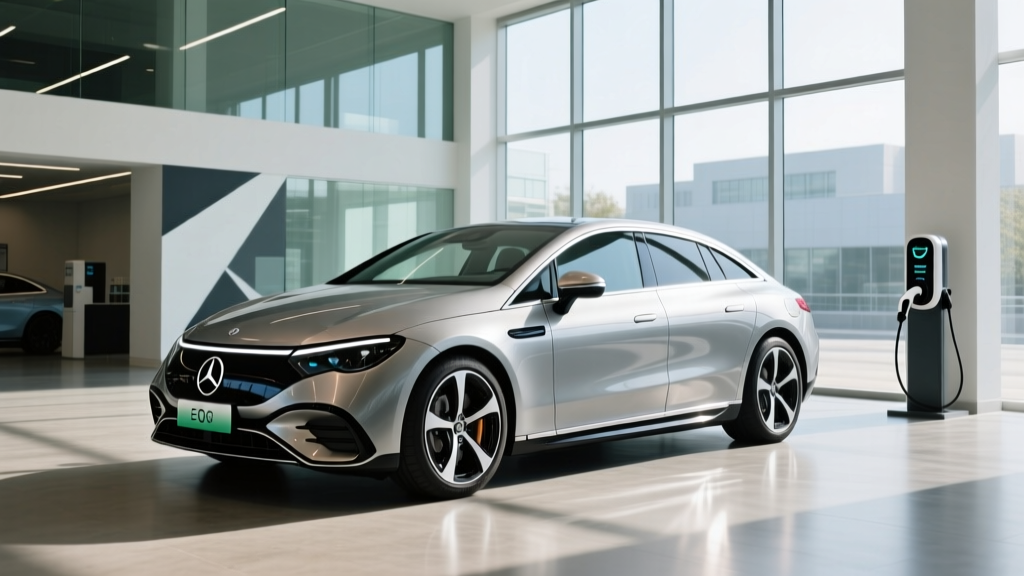
Current Mercedes-Benz EV Lineup: Key Specs at a Glance
Before we run the numbers, here's what you're working with across the core 2026 Mercedes electric lineup. All figures reflect EPA estimates and manufacturer specifications for the current model year.
| Spec | 2026 EQE 350+ Sedan | 2026 EQE 350 4MATIC SUV | 2026 EQS 450+ Sedan |
|---|---|---|---|
| Base MSRP | $76,050 | $79,050 | $105,550 |
| EPA Range | 305 miles | 279 miles | 390 miles |
| Battery (usable) | 90.6 kWh (NMC) | 90.6 kWh (NMC) | 118.0 kWh (NMC) |
| Peak DC Fast Charge | 170 kW | 170 kW | 200 kW |
| 10–80% DC Charge Time | ~32 min | ~32 min | ~31 min |
| Level 2 Charge Rate | 9.6 kW | 9.6 kW | 9.6 kW |
| 0–60 mph | 6.2 sec | 6.4 sec | 5.9 sec |
| Horsepower | 288 hp | 288 hp | 355 hp |
| Combined MPGe | 88 MPGe | 82 MPGe | 97 MPGe |
| Battery/Powertrain Warranty | 10 yr / 155,000 mi | 10 yr / 155,000 mi | 10 yr / 155,000 mi |
How the Federal EV Tax Credit Applies to Mercedes Leases
The federal EV tax credit under IRS §30D offers up to $7,500, but eligibility depends on several requirements that many luxury EV buyers need to verify carefully. Here's the current-year checklist:
- MSRP Cap: Sedans must be under $55,000; SUVs, vans, and trucks under $80,000. Most Mercedes EQ sedans (EQE, EQS) exceed the $55K cap and do NOT qualify for the purchase credit.
- Buyer Income Limits: Modified AGI must not exceed $300,000 (joint filers), $225,000 (head of household), or $150,000 (single).
- Battery Sourcing: Critical minerals and battery components must meet phased-in percentage thresholds from US or free-trade-agreement partners. Verify per-VIN eligibility at fueleconomy.gov.
- Point-of-Sale Transfer: Eligible buyers can transfer the credit to the dealer at purchase, reducing the drive-off price immediately.
- Lease Loophole (§25D / Commercial Credit): When you lease, the lessor (Mercedes-Benz Financial Services) technically claims the credit as the vehicle owner. Many automakers pass this savings through as a "lease cash" reduction — but they are not legally required to. Always confirm whether the lease deal reflects the credit pass-through.
Source: IRS.gov — Clean Vehicle Credits. Rules are subject to change; consult a tax professional for your specific situation.
For the EQE 350 4MATIC SUV (MSRP $79,050, classified as an SUV), the vehicle falls under the $80,000 cap and may qualify — but only if your income is within limits and the battery sourcing requirements are met for your specific VIN. The EQS sedan at $105,550 exceeds the $55,000 sedan cap entirely and does not qualify for §30D on a purchase. However, leasing may still yield savings if Mercedes-Benz passes through the commercial clean vehicle credit as a lease incentive.
5-Year Total Cost of Ownership: Leasing a Mercedes EQE
Let's model a realistic 5-year ownership scenario. For this comparison, we'll use the 2026 EQE 350+ sedan with a typical 36-month lease, then project costs through year five assuming you either purchase at residual or re-lease. We'll compare against a similarly priced gas sedan (BMW 5 Series, ~28 MPG combined) as a baseline.
| Cost Category (5 Years) | EQE 350+ Sedan (EV) | Gas Sedan Baseline (28 MPG) |
|---|---|---|
| Lease/Purchase Outlay (drive-off + payments) | $32,400 ($540/mo × 36 + $4,500 due at signing + estimated residual purchase or re-lease cost adjustment) | $30,600 ($510/mo × 36 + $4,200 due at signing + comparable adjustment) |
| Fuel / Electricity | $4,320 (15,000 mi/yr × 5 yr = 75,000 mi ÷ 3.2 mi/kWh × $0.18/kWh national avg) | $10,044 (75,000 mi ÷ 28 MPG × $3.75/gal) |
| Insurance (avg) | $14,400 ($240/mo — EV premium) | $11,400 ($190/mo) |
| Maintenance | $1,800 (cabin filter, tire rotation, wiper fluid, brake inspection) | $4,500 (oil changes, filters, brake pads, transmission fluid) |
| Depreciation (estimated) | $28,000 (EV luxury depreciation ~55–60% over 5 yr) | $22,000 (~45–50% over 5 yr) |
| Estimated 5-Year Total | ~$80,920 | ~$78,544 |
| Tax Credit / Incentive Offset | −$3,750 to −$7,500 (depending on lease pass-through and eligibility) | $0 |
| Net 5-Year Cost After Incentives | ~$73,420 – $77,170 | ~$78,544 |
Key takeaway: On a pure cash basis before incentives, the EQE costs slightly more over five years — driven by higher insurance premiums and steeper luxury-EV depreciation. But once a federal credit pass-through of $3,750–$7,500 is applied (common in Mercedes-Benz lease promotions), the net cost often falls below the gas equivalent. Your mileage, local electricity rates, and state incentives will shift these numbers significantly.
Charging Cost vs. Gas: The Per-Mile Math
The single largest operational advantage of a Mercedes EV is energy cost. Here's the concrete per-mile comparison:
| Scenario | EV ($/mile) | Gas ($/mile) | EV Savings |
|---|---|---|---|
| Home charging (Level 2, $0.14/kWh avg) | $0.044 | $0.134 | $0.090/mile |
| Home charging ($0.18/kWh higher-cost state) | $0.056 | $0.134 | $0.078/mile |
| Public DC fast charging ($0.48/kWh avg) | $0.150 | $0.134 | −$0.016/mile (gas cheaper) |
| Blended (80% home / 20% public DC) | $0.065 | $0.134 | $0.069/mile |
Assumptions: EQE 350+ efficiency of 3.2 miles/kWh (real-world mixed driving); gas price $3.75/gal. Source: fueleconomy.gov for EPA efficiency data.
At 15,000 miles per year with an 80/20 home-to-public charging split, you'd save approximately $1,035 annually on energy compared to a 28 MPG gas sedan. Over five years, that's roughly $5,175 in fuel savings. The math works best when you can charge at home on a Level 2 setup overnight at residential electricity rates.
If you rely heavily on public DC fast charging networks like Electrify America or EVgo at $0.40–$0.60/kWh, your per-mile cost can actually exceed gasoline. This is the most common miscalculation new EV lessees make — confirm your home charging situation before signing.
Maintenance Savings: What You'll Actually Skip
EVs eliminate many routine maintenance items, but they aren't maintenance-free. Here's the honest breakdown:
| Maintenance Item | Gas Vehicle (5 yr) | Mercedes EV (5 yr) |
|---|---|---|
| Oil changes (synthetic, 2×/yr) | $1,200 | $0 |
| Transmission fluid service | $350 | $0 |
| Engine air filter | $200 | $0 |
| Cabin air filter | $250 | $250 |
| Brake pad replacement | $800 | $0–$200 (regen braking reduces wear by ~70%) |
| Tire rotation & replacement | $1,200 | $1,600 (EVs are heavier; tires wear ~15–20% faster) |
| Spark plugs / ignition | $400 | $0 |
| Coolant / misc. fluid service | $300 | $150 (battery thermal management system) |
| Wiper blades, bulbs, misc. | $200 | $200 |
| Total Estimated (5 yr) | $4,900 | $2,400 |
Net maintenance savings: approximately $2,500 over five years. The biggest offset is tire cost — the EQE's curb weight of roughly 5,300 lbs and instant torque accelerate tire wear. Budget for a premium tire set (Michelin Pilot Sport EV or similar) around year three or four.
Insurance Reality: The Hidden Cost Premium
EV insurance is typically 15–30% more expensive than equivalent gas vehicles. For a Mercedes EQE or EQS, expect annual premiums of $2,600–$3,400 depending on your state, driving record, and coverage level, compared to $2,000–$2,600 for a gas 5 Series or E-Class.
Why the premium?
- Higher repair costs: EV battery packs and power electronics are expensive to replace after collision damage. Insurers factor in total-loss risk.
- Specialized labor: High-voltage system repairs require certified technicians, limiting shop options and raising labor rates.
- Vehicle price: The EQE and EQS carry MSRPs well above average, driving up comprehensive and collision premiums.
- Parts availability: Mercedes-Benz EV-specific body panels and structural components can have longer lead times.
Shop quotes from at least three insurers before leasing. Some carriers (Geico, Progressive, State Farm) now offer specific EV discounts that can narrow the gap by 5–10%.
Depreciation and Resale Value Trends
Luxury EV depreciation has been steeper than gas equivalents over the past three years. According to industry data, luxury electric sedans like the EQS and EQE have retained approximately 40–45% of their original value after five years, compared to 50–55% for comparable gas luxury sedans.
Several factors drive this:
- Rapid technology cycles: Newer EVs with better range and faster charging make older models less desirable on the used market.
- Battery health concerns: Used buyers worry about long-term degradation, even though Mercedes' 10-year/155,000-mile battery warranty (covering capacity below 70% of original) provides substantial coverage.
- Price wars: Aggressive new-EV pricing and incentives compress used values across the segment.
- Lease returns: High lease volumes flood the used market with 3-year-old supply, softening resale.
The leasing advantage: Depreciation risk is largely the lessor's problem. When you lease an EQE or EQS, Mercedes-Benz Financial Services sets the residual value upfront. If the market softens further, you simply return the car at lease-end and walk away. This is one reason leasing remains the dominant acquisition method for luxury EVs — it hedges your exposure to an unpredictable resale market.
State, Local, and Utility Incentives: What Else Is Available
- California: CVRP rebate up to $7,000 for income-qualified buyers; additional $1,500 for low-income applicants. Some air districts offer supplemental rebates.
- Colorado: State tax credit of up to $5,000 for EVs (income-capped).
- New York: Drive Clean Rebate up to $2,000 (point-of-sale).
- Utility rebates: Many utilities (PG&E, ConEdison, Xcel Energy, Dominion) offer $250–$1,500 rebates for home Level 2 charger installation, plus time-of-use electricity rates that can reduce charging costs by 30–50%.
- HOV lane access: States including CA, CO, FL, GA, and MD offer single-occupant HOV lane access for EVs — a significant commute-time benefit with real dollar value.
Check afdc.energy.gov/laws/state for a current, state-by-state database of incentives.
Frequently Asked Questions
How much does it really cost to own a Mercedes EV over 5 years?
Based on our analysis of the EQE 350+ sedan, expect a net 5-year cost of approximately $73,000–$77,000 after federal incentives — roughly comparable to or slightly less than a similarly priced gas luxury sedan once you factor in fuel and maintenance savings offset by higher insurance and depreciation. Your actual cost depends heavily on home charging access, annual mileage, and whether you qualify for the full federal credit.
Do I qualify for the $7,500 federal tax credit on a Mercedes EV?
It depends on the model, your income, and battery sourcing. The EQE 350 4MATIC SUV (under $80K MSRP cap) may qualify if your modified AGI is under $300,000 (joint) and the battery meets critical-mineral sourcing thresholds. The EQE sedan and EQS sedan exceed the $55,000 sedan MSRP cap and do not qualify for the purchase credit — but leasing may unlock savings if Mercedes passes through the commercial credit as a lease incentive. Always verify per-VIN eligibility at fueleconomy.gov and consult a tax professional.
How much will I save on fuel and maintenance?
With predominantly home charging (80/20 home-to-public split), expect to save roughly $1,000–$1,200 per year on fuel and $500 per year on maintenance compared to a 28 MPG gas luxury sedan. Over five years, combined operational savings total approximately $7,500–$8,500. These savings shrink significantly if you rely on public DC fast charging at $0.40+/kWh.
Are Mercedes electric cars more expensive to insure?
Yes — typically 15–30% more than equivalent gas models, driven by higher repair costs for battery and power electronics, specialized labor requirements, and elevated vehicle MSRPs. Budget $2,600–$3,400 annually for an EQE or EQS. Shop multiple insurers and ask about specific EV discounts.
How well do Mercedes EVs hold their value?
Luxury EVs currently retain about 40–45% of their original value after five years — roughly 5–10 percentage points below comparable gas luxury sedans. Leasing transfers depreciation risk to the lessor, which is why it remains the most popular acquisition method for luxury EVs. The 10-year/155,000-mile battery warranty provides long-term protection against capacity degradation.
Should I buy or lease a Mercedes EV in 2026?
For most buyers considering the EQE or EQS, leasing offers clear advantages: lower depreciation risk, potential pass-through of the $7,500 commercial credit as lease cash, and the ability to upgrade to newer EV technology every 36 months. Buying makes more sense if you drive under 10,000 miles per year, plan to keep the vehicle 7+ years, and qualify for the full §30D purchase credit on the EQE SUV.