Why a Mercedes EV Lease Needs a Hard Numbers Check
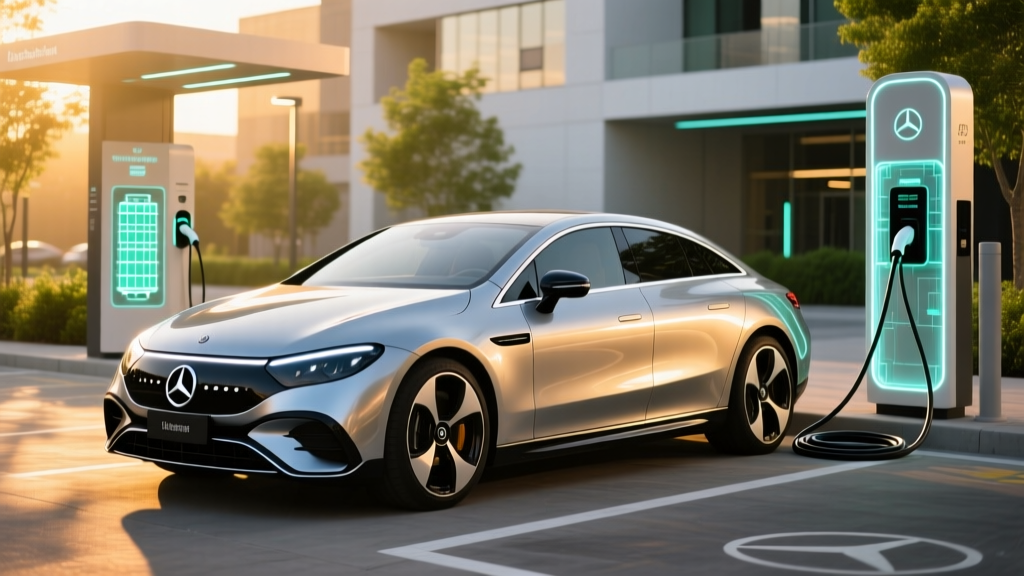
If you've been browsing dealer lots or the Mercedes-Benz USA configurator lately, the allure of a sleek EQE or EQS sedan — or the increasingly practical EQB compact SUV — is obvious. But before you sign a 36-month Mercedes EV lease, the math demands scrutiny. Leasing an electric vehicle is structurally different from leasing a gas car: the federal tax credit flows through the lessor, charging costs depend entirely on your local electricity rate, and depreciation risk sits with Mercedes-Benz Financial Services, not you. That last point matters more than most buyers realize.
This guide runs the exact numbers on what a 2026 Mercedes EV lease actually costs over five years of ownership-equivalent use, whether you'll see any federal incentive benefit, and where the hidden expenses live. No marketing gloss — just the spreadsheet.
The 2026 Mercedes EV Lineup: What You Can Actually Lease
As of early 2026, Mercedes-Benz offers several battery-electric models in the U.S. market. Here's what's relevant for lease shoppers, with EPA figures and base MSRP before any incentives:
| Model | Trim (Base) | Battery (kWh usable) | EPA Range | 0–60 mph | MSRP |
|---|---|---|---|---|---|
| EQB 300 4MATIC | Base | 66.5 kWh (NMC) | 251 mi | 7.7 sec | ~$54,350 |
| EQE 350+ Sedan | Base | 90.6 kWh (NMC) | 305 mi | 6.2 sec | ~$76,050 |
| EQE 350 4MATIC SUV | Base | 90.6 kWh (NMC) | 279 mi | 6.3 sec | ~$79,050 |
| EQS 450+ Sedan | Base | 118 kWh (NMC) | 390 mi | 5.9 sec | ~$105,550 |
| EQS 580 4MATIC SUV | Base | 118 kWh (NMC) | 330 mi | 4.4 sec | ~$121,550 |
All current Mercedes EQ models use NMC (nickel manganese cobalt) battery chemistry, which delivers high energy density but requires more careful state-of-charge management than LFP packs. Mercedes recommends charging to 80% for daily use and 100% only before long trips to minimize long-term degradation. DC fast charging peaks at 170 kW on the EQB and up to 200 kW on the EQE/EQS platforms, with 10–80% charges taking approximately 28–32 minutes under ideal thermal conditions. Preconditioning the battery via the MBUX navigation route planner is essential to hitting those peak rates at public chargers.
The Federal Tax Credit Trap: Why Leasing Changes Everything
Here's where a Mercedes EV lease diverges sharply from buying. Under IRS §30D rules, the federal EV tax credit of up to $7,500 is available to purchasers who meet strict requirements. But when you lease, the vehicle is titled to Mercedes-Benz Financial Services (the lessor), not to you. The lessor technically claims any applicable credit.
However, there's a well-known provision in the tax code — sometimes called the "leasing loophole" — where a commercial lessor may pass the benefit through as a lease cash incentive, reducing your monthly payment. Mercedes-Benz has historically offered lease cash on EQ models that reflects this benefit, though the exact amount varies by model, term, and market conditions. You must confirm with your dealer whether current lease offers include a credit pass-through.
- MSRP Caps: Vans, SUVs, and pickups capped at $80,000; sedans and other vehicles capped at $55,000. This disqualifies most Mercedes EQ sedans (EQE, EQS) from the purchase credit entirely, though EQB SUV pricing may fall under the $80K SUV cap depending on trim.
- Buyer Income Limits: Modified AGI cannot exceed $300,000 (joint filers), $225,000 (head of household), or $150,000 (single). Based on current or prior tax year, whichever is lower.
- Battery Sourcing Requirements: The credit splits into two halves — $3,750 for critical minerals and $3,750 for battery components — each with escalating domestic/free-trade sourcing thresholds that tighten annually. As of 2026, these requirements are stringent and disqualify many vehicles from the full amount.
- Point-of-Sale Transfer: Eligible purchasers can transfer the credit to the dealer at purchase, receiving it as an immediate price reduction rather than waiting to claim it on their tax return. This option applies to purchases, not leases directly.
- Lease Workaround: Under IRC §45W (commercial clean vehicle credit), lessors may claim the credit on leased vehicles and pass savings through as reduced lease payments. Confirm with your dealer whether current Mercedes lease offers reflect this benefit.
Source: IRS — Credits for New Clean Vehicles. Rules are subject to legislative change. Consult a tax professional before relying on credit eligibility.
The practical takeaway: a Mercedes EV lease may deliver a monthly payment reduction equivalent to some or all of the $7,500 credit — but it's not guaranteed, it's model-dependent, and it's structured as a manufacturer incentive rather than a tax credit you personally claim. Always ask the dealer to itemize exactly what "lease cash" is being applied.
5-Year Total Cost of Ownership: Mercedes EQE vs. Gas Equivalent
To ground this in real numbers, let's model a 5-year cost scenario comparing the 2026 EQE 350+ Sedan against a comparable luxury gas sedan (the BMW 5 Series / Mercedes E-Class segment). We'll assume 15,000 miles per year, a mix of 70% home Level 2 charging and 30% public DC fast charging, and national average electricity rates.
| Cost Category | Mercedes EQE 350+ (EV) | Gas Luxury Sedan (E-Class equiv.) | 5-Year Difference |
|---|---|---|---|
| Purchase/Lease Base Price | $76,050 MSRP | $62,050 MSRP | +$14,000 (EV) |
| Federal Tax Credit (if eligible) | Up to –$7,500 (purchase) or lease cash equiv. | $0 | –$7,500 (EV) |
| Fuel/Energy (5 yrs, 75K mi) | $5,625 (at $0.15/kWh home, $0.40/kWh DCFC, 3.0 mi/kWh) | $11,250 (at $3.75/gal, 25 MPG combined) | –$5,625 (EV saves) |
| Maintenance (5 yrs) | ~$2,200 | ~$4,800 | –$2,600 (EV saves) |
| Insurance (5 yrs) | ~$14,500 ($2,900/yr avg) | ~$11,000 ($2,200/yr avg) | +$3,500 (EV costs more) |
| Estimated Depreciation (5 yrs) | ~55–60% ($41,828–$45,630) | ~45% ($27,923) | +$13,905–$17,707 (EV costs more) |
| Net 5-Year Cost (approx.) | ~$102,000–$108,000 | ~$111,000 | Varies $3K–$9K depending on credit |
Charging vs. Gas: The Real Cost-Per-Mile Math
The fuel savings argument for EVs holds up, but the exact dollar amount depends heavily on where and how you charge. Let's break down the per-mile cost for the EQE 350+ (which achieves roughly 3.0 miles per kWh, or about 111 MPGe combined per fueleconomy.gov):
| Charging Scenario | Rate ($/kWh) | Cost Per Mile | Annual Cost (15K mi) |
|---|---|---|---|
| Home Level 2 (national avg) | $0.15/kWh | $0.050 | $750 |
| Home Level 2 (California / high-cost state) | $0.28/kWh | $0.093 | $1,400 |
| Public DC Fast Charging (avg) | $0.40/kWh | $0.133 | $2,000 |
| Tesla Supercharger (NACS adapter required) | $0.35/kWh | $0.117 | $1,750 |
| Gas Sedan (25 MPG, $3.75/gal) | $3.75/gal | $0.150 | $2,250 |
At a blended 70/30 home-to-DCFC ratio, the EQE 350+ costs roughly $0.075 per mile in electricity — about half the cost of a 25 MPG gas sedan. Over 75,000 miles, that's a savings of approximately $5,600. But if you live in an apartment without home charging and rely entirely on public DC fast chargers, your cost per mile climbs to $0.133, and the savings over gas narrow to just $1,250 over five years. Home charging access is the single largest variable in EV operating economics.
Maintenance Savings: Where EVs Actually Deliver
This is the category where electric vehicles consistently outperform internal combustion, and a Mercedes EV is no exception. Battery-electric powertrains eliminate dozens of maintenance items that gas car owners take for granted:
| Maintenance Item | Gas Sedan (5 yrs / 75K mi) | Mercedes EQ EV (5 yrs / 75K mi) |
|---|---|---|
| Oil Changes (synthetic) | $750–$1,000 (5–7 changes) | $0 |
| Transmission Fluid | $200–$400 | $0 (single-speed reduction gear) |
| Spark Plugs | $300–$500 | $0 |
| Engine Air Filter | $100–$150 | $0 (cabin filter only) |
| Brake Pads & Rotors | $1,200–$2,000 (1–2 replacements) | $200–$400 (regen braking extends pad life 2–3x) |
| Coolant Flush | $200–$300 | $150–$200 (battery thermal system) |
| Tire Rotation / Replacement | $800–$1,200 | $1,000–$1,500 (heavier vehicle, instant torque wears tires faster) |
| Total Estimated Maintenance | $4,350–$6,350 | $1,550–$2,100 |
The net maintenance savings of roughly $2,600–$4,000 over five years is real and well-documented. Regenerative braking is the biggest contributor — by using the electric motor to decelerate, the friction brakes see dramatically less use. Many EV owners report original brake pads at 80,000+ miles. The one offset: EV tires tend to wear faster due to the vehicle's heavier curb weight (the EQE 350+ weighs approximately 5,300 lbs) and the instant torque delivery that stresses rubber more aggressively than a gas powertrain. Budget for a tire replacement around 30,000–40,000 miles.
Insurance: The Cost Most EV Shoppers Overlook
Insurance premiums for electric vehicles — and particularly luxury EVs — run 20–35% higher than comparable gas vehicles. For a Mercedes EQE or EQS, expect annual premiums in the $2,600–$3,400 range depending on your state, driving record, and coverage level, compared to roughly $2,000–$2,400 for a gas E-Class.
The reasons are structural, not arbitrary:
- Higher repair costs: EV battery packs and power electronics are expensive to replace after collision damage. Even minor structural damage near the battery enclosure can trigger a total-write-off protocol at some insurers.
- Specialized labor: High-voltage system repairs require certified technicians, and fewer shops have that certification compared to conventional auto body work.
- Parts availability: Mercedes EQ-specific body panels, battery modules, and power electronics carry premium pricing and sometimes longer lead times than high-volume gas-car parts.
- Vehicle MSRP: Insurers price premiums partly on replacement cost. A $76,000+ EQE simply costs more to indemnify than a $62,000 gas sedan.
Before signing any Mercedes EV lease, get a binding insurance quote for the exact VIN. The premium difference over five years can exceed $3,500, which eats meaningfully into your fuel and maintenance savings.
Depreciation and Resale: The Elephant in the EV Room
Luxury EV depreciation has been the most painful ownership cost of the 2023–2025 period. According to multiple used-car market analyses, vehicles like the Mercedes EQS and EQE lost 50–60% of their value within the first two years — far steeper than their gas counterparts. Several factors drove this:
- Tesla's aggressive price cuts in 2023–2024 pulled down the entire used-EV market
- Rapid technology iteration made 2022–2023 models feel outdated quickly
- Federal incentive changes altered new-vehicle pricing, further compressing used values
- Consumer hesitation around out-of-warranty battery replacement costs
For 2026, the depreciation curve has stabilized somewhat as the EV market matures and new-vehicle pricing has become more consistent. But luxury EVs still depreciate faster than luxury gas vehicles on average — expect 5-year depreciation of 55–60% for a Mercedes EQ model versus roughly 40–48% for a comparable gas E-Class or 5 Series.
This is precisely why a Mercedes EV lease can be strategically smart. When you lease, the residual value is Mercedes Financial's problem, not yours. If the market softens further, you simply hand back the keys at lease-end. If you bought and the car is worth $25,000 less than expected, that loss comes directly from your equity.
Should You Lease a Mercedes EV in 2026?
- You want to drive a luxury EV without absorbing the steep depreciation risk
- You plan to upgrade every 3 years as battery and charging tech evolves
- The dealer's current lease cash incentive effectively passes through the federal credit benefit
- You have reliable home Level 2 charging access
- Your annual mileage fits within typical lease limits (10K–15K mi/yr) without costly overage penalties
Consider Buying (or a Different Brand) If:
- You drive more than 15,000 miles per year (lease overage charges of $0.20–$0.30/mi add up fast)
- You want to capture the full $7,500 federal credit as a point-of-sale reduction on a qualifying purchase
- You plan to keep the vehicle 7+ years and want to build equity
- You're looking at the EQS sedan, which exceeds the $55,000 MSRP cap for the purchase credit regardless
Frequently Asked Questions
How much does it really cost to own a Mercedes EV over 5 years?
Based on our analysis of the EQE 350+ sedan, total 5-year costs run approximately $102,000–$108,000 when you include the purchase price (minus any credit), energy, maintenance, insurance, and depreciation. A comparable gas luxury sedan costs roughly $111,000 over the same period. The EV can be cheaper overall, but the margin is thin — roughly $3,000–$9,000 — and depends heavily on whether you capture the federal tax credit, your electricity rates, and actual depreciation at resale.
Do I qualify for the federal tax credit on a Mercedes EV?
It depends on the model, your income, and battery sourcing. The EQE sedan ($76,050 MSRP) exceeds the $55,000 sedan cap and is ineligible for the §30D purchase credit. The EQB SUV ($54,350) may qualify under the $80,000 SUV cap, but only if your modified AGI is under the income thresholds ($300K joint / $150K single) and the battery meets 2026 critical-mineral and component sourcing requirements. When leasing, the credit technically goes to the lessor — ask your dealer whether current lease cash reflects this benefit. Always verify current rules at IRS.gov.
How much do I save on fuel and maintenance with a Mercedes EV?
Fuel savings run approximately $5,600 over five years (75,000 miles) at a blended home/public charging rate, assuming $0.15/kWh home electricity and $0.40/kWh DC fast charging. Maintenance savings add another $2,600–$4,000 thanks to eliminated oil changes, fewer fluid replacements, and extended brake life from regenerative braking. Combined, you're looking at roughly $8,200–$9,600 in operational savings over five years — meaningful, but not enough to fully offset the higher purchase price and insurance premiums without the tax credit.
Are Mercedes EVs more expensive to insure?
Yes. Expect to pay 20–35% more for insurance on a Mercedes EQ model compared to a gas equivalent. For an EQE 350+, that translates to roughly $2,600–$3,400 annually versus $2,000–$2,400 for a gas E-Class — an extra $3,000–$5,000 over five years. Higher repair costs, specialized high-voltage labor, and the vehicle's premium MSRP all contribute. Always get a VIN-specific insurance quote before committing to a lease or purchase.
How well do Mercedes EVs hold their value?
Not as well as their gas counterparts, though the gap has narrowed since the steep depreciation of 2023–2024. Expect a Mercedes EQ model to retain approximately 40–45% of its MSRP after five years, compared to 52–58% for a comparable gas luxury sedan. This makes leasing particularly attractive — you transfer the residual-value risk to Mercedes-Benz Financial Services. If you plan to buy and hold long-term (8+ years), depreciation matters less since you'll drive the car well past the steepest part of the curve.
What happens if I exceed the mileage limit on my Mercedes EV lease?
Most Mercedes-Benz leases set a 10,000, 12,000, or 15,000 mile-per-year limit. Excess mileage charges typically run $0.20–$0.30 per mile. If you drive 18,000 miles per year on a 12,000-mile lease, you'd owe $9,000–$18,000 at lease-end for 30,000 excess miles. Choose your annual mileage allowance carefully at signing, and consider pre-purchasing extra miles at a slight discount if you anticipate exceeding the base limit.