The Sprinter Electric Van: Quick Verdict for Fleet & Commercial Buyers
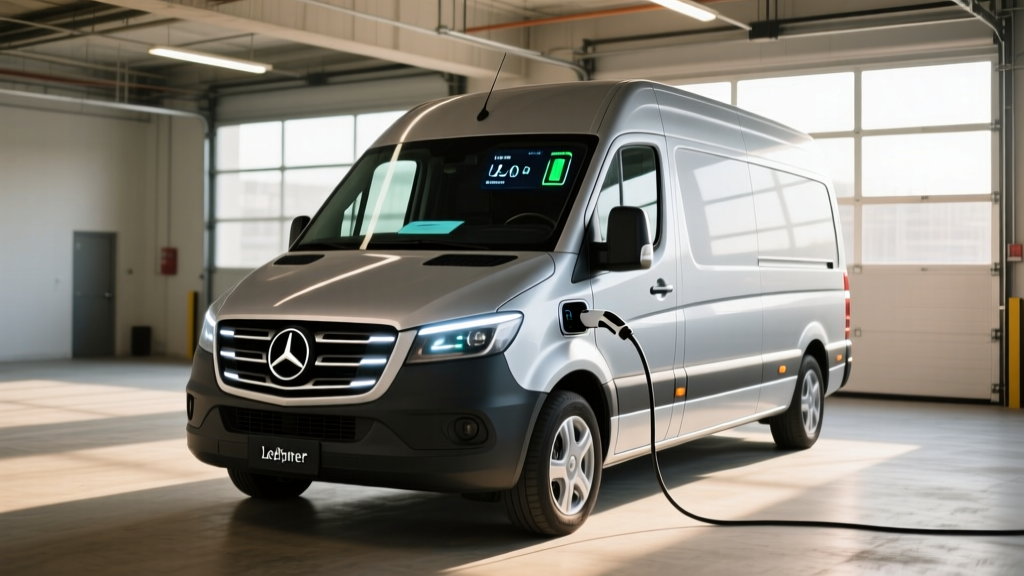
The 2026 Mercedes-Benz eSprinter is a battery-electric commercial van offering an EPA-estimated 205 miles of range (high-roof, 170-inch wheelbase cargo variant) from a 113 kWh usable lithium-ion (NMC) battery pack. It supports DC fast charging up to 115 kW, reaching 10–80% in roughly 42 minutes. Base pricing starts around $74,000 MSRP for the cargo van, though the federal §30D commercial clean vehicle credit (IRC §45W for business use) can offset up to $7,500 for vehicles under 14,000 lbs GVWR. The eSprinter makes the strongest financial sense for last-mile delivery fleets and tradespeople with predictable daily routes under 150 miles and access to depot-level Level 2 charging. For long-haul or rural operators without reliable charging infrastructure, the diesel Sprinter remains the pragmatic choice.
Range, Battery & Efficiency: What the Numbers Actually Mean
The 2026 eSprinter carries a 113 kWh usable battery pack (gross capacity approximately 120 kWh) using nickel-manganese-cobalt (NMC) chemistry. Mercedes-Benz offers this single battery size across cargo, crew, and cutaway configurations. The EPA-rated range depends heavily on body configuration:
| Configuration | Wheelbase | Roof | EPA Est. Range | Efficiency (kWh/100 mi) |
|---|---|---|---|---|
| Cargo Van | 170 in | High | 205 mi | ~55 |
| Cargo Van | 144 in | High | ~190 mi | ~58 |
| Crew Van | 170 in | High | ~185 mi | ~60 |
| Cutaway (cab-chassis) | 170 in | — | ~150 mi | ~72 |
Real-World Range Reality
The EPA 205-mile figure assumes moderate speeds, mild weather, and partial payload. In real-world fleet operations, expect:
- Urban stop-and-go delivery (loaded): 150–175 miles — regenerative braking recovers energy in traffic, but payload weight and frequent HVAC use cut range.
- Highway (65–70 mph, loaded): 130–155 miles — the eSprinter's 5,000+ lb curb weight and tall profile create significant aerodynamic drag at speed.
- Cold weather (below 32°F, loaded): 110–140 miles — battery chemistry slows and cabin/battery heating draws substantial energy. The eSprinter includes a heat pump, which helps but doesn't eliminate cold-weather losses of 25–35%.
Fleet managers should plan routes around a 120–130 mile practical daily radius to maintain a safe reserve buffer, especially in northern climates. Source: fueleconomy.gov EV side-by-side tool.
Charging: Depot Level 2 vs. DC Fast Charging on the Road
Understanding the distinction between kW (power, or charge rate) and kWh (energy, or battery capacity) is critical for planning your charging infrastructure. The eSprinter's 113 kWh battery needs time to refill, and charge speed varies dramatically by level:
| Charging Level | Power (kW) | Time to Full / 10–80% | Miles Added per Hour | Best For |
|---|---|---|---|---|
| Level 1 (120V AC) | ~1.4 kW | ~80+ hours (full) | ~3 mi/hr | Emergency trickle only |
| Level 2 (240V AC, 40A) | 9.6 kW | ~12 hours (full) | ~20 mi/hr | Overnight depot charging |
| Level 2 (240V AC, 48A) | 11.5 kW | ~10 hours (full) | ~24 mi/hr | Recommended depot setup |
| DC Fast (CCS) | Up to 115 kW peak | ~42 min (10–80%) | ~170 mi/hr at peak | Mid-route top-ups |
Charging curve reality: The 115 kW peak rate holds only between roughly 10–40% state of charge (SoC). From 40–80%, the rate tapers to 60–80 kW. Above 80%, it drops further to protect the battery. This means a 10–80% session takes about 42 minutes, but 10–100% would take closer to 65–70 minutes on DC fast charging.
The eSprinter uses the CCS1 connector standard. For fleets planning depot charging, a 48-amp Level 2 station per vehicle (roughly $2,500–$5,000 installed per stall, depending on electrical infrastructure) is the minimum practical setup. Fleet operators with 5+ vehicles should consult a licensed electrician about panel upgrades, switchgear, and potential utility demand charges — these can exceed the cost of the chargers themselves.
Performance & Drivetrain
The eSprinter is rear-wheel drive, powered by a single permanent-magnet synchronous motor on the rear axle:
- Horsepower: 201 hp (150 kW)
- Torque: 295 lb-ft (400 Nm), available from 0 rpm
- 0–60 mph: ~8.5 seconds (unloaded); expect 10–12 seconds at max payload
- Governed top speed: 80 mph
- Max payload capacity: ~2,600 lbs (cargo van, varies by config)
- Cargo volume: Up to 533 cu ft (high-roof, 170-in wheelbase)
The instant torque delivery makes the eSprinter feel responsive in city traffic despite its weight. Regenerative braking offers multiple levels selectable via steering-wheel paddles, including a near-one-pedal driving mode in the strongest setting. The turning circle is generous (45.3 ft for the 170-in wheelbase), which is a consideration for tight urban loading docks.
eSprinter vs. Diesel Sprinter: Total Cost of Ownership
The headline price difference is significant, but operating costs tell a different story over a 5-year fleet lifecycle. Here's a data-driven comparison assuming 15,000 miles/year, $3.80/gallon diesel, and $0.14/kWh commercial electricity (national average):
| Cost Factor | 2026 eSprinter (Electric) | 2026 Sprinter 2500 Diesel |
|---|---|---|
| Base MSRP | ~$74,000 | ~$49,000 |
| Federal tax credit (§45W commercial) | Up to –$7,500 | $0 |
| Effective purchase price | ~$66,500 | ~$49,000 |
| Fuel/energy cost per mile | ~$0.077 (at 55 kWh/100mi, $0.14/kWh) | ~$0.217 (at 17.5 mpg, $3.80/gal) |
| Annual fuel/energy (15k mi) | ~$1,155 | ~$3,257 |
| 5-year fuel/energy total | ~$5,775 | ~$16,285 |
| Estimated maintenance (5 yr) | ~$2,500 | ~$6,500 |
| Depot charging install (per vehicle) | ~$3,500 | $0 |
| 5-year total cost of ownership | ~$78,275 | ~$71,785 |
Key takeaway: The eSprinter still carries a ~$6,500 TCO premium at 5 years/75,000 miles under these assumptions. However, the breakeven point typically arrives around year 7 or ~105,000 miles. Fleets running higher daily mileage, operating in states with commercial EV incentives (such as California's HVIP or New York's NYTVIP), or benefiting from time-of-use electricity rates below $0.10/kWh can reach parity much sooner.
Maintenance savings are substantial: no diesel particulate filter (DPF) regenerations, no DEF fluid, no oil changes, no transmission fluid, and significantly reduced brake wear thanks to regenerative braking. Mercedes-Benz warranties the battery pack for 8 years or 100,000 miles (whichever comes first) against capacity loss below 70% of original. The bumper-to-bumper warranty is 3 years/36,000 miles, with the drivetrain covered for 5 years/75,000 miles.
Tax Credits, Incentives & What Fleet Buyers Actually Qualify For
Commercial EV incentive rules differ from consumer credits. Here's what applies to the eSprinter in 2026:
- IRC §45W Commercial Clean Vehicle Credit: Up to $7,500 for vehicles under 14,000 lbs GVWR (the eSprinter qualifies). This credit applies to the business entity purchasing the vehicle, not the individual. It is non-refundable but can offset tax liability. See IRS.gov §45W guidelines.
- State and local incentives: Vary widely. California, New York, New Jersey, Colorado, and several other states offer additional commercial EV rebates ranging from $2,000 to $15,000+ per vehicle. Check your state energy office or CARB (California Air Resources Board) for current programs.
- Charging infrastructure credits: The §30C Alternative Fuel Vehicle Refueling Property Credit provides up to 30% of charging equipment and installation costs (capped at $100,000 per item for commercial property) in eligible census tracts. This can offset a meaningful portion of depot charging buildout.
- Utility rebates: Many commercial utilities offer make-ready incentives, reduced demand charges, or per-station rebates for fleet EVSE installation. Contact your local utility's commercial EV program.
Always consult a tax professional for your specific business situation. Credit eligibility depends on tax liability, vehicle sourcing requirements, and placement-in-service dates that change annually.
Common Misconceptions About the Electric Sprinter Van
| Myth | Fact |
|---|---|
| "205 miles of range isn't enough for any real business." | The average last-mile delivery van drives 70–120 miles per day (Bureau of Transportation Statistics data). The eSprinter covers the vast majority of urban/suburban routes with range to spare, provided you charge overnight at the depot. |
| "Electric vans can't handle cold weather." | Cold weather reduces range by 25–35%, which is real and must be planned for. But the eSprinter's heat pump and battery thermal management system mitigate this. Fleets in Minnesota and Norway operate electric vans year-round by right-sizing routes for winter. |
| "Charging takes too long for a commercial vehicle." | Depot Level 2 charging overnight (10–12 hours) fully replenishes the battery while the van is parked. For most fleet operations, the vehicle charges while drivers are off-shift. DC fast charging is a backup, not the primary strategy. |
| "The battery will need replacing and cost a fortune." | Mercedes-Benz warranties the battery to 70% capacity retention for 8 years/100,000 miles. NMC packs in commercial use with proper thermal management typically lose 2–3% capacity per year. A full out-of-warranty replacement would cost $20,000–$30,000 (estimated), but most fleets will cycle the vehicle before this becomes relevant. |
| "It can't tow or carry a real payload." | The eSprinter offers up to ~2,600 lbs of payload capacity in the cargo van configuration. Towing is limited (not currently rated for trailer towing in the US), which is a genuine limitation for certain trades. |
Who Should Buy the eSprinter — and Who Shouldn't
Decision Framework: Is the eSprinter Right for Your Operation?
Choose the eSprinter if:
- Your daily routes are under 130 miles with predictable stops
- You have (or can install) depot Level 2 charging at your base of operations
- You operate primarily in urban or suburban environments where regenerative braking maximizes efficiency
- You plan to keep the vehicle 7+ years (reaching TCO breakeven)
- Your state offers additional commercial EV incentives beyond the federal credit
- Reducing fleet emissions supports corporate sustainability goals or client contract requirements
- You want to eliminate diesel maintenance costs (DPF, DEF, oil, fuel filters)
Stick with the diesel Sprinter if:
- Your routes regularly exceed 180 miles per day or are highly variable
- You operate in rural areas with no DC fast charging access along routes
- You need trailer towing capability
- You operate in extreme cold (sustained below 0°F) where range loss becomes operationally limiting
- You replace vehicles every 3–4 years (the TCO premium won't be recovered)
- Your depot lacks the electrical capacity for Level 2 charging and a panel upgrade is cost-prohibitive
First-Time EV Fleet Buyer Essentials
If the eSprinter is your operation's first electric vehicle, plan for these ownership realities that don't appear on a spec sheet:
- Electrical infrastructure lead time: Commercial EVSE installation can take 3–6 months from permit to energization, especially if utility transformer upgrades are needed. Start this process before you order the van.
- Driver training: Regenerative braking behavior, range-maximizing driving techniques, and charge planning require a brief training investment. Most fleet drivers adapt within a week.
- Telematics and charge management: Mercedes-Benz PRO Connect services include remote SoC monitoring, preconditioning scheduling, and charge-session logging. Use these — preconditioning the battery and cabin while still plugged in preserves range.
- Insurance: Commercial EV insurance premiums run 10–20% higher than diesel equivalents due to repair cost assumptions and higher vehicle MSRP. Get quotes before committing.
- Resale value uncertainty: Commercial EV residual values are still establishing. Plan for higher depreciation risk in the first 3–5 years compared to the well-understood diesel Sprinter resale market.
Frequently Asked Questions
Can the eSprinter be charged at public charging stations?
Yes, via the CCS1 connector at any DC fast charging station. However, the eSprinter's peak 115 kW charge rate is modest compared to passenger EVs (which now reach 250–350 kW). Expect ~42 minutes for a 10–80% session. Public charging is best used as a supplement, not a primary strategy — depot Level 2 charging is far more economical at roughly $0.14/kWh vs. $0.35–$0.50/kWh at public DC stations.
What is the eSprinter's cargo capacity compared to the diesel Sprinter?
Cargo volume is nearly identical: up to 533 cubic feet in the high-roof 170-inch wheelbase configuration. The battery pack is mounted under the floor, so there is no intrusion into the cargo area. Payload capacity is slightly reduced (~2,600 lbs vs. ~3,000+ lbs for the diesel) due to the battery's weight.
Does the eSprinter qualify for the $7,500 federal tax credit?
For business/commercial purchasers, the eSprinter qualifies for the IRC §45W Commercial Clean Vehicle Credit of up to $7,500 (vehicles under 14,000 lbs GVWR). This is separate from the consumer §30D credit. Eligibility depends on your business's tax liability and the vehicle meeting battery sourcing requirements. Consult IRS guidance and a tax professional.
How long does the eSprinter battery last before replacement?
Mercedes-Benz warranties the battery for 8 years/100,000 miles at 70% capacity retention. Real-world degradation for NMC chemistry with active thermal management typically runs 2–3% per year in commercial use. At that rate, the battery should retain roughly 80–85% capacity at 100,000 miles. Full replacement (if needed out of warranty) is estimated at $20,000–$30,000, though module-level repair may be possible at lower cost.
Is there an extended-range eSprinter planned?
Mercedes-Benz has not announced a larger battery option for the US-market eSprinter as of the 2026 model year. The European market has received some configurations with different battery options, but the US currently receives the 113 kWh pack only. Monitor Mercedes-Benz commercial vehicle announcements for updates.