Quick Verdict: The Mercedes EQS in 2026
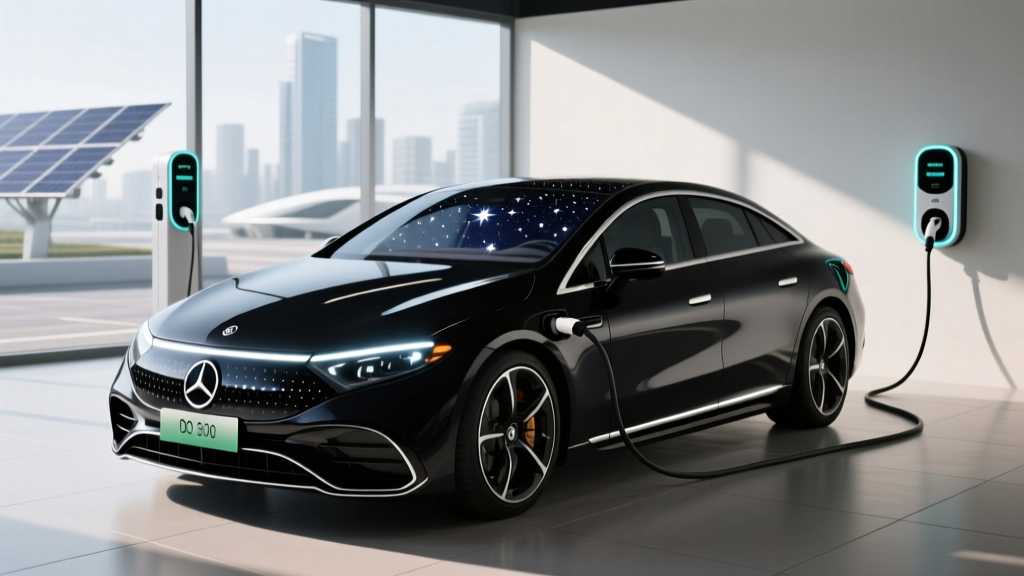
The Mercedes-Benz EQS sedan remains the benchmark for electric luxury, pairing a usable 108.4 kWh battery with class-leading aerodynamics (a 0.20 Cd drag coefficient) to deliver an EPA-estimated 390 miles of range in the EQS 450+ trim. For 2026, Mercedes has refined the EQS lineup with updated MBUX software, standard rear-axle steering, and a revised pricing structure that keeps it competitive against the Tesla Model S, BMW i7, and Lucid Air. But at a starting MSRP above $105,000, the EQS is a deliberate purchase — one that rewards buyers who prioritize ride comfort, cabin isolation, and long-distance cruising over outright performance or value.
| Spec | EQS 450+ Sedan | EQS 580 4MATIC Sedan | AMG EQS |
|---|---|---|---|
| EPA Range | 390 mi | 371 mi | 330 mi |
| Battery (usable) | 108.4 kWh, NMC | 108.4 kWh, NMC | 108.4 kWh, NMC |
| Drivetrain | RWD (single motor) | AWD (dual motor) | AWD (dual motor) |
| Horsepower | 355 hp | 536 hp | 649 hp (751 w/ RACE START) |
| 0-60 mph | 5.9 sec | 4.1 sec | 3.4 sec |
| Max DC Charge Rate | 200 kW | 200 kW | 200 kW |
| 10-80% DC Time | ~31 min | ~31 min | ~31 min |
| Level 2 Rate | 9.6 kW (~30 mi/hr) | 9.6 kW (~30 mi/hr) | 9.6 kW (~30 mi/hr) |
| MPGe (combined) | 97 MPGe | 92 MPGe | 81 MPGe |
| Base MSRP | $105,550 | $125,950 | $149,950 |
Range and Efficiency: EPA Numbers vs. Real-World Miles
EPA Estimate: 390 miles (EQS 450+)
Real-World Expectation: 310–340 miles on the highway at 70-75 mph; 350–370 miles in mixed city/suburban driving. In cold weather (below 32°F), expect a 15–25% reduction, dropping highway range to roughly 250–280 miles.
The EQS 450+ achieves its 390-mile EPA figure thanks to Mercedes' obsessive aero work and a heat pump that comes standard on all 2026 trims. Efficiency lands at roughly 35 kWh per 100 miles — competitive with the Lucid Air Pure (37 kWh/100mi) and significantly better than the BMW i7 eDrive50 (39 kWh/100mi), per fueleconomy.gov.
The dual-motor EQS 580 sacrifices about 19 miles of EPA range for all-wheel drive and 536 hp, landing at 371 miles. The AMG variant drops further to 330 miles under hard-driving assumptions. In our experience, the EQS 450+ is the sweet spot for road-trippers: single-motor efficiency, adequate power for merging, and a range buffer that reduces charging stops on 400-mile drives to a single 30-minute session.
Cold-weather performance is where the EQS shows its German engineering. The standard heat pump and battery preconditioning (activated when you navigate to a DC fast charger) mitigate range loss better than many competitors. Still, buyers in northern climates should budget for 260–280 miles of usable winter highway range and plan charging accordingly.
Charging Speed: DC Fast, Level 2, and the Curve Reality
| Charging Level | Power / Rate | Speed (Approx.) | Use Case |
|---|---|---|---|
| Level 1 (120V) | 1.4 kW | ~4 mi/hr | Emergency / trickle |
| Level 2 (240V, 40A) | 9.6 kW | ~30 mi/hr | Home overnight charging |
| DC Fast Charge | 200 kW peak | 10-80% in ~31 min | Road trips, public stations |
The EQS peaks at 200 kW on DC fast chargers — a figure that trails the Hyundai Ioniq 5's 240 kW and the Porsche Taycan's 270 kW, but remains adequate for the EQS's large battery. The critical metric is the 10-80% charge time of approximately 31 minutes at a 350 kW-capable station, which translates to roughly 220 miles added in a half-hour stop.
Here's what the spec sheet doesn't tell you: the EQS charge curve is relatively flat between 20% and 60% SoC, sustaining 170-190 kW, then tapers progressively above 70%. Charging from 80% to 100% on DC can take an additional 25-30 minutes — so unless you absolutely need a full battery, plan to unplug at 80% and keep moving. This is standard behavior for NMC chemistry at this capacity, but it's worth internalizing for trip planning.
At home on a Level 2 Wallbox or ChargePoint unit wired to a 50-amp circuit (delivering 40 amps continuous), the EQS adds roughly 30 miles per hour of charging. A full 10-100% charge takes about 11.5 hours — easily accomplished overnight. Mercedes includes a portable Level 2 charging cord with a NACS connector for 2026, aligning with the Tesla Supercharger network adoption that now covers the majority of US DC fast-charging infrastructure.
Performance and Driving Dynamics
The EQS 450+ makes 355 hp from its rear-mounted permanent-magnet motor, reaching 60 mph in 5.9 seconds. That's leisurely by EV standards, but the EQS was never engineered for drag-strip bragging rights. The torque delivery is immediate and linear, and the single-motor layout keeps weight over the rear axle for confident traction.
Step up to the EQS 580 4MATIC and you get 536 hp, dual motors, and a 4.1-second 0-60 time — genuinely quick for a 5,800-pound sedan. The AMG EQS pushes to 649 hp (751 hp with RACE START launch control engaged) and a 3.4-second sprint, though at the cost of roughly 60 miles of EPA range and a firmer ride.
All 2026 EQS models include standard rear-axle steering (up to 10 degrees), which shrinks the turning circle to a compact-car-like 35.4 feet — a genuine daily usability win in parking structures and tight urban streets. Air suspension with adaptive damping is standard across the lineup, delivering the pillowy ride isolation that defines the S-Class legacy. Road noise suppression is exceptional; at 80 mph, cabin noise levels rival a library.
Interior, Technology, and the Hyperscreen Question
The EQS cabin is a showcase of Mercedes' digital ambition. The available 56-inch MBUX Hyperscreen spans the entire dashboard width, integrating a 17.7-inch central OLED display, a 12.3-inch passenger screen, and a 12.3-inch instrument cluster behind a single curved glass panel. For 2026, MBUX has been updated with faster processing, improved voice recognition, and native integration with major charging networks including Tesla Superchargers (via the NACS adapter), Electrify America, and EVgo.
Standard equipment includes:
- Heated and ventilated front seats with massage
- Burmester 3D surround sound (15 speakers)
- Wireless Apple CarPlay and Android Auto
- 64-color ambient lighting
- Power rear-axle steering
- MBUX Drive Pilot (SAE Level 2 driver assistance) with adaptive cruise, lane centering, and automatic lane changes
Driver Assist Clarification: MBUX Drive Pilot and Mercedes' Driver Assistance Package are SAE Level 2 systems. The driver must remain attentive, keep hands available, and supervise at all times. This is not autonomous driving. Mercedes has a separate SAE Level 3 system (Drive Pilot) available in limited markets under strict conditions (pre-mapped highways, under 40 mph, clear weather) — but it is not broadly available in the US as of 2026.
The Hyperscreen is polarizing. Some owners love the visual drama and the passenger entertainment screen; others find it distracting and prefer the simpler dual-screen setup in the EQS 450+ base trim (which uses a 12.8-inch central screen and 12.3-inch cluster). We recommend testing both configurations during a dealership visit before committing — the Hyperscreen adds roughly $8,000 to the build sheet and is non-refundable once ordered.
Cargo space measures 22 cubic feet in the trunk (the EQS uses a traditional sedan trunklid, not a hatchback), which is generous for the class but less versatile than the Tesla Model S's liftback design. Rear-seat legroom is 41.7 inches — S-Class generous — and the flat floor (no transmission tunnel) makes the middle seat usable for a fifth passenger on shorter trips.
Pricing, Trims, and Federal Tax Credit Eligibility
| Trim | Base MSRP | As-Tested (Typical) | §30D Federal Credit Eligible? |
|---|---|---|---|
| EQS 450+ Sedan | $105,550 | $112,000–$118,000 | No — exceeds MSRP cap |
| EQS 580 4MATIC | $125,950 | $135,000–$145,000 | No — exceeds MSRP cap |
| AMG EQS Sedan | $149,950 | $155,000–$168,000 | No — exceeds MSRP cap |
Under current IRS §30D rules (irs.gov), the federal EV tax credit is capped at $7,500 for vehicles with an MSRP at or below $55,000 for sedans. Every EQS trim exceeds this threshold by a wide margin, making none of the 2026 EQS models eligible for the federal purchase credit.
Additionally, §30D imposes buyer income limits ($150,000 single / $300,000 joint modified AGI) and battery critical-mineral and component sourcing requirements that further restrict eligibility for imported luxury EVs. The EQS is assembled in Sindelfingen, Germany, and its battery supply chain does not currently meet the domestic-content thresholds.
Some buyers may qualify for state or utility-level incentives — California's CVRP, Colorado's state credit, and various utility time-of-use rebates can offset $1,000–$5,000 depending on jurisdiction. Check your state energy office and local utility for current programs, but do not factor the federal credit into your EQS purchase budget.
Warranty and Long-Term Battery Outlook
Mercedes backs the 2026 EQS with:
- New Vehicle Limited Warranty: 4 years / 50,000 miles
- High-Voltage Battery Warranty: 8 years / 100,000 miles (whichever comes first), covering capacity loss below 70% of original
- Drive Unit Warranty: 8 years / 100,000 miles
The 108.4 kWh NMC (nickel manganese cobalt) battery pack is liquid-cooled and thermally managed. Based on data from earlier EQS model years and comparable NMC packs from CATL and LG Energy Solution, degradation of 8-12% over 100,000 miles is typical — meaning most owners will retain 88-92% of original capacity within the warranty period. Mercedes' 70% threshold is conservative and unlikely to be triggered under normal use.
For longevity, we recommend keeping daily charge limits at 80% (configurable in MBUX) and using DC fast charging primarily for road trips rather than daily top-ups. NMC chemistry ages faster when held at 100% SoC for extended periods or repeatedly fast-charged to full — standard lithium-ion care that applies across the EV market.
Who Should Buy the Mercedes EQS — And Who Shouldn't
Choose the EQS 450+ if:
- You want maximum range (390 mi EPA) and efficiency in a luxury sedan
- Ride comfort and cabin quiet are your top priorities over sportiness
- You regularly drive 250+ miles and want single-charge road-trip capability
- You value S-Class-level rear-seat space and amenities
Look elsewhere if:
- You need a federal tax credit — the EQS doesn't qualify (consider a Genesis Electrified G80 or BMW i5 for credit-eligible luxury)
- You want hatchback cargo versatility — the Tesla Model S offers a liftback and frunk
- You prioritize driving dynamics over comfort — the Porsche Taycan or BMW i7 M70 are sharper
- Budget is a primary concern — the Lucid Air Pure delivers 419 miles of range starting at $69,900
The EQS is best understood as the electric successor to the S-Class: a technology flagship for buyers who measure value in refinement, not lap times or price-per-mile. It excels as a long-distance commuter and cross-country cruiser, particularly for owners with home Level 2 charging who can wake to a full battery every morning.
Mercedes EQS vs. Key Competitors
| Spec | Mercedes EQS 450+ | Tesla Model S LR | BMW i7 eDrive50 | Lucid Air Pure |
|---|---|---|---|---|
| EPA Range | 390 mi | 402 mi | 321 mi | 419 mi |
| Battery | 108.4 kWh NMC | ~100 kWh NMC | 101.7 kWh NMC | 88 kWh NMC |
| 0-60 mph | 5.9 sec | 3.1 sec | 5.5 sec | 5.0 sec |
| Max DC Charge | 200 kW | 250 kW | 195 kW | 220 kW |
| Base MSRP | $105,550 | $79,990 | $105,700 | $69,900 |
| §30D Credit | No | Partial* | No | Partial* |
*Credit eligibility depends on battery sourcing, buyer income, and MSRP compliance. Verify on irs.gov before purchasing.
The Model S undercuts the EQS on price and performance but can't match its ride quality or cabin materials. The BMW i7 is a closer luxury rival but sacrifices nearly 70 miles of range. The Lucid Air Pure is the efficiency and range champion at a dramatically lower price, though its service network and brand cachet trail Mercedes significantly. Your priority hierarchy — range, luxury, price, or performance — will determine the winner.
Pros
- Class-leading 390-mile EPA range (450+)
- Exceptional ride quality and cabin isolation
- Standard heat pump and battery preconditioning
- Rear-axle steering for tight maneuverability
- Strong 8-year / 100,000-mile battery warranty
- NACS connector for Tesla Supercharger access
Cons
- No federal tax credit eligibility (MSRP cap)
- 200 kW peak DC charge rate trails competitors
- Hyperscreen adds $8K and can be distracting
- Sedan trunk (not hatchback) limits cargo versatility
- High starting price with expensive option packages
- No frunk (front trunk) storage
Frequently Asked Questions
What is the real-world range of the Mercedes EQS?
The EQS 450+ delivers an EPA-estimated 390 miles, but expect 310–340 miles in sustained highway driving at 70-75 mph, and 250–280 miles in cold weather below 32°F. City and suburban driving returns closer to the EPA figure due to regenerative braking recovery.
How fast does the EQS charge at home and on DC fast chargers?
On DC fast chargers, the EQS peaks at 200 kW and charges from 10-80% in approximately 31 minutes. At home on a Level 2 (240V, 9.6 kW) charger, it adds about 30 miles per hour, with a full 10-100% charge taking roughly 11.5 hours overnight.
Does the 2026 Mercedes EQS qualify for the $7,500 federal EV tax credit?
No. Under IRS §30D rules, the federal EV tax credit for sedans is limited to vehicles with an MSRP of $55,000 or less. All EQS trims start well above $105,000, disqualifying them from the credit regardless of buyer income or battery sourcing.
Is the Mercedes EQS worth buying over the Tesla Model S or Lucid Air?
The EQS wins on ride comfort, cabin luxury, and brand prestige. The Model S wins on performance, price, and Supercharger network convenience. The Lucid Air wins on range and value. If luxury isolation and Mercedes ownership experience are your priorities, the EQS justifies its premium. If efficiency-per-dollar matters most, the Lucid Air Pure is the stronger choice.
What battery chemistry does the EQS use and how long will it last?
The EQS uses an NMC (nickel manganese cobalt) lithium-ion battery with 108.4 kWh of usable capacity. Mercedes warranties it for 8 years / 100,000 miles against capacity loss below 70%. Real-world degradation data from NMC packs suggests 8-12% loss over 100,000 miles with normal charging habits, meaning most owners will retain 88-92% capacity within the warranty window.
Can the EQS use Tesla Superchargers?
Yes. The 2026 EQS comes with a NACS (North American Charging Standard) connector, providing native access to Tesla's Supercharger network — the largest DC fast-charging network in the US with over 25,000 stalls. Mercedes' MBUX navigation integrates Supercharger locations, availability, and preconditioning automatically.