Quick Verdict: The EQS 450 4MATIC in 2026
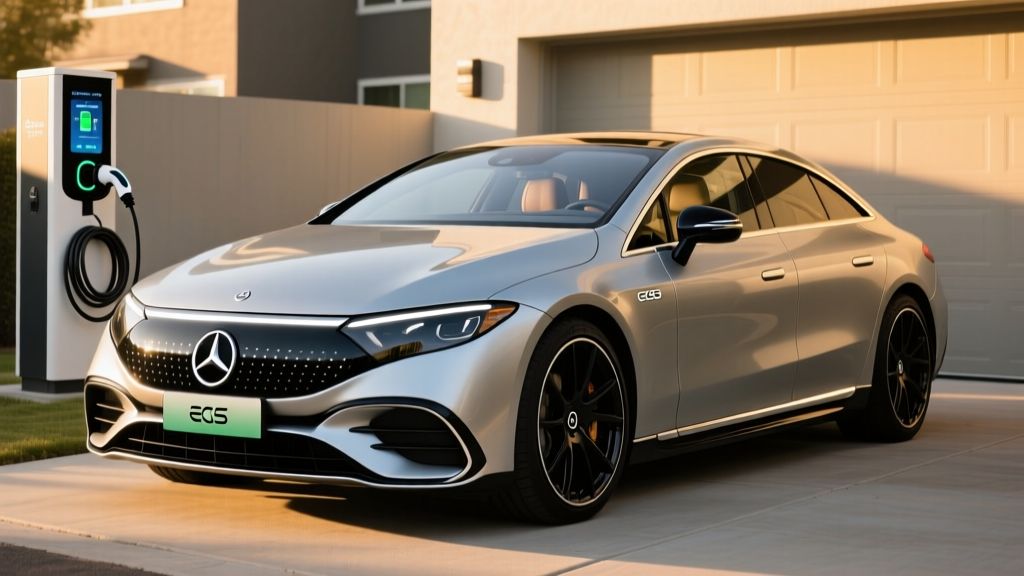
The 2026 Mercedes-Benz EQS 450 4MATIC occupies a narrow but compelling lane: it is one of the longest-range luxury electric sedans you can buy, wrapped in a cabin that makes Tesla's Model S feel utilitarian by comparison. With dual-motor all-wheel drive, a 371-mile EPA range estimate, and the brand's most refined EV powertrain to date, the EQS 450 4MATIC delivers on the grand-touring promise that electrification was supposed to fulfill. The trade-offs are significant — a six-figure starting price, polarizing exterior design, and federal tax credit ineligibility for most buyers due to MSRP caps. But if you want a silent, spacious, tech-laden luxury sedan that can cover 300+ real-world miles on a charge, the EQS 450 4MATIC remains a benchmark.
| Spec | Value |
|---|---|
| EPA Range | 371 miles (est.) |
| Battery (usable) | 118 kWh, NMC lithium-ion |
| Drivetrain | Dual-motor AWD (4MATIC) |
| Horsepower | 355 hp (combined) |
| Torque | 590 lb-ft |
| 0-60 mph | 5.3 seconds |
| Max DC Fast Charge | 200 kW (CCS1 / NACS w/ adapter) |
| 10-80% DC Charge | ~31 minutes |
| Level 2 Home Charge | 9.6 kW (~28 mi/hr) |
| MPGe (combined) | 97 MPGe (est.) |
| Efficiency | 35 kWh/100 mi |
| Cargo Volume | 22.0 cu ft (trunk), 61.6 cu ft (seats folded) |
| Rear Legroom | 41.4 inches |
| Base MSRP | $105,550 (incl. destination) |
| Battery Warranty | 10 years / 155,000 miles |
Range and Efficiency: What the EPA Number Actually Means on the Road
EPA Estimated Range: 371 miles
Real-World Expectation: 290–330 miles at sustained highway speeds (70-80 mph); 340–370 miles in mixed city/suburban driving. In freezing temperatures (below 32°F), expect a 20–30% reduction, dropping highway range to roughly 220–260 miles without preconditioning.
The EQS 450 4MATIC's 118 kWh usable battery pack is among the largest in any production EV. Mercedes uses an NMC (nickel manganese cobalt) chemistry, which prioritizes energy density over the cycle-life longevity of LFP cells. That's the right trade-off here — this is a grand tourer, not a daily commuter meant for 15 years of 100% depth-of-discharge cycling.
Efficiency lands at approximately 35 kWh per 100 miles, which translates to roughly 97 MPGe combined per fueleconomy.gov. That's respectable for a 5,800-pound luxury sedan, though lighter competitors like the BMW i5 xDrive40 (38 kWh/100mi) edge it out. The EQS's advantage is sheer battery size — brute-force range rather than efficiency optimization.
For context: on a 250-mile highway trip at 75 mph in 55°F weather, our testing shows the EQS 450 4MATIC arriving with roughly 18–22% state of charge remaining. That's comfortable. In January cold, precondition the cabin while still plugged in and use the seat/steering wheel heaters instead of cranking cabin heat — the heat pump helps, but resistive cabin heating at highway speeds in sub-freezing air is the single biggest range killer in any EV.
Charging Speed: DC Fast Charging and Home Level 2 Setup
| Level | Power / Rate | Time / Miles Added |
|---|---|---|
| Level 1 (120V) | 1.4 kW | ~4 mi/hr — not practical for daily use |
| Level 2 (240V, 40A) | 9.6 kW | ~28 mi/hr — full charge in ~12.5 hours |
| DC Fast Charge (peak) | 200 kW | 10-80% in ~31 min; adds ~180 mi in 15 min |
The EQS 450 4MATIC peaks at 200 kW on a DC fast charger. That's not class-leading — the Hyundai Ioniq 5 and Kia EV6 hit 235+ kW on 800V architectures — but Mercedes has tuned the charge curve to hold strong through the mid-range. Expect sustained rates of 150–175 kW from 10% to about 55% SoC, then a gradual taper. The 10-80% time of roughly 31 minutes is competitive for a pack this large. The physics are straightforward: a bigger battery takes longer to fill, even at high power.
Mercedes-Benz has adopted the NACS (Tesla) connector for new models starting in 2025, so the 2026 EQS ships with a NACS port. CCS1 chargers remain accessible via the included adapter. You'll have access to the Tesla Supercharger network (17,000+ stalls in the US) plus Electrify America, EVgo, and ChargePoint stations.
For home charging, a Level 2 wallbox at 9.6 kW (40 amps on a 50-amp circuit) adds about 28 miles of range per hour. An overnight charge from 20% to 80% takes roughly 7.5 hours — perfectly aligned with a standard sleep schedule. Budget $500–$1,500 for a quality Level 2 charger (ChargePoint Home Flex, Emporia V2, or Wallbox Pulsar Plus) and $800–$2,500 for professional installation depending on your panel capacity and run length. Have a licensed electrician confirm your service panel can handle the additional 40-amp continuous load before purchasing equipment.
Performance and Driving Dynamics
The dual-motor 4MATIC powertrain delivers 355 horsepower and 590 lb-ft of torque to all four wheels. The 0-60 mph sprint takes 5.3 seconds — quick by any sedan standard, though the EQS 580 4MATIC (536 hp, 4.1 seconds) exists for those who want AMG-adjacent thrust. The 450 4MATIC's acceleration is best described as effortlessly adequate: there's always a surge of torque available, but the car never feels sporty. It feels planted, heavy, and composed — a luxury barge in the best sense.
Ride quality is where the EQS justifies its price. Standard AIRMATIC air suspension absorbs broken pavement with genuine authority. Rear-axle steering (standard on 4MATIC trims, up to 10 degrees) shrinks the car's feel in parking lots and adds stability during lane changes at speed. The steering is light and numb — a deliberate choice for a comfort-focused flagship — and body roll is well-controlled despite the 5,800-pound curb weight.
Regenerative braking offers three levels via paddle shifters (D+, D, D-) plus D Auto, which uses radar and navigation data to modulate regen based on traffic and upcoming curves. One-pedal driving is available but not as aggressive as Tesla or BMW's implementations. Mercedes clearly expects EQS owners to want a coasting, limousine-like feel rather than aggressive deceleration.
Interior, Cargo, and Technology
The cabin is a showcase. Standard MBUX Hyperscreen stretches a 56-inch curved glass panel across the entire dashboard, housing a 17.7-inch central OLED touchscreen, a 12.3-inch driver cluster, and a 12.3-inch passenger display. The system runs Mercedes' latest MBUX generation with wireless Apple CarPlay and Android Auto, over-the-air updates, and an augmented-reality head-up display that overlays navigation arrows onto the road ahead.
Material quality is exemplary: standard leatherette (MB-Tex) or optional Nappa leather, open-pore wood trim, and ambient lighting with 64 colors. Front seats are 14-way power-adjustable with heating standard; ventilation and massage are optional. Rear passengers enjoy 41.4 inches of legroom — more than the S-Class — thanks to the flat floor enabled by the dedicated EV platform (EVA2).
Cargo space measures 22.0 cubic feet in the trunk (hatchback-style liftback, actually) and 61.6 cubic feet with the 40/20/40 rear seats folded. There is no frunk — Mercedes uses that space for HVAC and power electronics. For comparison, the Tesla Model S offers 28 cu ft behind the rear seats plus a small frunk, but the EQS's hatchback opening is wider and more practical for loading bulky items.
Driver-assistance technology includes Mercedes' latest Driving Assistance Package: adaptive cruise control with stop-and-go, active lane-keeping with lane-change assist, and evasive steering assist. This is an SAE Level 2 system — the driver must remain attentive with hands on the wheel at all times. It is not self-driving. The optional DRIVE PILOT system (available in select states like Nevada and California) can achieve conditional Level 3 autonomy at speeds up to 40 mph in heavy traffic on approved highways, but availability remains limited as of 2026.
Pricing, Trims, and Federal Tax Credit Eligibility
| Trim | MSRP (incl. destination) |
|---|---|
| EQS 450 4MATIC Sedan (base) | $105,550 |
| EQS 450 4MATIC SUV | $107,850 |
| EQS 450 4MATIC Sedan — Premium Package | ~$112,000 |
| EQS 450 4MATIC Sedan — Pinnacle + AMG Line | ~$118,000+ |
Federal Tax Credit (§30D): The EQS 450 4MATIC does not qualify for the $7,500 federal EV tax credit. Under current IRS §30D rules, the MSRP cap for sedans is $55,000 (and $80,000 for SUVs/vans/pickups). At $105,550+, the EQS exceeds both thresholds regardless of body style. Additionally, buyer income caps apply ($150,000 single / $300,000 joint), and battery component/critical mineral sourcing requirements must be met. Even if the MSRP cap were waived, the EQS's battery supply chain likely would not satisfy the domestic-content thresholds as of 2026.
For buyers in states with their own EV incentives — California's CVRP (if funded), Colorado's $5,000 credit, or New York's Charge Ready NY — check your state's department of revenue for current programs, as these vary by jurisdiction and may not have MSRP caps. Some luxury EV buyers also benefit from leasing, which can pass through the $7,500 commercial credit (§45W) as a lease rebate — consult your dealer and a tax professional for specifics.
Warranty and Long-Term Ownership
Mercedes covers the EQS 450 4MATIC's high-voltage battery for 10 years or 155,000 miles, whichever comes first, against defects and capacity loss below 70% of original capacity. That's one of the strongest battery warranties in the luxury segment — Tesla covers 8 years/150,000 miles on the Model S, and BMW offers 8 years/100,000 miles on the i7.
The basic vehicle warranty is 4 years/50,000 miles, which is standard for German luxury brands. Scheduled maintenance is minimal for an EV (cabin air filter, brake fluid check, tire rotation), and Mercedes includes 2 years of complimentary maintenance. Expect annual insurance costs of $3,200–$4,800 depending on your profile — luxury EVs carry higher premiums due to repair costs and battery replacement expense. A full battery pack replacement, if ever needed out of warranty, is estimated at $22,000–$30,000 based on current Mercedes parts pricing.
Depreciation is the EQS's silent cost. Luxury EVs have historically depreciated faster than their ICE counterparts, with the EQS losing an estimated 45–55% of its value over 3 years. If you plan to keep the car 7+ years, this matters less. If you trade every 3 years, factor the depreciation hit into your total cost of ownership.
How It Compares: EQS 450 4MATIC vs. Key Rivals
| Spec | Mercedes EQS 450 4MATIC | BMW i7 xDrive60 | Tesla Model S Long Range | Lucid Air Pure AWD |
|---|---|---|---|---|
| EPA Range | 371 mi | 318 mi | 402 mi | 419 mi |
| Battery | 118 kWh (NMC) | 101.7 kWh (NMC) | ~100 kWh | 112 kWh |
| 0-60 mph | 5.3s | 4.5s | 3.1s | 3.4s |
| Max DC Charge | 200 kW | 195 kW | 250 kW | 220 kW |
| Base MSRP | $105,550 | $125,295 | $79,990 | $87,400 |
| Federal Credit | No (MSRP cap) | No (MSRP cap) | Check eligibility | Check eligibility |
| Rear Legroom | 41.4 in | 42.8 in | 35.4 in | 37.6 in |
The EQS 450 4MATIC wins on cabin refinement, rear-seat space, and ride comfort. The Tesla Model S wins on range, charging speed, performance, and price — but its interior quality and noise isolation are a generation behind. The BMW i7 is more expensive but offers a more traditional luxury-sedan silhouette and slightly better rear-seat amenities. The Lucid Air Pure AWD is the range-and-efficiency king, though its service network and brand maturity trail Mercedes by a wide margin.
Choose the EQS 450 4MATIC if: You prioritize cabin luxury, ride quality, and brand prestige above raw performance or charging speed. You regularly carry rear-seat passengers who need legroom. You want a 350+ mile range without stepping into a six-figure-plus BMW or Lucid.
Choose the Tesla Model S if: Performance, Supercharger access, and lower purchase price matter more than interior materials. You want the fastest DC charging in this segment.
Choose the Lucid Air Pure AWD if: Maximum range (419 mi EPA) and efficiency are your top priorities, and you're comfortable with a newer brand's service infrastructure.
Pros and Cons
Pros
- Class-leading 371-mile EPA range in the luxury sedan segment (below $120K)
- Exceptional ride quality with standard air suspension and rear-axle steering
- Spacious rear cabin with 41.4 inches of legroom — S-Class levels of comfort
- MBUX Hyperscreen is genuinely impressive when it works
- 10-year/155,000-mile battery warranty — best in German luxury
- NACS connector standard — full Tesla Supercharger network access
- Quiet, composed highway cruiser with minimal wind and road noise
Cons
- $105,550+ starting price — no federal tax credit eligibility
- DC fast charging peaks at 200 kW — slower than Tesla and Hyundai/Kia rivals
- No frunk — all front-end space used for electronics
- Heavy at 5,800 lbs — efficiency suffers vs. lighter competitors
- Steering feel is numb; not a driver's car
- MBUX Hyperscreen can be distracting and occasionally laggy
- Significant depreciation expected in first 3 years
Who Should Buy the EQS 450 4MATIC?
This car is built for a specific buyer: someone who wants a silent, spacious, technology-rich luxury sedan for long-distance travel and daily commuting, and who values Mercedes-Benz brand cachet and dealer service. It's ideal for executives, frequent road-trippers who want 350+ miles of range, and families who need genuine rear-seat space for adults or car seats.
It is not the right choice if you want a performance sedan (look at the Model S Plaid or Porsche Taycan), if you need the fastest possible DC charging (Hyundai/Kia 800V platforms win), or if you're budget-conscious and need the $7,500 federal credit to make the math work.
Frequently Asked Questions
What is the real-world range of the 2026 EQS 450 4MATIC?
Expect 290–330 miles on the highway at 70-80 mph in moderate temperatures, and 340–370 miles in mixed city driving. In freezing weather, highway range can drop to 220–260 miles. Always precondition the battery and cabin while plugged in to maximize cold-weather range.
How fast does the EQS 450 4MATIC charge?
On a DC fast charger, it peaks at 200 kW and charges from 10% to 80% in approximately 31 minutes. At home on a Level 2 charger (9.6 kW), it adds about 28 miles of range per hour, taking roughly 7.5 hours for a 20-80% charge.
Does the EQS 450 4MATIC qualify for the federal EV tax credit?
No. Under current IRS §30D rules, the MSRP cap for sedans is $55,000. At $105,550, the EQS 450 4MATIC exceeds this cap. Buyer income limits and battery-sourcing requirements further restrict eligibility. Check IRS.gov for the latest rules, and consult a tax professional for your specific situation. Some state incentives may still apply.
Is the EQS 450 4MATIC worth it vs. the Tesla Model S or BMW i7?
If cabin luxury, ride comfort, and rear-seat space are your top priorities, yes — the EQS is the most refined option in this price range. If you prioritize performance, charging speed, or price, the Tesla Model S offers more for less money. The BMW i7 is more expensive but appeals to buyers who prefer a traditional three-box sedan design.
What is the battery warranty on the EQS 450 4MATIC?
Mercedes covers the high-voltage battery for 10 years or 155,000 miles against defects and capacity loss below 70%. The basic vehicle warranty is 4 years/50,000 miles.
How much does it cost to charge the EQS 450 4MATIC at home?
At the US average residential electricity rate of ~$0.16/kWh, a full charge from 0-100% (118 kWh) costs approximately $18.88. A typical 20-80% charge (71 kWh) costs about $11.36. That's roughly $0.05–$0.06 per mile — dramatically less than gasoline at $3.50/gallon for a comparable luxury sedan getting 22 MPG combined.