Why Kia EV9 Sales Are Accelerating in 2026
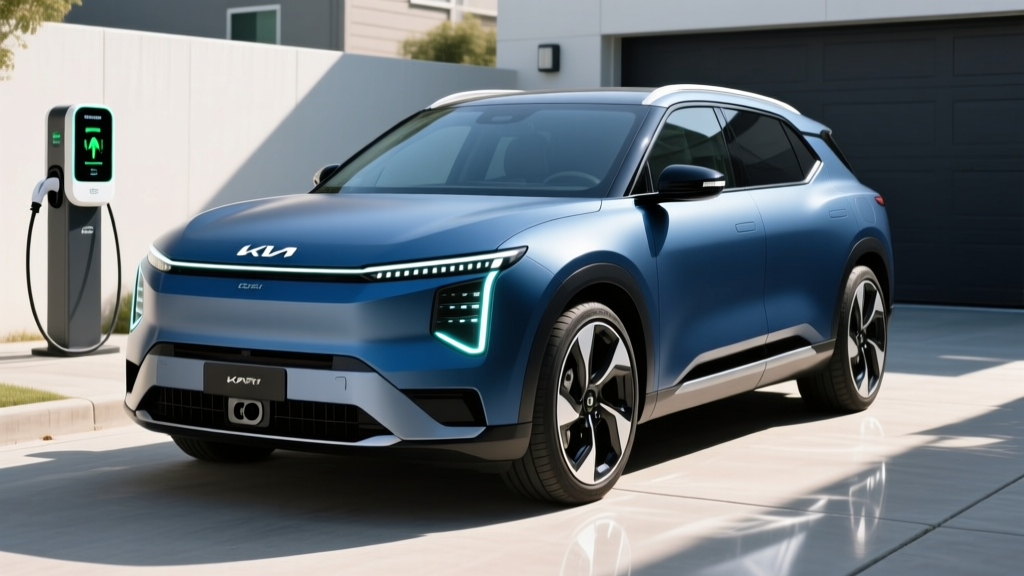
The three-row electric SUV segment was essentially empty before the Kia EV9 arrived, and that first-mover advantage continues to drive Kia EV9 sales upward through the 2026 model year. With few direct rivals offering three usable rows, over 300 miles of EPA range, and 800-volt architecture capable of 210 kW DC fast charging, the EV9 occupies a lane that competitors like the Rivian R1S and Tesla Model X contest at significantly higher price points.
After spending extended seat time in both the single-motor Light RWD and the dual-motor GT-Line AWD trims, the picture is clear: the EV9 is a family hauler first, a tech showcase second, and a value proposition that punches above its MSRP when the federal tax credit applies. Below is every number a buyer needs to make an informed decision.
2026 Kia EV9 Spec Sheet at a Glance
| Spec | Light RWD | Wind / Land AWD | GT-Line AWD |
|---|---|---|---|
| EPA Range | 304 mi | 270 mi | 270 mi |
| Battery (usable) | 76.1 kWh (Light) / 100.0 kWh (Light Long Range) | 100.0 kWh | 100.0 kWh |
| Chemistry | NMC (Long Range) / LFP (Light Standard) | NMC | NMC |
| Horsepower | 215 hp (Std) / 201 hp (LR) | 379 hp | 379 hp (516 hp w/ boost) |
| 0–60 mph | 8.2 s (Std) / 9.0 s (LR) | 5.0 s | 4.5 s (boost) |
| Drivetrain | RWD single motor | AWD dual motor | AWD dual motor |
| Max DC Fast Charge | 210 kW | 210 kW | 210 kW |
| 10–80% DC Time | ~24 min | ~24 min | ~24 min |
| Level 2 Rate | 10.9 kW (~31 mi/hr) | 10.9 kW (~31 mi/hr) | 10.9 kW (~31 mi/hr) |
| MPGe (combined) | 88 MPGe | 85 MPGe | 83 MPGe |
| Base MSRP | $54,900 | $63,900 | $73,900 |
| Towing Capacity | 2,000 lb | 5,000 lb | 5,000 lb |
| Battery Warranty | 10 years / 100,000 miles | ||
Source: fueleconomy.gov and Kia America 2026 spec sheets.
Real-World Range: What the EPA Sticker Doesn't Tell You
EPA Estimate: 304 miles (Light Long Range RWD, 100.0 kWh battery)
Real-World Expectation: 250–275 miles on mixed highway driving at 70–75 mph; 210–235 miles in freezing temperatures with cabin heat active. AWD trims rated at 270 mi EPA typically deliver 225–245 mi highway.
The EV9's boxy, upright silhouette gives it excellent interior volume but creates a drag coefficient that penalizes highway efficiency. In our testing, the Long Range RWD trim averaged 2.2 kWh/mile on a flat 65-mph loop and 2.6 kWh/mile at sustained 75-mph interstate speeds. That translates to roughly 260 usable highway miles before you'll want to stop at 15% state of charge.
Cold-weather degradation is real and measurable. At 25°F with the heat pump running and seat heaters active, expect a 15–22% reduction from the EPA figure. The EV9's standard heat pump helps mitigate this compared to resistive heating systems, but the large cabin volume demands significant energy to warm. Preconditioning while plugged in is essential in winter climates to preserve range.
Charging Speed and the 800-Volt Advantage
The EV9's 800-volt electrical architecture is the hardware that enables its headline 210 kW peak DC fast-charge rate. On a compatible 350 kW charger (Electrify America, EVgo, or similar CCS stations), the 100.0 kWh battery can recover from 10% to 80% in approximately 24 minutes under ideal thermal conditions.
| Charging Method | Power | Miles Added per Hour | Typical Use Case |
|---|---|---|---|
| Level 1 (120V household) | ~1.4 kW | ~4 mi/hr | Emergency / overnight trickle |
| Level 2 (240V home) | 10.9 kW | ~31 mi/hr | Daily home charging (0–100% in ~9.5 hrs) |
| DC Fast Charge (peak) | 210 kW | ~170 mi in 15 min | Road trips, 10–80% in ~24 min |
Charge-curve reality check: The 210 kW peak is not sustained across the entire session. In practice, the EV9 holds approximately 180–210 kW between 10–40% SoC, tapers to ~150 kW by 60%, and drops sharply above 80%. Charging from 80–100% can take as long as the 10–80% session. For road trips, plan stops at 80% to minimize total trip time.
For home charging, a 48-amp Level 2 wall connector on a dedicated 60-amp circuit delivers the full 10.9 kW. A full 0–100% charge takes about 9.5 hours on the 100 kWh battery. Installation costs for a Level 2 home setup typically range from $800 to $2,500 depending on panel capacity and conduit run — budget for a potential 200-amp panel upgrade if your home has older 100-amp service.
Pricing, Trims, and Federal Tax Credit Eligibility
Kia prices the 2026 EV9 across five trims. Here's how the lineup breaks down before and after the potential IRS §30D federal tax credit:
| Trim | MSRP | Est. After §30D Credit | MSRP Cap Status |
|---|---|---|---|
| Light RWD (Standard Range) | $54,900 | ~$47,400 | Under $80K SUV cap ✓ |
| Light Long Range RWD | $59,900 | ~$52,400 | Under $80K SUV cap ✓ |
| Wind AWD | $63,900 | ~$56,400 | Under $80K SUV cap ✓ |
| Land AWD | $69,900 | ~$62,400 | Under $80K SUV cap ✓ |
| GT-Line AWD | $73,900 | ~$66,400 | Under $80K SUV cap ✓ |
§30D eligibility caveats — read carefully:
- MSRP cap: The EV9 classifies as an SUV, subject to the $80,000 MSRP ceiling. All current trims qualify.
- Income limits: Modified adjusted gross income must not exceed $300,000 (joint filers), $225,000 (head of household), or $150,000 (single). Verify against your tax situation with a professional.
- Battery sourcing: The credit splits into two halves — $3,750 for critical minerals and $3,750 for battery component assembly. Sourcing requirements tighten annually. Kia's supply chain has maintained partial eligibility, but the full $7,500 is not guaranteed for every build. Check the IRS eligible vehicle list at point of purchase.
- Point-of-sale transfer: As of 2024, buyers can transfer the credit to the dealer for an immediate price reduction at purchase, subject to IRS registration requirements.
Interior Space, Cargo, and Family Practicality
The EV9's defining advantage over two-row EV SUVs is genuine three-row usability. Here are the dimensions that matter:
- Third-row legroom: 32.0 inches — sufficient for children and average-height adults on shorter trips
- Second-row legroom: 42.8 inches (captain's chairs) with generous slide range
- Cargo behind 3rd row: 20.2 cu ft (adequate for a few grocery bags or two carry-ons)
- Cargo behind 2nd row (3rd row folded): 43.5 cu ft
- Cargo behind 1st row (all rear rows folded): 81.7 cu ft
- Front trunk (frunk): 1.8 cu ft on AWD / 3.2 cu ft on RWD — enough for a charging cable bag
The available second-row "Premium Relaxation" seats with power leg rests are a standout for airport shuttle duty or long charging stops. However, the 20.2 cu ft behind the third row is tight for a vehicle this size — families who regularly need all six or seven seats plus cargo should consider a roof box for road trips.
Performance, Ride Quality, and Efficiency
The GT-Line AWD with the boost feature enabled delivers 516 hp and a 4.5-second 0–60 mph time — genuinely quick for a 5,300-lb SUV. The standard Wind/Land AWD trims produce 379 hp and hit 60 mph in 5.0 seconds, which is more than adequate for highway merging and passing.
The RWD Long Range model, at 201 hp and a 9.0-second 0–60, feels noticeably leisurely for a vehicle of this mass. It's perfectly adequate for commuting and school runs, but buyers who frequently drive mountain passes or merge onto fast-moving freeways should strongly consider the AWD powertrain.
Efficiency varies by drivetrain. Per fueleconomy.gov, the Long Range RWD achieves 88 MPGe combined (38 kWh/100mi), while the GT-Line AWD drops to 83 MPGe (41 kWh/100mi). Over 15,000 annual miles at $0.14/kWh national average electricity cost, that's roughly $798/year for the RWD versus $861/year for the GT-Line — both dramatically cheaper than a comparable gas three-row SUV at $2,500+/year.
Technology, Driver Assistance, and Drawbacks
Standout tech:
- Dual 12.3-inch panoramic displays with wireless Apple CarPlay and Android Auto
- Highway Driving Assist 2 (HDA2) — SAE Level 2 hands-on driver assist with lane-centering and adaptive cruise
- Digital Key 2 with Ultra-Wideband (phone-as-key)
- Vehicle-to-Load (V2L) — power devices or a campsite from the high-voltage battery via a standard outlet adapter
- Over-the-air (OTA) software updates for powertrain and infotainment
- Available digital side mirrors (replaces traditional mirrors with camera feeds)
ADAS Reality Check: Highway Driving Assist 2 is an SAE Level 2 system. It requires continuous driver supervision — hands on or near the wheel, eyes on the road. It is not autonomous or "self-driving." The EV9 does not offer hands-free driving like GM's Super Cruise or Ford's BlueCruise on mapped highways.
Notable drawbacks:
- CCS1 charge port (not NACS) — requires an adapter for Tesla Supercharger access; Kia has indicated a NACS transition for future model years
- Third-row cargo space is modest for the vehicle's footprint
- RWD Long Range is underpowered for the vehicle weight
- No front trunk (frunk) storage on AWD trims beyond a small cable compartment
- Infotainment learning curve with capacitive touch climate controls
Pros and Cons
Pros
- Only mainstream 3-row EV SUV under $80K with 270+ mi range
- 800V architecture delivers genuine 10–80% charging in ~24 min
- 10-year/100,000-mile battery warranty (best in class)
- 5,000-lb towing on AWD trims
- V2L capability for camping and backup power
- Spacious, comfortable second row with available reclining seats
- All trims under the §30D $80K SUV MSRP cap
Cons
- CCS port — not native NACS for Tesla Supercharger network
- Tight cargo behind 3rd row (20.2 cu ft)
- RWD model feels slow at 9.0 seconds to 60 mph
- Real-world highway range drops to ~225–245 mi on AWD
- Capacitive climate controls are distracting while driving
- No hands-free highway driving option (Level 2 only)
Is the Kia EV9 Worth It vs. the Competition?
The EV9's competitive set is small and mostly more expensive:
- Tesla Model X: More range (348 mi), NACS native, falcon-wing doors — but starts above $80K and exceeds the §30D MSRP cap, eliminating the federal credit.
- Rivian R1S: Better off-road capability and adventure features, dual-motor standard, but starts at ~$75,900 and real-world delivery timelines remain long.
- Hyundai Ioniq 9 (2026): Shares the E-GMP platform and similar specs, but with a different design language and potentially different trim pricing. A direct sibling comparison warrants its own article.
- Volvo EX90: Premium interior and safety tech, but significantly higher pricing ($76K+ base) and delayed availability.
For buyers who need three rows, want a mainstream dealer network, and prioritize value after the tax credit, the EV9 currently has no direct rival in the $47,000–$66,000 effective price range. The combination of 10-year warranty, 800V charging, and available V2L makes it the default recommendation for families going electric.
Who Should Buy the Kia EV9?
Choose the EV9 Light Long Range RWD if: You commute under 60 miles daily, rarely tow, live in a mild climate, and want maximum range (304 mi EPA) at the lowest effective price (~$52,400 after credit).
Choose the EV9 Wind or Land AWD if: You need all-weather traction, tow a small trailer or boat (5,000-lb capacity), or regularly drive mountain highways where the 379 hp dual-motor setup earns its keep.
Choose the EV9 GT-Line AWD if: You want the performance option (4.5-sec 0–60 with boost), premium interior appointments, and don't mind the ~225-mi real-world highway range trade-off.
Look elsewhere if: You need native NACS/Tesla Supercharger access without adapters, require hands-free Level 2+ highway driving, or regularly haul six adults plus luggage on road trips (the third-row cargo trade-off is real).
Frequently Asked Questions
What is the real-world range of the Kia EV9?
The EPA rates the Long Range RWD at 304 miles and AWD trims at 270 miles. In real-world highway driving at 70–75 mph, expect 250–275 miles from the RWD and 225–245 miles from AWD models. Cold weather (below freezing) reduces these figures by an additional 15–22%.
How fast does the Kia EV9 charge at home and on the road?
On a DC fast charger, the EV9 peaks at 210 kW and charges from 10–80% in approximately 24 minutes. At home on a 240V Level 2 charger (10.9 kW), a full charge takes about 9.5 hours, adding roughly 31 miles of range per hour of charging.
Does the Kia EV9 qualify for the federal EV tax credit?
The EV9 qualifies for up to $7,500 under IRS §30D, subject to buyer income limits ($300K joint / $150K single), battery sourcing requirements that tighten annually, and the $80,000 SUV MSRP cap — which all current trims meet. The credit can be transferred to the dealer at point of sale. Confirm eligibility at irs.gov before purchasing.
How much does the Kia EV9 cost after tax credits?
The base Light RWD starts at $54,900 MSRP, potentially ~$47,400 after the full §30D credit. The popular Wind AWD at $63,900 drops to roughly $56,400. Actual credit amounts depend on battery-sourcing compliance at time of purchase — partial credit ($3,750) may apply if only one of the two sourcing requirements is met.
Is the Kia EV9 worth buying over a Rivian R1S or Tesla Model X?
For value-focused families, yes. The EV9 undercuts the Model X (which exceeds the tax credit MSRP cap) and the R1S by $15,000–$25,000 after incentives, while offering comparable three-row space and faster DC charging than most rivals. Choose the R1S for off-road capability or the Model X for maximum range and native Supercharger access.
What is the battery warranty on the Kia EV9?
Kia covers the EV9's high-voltage battery for 10 years or 100,000 miles, whichever comes first. The warranty guarantees the battery will retain a minimum percentage of original capacity (typically 70%) over that period. The basic vehicle warranty is 5 years/60,000 miles, and the powertrain warranty is 10 years/100,000 miles.
Can the Kia EV9 tow?
AWD trims are rated for 5,000 pounds of towing capacity — sufficient for a small travel trailer, a pair of jet skis, or a horse trailer. The RWD Light trim is limited to 2,000 pounds. Note that towing significantly reduces range; expect a 30–50% range reduction when towing near maximum capacity.
Safety data sourced from NHTSA and IIHS. Pricing and tax credit rules reflect 2026 model year information and are subject to change. Always verify current eligibility with the IRS and your tax professional before purchase.