The Mercedes EQC in 2026: A Luxury EV Bargain on the Used Market
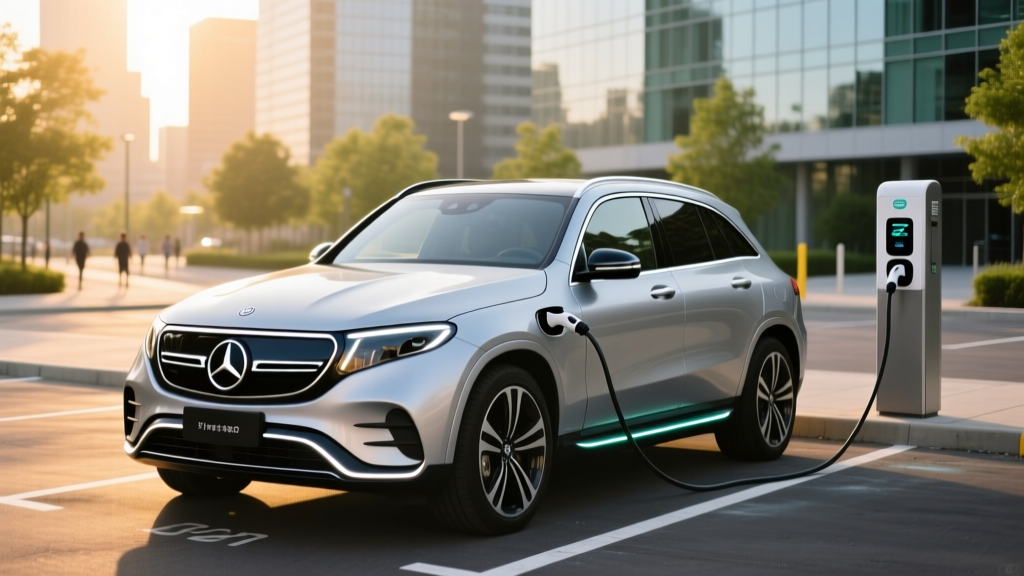
The Mercedes-Benz EQC 400 4MATIC was never a high-volume seller in the United States. Mercedes-Benz offered it in limited markets during the 2020–2021 model years before discontinuing it in favor of the EQE SUV and EQB. That limited availability means the Mercedes EQC price on the used market in 2026 has softened considerably — often landing between $28,000 and $38,000 depending on mileage, condition, and region. For buyers who want a premium badge, refined ride quality, and a usable 80 kWh battery without paying new-car premiums, the EQC deserves a serious second look.
But the EQC was also compromised from the start. Built on a modified GLC platform rather than a dedicated EV architecture, it sacrifices some efficiency and interior packaging compared to purpose-built competitors. This review breaks down the exact numbers you need to evaluate whether the EQC fits your driving pattern, charging setup, and budget.
Mercedes EQC 400 4MATIC: Full Specification Sheet
| Specification | Value |
|---|---|
| EPA Estimated Range | 220 miles |
| Battery Capacity (Usable) | 80 kWh (NMC lithium-ion) |
| Drivetrain | Dual-motor AWD (4MATIC) |
| Horsepower | 402 hp combined |
| Torque | 564 lb-ft |
| 0–60 mph | 4.8 seconds |
| Top Speed | 112 mph (electronically limited) |
| EPA Efficiency | 74 MPGe combined (46 kWh/100 mi) |
| Max DC Fast Charge Rate | 110 kW (CCS1) |
| 10–80% DC Charge Time | ~40 minutes |
| Level 2 Onboard Charger | 7.4 kW (single-phase) |
| Cargo Volume (rear seats up) | 17.4 cu ft |
| Cargo Volume (rear seats folded) | 51.5 cu ft |
| Curb Weight | 5,500 lbs |
| Original Base MSRP (2021) | $67,900 |
| 2026 Used Market Range | $28,000–$38,000 |
Real-World Range: What to Actually Expect
EPA Sticker: 220 miles
Real-World Highway (70 mph, mild weather): ~185–200 miles
Real-World City/Mixed Commuting: ~205–220 miles
Cold Weather (below 32°F, highway): ~150–175 miles
The EQC's 220-mile EPA figure was modest even at launch, and in 2026 it trails most new luxury EVs by a wide margin. The reason is physics: the EQC is heavy (5,500 lbs) and was built on a platform originally designed for a combustion engine, meaning less optimal weight distribution and higher rolling resistance.
In real-world highway driving at sustained speeds of 70–75 mph, expect between 185 and 200 miles before reaching a 10% state of charge. City driving with frequent regenerative braking opportunities gets you closer to the EPA number. The EQC does not feature a heat pump — it relies on resistive cabin heating — so cold-weather range loss is significant, often 20–30% below the EPA sticker. If your daily commute is under 60 miles round-trip and you charge at home, the range is perfectly manageable. For frequent 300+ mile road trips, you'll be stopping often.
According to EPA data on fueleconomy.gov, the EQC achieves 74 MPGe combined, which translates to 46 kWh consumed per 100 miles. That efficiency figure is below competitors like the BMW iX (86 MPGe) and the Tesla Model Y (122 MPGe), a direct result of the EQC's weight and adapted platform.
Charging Speeds: DC Fast and Home Level 2
| Charging Level | Power / Rate | Speed | Notes |
|---|---|---|---|
| Level 1 (120V household) | ~1.4 kW | ~3–4 miles/hour | Emergency/trickle only |
| Level 2 (240V home) | 7.4 kW | ~20–22 miles/hour | Full charge in ~11 hours |
| DC Fast Charge (CCS1) | Peak 110 kW | 10–80% in ~40 min | Tapers above 80% SoC |
The EQC's 110 kW peak DC fast-charge rate was acceptable in 2020 but is now a clear weakness. Competitors on 800V architectures (Hyundai Ioniq 5, Kia EV6, Porsche Taycan) accept 230–350 kW and complete a 10–80% session in 18 minutes or less. The EQC's 40-minute 10–80% time means road-trip charging stops are noticeably longer.
The charge curve is relatively flat between 10–60% SoC, sustaining roughly 90–110 kW, but tapers sharply above 80%. Mercedes recommends charging to 80% for daily use to preserve long-term battery health. The CCS1 connector is compatible with Electrify America, EVgo, and ChargePoint DC stations — though not with Tesla Superchargers without a third-party adapter (and many NACS-to-CCS adapters in 2026 still have speed or compatibility limitations).
At home, the 7.4 kW onboard charger is the main bottleneck. A full 0–100% charge takes approximately 11 hours on a Level 2 wallbox. Most owners charging overnight from 20–80% will need 6–7 hours, which is fine for daily use but slower than vehicles with 11.5 kW or 19.2 kW onboard chargers. Installation of a Level 2 home charger (such as a ChargePoint Home Flex or Emporia Level 2) typically costs $800–$2,000 including equipment and electrician labor, depending on your panel capacity and run length.
2026 Used Mercedes EQC Price and Tax Credit Eligibility
| Cost Factor | Amount |
|---|---|
| Used Market Price (avg. 30K–50K mi) | $28,000–$38,000 |
| Federal Used EV Tax Credit (§25E) | Up to $4,000 (30% of sale price, max $4,000) |
| Price After Max Federal Credit | $24,000–$34,000 |
| Federal New EV Credit (§30D) | Not eligible (discontinued model) |
Because the EQC is no longer sold new, the Mercedes EQC price conversation in 2026 centers on the used market and the IRS §25E Previously-Owned Clean Vehicle Credit. This credit provides 30% of the sale price, up to a maximum of $4,000, for qualifying used EVs purchased from a licensed dealer.
To qualify for the $4,000 used-EV credit, several conditions must be met per IRS guidelines:
- Income caps: Modified adjusted gross income (MAGI) must not exceed $75,000 (single), $112,500 (head of household), or $150,000 (married filing jointly).
- Vehicle price cap: The dealer sale price must be $25,000 or less to qualify.
- Dealer requirement: The vehicle must be purchased from a licensed dealer (private-party sales do not qualify).
- Model year: The vehicle must be at least two model years old (the 2020–2021 EQC satisfies this).
- Battery capacity: Must have at least 7 kWh (the EQC's 80 kWh easily qualifies).
The $25,000 sale price cap is the key constraint. In 2026, some higher-mileage or lower-trim EQC examples do list at or below $25,000, making them eligible. However, well-maintained, lower-mileage examples priced at $30,000+ will not qualify for the federal used credit. State and local incentives vary by jurisdiction — check your state's energy office or the Alternative Fuels Data Center for regional rebates.
Important: Tax credit eligibility depends on your individual income, filing status, and the specific dealer transaction price. Always verify current IRS rules at irs.gov and consult a qualified tax professional before relying on credit availability.
Interior, Tech, and Daily Livability
The EQC's interior is where the Mercedes badge earns its keep. Even in 2026, the cabin materials, sound insulation, and seat comfort outclass most EVs in the $28,000–$38,000 used price range. The dual 10.25-inch displays running MBUX (Mercedes-Benz User Experience) remain responsive, and the "Hey Mercedes" voice assistant handles navigation, climate, and media commands reliably.
Passenger space:
- Front legroom: 41.1 inches
- Rear legroom: 38.0 inches
- Front headroom: 38.1 inches
- Rear headroom: 38.2 inches
Cargo: 17.4 cu ft behind the rear seats expands to 51.5 cu ft with the 40/20/40 split rear seats folded. There is no front trunk (frunk) — the space under the hood houses the electric motors and power electronics due to the adapted GLC platform. This is a meaningful gap versus the Tesla Model Y (76 cu ft total with frunk) or the Hyundai Ioniq 5 (59 cu ft with frunk).
Driver assistance: The EQC came equipped with Mercedes' Active Distance Assist DISTRONIC (adaptive cruise control), Active Steering Assist (lane centering), Active Blind Spot Assist, and Active Brake Assist. These are SAE Level 2 driver-assistance features — the driver must remain fully engaged with hands on the wheel and eyes on the road. There is no hands-free or eyes-off capability comparable to GM's Super Cruise or Ford's BlueCruise.
Notable drawbacks:
- No frunk (front trunk)
- CCS1 connector only — no native NACS compatibility
- 7.4 kW onboard charger is slow for Level 2
- No heat pump — significant cold-weather range loss
- Regenerative braking is not strong enough for true one-pedal driving in most modes
- Mercedes me app connectivity may require subscription renewal on used vehicles
Pros and Cons at a Glance
Pros
- Premium cabin quality, materials, and sound isolation
- Smooth, quiet ride with excellent suspension tuning
- 402 hp and 4.8-second 0–60 provide strong acceleration
- 80 kWh battery provides manageable daily range for most commuters
- May qualify for up to $4,000 federal used-EV credit (§25E)
- Significant depreciation from $67,900 MSRP makes it a value play
- Comprehensive driver-assistance suite included
Cons
- 220-mile EPA range is below most 2026 competitors
- 110 kW DC fast charge is slow — 40 min for 10–80%
- 7.4 kW Level 2 charger limits home charging speed
- No heat pump — cold-weather range loss of 20–30%
- No frunk; cargo space trails rivals
- CCS1 connector — NACS adapter needed for Tesla Superchargers
- Discontinued model — long-term parts/service uncertainty
- Efficiency (74 MPGe) lags behind dedicated EV platforms
How the EQC Stacks Up Against Key Competitors
If you're cross-shopping the used Mercedes EQC, here's how its core specs compare to rivals you'll encounter in the $25,000–$45,000 used-EV market in 2026:
| Spec | Mercedes EQC 400 | Tesla Model Y LR (2022) | BMW iX xDrive50 (2022) | Audi e-tron (2021) |
|---|---|---|---|---|
| EPA Range | 220 mi | 330 mi | 324 mi | 222 mi |
| Battery (usable) | 80 kWh | 75 kWh | 105.2 kWh | 86.5 kWh |
| DC Fast Charge | 110 kW | 250 kW | 200 kW | 150 kW |
| 0–60 mph | 4.8 sec | 4.8 sec | 4.4 sec | 5.5 sec |
| Efficiency | 74 MPGe | 122 MPGe | 86 MPGe | 78 MPGe |
| Cargo (rear up) | 17.4 cu ft | 30.2 cu ft | 35.5 cu ft | 28.5 cu ft |
| Used Price Range | $28K–$38K | $30K–$42K | $40K–$55K | $28K–$38K |
The Audi e-tron (2021) is the closest direct competitor — similar range, similar platform-adaptation compromises, and similar used pricing. The Tesla Model Y offers dramatically more range, faster charging, and more cargo space but a less refined interior. The BMW iX is superior in nearly every metric but commands a significant price premium on the used market.
Battery Health, Warranty, and Long-Term Ownership
The EQC's 80 kWh NMC (nickel-manganese-cobalt) battery was engineered with a conservative buffer — roughly 5–7 kWh of the gross capacity is reserved to protect against deep discharge and overcharge, which helps slow degradation. Mercedes-Benz originally warranted the battery for 8 years or 100,000 miles, whichever comes first, against capacity loss below 70% of original.
For a 2020 or 2021 model in 2026, that means the original battery warranty is either nearing expiration or has already expired based on the 8-year time limit (expiring in 2028–2029). If you're buying used, request a battery state-of-health (SoH) report from a Mercedes-Benz dealer or an independent EV specialist. Typical NMC degradation for a vehicle of this age and mileage (30,000–60,000 miles) is 5–10%, meaning you can expect roughly 72–76 kWh of usable capacity remaining.
Out-of-warranty battery replacement for the EQC, should it ever be needed, is estimated at $15,000–$22,000 based on current NMC pack pricing and Mercedes service labor rates. However, complete pack failures are rare — most degradation manifests as gradual range loss rather than catastrophic failure.
Maintenance costs are lower than a comparable gas-powered GLC (no oil changes, no transmission fluid, fewer brake replacements due to regenerative braking), but Mercedes-Benz parts and service labor remain premium-priced. Budget $800–$1,200 annually for tires, cabin air filters, brake fluid, and software updates.
Who Should Buy the Mercedes EQC in 2026?
Choose the EQC if:
- You want a luxury-badged EV SUV under $35,000 with a premium cabin
- Your daily commute is under 80 miles round-trip with home charging
- You rarely take road trips over 200 miles, or you don't mind longer charge stops
- You value ride comfort and cabin quietness over maximum range
- You can find a qualifying example under $25,000 for the §25E tax credit
Look elsewhere if:
- You need 300+ miles of range for frequent long-distance travel
- You want fast DC charging (under 20 minutes for 10–80%)
- You need maximum cargo space or a front trunk
- You live in a very cold climate where the lack of a heat pump will significantly impact range
- You want native NACS/Tesla Supercharger access without adapters
Frequently Asked Questions
What is the real-world range of the Mercedes EQC?
The EPA rates the EQC at 220 miles. In real-world highway driving at 70 mph, expect 185–200 miles. City driving with regenerative braking gets closer to 210–220 miles. In freezing temperatures, highway range drops to approximately 150–175 miles due to the lack of a heat pump.
How fast does the Mercedes EQC charge?
On a DC fast charger, the EQC peaks at 110 kW and takes about 40 minutes to charge from 10% to 80%. At home on a Level 2 (240V) charger, it accepts 7.4 kW and adds roughly 20–22 miles of range per hour, with a full charge taking about 11 hours.
Does the Mercedes EQC qualify for a federal tax credit?
The EQC does not qualify for the §30D new-vehicle credit because it is discontinued. However, it may qualify for the §25E Previously-Owned Clean Vehicle Credit of up to $4,000 if purchased from a dealer for $25,000 or less, and if your income falls within IRS limits ($75K single / $150K married filing jointly). Verify eligibility at irs.gov and consult a tax professional.
Is the Mercedes EQC worth buying vs. the Tesla Model Y or Audi e-tron?
The EQC makes sense if you prioritize cabin luxury and ride comfort over range and charging speed. The Tesla Model Y (used) offers far more range (330 mi), faster charging (250 kW), and more cargo space, but a less refined interior. The Audi e-tron is the closest rival in character and pricing. If long road trips are frequent, the Model Y or a newer platform EV is the better choice. If daily comfort is paramount and you charge at home, the EQC is a compelling luxury value.
What are the biggest problems with the Mercedes EQC?
The most common owner complaints center on the limited 220-mile range, slow 110 kW DC charging, the lack of a front trunk, and cold-weather range loss due to no heat pump. Some owners also report that the regenerative braking system doesn't provide strong enough deceleration for true one-pedal driving. As a discontinued model, long-term parts availability for EV-specific components is a minor but real consideration.
How long will the EQC battery last?
The 80 kWh NMC battery carries an original warranty of 8 years/100,000 miles (70% capacity retention threshold). Real-world NMC degradation data suggests 5–10% capacity loss over 5–6 years with normal use. With proper care (avoiding frequent 100% charges, limiting DC fast charging, using scheduled charging), the battery should provide usable service well beyond 150,000 miles.