The Short Answer
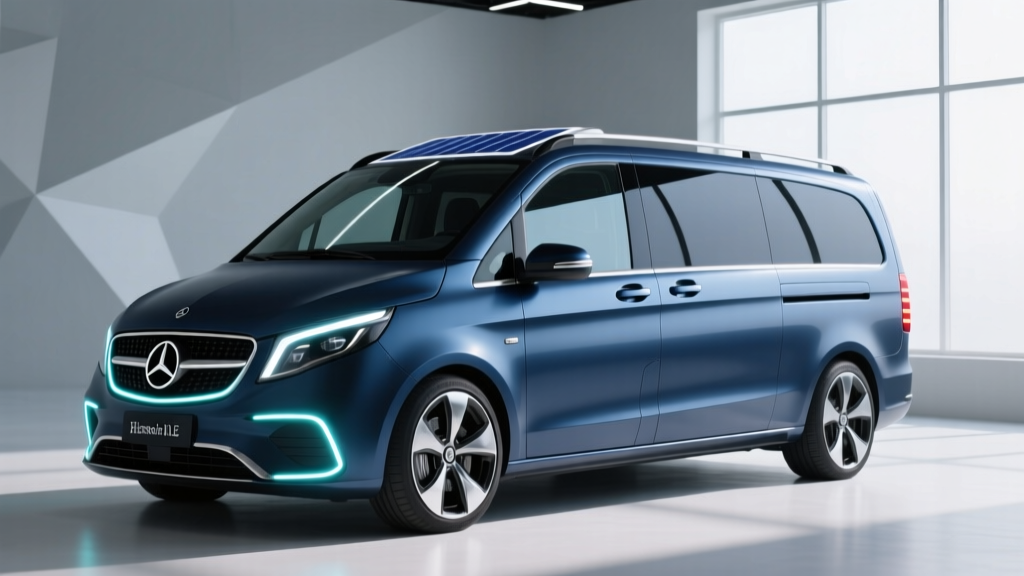
Mercedes-Benz will debut the new electric VLE minivan March 10, 2026, marking the brand's first dedicated electric people-mover built on its modular VAN.EA platform. While final EPA-certified specs won't be confirmed until closer to the on-sale date (expected late 2026 as a 2027 model), preliminary targets suggest a usable battery around 90–110 kWh, a projected range of 250–300+ miles, and DC fast-charging capability up to 200+ kW. Pricing is anticipated to start in the mid-$60,000s before incentives. If you're considering an electric family hauler, the VLE will compete directly with the Chrysler Pacifica Plug-In Hybrid and the upcoming Volkswagen ID. Buzz, offering a zero-tailpipe-emission alternative to the Sienna and Odyssey hybrids.
What the Mercedes VLE Is — and Isn't
The Mercedes-Benz VLE (Van, Large, Electric) is the first product from the automaker's new VAN.EA electric architecture, a dedicated skateboard platform designed specifically for large passenger vans. This is not a retrofit of the gas-powered Metris or V-Class — it's a ground-up EV with a flat floor, optimized weight distribution, and the packaging flexibility that comes with a dedicated battery-electric design.
What we know heading into the March 10 debut, based on Mercedes-Benz Group's published VAN.EA strategy and industry reporting:
- Platform: VAN.EA (modular, supports multiple wheelbase lengths)
- Battery chemistry: Expected NMC (nickel manganese cobalt) for energy density in a large vehicle; LFP variants possible for lower trims
- Estimated usable battery capacity: 90–110 kWh (preliminary)
- Projected EPA range: 250–300+ miles (dependent on battery size and drivetrain configuration)
- DC fast charging: Expected peak rate of 200+ kW, with 10–80% in approximately 25–30 minutes (preliminary)
- Level 2 AC charging: Likely 11–22 kW onboard charger, full charge in 5–10 hours depending on equipment
- Seating: Configurable for 6, 7, or 8 passengers with second- and third-row flexibility
- Driver assistance: Expected to feature Mercedes-Benz's latest Drive Pilot / Driver Assistance systems — note these are SAE Level 2 (supervised), not autonomous
Electric VLE vs. Gas and Hybrid Minivans: The Numbers
The minivan segment has been dominated by hybrids in recent years — the Toyota Sienna (standard hybrid, ~36 MPG combined) and the Chrysler Pacifica PHEV (32 miles electric-only, then ~30 MPG). The Honda Odyssey remains conventional gas-only at roughly 22 MPG combined. Here's how a projected VLE stacks up on the metrics that matter to family-hauler buyers:
| Metric | Mercedes VLE (Projected) | Toyota Sienna Hybrid | Chrysler Pacifica PHEV | Honda Odyssey |
|---|---|---|---|---|
| Powertrain | BEV (all-electric) | HEV (hybrid) | PHEV (plug-in hybrid) | Gas V6 |
| EPA Range / MPG | ~250–300 mi (est.) | 36 MPG combined | 32 mi EV + 30 MPG | 22 MPG combined |
| Starting MSRP (est.) | ~$65,000–$70,000 | ~$38,000 | ~$51,000 | ~$39,000 |
| Fuel/Energy Cost per Mile | ~$0.04–$0.06 (home charging) | ~$0.09 | ~$0.07 (blended) | ~$0.15 |
| Annual Fuel/Energy (15k mi) | ~$600–$900 | ~$1,350 | ~$1,050 | ~$2,250 |
| Maintenance (annual avg.) | ~$300–$500 | ~$600–$800 | ~$700–$900 | ~$700–$900 |
| Federal Tax Credit (§30D) | Up to $7,500 (if eligible) | None (HEV) | Up to $7,500 (if eligible) | None |
Sources: fueleconomy.gov for Sienna, Pacifica, and Odyssey EPA data. VLE figures are preliminary estimates pending official Mercedes-Benz specifications. Energy costs based on U.S. average residential electricity rate of ~$0.16/kWh and average gasoline price of ~$3.30/gallon.
Cost Breakdown: What Ownership Actually Costs
The sticker price of a Mercedes VLE will be substantially higher than a Sienna or Odyssey. But total cost of ownership (TCO) tells a different story over time — especially if you can charge at home. Let's model a realistic 5-year/75,000-mile ownership scenario:
| 5-Year Cost Category | Mercedes VLE (Est.) | Toyota Sienna Hybrid | Honda Odyssey |
|---|---|---|---|
| Purchase price (base, before credit) | $67,000 | $38,000 | $39,000 |
| Federal §30D tax credit | –$7,500* | $0 | $0 |
| Net purchase price | $59,500 | $38,000 | $39,000 |
| Energy/fuel (75,000 mi) | $3,750 | $6,750 | $11,250 |
| Maintenance (5 years) | $2,000 | $3,500 | $4,000 |
| Insurance (5-year avg.) | $12,000 | $8,500 | $8,500 |
| Total 5-Year Cost | $77,250 | $56,750 | $62,750 |
*§30D credit eligibility depends on buyer income caps ($150K single / $300K joint), vehicle MSRP caps ($80K for vans/SUVs), battery critical-mineral sourcing, and final assembly in North America. Rules are current as of 2026 and subject to legislative change. Consult a tax professional and verify on IRS.gov before purchasing. The credit can be transferred to the dealer at point of sale as a price reduction.
The VLE's energy and maintenance savings are real — roughly $7,500 less than the Odyssey over five years. But the higher purchase price and insurance premiums (EVs typically cost 15–25% more to insure due to repair complexity and parts cost) mean the VLE won't close the TCO gap with a Sienna within five years. The value proposition here is about premium space, Mercedes technology, and zero tailpipe emissions — not pure economics.
Charging the VLE: Home, Public, and What You Need to Know
For a vehicle this size, charging logistics matter enormously. A 100 kWh battery takes significant energy to fill, and your charging setup will determine whether the VLE is a joy or a frustration.
Home Charging (Where 80%+ of Charging Happens)
With a ~100 kWh battery and an expected 11 kW onboard AC charger, a full 0–100% charge at home would take approximately 9–10 hours on a Level 2 (240V) circuit. If Mercedes offers a 22 kW onboard charger option (as they do on some EQ models), that drops to ~4.5 hours — but requires a 100-amp dedicated circuit that most homes don't have without a panel upgrade.
| Charging Level | Power (kW) | Miles Added/Hour | 0–100% Time (~100 kWh) |
|---|---|---|---|
| Level 1 (120V standard outlet) | 1.4 kW | ~3–4 mi/hr | ~70+ hours |
| Level 2 (240V, 48A circuit) | 11.5 kW | ~30–35 mi/hr | ~9 hours |
| Level 2 (240V, high-power option) | ~22 kW | ~60 mi/hr | ~4.5 hours |
| DC Fast Charging (peak) | 200+ kW | ~500+ mi/hr (peak) | 10–80% in ~25–30 min |
Home installation reality: A Level 2 home charger installation typically runs $1,200–$3,500 (equipment + electrician + permit) if your electrical panel has capacity. If you need a panel upgrade from 100A to 200A service, add $2,000–$5,000. Always have a licensed electrician assess your panel before purchasing a vehicle.
DC Fast Charging and the Charge Curve
The projected 200+ kW peak DC fast-charging rate is impressive, but peak is not sustained. Like all EVs, the VLE will taper its charging rate as the battery fills — typically holding peak rate from roughly 10–50% SoC, then progressively stepping down through 50–80%, and dropping to a trickle above 80%. This is normal battery management to protect cell longevity.
For road trips, plan your stops around the 10–80% window. A 25–30 minute stop at a 200+ kW station will add roughly 180–220 miles of range. Above 80%, you're better off driving than waiting — the last 20% can take as long as the first 70%.
Federal Tax Credit and Incentive Eligibility
Whether the VLE qualifies for the full $7,500 federal EV tax credit under IRS §30D depends on several factors that won't be fully confirmed until Mercedes publishes final battery-sourcing documentation:
- MSRP cap: Vans/SUVs must be under $80,000 MSRP — the base VLE should qualify, but fully loaded trims may exceed this
- Buyer income cap: Modified AGI must not exceed $150,000 (single), $225,000 (head of household), or $300,000 (joint filing)
- Critical minerals requirement: A percentage of battery minerals must be sourced from the U.S. or FTA partners (phases up annually)
- Battery components: Battery components must be manufactured or assembled in North America (phases up annually)
- Final assembly: Vehicle must undergo final assembly in North America — Mercedes' Vance, Alabama plant is a likely candidate for U.S.-market VLE production
- Point-of-sale transfer: As of 2024+, eligible buyers can transfer the credit to the dealer at purchase, reducing the purchase price directly rather than waiting for a tax refund
The credit eligibility is not guaranteed for any specific buyer or trim. Verify current rules at the time of purchase, as legislative changes could alter availability.
Common Misconceptions — Addressed with Facts
| Myth | Fact |
|---|---|
| "Electric minivans can't handle road trips." | A 280-mile EPA range covers most daily driving easily. For road trips, a 25-minute DC fast-charge stop every 2–2.5 hours aligns with normal family rest stops. The U.S. now has 7,000+ DC fast-charging stations, though coverage in rural areas remains uneven. |
| "The battery will need replacing in a few years." | Modern NMC batteries are engineered for 200,000+ miles with gradual degradation (typically 10–15% capacity loss over 10 years/150,000 miles). Mercedes is expected to offer a battery warranty of at least 8 years/100,000 miles with a 70% capacity retention threshold, consistent with industry standards. |
| "Charging an EV costs the same as gas." | At the U.S. average residential rate of ~$0.16/kWh, charging a 100 kWh battery costs ~$16 for ~280 miles — about $0.06/mile. Gasoline at $3.30/gallon in a 22 MPG Odyssey costs ~$0.15/mile. Public DC fast charging is more expensive ($0.30–$0.50/kWh) but still typically cheaper per mile than gas. |
| "EVs don't work in cold climates." | Cold weather reduces range by 15–30%, which is significant but manageable. Preconditioning the battery while plugged in (a feature Mercedes includes) mitigates charging-speed loss. Many EV owners in Minnesota, Canada, and Norway operate successfully year-round — just plan for shorter range between charges. |
| "I need a special charger at home." | You need a 240V Level 2 circuit (similar to a dryer outlet) installed by a licensed electrician. The charger unit itself costs $400–$800. Installation varies: $800–$2,500 for a simple run, more if your panel needs upgrading. Level 1 (standard 120V) works in a pinch but adds only ~3–4 miles per hour — inadequate for a 100 kWh battery unless you drive very little daily. |
Decision Framework: Is the VLE the Right Family EV for You?
Choose the Mercedes VLE If:
- You have reliable home charging (Level 2 installed or installable) and drive under 250 miles on most days
- You want a premium, tech-forward family hauler and are willing to pay a brand premium over the Sienna or Pacifica
- You want zero tailpipe emissions and lower per-mile energy costs
- Your typical road trips are under 400 miles or follow well-served DC fast-charging corridors (I-5, I-95, I-80, etc.)
- You qualify for the §30D tax credit, bringing effective price closer to $60K
Choose the Toyota Sienna Hybrid If:
- Budget is a primary concern — the Sienna starts $27K+ lower
- You lack home charging access and don't want to rely on public infrastructure
- You regularly drive in remote areas with sparse charging coverage
- You need proven, widely available service at any Toyota dealer nationwide
- You want 500+ miles of total range without planning charging stops
Choose the Chrysler Pacifica PHEV If:
- You want electric-only driving for short commutes (32 miles) but gas flexibility for road trips
- You have home charging for daily top-ups but also want unlimited highway range
- You want a middle-ground price with available tax credit eligibility
What First-Time EV Buyers Should Know Before the VLE Arrives
If the Mercedes VLE is your first electric vehicle, here's what to prepare before it goes on sale:
- Assess your electrical panel now. A 100 kWh battery demands robust home charging. Have an electrician evaluate whether your panel can support a 48-amp (or higher) dedicated 240V circuit. If you need a panel upgrade, lead times for permits and work can be 2–4 months.
- Understand your daily mileage. The average American drives ~37 miles per day. Even with cold-weather range reduction, a VLE with ~250 miles of real-world range covers most daily needs with nightly home charging. Range anxiety is real but usually unfounded for daily driving — it's road trips that require planning.
- Research your local public charging network. Download the PlugShare or ChargePoint apps and map the DC fast chargers along your most common road-trip routes. Note which networks (Tesla Supercharger with Magic Dock, Electrify America, EVgo) operate near you and their per-kWh pricing.
- Factor in insurance early. Get insurance quotes before ordering. Mercedes EVs carry higher premiums due to parts cost, aluminum body repair complexity, and limited collision-repair network availability. Budget 15–25% more than your current minivan insurance.
- Learn preconditioning. The VLE will almost certainly include battery preconditioning — warming or cooling the battery before fast charging to optimize charge speed. Use the Mercedes me app to precondition while plugged in at home; this preserves range and ensures peak charging speeds at DC stations.
FAQ: Mercedes VLE Electric Minivan
When will the Mercedes VLE be available to buy?
Mercedes will debut the VLE on March 10, 2026. Based on typical Mercedes timelines, U.S. deliveries would likely begin in late 2026 or early 2027 as a 2027 model-year vehicle. Reservations or build-to-order may open shortly after the debut event.
Will the VLE qualify for the $7,500 federal EV tax credit?
Potentially, yes — if the base MSRP stays under the $80,000 van/SUV cap, final assembly occurs in North America, and battery sourcing meets the escalating critical-mineral and component requirements under §30D. Buyer income limits also apply. Verify eligibility on IRS.gov at time of purchase.
How does the VLE compare to the Volkswagen ID. Buzz?
The VW ID. Buzz launched in the U.S. for 2025 with a ~91 kWh battery, ~234 miles EPA range, and ~170 kW DC fast charging, starting around $59,995. The VLE is expected to be larger (more interior volume and third-row space), likely offer more range, and feature more premium Mercedes technology — but at a higher price point. The ID. Buzz targets the retro-modern niche; the VLE targets the traditional luxury-minivan buyer.
Can I charge a Mercedes VLE at a Tesla Supercharger?
Mercedes-Benz has been transitioning to the NACS (North American Charging Standard) connector for its EVs. If the VLE ships with a native NACS port, it will access Tesla Superchargers directly. If it ships with CCS, a NACS adapter will likely be included or available, as Tesla has opened its network to non-Tesla EVs via adapter. Confirm the connector type at the debut event.
What is the expected battery warranty?
Mercedes typically offers 8 years / 100,000 miles on high-voltage battery packs, with a capacity retention threshold of 70%. This is consistent with the industry standard set by federal mandate (EPA emissions warranty covers 8yr/80K; most automakers exceed this for EV batteries). Final VLE warranty terms will be confirmed at launch.
Is the VLE self-driving?
No. The VLE will feature advanced driver-assistance systems — likely Mercedes' latest generation of Active Distance Assist, Active Lane Keeping, and potentially Drive Pilot on limited highways. All of these are SAE Level 2, meaning the driver must remain fully attentive and hands-on (or eyes-on, depending on the system). The vehicle does not drive itself. Mercedes does hold approval for Level 3 (conditional automation, eyes-off in specific traffic-jam scenarios) in limited jurisdictions, but this is a narrow use case, not full autonomy.