The Quick Answer: Are Mercedes Electric Vehicles Worth It in 2026?
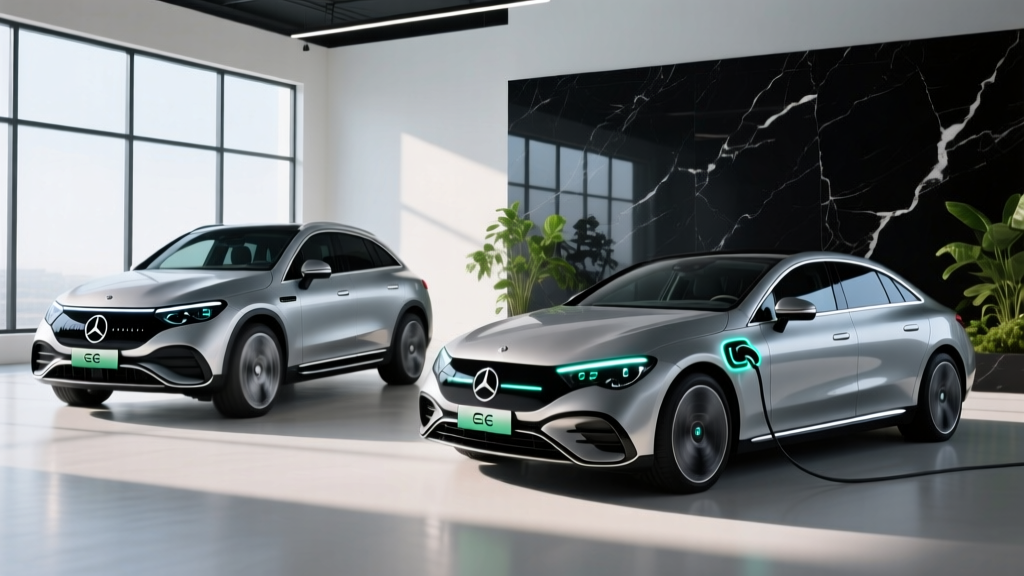
Mercedes-Benz currently sells four core battery-electric models in the U.S. under its EQ sub-brand: the EQE Sedan (308 mi EPA, from $76,050), EQE SUV (279 mi EPA, from $78,050), EQS Sedan (390 mi EPA, from $105,550), and EQS SUV (330 mi EPA, from $108,700). All use a 90.6 kWh usable NMC battery and support up to 170 kW DC fast charging (10–80% in roughly 32 minutes). They deliver a genuinely premium EV experience — whisper-quiet cabins, excellent ride quality, and strong straight-line performance — but they carry premium prices that largely disqualify them from the federal §30D tax credit (MSRP caps are $55,000 for sedans, $80,000 for SUVs). If you want a luxury EV and can charge at home, these are compelling. If you need incentives to justify the switch, competitors like the BMW iX or Tesla Model S may offer a stronger financial case.
The 2026 Mercedes EQ Lineup at a Glance
Mercedes streamlined its EV offerings after discontinuing the compact EQB and the original EQS-class configurations that underwhelmed on range. The current lineup focuses on two platforms: the mid-size EVA2 (EQE sedan and SUV) and the full-size EVA2.5 (EQS sedan and SUV). Here are the numbers that matter:
| Model | EPA Range | Battery (usable) | Peak DC Charge | 10–80% Time | 0–60 mph | HP | Base MSRP |
|---|---|---|---|---|---|---|---|
| EQE 350+ Sedan | 308 mi | 90.6 kWh NMC | 170 kW | ~32 min | 6.2 sec | 288 | $76,050 |
| EQE 350 4MATIC SUV | 279 mi | 90.6 kWh NMC | 170 kW | ~32 min | 6.4 sec | 288 | $78,050 |
| EQS 450+ Sedan | 390 mi | 118.0 kWh NMC | 200 kW | ~31 min | 5.9 sec | 355 | $105,550 |
| EQS 450 4MATIC SUV | 330 mi | 118.0 kWh NMC | 200 kW | ~31 min | 5.8 sec | 355 | $108,700 |
Sources: fueleconomy.gov, Mercedes-Benz USA press specifications. Range figures are EPA estimates for the most efficient rear-wheel-drive or base AWD trims. AMG and higher-output variants sacrifice 20–40 miles of range for additional power.
Real-World Range: What the EPA Sticker Doesn't Tell You
EPA range estimates for Mercedes electric vehicles are measured under controlled conditions that don't fully reflect highway driving, cold weather, or aggressive acceleration. Based on owner reports and independent testing, here's what to expect in practice:
EQE Sedan (EPA 308 mi): Expect 250–275 mi on a 75°F highway trip at 70–75 mph. In freezing weather (20–30°F) with cabin heat, plan for 210–235 mi. The heat pump (standard on 2026 models) helps, but resistive heating still draws significant energy below freezing.
EQS Sedan (EPA 390 mi): The class-leading battery gives genuine 320–340 mi highway capability in moderate temps. Cold-weather highway range drops to roughly 265–290 mi. This is the most road-trip-capable Mercedes EV currently sold.
EQE/EQS SUVs: Subtract 10–15% from sedan figures due to increased frontal area and weight. The EQS SUV is still a strong 280+ mi highway vehicle in fair weather.
The key takeaway: if your typical daily driving is under 60 miles round-trip, any of these vehicles will go 3–5 days between charges. For road trips exceeding 250 miles between reliable DC fast chargers, the EQS Sedan is the only Mercedes EV where you can confidently skip a charge stop.
Charging at Home and on the Road
Home Charging (Level 2)
All current Mercedes EQ models accept up to 9.6 kW on Level 2 AC charging (48 amps on a 60-amp circuit). At this rate, a full 0–100% charge on the EQE's 90.6 kWh battery takes about 9.5 hours; the EQS's 118 kWh battery takes roughly 12.5 hours. Overnight charging easily replenishes daily driving.
Mercedes includes a Wallbox home charger with new vehicle purchases, but installation costs are the buyer's responsibility. Expect:
| Item | Typical Cost Range |
|---|---|
| Level 2 charger hardware (included w/ vehicle) | $0 (included) |
| Electrician: 240V/60A circuit install (50 ft run) | $800–$1,800 |
| Panel upgrade (100A → 200A, if needed) | $1,500–$3,500 |
| Permit and inspection | $100–$350 |
| Total typical install | $900–$2,150 (no panel upgrade) |
DC Fast Charging
Mercedes EQ vehicles use the CCS1 connector natively. A NACS adapter is available for Tesla Supercharger access. At peak rate (170 kW for EQE, 200 kW for EQS), charging from 10–80% takes about 31–32 minutes. However, the charge curve tapers significantly above 80% — expect 80–100% to take an additional 25+ minutes. For road-trip efficiency, plan stops around the 10–80% window.
Mercedes' Mercedes me Charge network aggregates Electrify America, EVgo, and ChargePoint stations. Plug & Charge capability is supported at Electrify America locations, meaning authentication and billing happen automatically when you plug in.
Mercedes EVs vs. Gas Equivalents: Cost of Ownership
Let's compare the EQE 350+ Sedan against its closest internal-combustion sibling, the E 350 Sedan (2.0L turbo, 255 hp), over 5 years and 75,000 miles of ownership:
| Category | EQE 350+ Sedan | E 350 Sedan (Gas) |
|---|---|---|
| Base MSRP | $76,050 | $62,300 |
| Federal tax credit (§30D) | $0 (MSRP exceeds $55K cap) | $0 |
| Fuel/energy (75K mi @ $0.14/kWh home, $3.60/gal gas) | $3,465 | $9,450 |
| Maintenance (5 yr) | $1,200 (est.) | $3,800 (est.) |
| Insurance (5 yr avg.) | $11,500 | $8,750 |
| Estimated depreciation (5 yr) | $38,000 | $25,000 |
| 5-Year Total Cost | $130,215 | $109,300 |
Insurance estimates based on national averages for luxury mid-size vehicles; actual premiums vary by state, driver profile, and carrier. Depreciation reflects current luxury-EV resale trends, which remain weaker than ICE equivalents. Source: IRS §30D guidelines for credit eligibility.
The EQE costs roughly $21,000 more over five years. Energy savings (~$6,000) and maintenance savings (~$2,600) offset only a fraction of the higher purchase price, steeper depreciation, and elevated insurance premiums. You buy a Mercedes EQ for the driving experience, refinement, and technology — not to save money versus a gas E-Class.
Federal Tax Credit: The MSRP Problem
This is the single biggest financial gotcha for Mercedes electric vehicle buyers. Under current IRS §30D rules, the federal tax credit has MSRP caps:
- Sedans: MSRP must not exceed $55,000
- SUVs/Vans/Pickups: MSRP must not exceed $80,000
- Buyer income caps: AGI ≤ $150K single / $300K joint
- Battery sourcing: Critical minerals and battery components must meet phased-in domestic/free-trade requirements
- Point-of-sale transfer: Eligible credits can be applied at purchase as a down payment reduction
Every Mercedes EQ model exceeds these MSRP caps. The EQE Sedan starts at $76,050 (cap: $55K). The EQE SUV starts at $78,050, which is under the $80K SUV cap — but only in its base 350 4MATIC trim with zero options. Adding packages like the AMG Line exterior, Pinnacle Trim, or Driver Assistance Package pushes it above $80K quickly. The EQS Sedan and SUV are well above their respective caps in all configurations.
Common Misconceptions About Mercedes EVs
| Myth | Fact |
|---|---|
| "Mercedes EVs qualify for the $7,500 federal tax credit." | No current EQ model qualifies due to MSRP caps. State and utility incentives may still apply — check your local programs. |
| "The battery will need replacement in 5–8 years." | Mercedes warranties the HV battery for 10 years/155,000 miles against degradation below 70% capacity. NMC chemistry in these packs shows ~10–12% degradation at 100K miles in fleet data. |
| "DC fast charging ruins the battery." | Occasional DC fast charging has minimal impact. Mercedes' thermal management system actively cools the pack during high-rate sessions. Daily Level 2 home charging remains the recommended routine. |
| "I can't road-trip an EQ because charging is unreliable." | Electrify America's Plug & Charge network now averages >95% uptime at major highway corridors. With 300+ mi range on the EQS, most trips require just one 25-minute stop per 250 miles. |
Battery, Warranty, and Long-Term Ownership
All Mercedes EQ models use nickel-manganese-cobalt (NMC) lithium-ion battery packs. NMC offers higher energy density than LFP (lithium iron phosphate), enabling the EQS's 390-mile range in a package that fits the sedan's floorpan. The trade-off: NMC degrades slightly faster than LFP and prefers not to sit at 100% state of charge for extended periods.
Warranty coverage:
- High-voltage battery: 10 years / 155,000 miles (capacity retention ≥ 70%)
- Electric powertrain: 6 years / 70,000 miles
- Vehicle: 4 years / 50,000 miles bumper-to-bumper
Battery replacement cost: If out of warranty, a full EQE battery pack replacement runs $20,000–$28,000 including labor. The EQS pack is $28,000–$35,000. Module-level repair (replacing individual degraded modules rather than the full pack) can reduce costs to $5,000–$12,000 at specialized EV service centers.
Who Should Buy a Mercedes EQ — and Who Shouldn't
Decision Framework
Choose a Mercedes EQ if:
- You want the quietest, most refined luxury EV cabin available and prioritize ride comfort over sporty handling
- You have reliable Level 2 home charging and drive under 80 miles daily
- The $75K–$110K price point fits your budget without relying on federal tax credits
- You value Mercedes' dealer network and certified service centers over Tesla's direct-to-consumer model
- You want Plug & Charge simplicity at Electrify America stations without app-juggling
Look elsewhere if:
- Federal tax credit eligibility is a must — consider the BMW iX (starts ~$87K but qualifies in certain configurations), Tesla Model S/X, or Hyundai Ioniq 5/6
- You want maximum range per dollar — the Lucid Air Pure (419 mi EPA, ~$70K) dramatically outperforms on efficiency
- You lack home charging access and rely entirely on public infrastructure — the 170–200 kW peak charge rate is slower than Hyundai/Kia's 350 kW E-GMP platform (10–80% in 18 min)
- You want cutting-edge sporty dynamics — the Porsche Taycan and BMW i4 M50 offer sharper handling at similar price points
First-Time EV Buyer Checklist for Mercedes EQ Owners
If this is your first electric vehicle, here's what to prepare before delivery day:
- Confirm your electrical panel capacity. A 60-amp dedicated circuit requires at least 100 amps of available panel capacity. If your home has a 100-amp main panel with heavy existing loads (electric range, dryer, HVAC), you may need a $1,500–$3,500 upgrade to 200 amps.
- Schedule the electrician 4–6 weeks before vehicle delivery. Permitting and inspection timelines vary by municipality. You want the charger operational on day one.
- Download the Mercedes me app and set up your Mercedes me Charge account. Link a payment method for public charging. Enable Plug & Charge for Electrify America.
- Set a charge limit of 80% for daily driving to maximize NMC battery longevity. Switch to 100% only before long road trips.
- Precondition the cabin while plugged in. Use the app's departure timer to warm or cool the car using grid power rather than battery power — this preserves 5–10 miles of range per session in extreme temperatures.
- Compare insurance quotes before purchase. Luxury EVs carry premiums 25–40% higher than equivalent gas vehicles. Shop at least three carriers; some offer EV-specific discounts.
Frequently Asked Questions
Do Mercedes electric vehicles hold their value?
Luxury EVs currently depreciate faster than their gas counterparts, primarily due to rapid technology advancement and buyer uncertainty about long-term battery costs. Expect a Mercedes EQ to retain roughly 45–50% of its value after 5 years / 75,000 miles, versus 55–60% for a comparable E-Class or GLS. This gap is narrowing as the used-EV market matures.
Can I charge a Mercedes EQ at a Tesla Supercharger?
Yes, with the Mercedes-approved NACS adapter (available through Mercedes dealers and the Mercedes me store). All current EQ models support Tesla's V3 and V4 Superchargers via this adapter. Expect slightly slower peak rates than CCS-native stations — roughly 150–165 kW instead of 170–200 kW due to adapter thermal limits.
How does the EQS compare to the Tesla Model S?
The EQS Sedan offers a more luxurious interior, quieter ride, and superior rear-seat comfort. The Model S Plaid is dramatically faster (1.99 sec 0–60 vs. 5.9 sec for the EQS 450+) and has access to the full Supercharger network natively. The EQS edges out the Model S on EPA range (390 vs. 402 mi for the Long Range, but real-world results are closer). If comfort is paramount, choose the EQS. If performance and charging convenience lead your priorities, the Model S wins.
Is Mercedes discontinuing the EQ brand name?
Mercedes announced in 2024 that future EVs will carry standard model names (e.g., the next-generation electric E-Class will simply be the E-Class, not the EQE). Current EQE and EQS models continue under their existing names through their production cycles. No current model has been discontinued as of the 2026 model year.
What happens if my EQ battery degrades past the warranty threshold?
If your battery falls below 70% of original capacity within 10 years or 155,000 miles, Mercedes will repair or replace it at no cost. Outside of warranty, module-level replacement is often possible at independent EV specialists for $5,000–$12,000 rather than a full $20K–$35K pack swap. Most NMC packs in Mercedes EVA-platform vehicles show only 8–12% degradation at 100,000 miles based on fleet telematics data.