Quick Answer: Is the 2026 Electric C-Class Worth It?
The 2026 Mercedes-Benz EQC sedan (the electric C-Class equivalent) offers an EPA-estimated 340 miles of range from its 89 kWh (usable) NMC battery, peaks at 200 kW DC fast charging (10–80% in ~30 minutes), and starts at approximately $59,900 before incentives. It competes directly with the BMW i4, Tesla Model 3 Performance, and Audi A4 e-tron. For buyers with Level 2 home charging access and daily commutes under 100 miles, the EQC sedan eliminates fuel stops and delivers near-silent luxury cruising. For those relying solely on public charging or living in extreme-cold climates, the ownership math gets tighter.
The Electric C-Class Explained: EQC Sedan on the MMA Platform
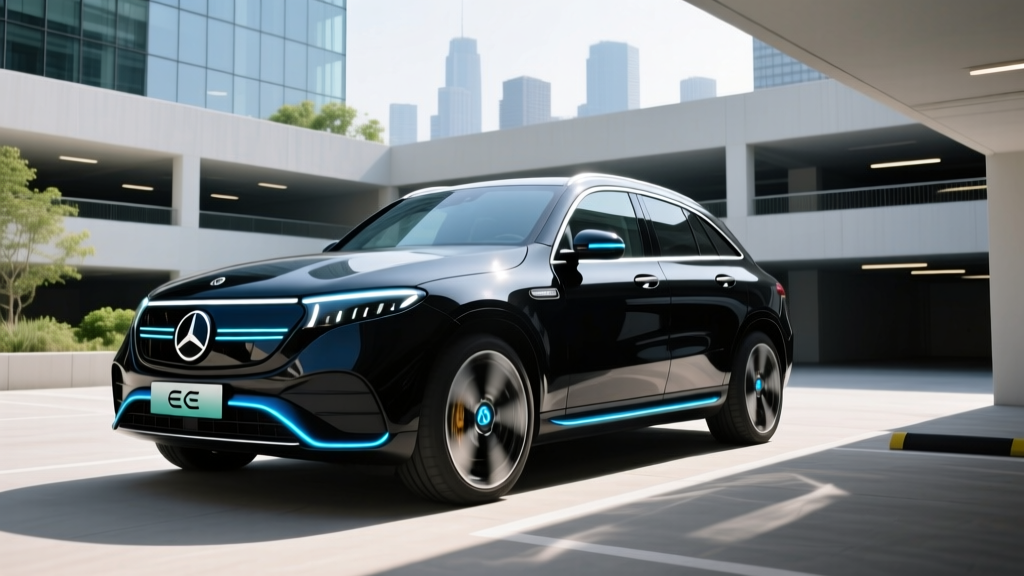
Mercedes-Benz has positioned the EQC sedan as the battery-electric counterpart to the long-running C-Class. Built on the Mercedes Modular Architecture (MMA) — the same platform underpinning the new CLA EV — the EQC sedan uses an 800-volt electrical architecture that enables faster DC charging and more efficient power delivery than the older EVA platform found in the EQS and EQE.
The base EQC 300+ runs a single rear-mounted motor producing 268 horsepower, while the dual-motor EQC 350 4MATIC pushes output to 402 hp with all-wheel drive. Mercedes has confirmed both NMC (nickel manganese cobalt) and LFP (lithium iron phosphate) battery options for the MMA lineup, with the EQC sedan expected to use NMC chemistry for its higher energy density — critical for fitting 89 usable kWh into a midsize sedan footprint.
| Spec | EQC 300+ (RWD) | EQC 350 4MATIC (AWD) |
|---|---|---|
| EPA Range (est.) | 340 miles | 310 miles |
| Battery (usable) | 89 kWh, NMC | 89 kWh, NMC |
| Horsepower | 268 hp | 402 hp |
| 0–60 mph | 6.2 sec | 4.5 sec |
| Peak DC Fast Charge | 200 kW | 200 kW |
| 10–80% DC Charge | ~30 min | ~30 min |
| Level 2 Charge Rate | 11 kW (AC) | 11 kW (AC) |
| MPGe (combined, est.) | 110 MPGe | 98 MPGe |
| Base MSRP | $59,900 | $66,400 |
| Battery Warranty | 8 yr / 100,000 mi | 8 yr / 100,000 mi |
Source: Mercedes-Benz USA preliminary specifications. Final EPA certification pending at launch.
Real-World Range vs. the EPA Sticker
Range Reality Check
EPA Estimate: 340 miles (EQC 300+)
Real-World Highway (70 mph, moderate climate): ~280–300 miles
Cold Weather (below 32°F, highway): ~230–260 miles
City / Suburban Mixed: ~310–335 miles
The EQC sedan's 800V architecture and heat pump (standard on all MMA vehicles) help mitigate cold-weather losses compared to older EV platforms. Mercedes rates the heat pump as recovering waste heat from the drivetrain to warm the cabin, reducing the battery drain that typically slashes winter range by 20–30% in EVs without thermal management.
However, physics is physics. At sustained 75–80 mph highway speeds, aerodynamic drag dominates energy consumption. Expect roughly 3.0–3.2 miles per kWh on the highway in the RWD model, which translates to 267–285 miles from a full charge. In freezing temperatures, the battery's internal resistance increases and cabin heating demands rise, even with the heat pump. Plan for 230–260 usable miles on a cold January road trip.
This is competitive with the segment. The BMW i4 eDrive40 (EPA 307 miles) yields similar real-world highway numbers, while the Tesla Model 3 Long Range (EPA 363 miles) benefits from slightly superior efficiency at ~4.0 mi/kWh highway.
Charging Speed and Infrastructure
The 200 kW peak DC fast-charge rate is respectable, though it trails the Hyundai Ioniq 6 (240 kW peak) and Tesla Model 3 (250 kW peak at V3 Superchargers). More important than peak rate is the charge curve — how long the car sustains high power before tapering.
Mercedes' 800V system allows the EQC to hold above 150 kW through roughly 60% state of charge before tapering. The 10–80% time of approximately 30 minutes is realistic based on the platform's confirmed performance in the CLA EV. For context, that adds roughly 185 miles of range in half an hour.
| Charging Level | Power | Miles Added Per Hour | Typical Use Case |
|---|---|---|---|
| Level 1 (120V) | 1.4 kW | ~5 mi/hr | Emergency / overnight trickle |
| Level 2 (240V, 48A) | 11 kW | ~37 mi/hr | Home / workplace daily charging |
| DC Fast Charge | 200 kW peak | ~370 mi/hr (peak) | Road trips, 10–80% in ~30 min |
The EQC sedan ships with a NACS (North American Charging Standard) port, granting native access to Tesla Supercharger stations without an adapter — a significant advantage for road-trip charging reliability. CCS1 access is available via adapter for Electrify America and other networks.
For home charging, a full 0–100% session on a Level 2 wallbox takes approximately 9 hours. Most owners charging from 20% to 80% overnight will need only 5–6 hours, easily achievable with off-peak electricity rates.
EQC Sedan vs. Gas C-Class: The Cost Breakdown
The most common question from C-Class shoppers: does going electric actually save money? Here's a 5-year comparison assuming 12,000 miles/year, $3.50/gallon premium fuel for the gas C300, and $0.14/kWh average electricity.
| Cost Category | EQC 300+ (Electric) | C300 (Gas, 2.0T) |
|---|---|---|
| Base MSRP | $59,900 | $47,550 |
| Federal Tax Credit (§30D) | Up to $7,500* | $0 |
| Effective Purchase Price | ~$52,400 | $47,550 |
| Fuel/Energy (5 yr / 60k mi) | $5,040 (home charging) | $12,600 (premium gas) |
| Maintenance (5 yr) | ~$1,200 | ~$3,800 |
| Insurance (5 yr avg) | ~$14,500 | ~$12,000 |
| Estimated Depreciation (5 yr) | ~$28,000 | ~$22,000 |
| Total 5-Year Cost | ~$101,140 | ~$97,950 |
*Federal tax credit eligibility depends on MSRP caps (sedans ≤$55,000 — the EQC likely exceeds this cap), buyer income limits, and battery-sourcing requirements. See IRS §30D guidelines. The point-of-sale transfer option allows the credit to reduce your purchase price at the dealer if eligible.
The honest takeaway: the EQC sedan does not clearly beat the gas C300 on total 5-year cost when you factor in higher purchase price, EV insurance premiums (typically 15–25% higher than equivalent ICE vehicles), and steeper luxury-EV depreciation. The fuel and maintenance savings are real — roughly $10,000 combined over 5 years — but they only partially offset the higher acquisition cost.
Where the EQC wins is the driving experience: instant torque, near-silent cruising, one-pedal regenerative braking in stop-and-go traffic, and zero tailpipe emissions. Buyers prioritizing refinement and daily convenience (home charging means a "full tank" every morning) over pure economics will find the EQC compelling.
Federal Tax Credit and Incentive Reality
§30D Clean Vehicle Credit — Key Requirements (2026)
- MSRP Cap: Sedans must be ≤$55,000 — the EQC at $59,900 likely exceeds this, disqualifying it from the federal credit
- Buyer Income Cap: AGI ≤$150,000 (single) / ≤$300,000 (joint) for the purchase year or prior year
- Battery Sourcing: Critical minerals and battery components must meet phased-in domestic/free-trade-partner thresholds
- Point-of-Sale Transfer: Eligible buyers can transfer the credit to the dealer to reduce the purchase price at signing
- Manufacturer Cap: No longer applies under current law (removed by the Inflation Reduction Act)
This is a critical point for EQC shoppers: at $59,900 base, the sedan likely falls above the $55,000 MSRP cap for sedans under §30D. This means most buyers will not qualify for the $7,500 federal credit on this specific model. The EQC may qualify for state-level incentives (California's CVRP, Colorado's innovative motor vehicle credit, etc.), but those vary by jurisdiction — check your state's energy office for current programs.
Leasing is a potential workaround. Under §45W, the commercial clean vehicle credit can apply to leased EVs regardless of MSRP caps, and many lessors pass the $7,500 benefit through as a capitalized-cost reduction. Ask your Mercedes dealer about lease-specific incentive pass-through.
Common Misconceptions About the Electric C-Class
| Myth | Fact |
|---|---|
| "The battery will need replacing in 5 years" | Mercedes warranties the battery for 8 years/100,000 miles with a 70% capacity-retention threshold. NMC batteries in liquid-cooled packs typically degrade 10–15% over 150,000 miles based on industry data. |
| "I can't take road trips" | With NACS access to 20,000+ Superchargers and 200 kW DC charging, a 500-mile trip requires one 30-minute stop — comparable to a gas-car lunch break. |
| "Charging at home is expensive to install" | A basic Level 2 wallbox install on an existing 240V/50A circuit runs $800–$1,500. A full panel upgrade to 200A adds $2,000–$4,000. Most homes with electric dryers or ovens already have sufficient capacity. |
| "EVs are worse in the cold" | Range drops 15–30% in sub-freezing temps, yes. But the EQC's heat pump and battery preconditioning mitigate this. The car also starts instantly in cold weather — no cranking, no warm-up idle. |
| "It's self-driving with Drive Pilot" | Mercedes Drive Pilot is SAE Level 3, but only on approved highway sections under 40 mph in specific conditions (currently limited to Nevada and California). All other driving requires full driver attention. |
SAE Automation Level: Drive Pilot
Mercedes-Benz Drive Pilot is certified as SAE Level 3 — meaning the car handles all driving tasks in narrowly defined conditions (mapped divided highways, under 40 mph, clear weather, daytime). The driver may look away but must be ready to resume control within ~10 seconds when prompted. This is not full self-driving. Outside those specific conditions, the EQC operates at Level 2 (driver must remain engaged at all times), like Tesla Autopilot or BMW Driving Assistant.
Who Should Buy the Electric C-Class — Decision Framework
Choose the EQC Sedan If:
- You have Level 2 home charging (garage or driveway with 240V access)
- Your daily commute is under 100 miles round-trip (covers 90%+ of US drivers)
- You value cabin silence, instant acceleration, and luxury tech over lowest total cost
- You take 2–4 road trips per year and are comfortable planning 30-minute DC fast-charge stops
- You live in a state with additional EV incentives that offset the MSRP-cap limitation
- You want NACS Supercharger access without an adapter
Stick with the Gas C300 or Consider a PHEV If:
- You live in an apartment or street-park with no reliable home charging access
- You regularly drive 300+ miles in a single day through rural charging deserts
- You live in a region with extreme cold (below 0°F regularly) and cannot garage the vehicle
- The $12,000+ purchase-price premium over the gas C300 is a deal-breaker for your budget
- You need the federal $7,500 credit and the EQC's MSRP disqualifies it — consider leasing or the CLA EV (lower MSRP, more likely to qualify)
First-Time EV Buyer Essentials
If the EQC sedan is your first electric vehicle, here are the practical realities no brochure mentions:
Home charging is non-negotiable for convenience. Without Level 2 home charging, EV ownership becomes a chore of planning public charging sessions. Budget $800–$1,500 for a quality Level 2 wallbox (ChargePoint Home Flex, Emporia Vue, or Tesla Wall Connector) plus electrician installation. If your electrical panel is maxed out, a 200A service upgrade adds $2,000–$4,000 — get a quote from a licensed electrician before committing to the car.
Insurance will cost more. EV luxury sedans carry 15–25% higher premiums than their gas equivalents due to higher repair costs (battery pack proximity to crash structures, specialized body-shop requirements). Get an insurance quote before signing the purchase agreement.
Maintenance is minimal but not zero. Expect cabin air filter replacements ($80–$150), tire rotations, brake fluid checks, and windshield washer fluid. Regenerative braking extends pad life dramatically — many EV owners go 80,000+ miles on original brake pads. But EVs are heavier, which accelerates tire wear. Budget for premium tire replacement every 30,000–40,000 miles ($800–$1,200 for a set of four).
Preconditioning matters. The EQC's navigation system can precondition the battery when a DC fast charger is set as your destination — warming it to optimal temperature for maximum charge speed. In cold weather, this can cut your 10–80% charge time by 5–10 minutes. Always use it.
Frequently Asked Questions
Does the electric C-Class qualify for the $7,500 federal tax credit?
Likely not via purchase. The §30D credit caps sedan MSRP at $55,000, and the EQC starts at $59,900. However, leasing the EQC may allow the dealer to apply the $7,500 commercial credit (§45W) as a lease incentive, effectively reducing your monthly payment. Consult your tax professional and ask the dealer specifically about lease credit pass-through.
How long does the EQC battery last, and what does replacement cost?
Mercedes warranties the battery for 8 years or 100,000 miles, guaranteeing at least 70% of original capacity. Real-world degradation data from similar NMC packs suggests 10–15% capacity loss over 150,000 miles. Full battery replacement, if needed out of warranty, currently runs $15,000–$22,000 for packs in this capacity range — though individual module replacement may cost significantly less.
Can I charge the EQC at Tesla Superchargers?
Yes. The 2026 EQC sedan ships with a native NACS charge port, granting direct access to Tesla's Supercharger network (20,000+ stalls in North America) without any adapter. This is one of the strongest road-trip charging advantages over CCS-only vehicles.
How does the EQC compare to the BMW i4 and Tesla Model 3?
The BMW i4 eDrive40 (EPA 307 mi, $57,900) is slightly less expensive with comparable range but uses CCS1 charging. The Tesla Model 3 Long Range (EPA 363 mi, $49,990) wins on range, price, and efficiency, but the EQC offers a more traditional luxury interior, Mercedes' MBUX infotainment, and a quieter ride. Choose the EQC for luxury refinement, the Model 3 for value and range, and the i4 for driving dynamics.
What happens if I run out of charge on the road?
The EQC's navigation system proactively warns of low charge and routes you to the nearest DC fast charger. If you do deplete the battery, roadside assistance (included with Mercedes me connect) can tow the vehicle to a charger. Unlike a gas car, you cannot bring a "jerry can" — plan routes with a 30–50 mile buffer in unfamiliar territory.