Quick Answer: Is the Mercedes C Electric Right for You?
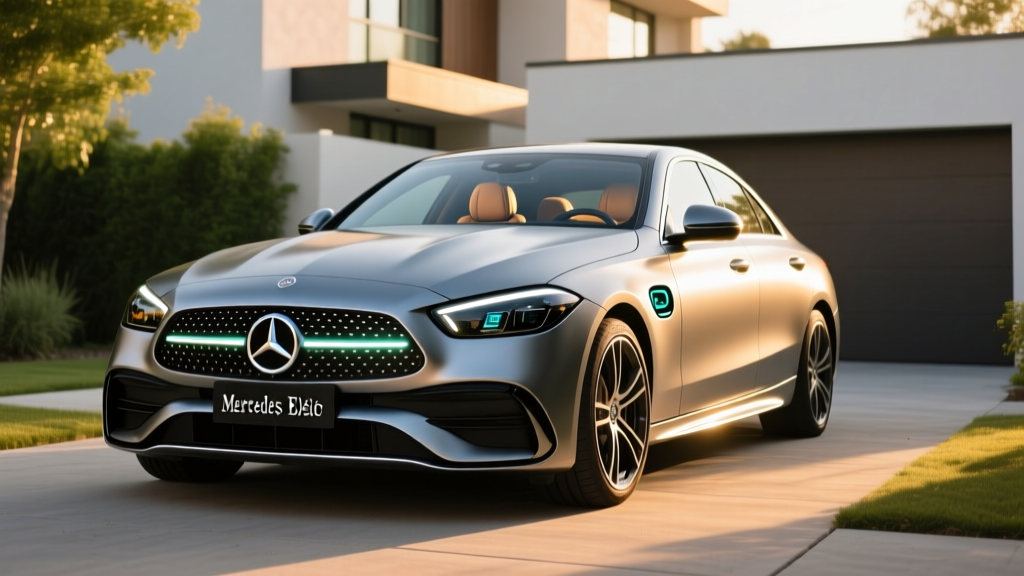
The Mercedes-Benz C-Class electric (built on the MMA platform and marketed under the EQ naming structure for 2026) targets luxury sedan buyers who want premium build quality, a ~340-mile EPA range, and 800V-class DC fast charging in a compact executive package. Starting around $52,000 before incentives, it competes directly with the Tesla Model 3, BMW i4, and Genesis Electrified G80. If you have access to Level 2 home charging, drive under 300 miles daily, and value cabin refinement over outright performance, the C-Class electric is a strong contender. If you rely exclusively on public charging in a cold climate or need a sub-$40K entry point, a plug-in hybrid C-Class or a different BEV may serve you better.
What Is the Mercedes C Electric? Platform, Specs, and Availability
For 2026, the electric C-Class is built on Mercedes-Benz's MMA (Mercedes Modular Architecture) platform, which supports an 800-volt electrical system, rear-wheel-drive and 4MATIC all-wheel-drive layouts, and both NMC (nickel manganese cobalt) and LFP (lithium iron phosphate) battery options depending on trim. The concept previewing this vehicle was the Concept CLA Class, and the production C-Class electric variant follows the same underpinnings.
| Specification | C 350 e (RWD) | C 450 4MATIC (AWD) |
|---|---|---|
| EPA Range (est.) | ~340 miles | ~310 miles |
| Battery Capacity (usable) | 85 kWh (NMC) | 85 kWh (NMC) |
| Motor Output | 268 hp / 295 lb-ft | 402 hp / 443 lb-ft |
| 0–60 mph | ~6.2 sec | ~4.5 sec |
| Peak DC Fast Charge | 250 kW | 250 kW |
| 10–80% DC Charge Time | ~22 min | ~22 min |
| Level 2 Charge Rate (AC) | 11 kW | 11 kW |
| Charging Port | NACS (native) | NACS (native) |
| Base MSRP (est.) | $52,000 | $58,500 |
| Battery/Powertrain Warranty | 8 yr / 100,000 mi | 8 yr / 100,000 mi |
Note: Specs above are based on Mercedes-Benz MMA platform announcements and European preliminary data. Final US EPA figures and pricing will be confirmed closer to on-sale date. Always verify at your local dealer.
Real-World Range Expectations
The EPA sticker may read ~340 miles, but real-world results vary significantly:
- Highway (70–75 mph, mild weather): Expect ~280–300 miles
- City/mixed driving (moderate temps): ~310–330 miles — regen braking helps
- Cold weather (below 32°F, highway): ~230–260 miles — battery heating consumes energy, and cabin heat draws from the pack even with a heat pump
- DC fast charging reality: The 250 kW peak rate is sustained roughly between 10–40% SoC, then tapers. Your 10–80% session averages closer to 170–190 kW. Plan for ~22 minutes at a functioning 350 kW station, not the 15 minutes marketing implies.
Electric C-Class vs. Gas C-Class vs. C-Class PHEV: Which Saves More?
The traditional C300 gas sedan and the C300e plug-in hybrid remain in the lineup. Here's how they stack up in a five-year ownership scenario at 12,000 miles per year.
| Factor | C-Class Electric (C 350 e) | C300 Gas | C300e PHEV |
|---|---|---|---|
| Base MSRP | $52,000 | $46,500 | $55,000 |
| Fuel/Energy Cost (5 yr) | ~$3,900 (home L2, $0.14/kWh) | ~$11,250 ($3.75/gal, 28 MPG comb.) | ~$6,800 (mixed gas + electric) |
| Maintenance (5 yr) | ~$1,800 | ~$4,200 | ~$3,400 |
| Federal Tax Credit (§30D) | Up to $7,500* | $0 | Up to $3,750* |
| Est. Insurance (5 yr) | ~$12,500 | ~$9,800 | ~$11,200 |
| 5-Year Total Cost (est.) | ~$62,700 | ~$71,750 | ~$72,650 |
*Federal §30D credit eligibility depends on MSRP caps (sedans: $55,000), buyer income limits ($150K single / $300K joint), and battery critical-mineral/component sourcing rules per IRS guidelines. Always confirm with a tax professional before purchase. The point-of-sale transfer option lets you apply the credit at the dealership.
The electric C-Class wins on five-year cost primarily through fuel and maintenance savings — no oil changes, fewer brake replacements thanks to regenerative braking, and far cheaper "fuel" when charging at home. However, insurance runs roughly 15–25% higher for the EV due to repair-cost data and battery replacement risk assessments.
Real Costs of Ownership: Charging, Insurance, and Maintenance
Charging Cost Breakdown
| Charging Method | Cost per kWh | Cost per Full Charge (85 kWh) | Cost per Mile |
|---|---|---|---|
| Home Level 1 (120V, 1.4 kW) | $0.14 (avg US residential) | $11.90 | $0.035 |
| Home Level 2 (240V, 11 kW) | $0.14 | $11.90 | $0.035 |
| Public Level 2 (ChargePoint, etc.) | $0.25–$0.39 | $21.25–$33.15 | $0.06–$0.10 |
| DC Fast Charging (EA, Tesla SC) | $0.35–$0.56 | $29.75–$47.60 | $0.09–$0.14 |
For comparison, the gas C300 at 28 MPG combined and $3.75/gallon costs roughly $0.134 per mile in fuel alone. Home-charged electric miles undercut that by 75%.
Insurance Reality
Expect to pay $2,200–$2,800 annually for the electric C-Class depending on your state, driving record, and coverage level. That's $400–$700 more per year than the gas C300. EV insurance is higher because collision repairs often involve high-voltage safety protocols, and battery-pack replacement costs (estimated $15,000–$22,000 out of warranty) influence total-loss thresholds. Shop quotes from GEICO, Progressive, and EV-specialty carriers like Lemonade before purchasing.
Maintenance Savings
The electric C-Class eliminates:
- Oil changes ($150–$250 each, 2× per year)
- Transmission fluid service
- Spark plugs, timing belts, exhaust system repairs
- Frequent brake pad replacement (regen braking extends pad life to 80,000+ miles in many cases)
You'll still need tire rotations, cabin air filter replacement, windshield washer fluid, and eventual tire replacement — EVs tend to wear tires 15–20% faster due to instant torque and higher curb weight.
Home Charging Setup: What You Actually Need
This is where many first-time EV buyers stumble. The electric C-Class includes an 11 kW onboard charger, meaning a properly installed Level 2 home station will add roughly 37 miles of range per hour of charging. An overnight session (8 hours) replenishes about 295 miles — enough for nearly any daily commute.
| Item | Cost Range | Notes |
|---|---|---|
| Level 2 EVSE (40–48A, hardwired) | $500–$800 | ChargePoint Home Flex, Emporia Vue, Wallbox Pulsar Plus |
| Electrician labor (240V/50A circuit) | $800–$2,500 | Varies by panel proximity, conduit run length |
| Electrical panel upgrade (if needed) | $1,500–$3,500 | Required if your panel is 100A or maxed out |
| Permit and inspection | $100–$300 | Required in most jurisdictions |
| Total typical install | $1,400–$3,600 | Without panel upgrade; add $1,500–$3,500 if needed |
If you live in an apartment or condo without dedicated parking and charging access, your ownership experience will depend entirely on public charging infrastructure. Check PlugShare and your local Electrify America or Tesla Supercharger map before committing. Regularly DC fast charging exclusively is more expensive per mile and accelerates battery degradation slightly compared to predominantly Level 2 charging.
Common Misconceptions About the Mercedes C Electric
| Myth | Fact |
|---|---|
| "The battery will need replacing in 5 years." | Mercedes warranties the battery for 8 years/100,000 miles against degradation below 70% capacity. Industry data from Geotab's fleet study shows average EV battery degradation of ~1.8% per year — meaning at year 8, most packs retain 85%+ of original capacity. |
| "It qualifies for the full $7,500 tax credit, no questions asked." | §30D eligibility requires meeting MSRP caps ($55K for sedans), buyer income limits, and critical-mineral/battery-component sourcing thresholds that change annually. A vehicle may qualify for $3,750 or $7,500 depending on when and how it's sourced. Verify on the IRS clean vehicle credit page. |
| "Charging takes too long for road trips." | At 250 kW peak on a 350 kW-capable station, you'll add ~200 miles in a 20-minute stop — comparable to a gas fill-up plus a bathroom break and coffee. The issue is station reliability and availability, not raw speed. |
| "Cold weather makes it unusable." | Range drops 20–30% in sub-freezing temps, but the MMA platform includes a heat pump and battery preconditioning. Precondition the cabin and battery while still plugged in at home, and the impact is manageable for most commutes. |
| "It's self-driving with Mercedes' driver assist." | Mercedes' DRIVE PILOT is a Level 2 driver-assistance system requiring hands-on or eyes-on engagement in most US markets. Only in limited, geo-fenced highway conditions in Nevada and California has Mercedes received NHTSA-acknowledged Level 3 approval at speeds up to 40 mph. You remain the driver. |
Decision Framework: Should You Buy the Mercedes C Electric?
Choose the C-Class Electric if:
- You have or can install Level 2 home charging (a 240V/50A circuit)
- Your daily driving is under 250 miles and you can charge overnight
- You value cabin quietness, MBUX tech, and Mercedes build quality
- You want to reduce per-mile fuel cost by 70%+ over gas
- You're eligible for the federal §30D credit (check income and sourcing rules)
- You plan to keep the car 5+ years to amortize the higher purchase price
Choose the C300 Gas or C300e PHEV Instead if:
- You live in an apartment/condo with no charging access and limited public infrastructure
- You regularly drive 400+ miles in a single day through charging-desert regions
- Your budget is strictly under $45,000 and you don't qualify for incentives
- You live in extreme cold (sustained below 0°F) where range loss compounds
- You want a traditional Mercedes service relationship without EV-specific training requirements
Consider the Tesla Model 3 or BMW i4 if:
- You want a more established Supercharger network (though the C electric's native NACS port gives full Tesla access)
- Performance is a priority — the Model 3 Performance does 0–60 in 2.9 seconds for under $55K
- You prefer BMW's driving dynamics and iDrive interface
Frequently Asked Questions
What is the real-world range of the Mercedes C-Class electric?
The EPA estimate is approximately 340 miles for the RWD trim. In real-world mixed driving at moderate temperatures, expect 300–320 miles. Highway driving at 75 mph drops this to ~280 miles, and sub-freezing winter highway driving can reduce range to 230–260 miles. The heat pump helps, but physics wins in extreme cold.
Does the Mercedes C electric use NACS or CCS?
Mercedes-Benz has committed to the NACS (North American Charging Standard) connector for its MMA-platform vehicles in North America. This means native compatibility with Tesla Superchargers without an adapter — a significant advantage for road-trip charging infrastructure access.
How long does it take to charge at home?
On an 11 kW Level 2 home charger, a full 0–100% charge takes approximately 8.5 hours. For a typical 20–80% daily cycle, you're looking at roughly 5 hours. A standard 120V Level 1 outlet adds only about 4 miles of range per hour — useful for overnight top-ups but not practical as a primary charging method.
Is the Mercedes C electric eligible for the $7,500 federal tax credit?
Eligibility under IRS §30D depends on multiple factors: the sedan MSRP must not exceed $55,000, your adjusted gross income must be under $150,000 (single) or $300,000 (joint), and the battery must meet critical-mineral and component-sourcing thresholds that tighten each year. Some configurations may qualify for $3,750 rather than the full $7,500. The credit can be transferred at point of sale to reduce your purchase price directly. Consult a tax professional and check the latest IRS clean vehicle credit guidance.
How does the electric C-Class compare to the C300e plug-in hybrid?
The C300e PHEV offers roughly 55 miles of electric-only range before the gas engine engages, making it ideal for short commutes with the flexibility of gas for road trips. However, you maintain two systems (engine + electric motor), meaning higher maintenance costs long-term. If your daily driving is under 50 miles and you can charge at home, the PHEV eliminates range anxiety but sacrifices the full fuel-cost savings and simplicity of a BEV.
What happens if the battery degrades or fails?
Mercedes covers the high-voltage battery for 8 years or 100,000 miles, warranting it against capacity loss below 70% of original. If the battery falls below that threshold within the warranty period, Mercedes will repair or replace it at no cost. Out-of-warranty replacement is estimated at $15,000–$22,000 depending on labor and parts availability — a significant cost to factor into long-term ownership plans beyond year 8.
Can I take the Mercedes C electric on long road trips?
Yes, with planning. With ~280 miles of real-world highway range and 10–80% charging in ~22 minutes at a 250 kW station, you'll stop every 2.5–3 hours for a 20-minute charge. The native NACS port opens the entire Tesla Supercharger network. The main friction point is station availability in rural corridors — use PlugShare or the Mercedes me app to map DC fast chargers along your route before departure.