Quick Answer: Is the Mercedes C-Class EV Worth the Wait?
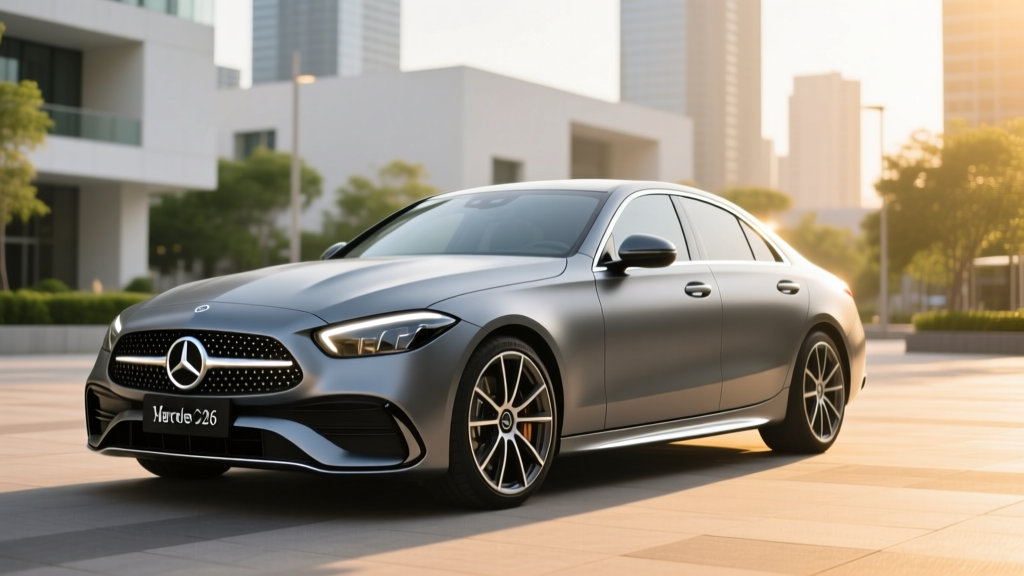
The all-electric Mercedes-Benz C-Class (built on the new MB.EA platform) is expected to arrive for the 2026 model year with an estimated EPA range of 300–350 miles, an ~85–100 kWh usable battery (NMC chemistry), 800-volt architecture enabling DC fast charging at up to ~250 kW (10–80% in approximately 20–22 minutes), and a starting MSRP in the $55,000–$60,000 range. It is not yet on sale — Mercedes has confirmed the MB.EA platform but final EPA certifications and pricing remain preliminary. If you need an EV today, the closest in-brand alternative is the Mercedes EQE sedan (EPA range up to 308 miles, MSRP from ~$74,900). The C-Class EV will compete directly with the BMW i4, Tesla Model 3, and upcoming electric Audi A4.
What We Know About the Mercedes C-Class EV So Far
Mercedes-Benz has confirmed that the next-generation C-Class will be offered as a fully electric vehicle built on the company's MB.EA (Mercedes-Benz Electric Architecture) platform. This dedicated EV underpinning replaces the adapted architecture used in the current EQ lineup and is designed for 800-volt electrical systems, improved energy density, and faster charging.
As of early 2026, Mercedes has not published final EPA range figures, confirmed U.S. trim levels, or opened order books for the electric C-Class. What follows is based on Mercedes' published MB.EA platform specifications, European pre-release data, and informed projections from comparable vehicles in the segment. All specs should be treated as estimated until the EPA certifies the production vehicle.
| Specification | Estimated Value |
|---|---|
| Platform | MB.EA (dedicated EV) |
| Battery Chemistry | NMC (Nickel Manganese Cobalt) |
| Battery Capacity (usable) | ~85–100 kWh |
| EPA Range (est.) | 300–350 miles |
| Real-World Highway Range | ~250–290 miles |
| DC Fast Charge (peak) | ~250 kW (800V architecture) |
| 10–80% DC Charge Time | ~20–22 minutes (est.) |
| Level 2 AC Charge Rate | 11 kW (standard) / 22 kW (optional) |
| 0–60 mph | ~5.5–6.5 sec (RWD); ~3.8–4.5 sec (AWD/AMG) |
| Horsepower | ~270 hp (RWD) / ~400+ hp (AWD) |
| Starting MSRP (est.) | $55,000–$60,000 |
| Battery Warranty | 8 years / 100,000 miles (Mercedes standard) |
Real-World Range: What the EPA Sticker Won't Tell You
Mercedes' European WLTP testing suggests the electric C-Class could achieve over 400 miles on the more generous WLTP cycle. U.S. EPA estimates are typically 15–25% lower than WLTP figures, which is why we project a 300–350 mile EPA range for the long-range rear-wheel-drive variant.
EPA Estimated Range: ~300–350 miles (preliminary, RWD long-range variant)
Real-World Expectations:
- Mixed driving (city/highway): ~280–320 miles
- Sustained highway (75+ mph): ~250–280 miles — aerodynamic drag reduces efficiency significantly above 70 mph
- Cold weather (below 32°F): ~220–260 miles — NMC chemistry loses 15–30% capacity in freezing temperatures without preconditioning
- With cabin preconditioning and heat pump: Cold-weather losses can be reduced to ~10–15%
The 800-volt architecture should allow the C-Class EV to precondition its battery more efficiently before DC fast charging sessions, which matters for sustaining peak charge rates. In real-world testing of comparable 800V platforms (Hyundai Ioniq 5, Porsche Taycan), vehicles sustain peak charge rates longer and taper more gradually above 80% State of Charge (SoC) compared to 400V systems.
Charging Speed and Infrastructure Compatibility
The C-Class EV's 800-volt system is the headline spec, but understanding what that means at an actual charger matters more than the architecture voltage.
| Charging Level | Power (kW) | Miles Added per Hour | Typical Use Case |
|---|---|---|---|
| Level 1 (120V household) | ~1.4 kW | ~4–5 miles | Overnight trickle; emergency only |
| Level 2 (240V home/public) | 11 kW (std) / 22 kW (opt) | ~35–70 miles | Daily home charging; full overnight refill |
| DC Fast Charge | Up to ~250 kW peak | ~700+ miles/hour (peak rate) | Road trips; 10–80% in ~20 min |
kW vs kWh — the critical distinction: kW (kilowatts) measures power — the rate at which energy flows into the battery. kWh (kilowatt-hours) measures energy — the total capacity of the battery. Think of kW as the width of the hose and kWh as the size of the tank. A 250 kW peak charge rate filling a 100 kWh battery sounds like a 24-minute fill, but the charge curve tapers significantly above 80% SoC to protect battery health.
Connector: Mercedes has adopted the NACS (North American Charging Standard) connector for new models, meaning the C-Class EV will have native access to Tesla Supercharger stations (now open to non-Tesla EVs via NACS) in addition to Electrify America, EVgo, and other networks. No adapter needed.
EV vs Gas C-Class: Cost Comparison Over 5 Years
The current Mercedes C300 (gas, 255 hp turbocharged I-4) starts around $47,000 and achieves an EPA-estimated 29 MPG combined (fueleconomy.gov). Let's compare projected 5-year ownership costs assuming 15,000 miles per year.
| Cost Category | C-Class EV (est.) | C300 Gas |
|---|---|---|
| Purchase Price (MSRP) | $58,000 | $47,000 |
| Federal Tax Credit (§30D) | Up to $7,500* | $0 |
| Effective Purchase Price | $50,500 | $47,000 |
| Fuel/Energy (5 yrs, 75K mi) | $4,500–$6,000** | $10,500–$12,000 |
| Maintenance (5 yrs) | $1,500–$2,500 | $4,000–$5,500 |
| Insurance (5 yrs) | $12,000–$15,000 | $9,000–$12,000 |
| Estimated Depreciation | $22,000–$28,000 | $18,000–$22,000 |
| Total 5-Year Cost (est.) | $90,500–$107,000 | $88,500–$98,500 |
*§30D federal tax credit eligibility depends on buyer income caps ($150K single / $300K joint), vehicle MSRP caps ($55,000 sedans), battery sourcing requirements, and point-of-sale transfer availability. The C-Class EV sedan may exceed the $55,000 MSRP cap depending on trim. Consult IRS.gov §30D guidelines and a tax professional before assuming eligibility.
**Energy costs assume $0.14/kWh home charging average and 3.5 miles/kWh efficiency. Public DC fast charging at $0.35–$0.50/kWh will increase costs.
The EV's fuel and maintenance savings are substantial — roughly $6,000–$9,000 saved over 5 years — but the higher purchase price, potentially higher insurance premiums, and uncertain depreciation partially offset those gains. The break-even point typically arrives around year 4–6 depending on local electricity rates and driving volume.
Federal Tax Credit: Will the C-Class EV Qualify?
This is where Mercedes buyers often encounter surprises. The §30D Clean Vehicle Credit has strict requirements that may limit or eliminate the $7,500 credit for a luxury sedan:
- MSRP cap for sedans: $55,000. A fully loaded C-Class EV could exceed this threshold, disqualifying it entirely.
- Buyer income cap: Modified AGI must not exceed $150,000 (single) or $300,000 (married filing jointly).
- Battery sourcing requirements: Critical minerals and battery components must meet escalating domestic-content percentages that increase each year through 2029.
- Point-of-sale transfer: Eligible buyers can transfer the credit to the dealer at purchase, reducing the out-of-pocket price immediately rather than waiting for tax filing.
- FEOC restriction: Vehicles with battery components from Foreign Entities of Concern (primarily Chinese supply chain) are disqualified.
Given Mercedes' global supply chain, battery sourcing compliance will depend on where the C-Class EV's cells are manufactured. Mercedes has been building battery plants in the U.S. (Bibb County, Alabama), which may help compliance. Buyers should verify eligibility on fueleconomy.gov at the time of purchase.
Common Misconceptions About the C-Class EV
| Myth | Fact |
|---|---|
| "It's just an EQC with a C-Class badge." | The C-Class EV rides on the dedicated MB.EA platform, not an adapted ICE chassis. Expect better packaging, lower floor, and superior efficiency vs the older EQ lineup. |
| "300+ miles of range means I'll always get 300 miles." | EPA range assumes mixed driving at moderate temperatures. Highway-only driving at 80 mph in winter can reduce range by 25–35%. |
| "I'll get the full $7,500 tax credit." | Luxury sedans face a $55,000 MSRP cap. Higher trims and option packages can push the C-Class EV above this threshold, eliminating the credit. |
| "It charges as fast as a Tesla." | Peak kW is not sustained kW. A 250 kW peak rate tapers above 80% SoC. Real-world 10–80% sessions average closer to 150–180 kW sustained. |
| "EVs don't need maintenance." | Tires, cabin filters, brake fluid, wiper fluid, and software updates still require attention. EVs simply eliminate oil changes, spark plugs, and transmission fluid. |
Decision Framework: Should You Wait or Buy Now?
Wait for the C-Class EV if:
- You want a compact luxury EV sedan with Mercedes build quality and the latest MBUX infotainment
- You have reliable home Level 2 charging access (or can install it)
- Your daily commute is under 80 miles round-trip with occasional 250-mile road trips
- You can be flexible on timing — the vehicle may not arrive in volume until late 2026 or early 2027
- You value 800V fast-charging architecture for road-trip practicality
Buy something now if:
- You need a vehicle in the next 3–6 months — the C-Class EV is not yet available for delivery
- You want guaranteed §30D tax credit eligibility — consider the Tesla Model 3 (MSRP from ~$38,990, EPA 341 mi, widely credit-eligible) or BMW i4 (MSRP from ~$52,200, EPA up to 307 mi)
- You primarily drive in extreme cold without garage parking — a PHEV like the Mercedes C300e (if available in your market) offers gas backup
- You want a proven Mercedes EV today — the EQE 350+ (EPA 308 mi, MSRP ~$74,900) is available now
First-Time EV Buyer Essentials
If the C-Class EV would be your first electric vehicle, these practical realities matter more than spec sheets:
Home charging is non-negotiable for convenience. A Level 2 home charger (240V, 40–48 amp circuit) delivers a full overnight charge and costs $800–$2,500 installed depending on your electrical panel. If your panel is older (100A service), a panel upgrade to 200A can add $1,500–$3,500. Always get a quote from a licensed electrician before purchasing.
Public charging is improving but not seamless. NACS adoption means broader Supercharger access, but urban apartment dwellers without home charging will still rely on public infrastructure. Research your local charging options (PlugShare, A Better Routeplanner) before committing.
Insurance premiums run 15–25% higher for EVs compared to gas equivalents, driven by higher repair costs and battery replacement values. Get insurance quotes before purchasing.
Tire wear accelerates 20–30% faster on EVs due to instant torque and heavier vehicle weight. Budget for tire replacement every 25,000–35,000 miles rather than the 45,000–55,000 typical for gas sedans.
Frequently Asked Questions
When will the Mercedes C-Class EV be available in the U.S.?
Mercedes has confirmed the MB.EA platform and electric C-Class for the 2026–2027 timeframe. U.S. deliveries are expected to begin in late 2026 at the earliest, with broader availability in 2027. Final EPA certification and pricing have not been published.
Will the C-Class EV have access to Tesla Superchargers?
Yes. Mercedes has adopted the NACS connector, meaning the C-Class EV will have native access to Tesla's Supercharger network (15,000+ stations in North America) without an adapter. It will also work with Electrify America, EVgo, ChargePoint, and other networks.
How does the C-Class EV compare to the BMW i4?
The BMW i4 is available now with EPA ranges up to 307 miles (eDrive40), starts at ~$52,200, and uses the CCS connector (requires an adapter for NACS Superchargers). The C-Class EV may offer slightly more range and faster charging via its 800V architecture, but won't be available for at least several more months and may cost more.
What battery chemistry will the C-Class EV use?
Mercedes has indicated NMC (Nickel Manganese Cobalt) chemistry for the MB.EA platform, prioritizing energy density and range. NMC offers better cold-weather performance than LFP (Lithium Iron Phosphate) but is recommended for 80% daily charge limits to maximize longevity — unlike LFP, which tolerates regular 100% charging.
Is the C-Class EV eligible for the $7,500 federal tax credit?
Possibly, but not guaranteed. The §30D credit has a $55,000 MSRP cap for sedans, buyer income limits, and battery sourcing requirements. A base-trim C-Class EV may qualify, while higher trims may exceed the cap. Verify eligibility at purchase on fueleconomy.gov and consult a tax professional.