Quick Answer: What Is the C-Class Electric?
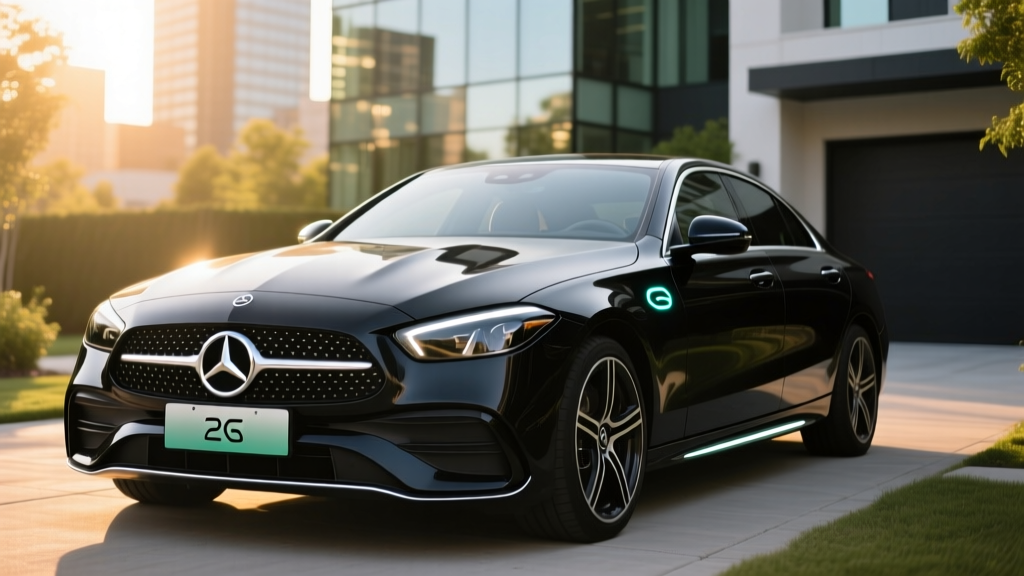
The Mercedes-Benz C-Class electric is an upcoming compact luxury sedan built on the new Mercedes-Benz Modular Architecture (MMA). Expected to arrive in U.S. showrooms as a 2026 or 2027 model, it targets an EPA-estimated range of approximately 350–400 miles (WLTP figures suggest up to 466 miles / 750 km for the rear-drive variant), an 85 kWh usable battery, and 800-volt DC fast-charging capability peaking around 250 kW. Pricing is anticipated to start near $52,000–$55,000 before incentives, positioning it against the Tesla Model 3, BMW i4, and Hyundai Ioniq 6. It is not yet on sale — specs below are based on Mercedes' published MMA platform data and European pre-release information and remain preliminary until EPA certification.
The C-Class Electric in Context: Why It Matters
Mercedes has confirmed that its next-generation C-Class lineup will include a fully electric variant alongside the traditional internal-combustion models. Unlike the EQE sedan — which sits a class above in size and price — the electric C-Class aims to be a volume luxury entry point. It rides on the MMA platform, which Mercedes debuted with the CLA electric sedan and which supports both battery-electric and range-extended configurations.
For buyers cross-shopping a BMW 3 Series, Audi A4, or gas-powered C300, the electric C-Class represents a decision point: stick with a proven gas sedan or jump to an electric platform with markedly lower running costs but higher upfront pricing and new ownership habits.
Range, Battery & Charging: The Preliminary Numbers
Mercedes has published the following platform-level data for MMA-based sedans. Final C-Class-specific figures will depend on body style, drivetrain, and wheel size.
| Spec | Target / Estimate |
|---|---|
| Usable Battery Capacity | ~85 kWh (NMC chemistry, cell-to-pack design) |
| WLTP Range (RWD) | Up to 750 km (~466 mi) |
| EPA Range (Estimated, RWD) | ~350–400 mi (EPA typically 10–15% lower than WLTP) |
| EPA Range (Estimated, AWD) | ~310–350 mi |
| Efficiency (WLTP) | ~12 kWh/100 km (~193 Wh/mi) |
| Architecture Voltage | 800V nominal |
| Peak DC Fast Charge | ~250 kW |
| 10–80% DC Charge Time | ~22–25 min (estimated) |
| Level 2 AC Charge Rate | 11 kW (est. ~9 hrs for 10–100%) |
| Drivetrain | RWD standard; AWD (4MATIC) available |
| System Output (RWD est.) | ~268 hp / 200 kW |
| 0–60 mph (RWD est.) | ~6.5 sec |
Real-World Range Reality Check
A 400-mile EPA sticker does not mean 400 miles in every condition. Based on comparable 800V platforms (Hyundai Ioniq 6, Porsche Taycan):
- Highway driving at 75 mph: Expect ~310–340 miles (aerodynamic drag dominates above 65 mph)
- Cold weather (20°F / -7°C): Expect ~260–300 miles — a 20–30% reduction is typical for NMC packs without aggressive heat-pump preconditioning
- City/mixed driving at moderate temps: Close to the EPA sticker, possibly 380–400 miles with regen braking assistance
The 800V architecture and cell-to-pack construction should yield class-leading efficiency, but physics still governs range: speed, temperature, and terrain matter.
Charging Speed: What the Curve Actually Looks Like
A 250 kW peak charge rate is impressive on paper, but sustained charging speed matters more for road trips. On 800V platforms, the charge curve typically holds near peak power from roughly 10% to 50% State of Charge (SoC), then tapers progressively. Expect the following at a 350 kW-capable DC fast charger (e.g., Electrify America, EVgo, or Tesla Supercharger with NACS adapter):
- 10–30% SoC: ~220–250 kW sustained (fastest segment)
- 30–60% SoC: ~175–200 kW
- 60–80% SoC: ~100–130 kW (taper begins)
- 80–100% SoC: ~30–50 kW (charge rate drops sharply — avoid unless necessary)
The estimated 22–25 minute 10–80% window is competitive with the Ioniq 6 (~18 min at 350 kW chargers) and meaningfully quicker than 400V rivals like the BMW i4 (~31 min at 205 kW peak).
Connector note: Mercedes has committed to the NACS (Tesla-style) connector for North American models beginning in 2025. The electric C-Class should ship with NACS natively, granting access to Tesla Superchargers without an adapter. Verify this at purchase, as early transition-period vehicles may still carry CCS1.
Cost Breakdown: C-Class Electric vs. Gas C300
The purchase decision for most luxury sedan buyers comes down to total cost of ownership (TCO). Below is a 5-year/75,000-mile comparison between the anticipated electric C-Class and the current Mercedes C300 gas sedan.
| Cost Category | C-Class Electric (Est.) | C300 Gas Sedan |
|---|---|---|
| Base MSRP | $53,000 | $46,550 |
| Federal Tax Credit (§30D) | Up to $7,500 (if eligible*) | $0 |
| Effective Purchase Price | ~$45,500 | $46,550 |
| Fuel / Electricity (75k mi) | $2,800–$3,600** | $9,400–$10,500*** |
| Maintenance (5 yr) | $1,200–$1,800 | $3,500–$4,500 |
| Insurance (5 yr avg.) | $11,500–$13,000 | $9,000–$10,500 |
| Estimated Depreciation | ~$22,000 | ~$20,000 |
| 5-Year Total Cost | ~$84,000–$85,900 | ~$88,450–$92,050 |
* §30D credit eligibility depends on MSRP caps ($55,000 for sedans), buyer income limits ($150k single / $300k joint AGI), and battery critical-mineral sourcing requirements. Rules are subject to change — consult IRS.gov and a tax professional before purchasing.
** Assumes $0.14/kWh home charging and 25% public DC charging at $0.45/kWh; ~3.5 mi/kWh efficiency.
*** Assumes $3.60/gal premium unleaded, 28 MPG combined per fueleconomy.gov.
The electric C-Class is projected to break even or beat the gas C300 on 5-year TCO primarily through fuel and maintenance savings — even with higher insurance premiums (EV insurance averages 15–25% higher than equivalent ICE models, per industry data).
EV vs. Gas vs. Hybrid: How the C-Class Electric Compares
Mercedes will likely continue selling the C300 gas sedan and may offer a plug-in hybrid (PHEV) variant alongside the electric model. Here's how the three powertrains stack up for different buyers:
| Factor | C-Class Electric (BEV) | C300 PHEV (Est.) | C300 Gas |
|---|---|---|---|
| Starting Price | ~$53,000 | ~$52,000 | $46,550 |
| Electric-Only Range | 350–400 mi (full) | ~35–50 mi | N/A |
| Total Range | 350–400 mi | ~400–450 mi (gas + electric) | ~450 mi |
| MPGe / MPG Combined | ~110–120 MPGe | ~60 MPGe (charge-sustaining ~30 MPG) | 28 MPG |
| Home Charging Needed? | Strongly recommended | Recommended for EV-mode benefit | No |
| Federal Tax Credit | Up to $7,500 | Up to $7,500 (if eligible) | $0 |
| Maintenance Burden | Lowest | Highest (two powertrains) | Moderate |
| Best For | Home chargers, daily commuters, tech-forward buyers | Short commutes + frequent road trips, no reliable DCFC access | Low-mileage drivers, apartment dwellers without charging |
Real-World Ownership: What First-Time EV Buyers Must Know
Buying the C-Class electric is not just a car purchase — it's an infrastructure decision. Here are the practical realities:
Home Charging Is Non-Negotiable for Most Owners
Level 2 home charging (240V, 11 kW) will add roughly 30–35 miles of range per hour, fully replenishing the 85 kWh battery in about 8–9 hours. Without home charging, you'll rely on public DC fast chargers, which cost 2–4× more per kWh and add wear from repeated high-rate charging. Budget $800–$2,500 for a Level 2 home charger installation (equipment + licensed electrician + permit), with potential panel-upgrade costs of $1,500–$3,000 if your home has a 100A service.
Cold-Weather Range Loss Is Real
If you live in northern climates (Chicago, Minneapolis, Boston), expect 20–30% range reduction in sustained sub-freezing temperatures. The MMA platform includes a heat pump for cabin and battery thermal management, which mitigates but does not eliminate cold-weather losses. Preconditioning the battery while plugged in (via the Mercedes me app) recovers significant range.
Insurance Costs More
EV insurance premiums run 15–25% higher than comparable gas vehicles due to higher repair costs, specialized parts, and battery replacement risk. Get quotes before committing — the $7,500 tax credit can be quickly offset by $1,500–$2,500 in annual insurance surcharges.
Depreciation Uncertainty
Luxury EVs have seen steeper depreciation than luxury gas sedans in 2024–2025, driven by price wars and rapid technology iteration. The C-Class electric's residual value will depend heavily on whether Mercedes maintains pricing discipline and whether the MMA platform proves reliable. Lease if depreciation concerns you.
Common Misconceptions: Myth vs. Fact
| Myth | Fact |
|---|---|
| "The C-Class electric will get 466 miles EPA." | 466 mi is a WLTP figure. EPA range will be ~350–400 mi — the EPA test cycle is more demanding. |
| "I'll save $7,500 no matter what." | §30D credit requires meeting income caps, MSRP caps ($55k for sedans), and battery-sourcing rules. Not all buyers or trims will qualify. |
| "It charges at 250 kW the whole time." | 250 kW is peak rate. Sustained average is lower due to charge-curve taper, especially above 60% SoC. |
| "EVs need no maintenance." | Tires, cabin filters, brake fluid, wipers, and suspension components still require service. EVs just skip oil changes and have less brake wear. |
| "The battery will need replacing in 5 years." | Modern NMC packs are warrantied for 8 years/100,000 miles at 70% capacity retention minimum. Data from Tesla, Hyundai, and BMW shows typical 5-year degradation of 8–12%. |
| "I can't take road trips." | With 350+ mi range and 22-min fast charges, road trips are practical — but require route planning around DCFC stations, which remain sparse in some rural corridors. |
Decision Framework: Should You Wait for the C-Class Electric?
Choose the C-Class Electric If:
- You have (or can install) Level 2 home charging
- Your daily commute is under 100 miles round-trip
- You value low running costs and can absorb higher upfront price
- You qualify for the §30D federal tax credit (check income and sourcing rules)
- You want access to Tesla Superchargers via NACS and take 2–4 road trips per year
- You prefer the latest MBUX infotainment and Mercedes driver-assist tech
Choose the Gas C300 or Wait for a PHEV If:
- You live in an apartment or condo without charging access
- You regularly drive 300+ miles between stops in areas with limited DCFC infrastructure
- Your budget is firm below $45,000 after incentives
- You live in an extreme cold-weather climate and cannot garage the vehicle
- You plan to keep the car 10+ years and are concerned about long-term battery replacement cost ($15,000–$22,000 out of warranty)
Choose a Rival (Tesla Model 3, BMW i4, Ioniq 6) If:
- You need a car now — the C-Class electric is not yet on sale
- You want proven long-term reliability data (Model 3 has 8+ years of market history)
- Price is paramount — the Ioniq 6 starts under $38,000 and offers 361 mi EPA range
FAQ: C-Class Electric Questions Answered
When will the Mercedes C-Class electric be available in the U.S.?
Mercedes has confirmed MMA-based sedans for 2025–2026 globally. A U.S.-spec C-Class electric is expected for the 2026 or 2027 model year, with pre-orders likely opening 6–9 months before delivery. Check Mercedes-Benz USA for official timing.
Will the C-Class electric qualify for the $7,500 federal tax credit?
It depends. The §30D credit requires the sedan's MSRP to be at or below $55,000, the buyer's AGI to fall under income limits, and the battery to meet critical-mineral and component sourcing thresholds. If the C-Class electric starts above $55,000 in higher trims, those trims will not qualify. Point-of-sale transfer is available if eligible, reducing your purchase price at the dealer. Always verify current rules at IRS.gov.
How does the C-Class electric compare to the EQE sedan?
The EQE is a larger, more expensive mid-size luxury EV (EPA range ~305 mi, starting ~$75,000). The C-Class electric will be smaller, more affordable, and likely more efficient, targeting buyers who find the EQE too large or too costly. Think of it as the electric equivalent of the C300, not the E-Class.
What battery chemistry will it use?
The MMA platform uses NMC (nickel manganese cobalt) chemistry in a cell-to-pack configuration for maximum energy density. Mercedes has also mentioned LFP (lithium iron phosphate) options for lower-range MMA variants, but the U.S.-spec C-Class electric is expected to use NMC for range maximization. LFP offers longer cycle life and lower cost but sacrifices ~15% energy density.
Can I charge at Tesla Superchargers?
Yes — if the vehicle ships with a native NACS port, which Mercedes has committed to for North America starting in 2025. If an early production batch carries CCS1, Mercedes is expected to provide a NACS adapter. Confirm the connector type at purchase.
What is the warranty coverage?
Mercedes typically provides 4 years/50,000 miles bumper-to-bumper and 8 years/100,000 miles on the high-voltage battery (at 70% capacity retention threshold). Final warranty terms for the C-Class electric have not been published — verify at launch.