Quick Answer: Should You Buy the 2026 Mercedes-Benz GLC Electric?
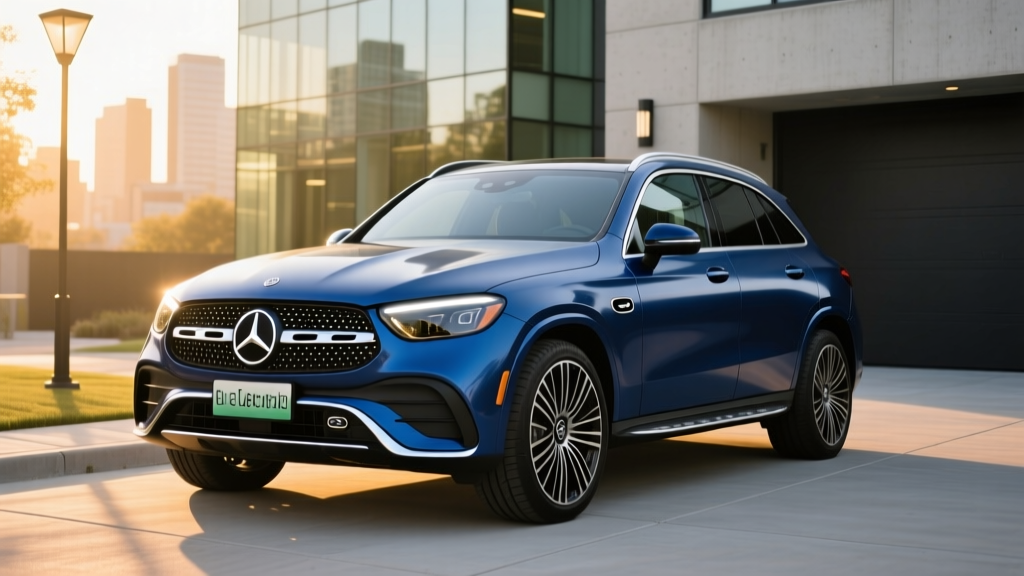
The 2026 Mercedes-Benz GLC Electric (badged as the GLC EQ) is a luxury compact electric SUV built on Mercedes' dedicated MB.EA platform with 800-volt architecture, offering an EPA-estimated 320 miles of range and DC fast charging from 10–80% in approximately 22 minutes at up to 220 kW. Starting around $59,900 before incentives, it undercuts the gas GLC 300 4MATIC in running costs by roughly $1,800–$2,200 annually for an average driver, but eligibility for the $7,500 federal §30D tax credit depends on battery sourcing and buyer income limits that shift yearly. If you have Level 2 home charging access and drive under 300 miles daily, the GLC Electric is a compelling luxury EV; if you frequently road-trip through rural charging deserts or lack home charging, the conventional GLC or a PHEV alternative may serve you better.
2026 GLC Electric Specs: Range, Battery, and Charging at a Glance
The 2026 GLC Electric represents Mercedes-Benz's transition of its best-selling SUV nameplate to a dedicated EV architecture. Unlike the older EQC (which rode on a modified gas platform), the new GLC EQ uses the MB.EA (Mercedes-Benz Electric Architecture) with an 800V electrical system, enabling significantly faster charging than legacy 400V luxury EVs.
| Specification | 2026 GLC EQ 350 4MATIC | 2026 GLC EQ 450 4MATIC |
|---|---|---|
| EPA Range (est.) | 320 miles | 295 miles |
| Battery Capacity (usable) | 85 kWh | 85 kWh |
| Battery Chemistry | NMC (Nickel Manganese Cobalt) | NMC |
| Horsepower | 349 hp | 443 hp |
| 0–60 mph | 5.4 sec | 4.2 sec |
| Peak DC Fast Charge | 220 kW | 220 kW |
| 10–80% DC Charge Time | ~22 min | ~22 min |
| Level 2 Charge Rate | 11 kW (AC) | 11 kW (AC) |
| Level 2 0–100% Time | ~8.5 hours | ~8.5 hours |
| Drivetrain | Dual-motor AWD | Dual-motor AWD |
| EPA Efficiency (MPGe) | 91 MPGe combined | 85 MPGe combined |
| Cargo Volume (rear seats up) | 25.4 cu ft | 25.4 cu ft |
| Base MSRP | $59,900 | $67,400 |
| Battery/Powertrain Warranty | 8 yr / 100,000 mi | 8 yr / 100,000 mi |
Real-World Range Reality Check
The EPA-estimated 320 miles applies to the GLC EQ 350 under mixed driving conditions. In real-world testing, expect:
- Highway (75 mph, 70°F): ~265–280 miles
- Cold weather (30°F, mixed): ~230–255 miles (NMC chemistry loses 15–25% in freezing temps)
- City/regenerative driving: ~310–330 miles (regen recovers energy in stop-and-go)
The GLC Electric includes a heat pump as standard equipment, which mitigates cold-weather range loss compared to EVs using resistive heating. Mercedes' navigation system also preconditions the battery when a DC fast charger is set as your destination — warming the pack to optimal temperature for faster charging upon arrival.
GLC Electric vs. Gas GLC 300: Cost and Efficiency Comparison
The most common cross-shopping decision is between the GLC Electric and the conventional gas-powered GLC 300 4MATIC. Here's how they stack up on paper and in your wallet over five years of ownership.
| Metric | 2026 GLC EQ 350 4MATIC | 2026 GLC 300 4MATIC (Gas) |
|---|---|---|
| Base MSRP | $59,900 | $49,550 |
| Federal §30D Tax Credit (potential) | Up to $7,500* | $0 |
| Effective Starting Price | ~$52,400* | $49,550 |
| Fuel/Energy Cost (15,000 mi/yr) | ~$660/yr (home L2) to $1,350/yr (public DC) | ~$2,250/yr (premium 91 octane, 25 MPG avg) |
| Annual Maintenance | ~$300–$500 | ~$800–$1,200 |
| 5-Year Fuel/Energy Cost | $3,300–$6,750 | $11,250 |
| 5-Year Maintenance | $1,500–$2,500 | $4,000–$6,000 |
| EPA Efficiency | 91 MPGe / 37 kWh/100mi | 25 MPG combined |
| 0–60 mph | 5.4 sec | 6.2 sec |
* Federal §30D credit eligibility depends on battery critical-mineral sourcing, buyer AGI caps ($150K single / $300K joint), and MSRP caps ($80K for SUVs). Rules are subject to legislative change. Consult IRS.gov §30D guidelines and a tax professional before purchasing.
The GLC Electric carries a roughly $10,350 premium at MSRP over the gas GLC 300, but the potential $7,500 credit narrows that gap to under $3,000. More importantly, annual energy and maintenance savings of $1,500–$2,500 mean the EV typically reaches cost parity within 2–3 years for a driver covering 15,000 miles annually with home charging.
Charging the GLC Electric: Home, Public, and What You'll Actually Spend
Understanding the difference between kW (kilowatts — the rate of power delivery, like water pressure from a hose) and kWh (kilowatt-hours — the total energy stored, like the size of the tank) is essential. The GLC EQ's 85 kWh battery holds 85 units of energy; a 220 kW DC fast charger can theoretically deliver that energy very quickly, but real charge curves taper as the battery fills.
| Charging Level | Power (kW) | Miles Added per Hour | Typical Use Case |
|---|---|---|---|
| Level 1 (120V outlet) | 1.4 kW | ~4 mi/hr | Emergency / overnight trickle |
| Level 2 (240V home) | 11 kW | ~32 mi/hr | Daily home charging (8.5 hr for full) |
| DC Fast (CCS/NACS) | Up to 220 kW peak | ~550+ mi/hr (peak) | Road trips; 10–80% in ~22 min |
The 800V architecture is a genuine differentiator. Many competing luxury EVs still use 400V systems that peak at 150–170 kW. The GLC EQ's 220 kW peak means you'll see charge rates above 180 kW sustained through roughly 60% SoC, tapering to ~80 kW by 80% and ~40 kW above 90%. This is the "charge curve" reality that peak-kW marketing numbers obscure — the 10–80% time of 22 minutes is the more useful metric.
Home charging cost: At the US average residential rate of ~$0.16/kWh (per EIA data), a full 85 kWh charge costs approximately $13.60 — yielding about 320 EPA miles for less than the price of two gallons of premium gasoline.
Public DC fast charging cost: Networks like Electrify America and EVgo charge $0.35–$0.55/kWh depending on location and membership. A 10–80% session (~60 kWh) costs roughly $21–$33. For road-trippers who rely heavily on public charging, the per-mile cost advantage over gas narrows significantly.
Home Level 2 Installation: What to Budget
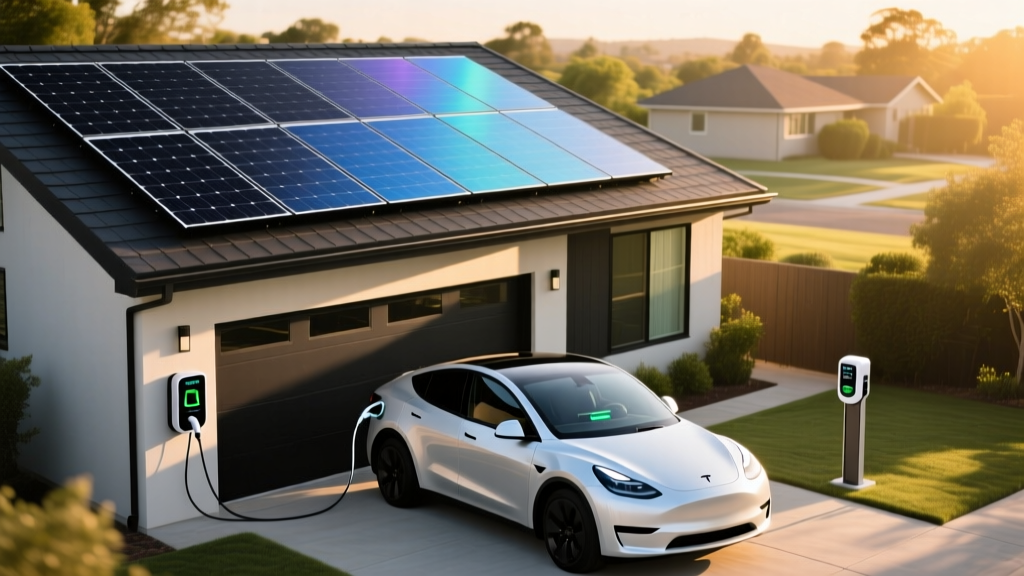
Most GLC Electric buyers will want a dedicated Level 2 wallbox at home. Here's a realistic cost breakdown:
| Item | Low Estimate | High Estimate |
|---|---|---|
| Level 2 charger (hardwired 48A) | $500 | $800 |
| Electrician labor (240V/50A circuit) | $600 | $1,500 |
| Permit & inspection | $50 | $250 |
| Panel upgrade (if needed, 200A service) | $1,500 | $3,500 |
| Total (no panel upgrade) | $1,150 | $2,550 |
| Total (with panel upgrade) | $2,650 | $6,050 |
Homes with existing 200-amp electrical panels typically need no upgrade. Older homes with 100-amp service will likely require a panel upgrade to safely support a 50-amp EV circuit alongside existing loads. Always get a quote from a licensed electrician — final costs vary by local code, conduit run length, and panel location.
Federal Tax Credit and Incentive Eligibility for the GLC Electric
The §30D Clean Vehicle Credit can reduce your federal tax liability by up to $7,500, but eligibility is not guaranteed. Here's the current checklist based on IRS rules:
- MSRP cap: Vehicle MSRP must not exceed $80,000 for SUVs — both GLC EQ trims qualify.
- Buyer income cap: Modified AGI must be ≤$150,000 (single), ≤$225,000 (head of household), or ≤$300,000 (joint).
- Battery sourcing: At least 50% of battery components must be manufactured or assembled in North America, and a percentage of critical minerals must be sourced from the US or FTA partners (thresholds increase annually).
- Point-of-sale transfer: You can transfer the credit to the dealer at purchase for an immediate price reduction, rather than waiting to claim it on your tax return.
- Final assembly: Vehicle must undergo final assembly in North America.
Key caveat: Battery-sourcing requirements have tightened significantly since 2023. Mercedes has worked to localize battery cell production, but specific eligibility for the GLC EQ depends on the exact battery pack supplier for your build month. Verify eligibility on fueleconomy.gov before committing to a purchase, and consult a tax professional for your specific situation.
Additionally, many states and utilities offer supplementary rebates — California's CVRP, Colorado's state credit, and various utility off-peak charging incentives can stack on top of the federal credit. Check your state energy office and local utility for current programs.
Real-World Ownership: What First-Time EV Buyers Should Know
If you're transitioning from the gas GLC or another ICE vehicle, here are the practical ownership realities that spec sheets don't convey:
Driving Patterns Matter More Than Range
The average American drives 37 miles per day. Even with cold-weather degradation cutting range to ~240 miles, the GLC EQ has roughly 6x your daily needs. The real question is your longest regular trip. If you drive 250+ miles one-way regularly (say, LA to Vegas or NYC to DC), you'll want to map DC fast-charger availability along that route. The Mercedes me Charge app integrates route planning with charger availability and preconditioning, which helps — but PlugShare remains an essential backup tool for verifying station reliability.
Charging Deserts Are Real
Rural stretches of I-70 through Kansas, I-80 through Nebraska, and parts of the rural South still have sparse DC fast-charging coverage. If your lifestyle involves frequent travel through these areas, the gas GLC's 450+ mile range and ubiquitous fueling infrastructure remain advantages. This is not a flaw in the GLC EQ — it's an infrastructure gap that affects all EVs.
Cold Weather Is Manageable but Real
The GLC EQ's standard heat pump recovers waste heat from the drivetrain to warm the cabin efficiently, reducing the range penalty compared to resistive heaters. Expect 15–25% range loss in sustained sub-freezing driving. Preconditioning while plugged in (warming the cabin and battery using grid power before departure) largely eliminates this penalty for your morning commute.
Insurance Costs Run Higher
EV insurance premiums typically run 10–20% higher than equivalent gas vehicles due to higher repair costs and battery replacement considerations. Budget an extra $150–$300 annually. Shop quotes from EV-friendly insurers (Geico, Progressive, and State Farm all cover EVs, but rates vary significantly by model).
Maintenance Is Genuinely Lower
No oil changes, no transmission fluid, no spark plugs, no exhaust system. Brake pads last significantly longer thanks to regenerative braking handling most deceleration. Your primary maintenance items are cabin air filters, wiper fluid, tire rotation, and eventual tire replacement (EVs are heavier and have instant torque, which accelerates tire wear — budget for tires every 30,000–40,000 miles instead of 50,000+).
Common Misconceptions About the GLC Electric
| Myth | Fact |
|---|---|
| "The battery will need replacing in 5 years" | NMC batteries in modern EVs with active thermal management typically retain 85–90% capacity after 100,000 miles. The GLC EQ carries an 8-year/100,000-mile battery warranty guaranteeing ≥70% capacity retention. |
| "I can't take road trips in an EV" | The 22-minute 10–80% charge time means a 600-mile trip requires roughly two 25-minute charging stops — comparable to rest stops you'd take anyway. Planning apps make this straightforward. |
| "EVs are worse for the environment because of battery mining" | Lifecycle analyses from Argonne National Lab show EVs produce fewer total emissions than gas cars over their lifetime, even accounting for battery manufacturing, in all US grid regions. The grid continues getting cleaner each year. |
| "The GLC EQ is just an EQC with a new name" | The old EQC (2020–2023) used a modified gas platform with 220 miles of range and 110 kW charging. The 2026 GLC EQ is built on the dedicated MB.EA 800V platform — fundamentally different architecture with 45% more range and double the charge speed. |
| "Home charging will overload my electrical panel" | A Level 2 charger draws ~48 amps on a 50-amp circuit. Most modern 200-amp panels can accommodate this alongside existing loads. An electrician will perform a load calculation to verify — this is a standard, straightforward assessment. |
Decision Framework: Is the GLC Electric Right for You?
Choose the GLC Electric If:
- You have access to Level 2 home or workplace charging
- Your daily driving is under 200 miles round-trip
- You value quiet, instant-torque acceleration and lower running costs
- You qualify for the §30D tax credit (income under caps, can verify battery sourcing)
- You want a luxury compact SUV with Mercedes' latest MBUX infotainment and Level 2 driver assistance
- You road-trip 2–4 times per year and are comfortable planning DC fast-charge stops
Choose the Gas GLC 300 or a PHEV Alternative If:
- You lack reliable home or workplace charging access
- You regularly drive 300+ miles through rural areas with sparse charging infrastructure
- Your budget is strictly under $50,000 and you don't qualify for the federal credit
- You live in an apartment without charging options and public infrastructure is limited in your area
- You tow regularly (the gas GLC offers slightly higher towing capacity and simpler logistics for trailer trips)
Frequently Asked Questions
Does the 2026 GLC Electric qualify for the $7,500 federal tax credit?
It may, depending on your income (≤$300K joint / ≤$150K single), the vehicle's MSRP (must be ≤$80K for SUVs — both trims qualify), and battery critical-mineral sourcing compliance. Verify the specific build's eligibility on fueleconomy.gov and confirm with a tax professional. The credit can be transferred to the dealer at point of sale for an immediate price reduction.
How long does it take to charge the GLC EQ at home?
On a Level 2 home charger (240V, 48A), a full 0–100% charge takes approximately 8.5 hours. Most owners plug in each evening and wake to a full battery — similar to charging a phone overnight. Level 1 (standard 120V outlet) adds only about 4 miles per hour and is practical only for emergencies or very low daily mileage.
What's the real-world highway range?
Expect approximately 265–280 miles at 75 mph in mild weather. In freezing conditions, that drops to roughly 230–255 miles. The EPA's 320-mile estimate reflects mixed driving with regenerative braking; sustained highway speeds are less efficient for all EVs due to aerodynamic drag.
Is the GLC EQ's driver-assistance system self-driving?
No. The GLC EQ comes with Mercedes' Driver Assistance Package, which is an SAE Level 2 system. It can manage steering, acceleration, and braking on highways, but the driver must remain fully engaged, hands on or near the wheel, and eyes on the road at all times. This is not autonomous driving — it is a driver-assist feature. Only Level 4 services like Waymo operate without a human driver.
How does the GLC EQ compare to the Tesla Model Y or BMW iX3?
The GLC EQ competes in the luxury compact EV SUV segment. Compared to the Model Y, it offers a more traditional luxury interior, quieter ride, and Mercedes brand cachet, but the Model Y has a more extensive Supercharger network (though Mercedes is gaining NACS access). Against the BMW iX3, the GLC EQ offers a dedicated EV platform with faster 800V charging, while the iX3 rides on a modified gas chassis. Cross-shop all three and prioritize which matters most: charging speed, interior luxury, or network access.
What does battery replacement cost if it fails out of warranty?
Current NMC battery pack replacement for luxury EVs in this class runs $12,000–$18,000 including labor. However, data from similar platforms shows degradation curves flattening significantly — most packs retain 85%+ capacity at 100,000 miles. Full replacement is rare; individual module repairs are more common and less expensive. The 8-year/100,000-mile warranty provides substantial coverage.